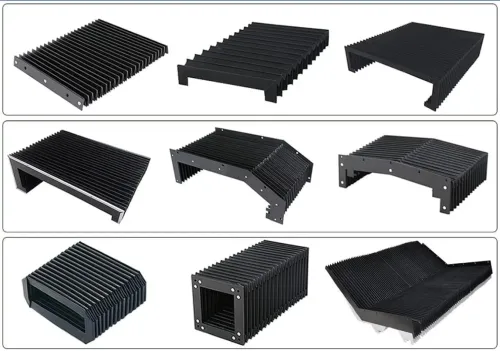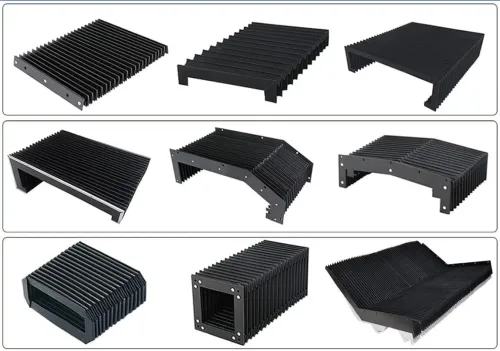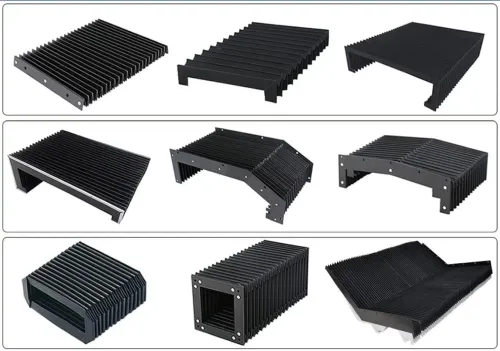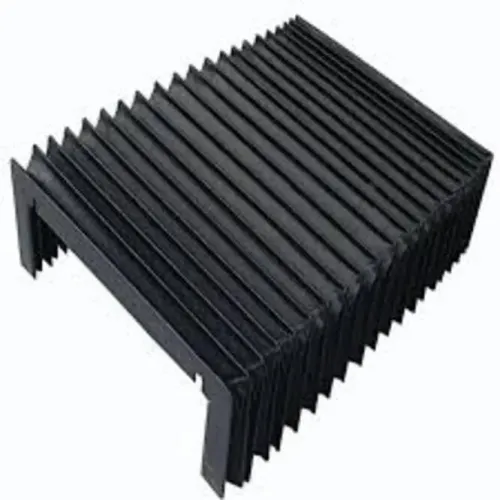

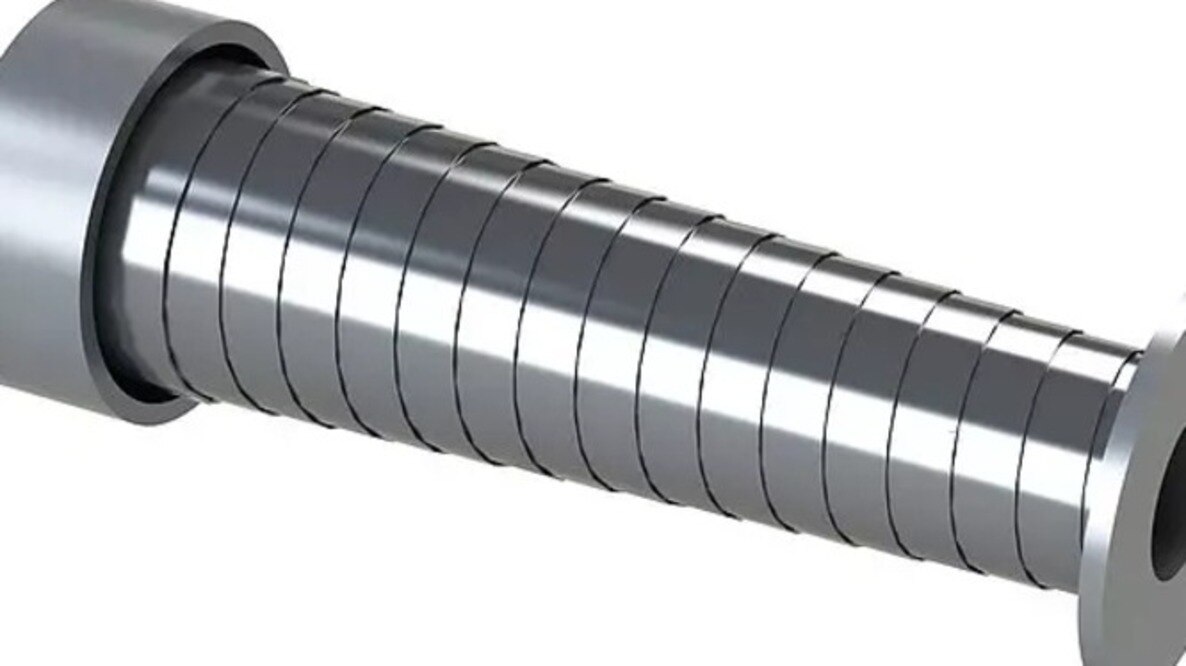
A torn wiper does not automatically mean the entire cover has failed, but a cover that binds, collides or admits coolant needs more than a cosmetic fix. By checking the damage, motion, mounting geometry and operating conditions, you can choose between cleaning, adjustment, repair, a partial rebuild and complete replacement with less risk of repeating the failure.
Key takeaways
- Check for square travel, binding, collisions, and abnormal noise.
- Repair seals, wipers, fasteners, and isolated panels when alignment remains correct.
- Measure closed length, extended length, height, width, stroke, and mounting details.
- Choose replacement when structural damage, repeated failures, or downtime outweigh repair effort.
How can you tell whether the damage is minor or structural?
Movement separates a cleaning or adjustment problem from structural damage. Record whether the stages open and close squarely, bind at one travel position, collide, or produce abnormal noise.
A cover that moves freely after cleaning or adjustment may not need replacement; one that binds at a single point needs alignment and guide inspection before anyone replaces panels.
1. Inspect torn, hardened, cracked, or permanently compressed wipers, broken scrapers, loose fasteners, damaged sliding surfaces, excessive gaps, dented boxes, damaged bellows, coolant ingress, and chips packed into overlaps.
2. Remove contamination according to the maker’s instructions, then check rollers, guide shoes, springs, brackets, mounting bolts, drainage and guide areas. Do not direct a high-pressure jet into stage gaps: it can force coolant and abrasive particles past the wipers.
3. Check the cover again through its full travel. If the stages remain square and the fault is limited to a wiper, scraper, guide shoe, roller, spring, wear strip, fastener, or individual panel, repair with the correct part. Match wiper profile, mounting method, temperature range, and chemical exposure; a similar-looking part may fail.
4. Treat distorted boxes, permanently bent guides, corrosion-thinned metal, repeated collision damage, or persistent binding as structural faults. Repairing one panel will not cure the cause, so compare the repair cost and reliability with a complete assembly replacement.
Set inspection intervals in the telescopic cover maintenance guide by cycle count and contamination level, not calendar time alone. A high-chip or coolant-heavy machine needs attention sooner.
Which telescopic cover repair options are worth attempting?
Repair is worth attempting when damage is localized and the boxes still telescope smoothly and squarely. Start by cleaning the cover, tightening loose fasteners, correcting mounting alignment, and setting wiper compression before testing the full stroke. A cover that binds at one point may need alignment or roller work, not a new panel.
| Option | What it means | When it applies |
|---|---|---|
| Adjustment | Tighten fasteners, realign mounts, and set wiper compression | The cover runs out of square or binds at one travel point |
| Part replacement | Install matched wear or sealing components | The box geometry remains sound |
| Section replacement | Replace one box or damaged stage | A stage drawing or parts list identifies the component |
| Complete replacement | Replace the assembled cover | Distortion or repeated damage affects several stages |
Replace worn wipers, scraper blades, felt, seals, guide shoes, rollers, bearings, springs, wear strips, drain components, fasteners, or brackets when you have confirmed the original profile, dimensions, and mounting method. These telescopic cover repair parts are not interchangeable simply because they look similar.
Straighten a minor dent in a noncritical area only when it does not change stage clearance, parallelism, or drainage. Replace an individual cover box or damaged section when the stage drawing or parts list identifies the correct component. Do not treat a torn wiper as the only fault when the underlying box is bent.
Stop pursuing repair when distorted boxes prevent smooth telescoping, guide rails are permanently bent, corrosion has reduced the metal section, mounting frames have moved, or repeated collisions have damaged several stages. Straightening can alter clearances and cause seizure, turning a low-cost repair into repeated downtime. These limits define practical telescopic cover repair options.
What must you measure before ordering a replacement?
Measure the replacement from the machine interface and motion envelope, not from nominal stroke alone. A machine telescopic cover replacement that fits the stroke but misses closed-length clearance, guide geometry or the mounting pattern creates a new alignment problem.
Record these dimensions and conditions:
- Guideway width and height; cover length closed and fully extended; number of stages; travel direction; mounting position; mounting-hole pattern; and interface dimensions.
- Clearance above and beside the machine, plus every interference point at both ends of travel.
- Maximum traverse speed, acceleration, cycle frequency, chip size and direction, coolant type and chemistry, abrasive-dust exposure, and whether chips fall, slide or accumulate on the cover.
- Required drainage direction, wiper compression, and overlap clearances.
Include photographs of every stage fully open and fully closed. Add the machine make and model, failure history, measured travel, and any interface drawing; photographs alone will not reveal hidden guide damage or closed-length conflicts.
| Check | Existing cover | Proposed replacement |
|---|---|---|
| Stage count and dimensions | Record each stage, width, height and closed length | Match or confirm the revised arrangement |
| Guide and mounting interface | Measure guide geometry, hole pattern and interface faces | Verify direct fit before manufacture |
| Motion envelope | Confirm extension, travel direction and end clearances | Check both travel limits, drainage and wiper overlap |
Use this comparison when reviewing telescopic cover replacement parts. It separates a predictable telescopic cover repair replacement from a component that only looks compatible on paper.
When does replacement provide better value than repair?
Replacement provides better value than repair when expected remaining life and avoided lost production outweigh the quotation, especially when the cover’s structure or alignment cannot be trusted. Compare the choices across four practical factors:
| Option | Downtime | Fitting effort | Recurrence risk | Machine alignment |
|---|---|---|---|---|
| Cleaning or adjustment | Lowest | Minimal | Low if dirt or looseness caused the fault | Preserves proven geometry |
| Component repair | Short | Low to moderate | Low when failure is localized and wear parts are available | Preserves accurate frame and guides |
| Partial rebuild | Moderate | Moderate; replaces several wipers, rollers, scrapers or individual boxes | Moderate; sound mounting geometry limits risk | Retains existing mounting geometry |
| Full replacement | Highest during manufacture and installation | Highest; verification, machining and commissioning required | Lowest when corrosion, fatigue or obsolete parts undermine repair | Restores alignment only if interfaces are measured and fitted correctly |
Choose component repair when the frame and guides remain accurate, the cover opens squarely, and the failed part is identifiable. Choose a partial rebuild when mounting geometry is sound but several wear components or stages have deteriorated.
Full replacement is more defensible when corrosion has thinned the metal, fatigue spans stages, guide rails or mounting frames are bent, adjacent stages collide, or obsolete parts make the outcome uncertain. Straightening a distorted box can change clearances and invite another seizure.
Telescopic cover replacement cost depends on stage count, engineering, hardware, material, surface treatment, mounting machining, testing, shipping size and installation downtime—not sheet-metal area alone. Compare the quotation with expected remaining life and lost production; confirm dimensional verification and commissioning are included.
Treat telescopic cover material options as a system choice: coated carbon steel gives stiffness and impact resistance, stainless steel suits aggressive coolant or washdown, while aluminum reduces moving mass but needs impact and abrasion protection.
What should you send a manufacturer for a dependable decision?
Send a measured drawing, photographs and operating evidence, not photographs alone. Photograph every stage fully open and fully closed, then add the machine make and model, guideway geometry, closed and extended lengths, width, height, stroke, section count, travel direction, mounting-hole pattern and available clearance.
Include the operating conditions and failure record in the same request:
- State speed, acceleration, cycle frequency, coolant chemistry, chip size, temperature and whether chips fall, slide or accumulate.
- Describe the cleaning method and previous repairs, collisions, replacements and dates.
- Mark where the cover binds, collides or admits coolant, and say whether it happens during extension, retraction or both.
- Ask whether the quotation includes inspection, alignment correction, replacement wipers, scrapers, rollers, guide elements, springs, brackets, individual boxes, installation and commissioning.
- Request the proposed material, surface treatment, drainage arrangement, wiper profile and test conditions.
SCUTES INDIA PRIVATE LIMITED belongs in a manufacturer comparison when its team reviews these interface and operating details instead of quoting from a product name alone.
| Evidence | Points toward repair | Points toward replacement |
|---|---|---|
| Measured travel and clearance | One binding point with correct envelope | Distorted envelope or insufficient clearance |
| Failure history | First fault after contamination or loose hardware | Repeated collisions or recurring leakage |
| Inspection findings | Worn wipers, rollers or alignment | Bent guide rails, cracked boxes or corrosion-through |
This record separates a repairable wear fault from structural failure and exposes whether a predictable replacement is cheaper than another short-lived repair.
Related products
 | TELESCOPIC SPRING COVER Telescopic Spring Covers provide protection under extreme conditions. View product → |
 | TELESCOPIC COVERS A telescopic cover protects guide-way surfaces and components of moving axis of machines. View product → |
Frequently asked questions
How can you tell whether telescopic cover damage is minor or structural?
Minor damage affects replaceable items such as seals, wipers, fasteners, or an isolated panel. Structural damage causes stages to travel out of square, bind at one position, collide, deform rails, or produce abnormal noise.
Which telescopic cover repair options are worth attempting?
Worthwhile repairs include cleaning chips and hardened coolant, replacing wipers or seals, tightening or replacing fasteners, correcting minor alignment issues, and replacing an isolated damaged panel when the frame and guide system remain sound.
What must you measure before ordering a replacement?
Record closed length, extended length, overall height and width, travel, stage count, mounting-hole locations, mounting orientation, guideway clearances, machine interface dimensions, and the cover material and operating conditions.
When does replacement provide better value than repair?
Replacement offers better value when the cover has distorted stages, damaged guides, repeated seal failures, widespread corrosion, unsafe collisions, obsolete repair parts, or downtime costs that exceed the repair.
What should you send a manufacturer for a dependable decision?
Send clear photographs, a dimensioned sketch, machine and cover model details, closed and extended measurements, travel symptoms, damage locations, operating speed, coolant or chip conditions, maintenance history, and the required delivery date.