
Dust protection only works when the cover seals the exposed machine areas without adding enough drag, mass or interference to disturb axis motion. You will be able to match each contaminant to a cover design, specify the dimensions and materials correctly, and test whether protection is reducing reliability instead of production speed.
Key takeaways
- Use bellows, telescopic, apron or roll-up covers for the motion involved.
- Separate fine dust, hot particles, coolant and chips before choosing materials.
- Protect travel speed with low-friction interfaces, correct clearances and controlled folds.
- Specify stroke, folded length, mounting points and access requirements before fabrication.
How a cover blocks dust while the machine keeps moving
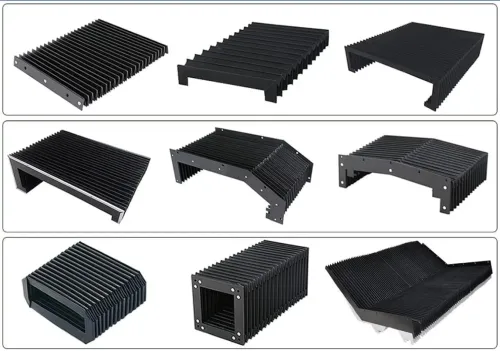
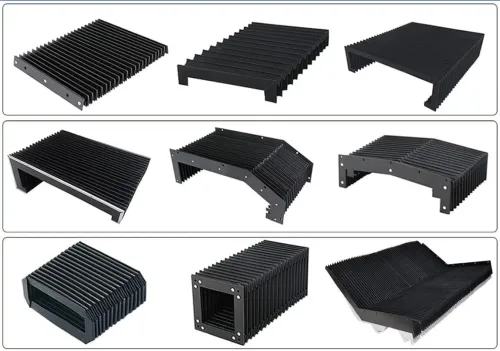
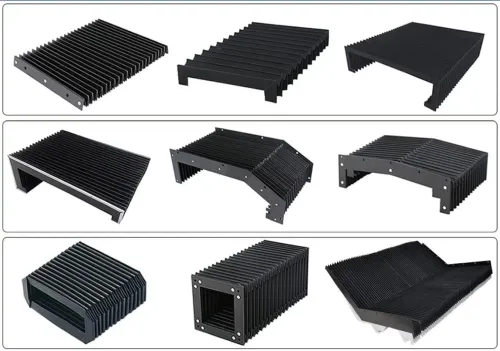
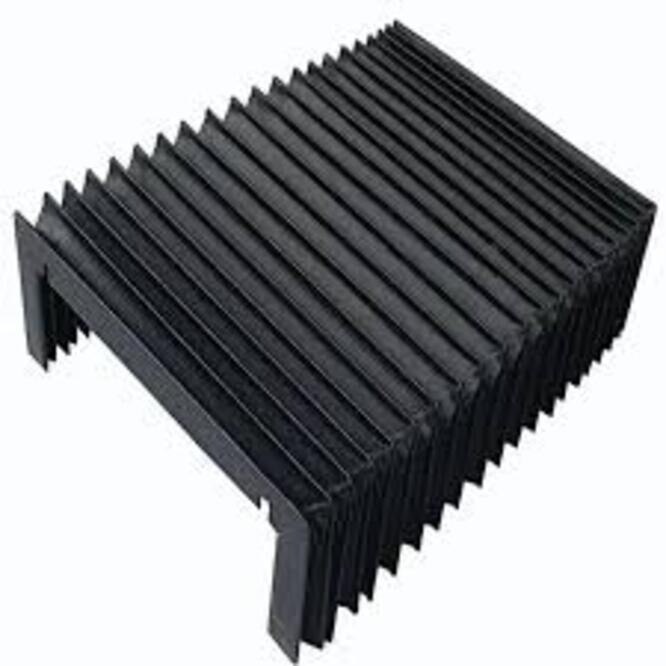
A laser machine cover against dust moves with the axis, cutting head or optical assembly while blocking the path to sensitive parts. A bellows uses overlapping folds; telescopic covers use sliding sections; apron and roll-up covers wind or retract; wipers and labyrinth gaps close the moving interface without stopping travel.
Choose the barrier around the motion, not one cover for every hazard. A telescopic steel cover resists hot chips and impact but adds moving mass, while a fabric bellows reduces inertia but needs sealed folds, protected stitching and support against sagging during acceleration.
Check each area separately:
- Linear guideways: prevent dust from reaching rails, carriages and lubrication points.
- Rack-and-pinion drives: cover tooth engagement without trapping abrasive debris.
- Ball screws: protect the screw and nut from contamination across full travel.
- Mirrors and lenses: stop deposited particles from scattering or absorbing laser energy.
- Laser head: prevent dust entry without restricting height adjustment or collision clearance.
- Cable routes: seal moving penetrations and inspect flexing zones for pinholes.
- Enclosure openings: use overlapping doors, labyrinth gaps or wipers around access points.
The cover limits particulate spread; it does not replace fume extraction. A hood or enclosed extraction system must capture the cutting plume at its source, with maintained negative pressure so contaminated air does not escape through seams or cable penetrations.
Provide safe access for vacuum cleaning. Trapped dust can increase friction, obstruct folds and become a secondary fire load. Never treat ordinary opaque fabric as a laser safety barrier: verify the complete enclosure, including windows, seams and internal surfaces, for the laser wavelength and exposure mode.
Match the cover design to the contaminant and hazard
Airborne dust and fine abrasive particles suit a laser machine cover against dust made from overlapping, sealed bellows folds with protected stitching. Pinholes in flexing zones, exposed seams, hook-and-loop joints and unprotected fabric edges become leakage and wear points.
| Option | Best match | Main trade-off |
|---|---|---|
| Bellows | Fine dust, smoke residue, coolant mist | Light and flexible; fabric must resist the actual heat and chemicals |
| Telescopic steel cover | Hot chips, sparks, abrasive cutting debris | Stronger protection, but added mass can slow acceleration |
| Roll-up cover | Moderate dust and larger debris | Compact, but vulnerable to edge leakage and damage |
| Apron cover | Chips, oil and simple travel paths | Less sealed than a fitted bellows |
| Brush wipers | Moving joints and coarse debris | Runs freely, but admits more fine dust |
| Sealed enclosure | Smoke, mist, combustible dust and widespread contamination | Best containment, with higher cost and cleaning demands |
Choose preloaded contact wipers when fine-particle exclusion matters more than running resistance; they add friction, heat and wear. Brush or labyrinth seals run more freely but admit more fine dust.
Specify fabric and coatings for hot chips, sparks, oil, coolant, solvents and condensation, then test the fold temperature rather than relying on ambient ratings. Provide access for vacuum cleaning; compressed air can spread dust and drive it into pinholes.
Combustible dust, polymer residue and oil-soaked particulate can accumulate inside the enclosure. Review flame-resistant materials, conductive bonding, cleaning access, and coordinated fire detection or suppression before approval.
Prevent protection from becoming a source of lost speed
Judge a cover by peak velocity, acceleration and reversal rate, not by whether the axis reaches both ends of its stroke. A cover that survives slow travel can whip, buckle, sag, slap the guideway or pull its mounts loose during rapid reversals.
Folded-stack interference, restricted travel, excessive seal preload, cable-carrier contact or a collision with the laser head can turn a laser machine cover against dust into a source of lost speed.
| Option | Motion effect | When it applies |
|---|---|---|
| Fabric bellows | Low moving mass and drive load; unsupported folds can sag or collapse | Clean, moderate-duty travel with stable fold geometry |
| Telescopic steel | Resists hot chips and impact; steel sections, guide shoes and wipers add mass, friction and heat | Abrasive debris, hot chips or mechanical contact justify the slower response |
| Guided bellows | Internal frames, sliding supports or anti-collapse strips control folds and reduce slap | Long unsupported spans, deep folds or high acceleration exceed fabric stability |
Verify the cover through the complete motion envelope, including every reversal and folded position. Check these items under production settings:
- Motor current or torque during reversals, peak acceleration and axis following error
- Cover temperature, operating noise, wiper or cable wear and any contact with the carrier
- Clearance from the laser head, guideway and enclosure at full speed
- Safe access for vacuuming trapped dust, which otherwise becomes abrasive and increases friction
Specify dimensions, materials and motion interfaces before fabrication
Define the laser machine cover against dust from machine geometry, not appearance: record retracted length, extended length, usable travel, width, height, mounting faces, clearances, bend radius and every attachment point. Mark the beam path, moving-axis envelope and service access before fabrication.
Use this checklist:
- Specify bellows fold depth, fabric type, coating, seam construction, end frames, guides, wipers, supports and anti-collapse features.
- Check unsupported spans under acceleration; sagging folds can strike a guideway or enter the laser head’s path.
- Evaluate the laser wavelength and exposure mode wherever the cover sits near the beam.
- Treat the complete enclosure as the safety system: windows, seams, penetrations and internal surfaces must control transmission, burning and hazardous reflections. Opaque fabric alone is not a laser barrier.
- Size cable carriers from each cable’s dynamic bend radius and motion cycle, not spare internal volume.
- Separate power, signal, fibre-optic, pneumatic and coolant lines when stiffness, electromagnetic effects or bend requirements differ. Do not overfill the carrier; abrasion and restricted movement follow.
| Choice | Define before approval | Risk if missed |
|---|---|---|
| Bellows fabric | Fold temperature, coolant, oil and solvent exposure | Coating cracks or fabric burns |
| Guides and supports | Span, acceleration and collision clearance | Cover slaps or collapses |
| End frames and seams | Fasteners, overlap and access points | Dust enters through weak joints |
SCUTES INDIA PRIVATE LIMITED can translate geometry, travel data and contaminant exposure into this specification instead of selecting a cover by appearance alone. A cover also does not replace fume extraction; capture the plume at its source.
Related products
 | Laser Machine Bellows Laser Machine Bellows are specialized protective coverings designed to safeguard the vital internal components of laser machines. View product → |
 | Machine Covers Machine covers are specially designed shields used to protect industrial equipment and machinery from environmental elements. View product → |
Verify dust exclusion without sacrificing access or service life
Prove a laser machine cover against dust is helping production through condition checks and motion data, not a visual inspection alone. Set acceptance limits before commissioning, then compare every service result with the baseline.
- Inspect the first exposed fold, scraper lips, telescopic guide shoes, mounting transitions and cable-carrier bend zones.
- Look for thinning, cracked coatings, loose stitching, distorted folds and debris packed under wipers.
- Check cable jackets for polished surfaces or cracks, including inside bend zones.
- Run the extraction system and inspect seams, stitching and cable penetrations for dust paths or air leakage.
Move the cover through full travel and repeat reversals at production speed. Record drive current or torque, acceleration, temperature, noise and following error, then note any contact with the laser head, guideway, wipers or cable carrier. A rising value against the baseline signals friction, interference or wear before an axis fault appears.
Provide safe access to vacuum and inspect beneath bellows folds and inside telescopic sections. Trapped dust becomes an abrasive, obstructs motion and adds fire load; a cover that cannot be cleaned safely reduces availability. Do not rely on extraction to repair a leaking seam.
Replace or redesign the cover when wiper preload, fold geometry, an unsupported span or cable interference raises drive load. Accept it only when exclusion remains sealed, acceleration stays stable, travel is unobstructed, cleaning is manageable and wear is predictable.
Frequently asked questions
How does a cover block dust while a laser machine keeps moving?
Bellows use overlapping folds, telescopic covers use sliding sections, and apron or roll-up covers retract with the moving axis. Wipers and labyrinth gaps close the moving interface while allowing travel.
How do you match a cover design to the contaminant and hazard?
Identify whether the machine faces fine dust, hot particles, coolant, oil, chips or mechanical impact, then select the cover construction, fabric and sealing interfaces for that hazard.
How can a protective cover avoid slowing machine movement?
Check folded length, drag, bend radius, moving mass, clearances and mounting alignment. Use low-friction interfaces and prevent folds or wipers from rubbing against the guideway.
What dimensions and interfaces must you specify before fabrication?
Provide total stroke, open and closed lengths, width, height, bend radius, mounting points, motion direction, access openings and the space available around the axis.
How do you verify dust exclusion without sacrificing service life?
Inspect seams, folds, wipers and labyrinth gaps during full-speed travel, then check dust ingress, access time, wear, heat exposure and interference after repeated machine cycles.