
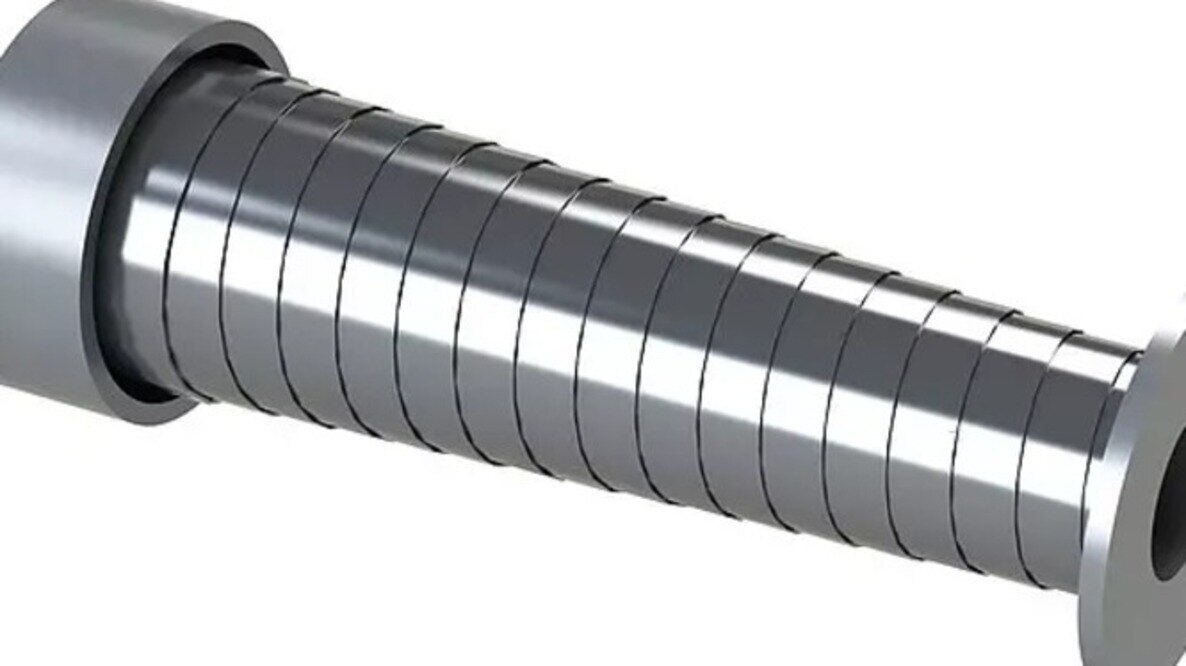
A spiral spring cover is not simply a smaller telescopic cover: its overlapping steel bands roll and unroll as an axis moves, creating a compact protection system with specific limits. By the end, you will be able to compare its motion, materials, fit, sealing performance and installation requirements before requesting a Pune machine-cover quotation.
Key takeaways
- Measure the full motion envelope, including stroke, speed and clearance.
- Match strip material and seals to chips, coolant, dust and operating temperature.
- Confirm mounting, compressed length, travel limits and maintenance access before commissioning.
- Give the manufacturer drawings, dimensions, motion data and contamination details.
How a spiral spring cover moves, and where it fits
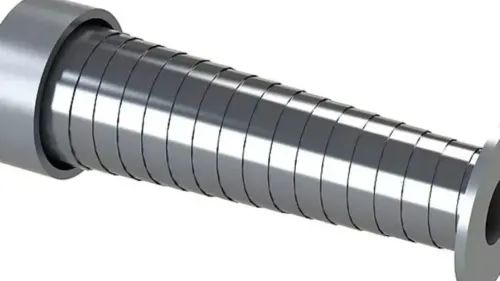
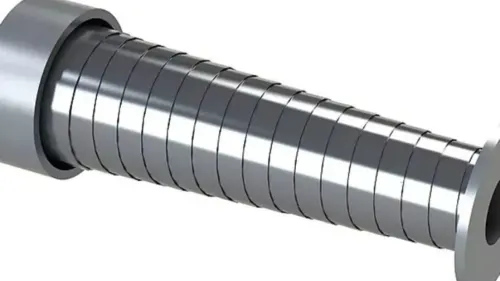
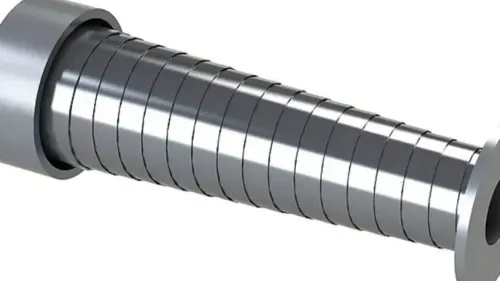
A spiral spring machine cover in Pune uses a coiled steel strip that expands and retracts with a shaft, spindle or rod. Spring tension keeps the strip wrapped around the moving member, while overlapping turns shield guideways, ballscrews and linear bearings from chips, swarf and coolant splash.
Its compact retracted length suits fast reciprocating axes where a long stacked enclosure will not fit.
| Option | How it moves | Where it fits |
|---|---|---|
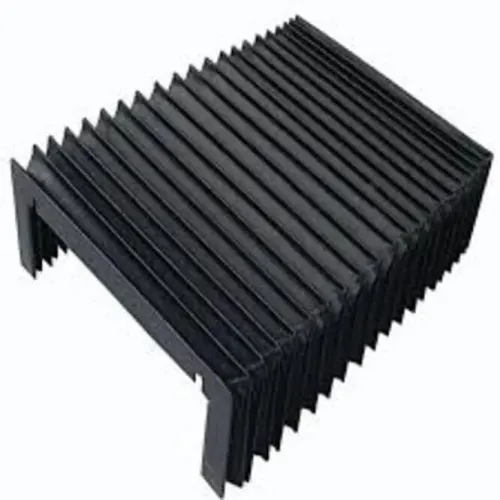
| Bellows | Folded fabric, coated fabric or synthetic panels expand accordion-style | Large travel, flexible routing and broad surface coverage |
| Roll-up cover | A flexible curtain winds onto a drum | General chip and splash protection where drum space is available |
| Telescopic steel cover | Rigid boxes slide inside one another | Heavy chip impact and stronger enclosure requirements |
| Spiral spring cover | Tensioned steel bands coil and overlap around the protected member | Short retracted length, compact packaging and rapid axis movement |
The design is not interchangeable with the alternatives. A spiral cover is not automatically liquid-tight or dust-tight, and severe hot-chip impact can damage its overlapping bands. Confirm the manufacturer’s limits for travel speed, acceleration, cycle rate, orientation and extension length before treating it as suitable.
The machine cover benefits in Pune include less contamination-related maintenance, protection of precision motion parts and easier access than a large telescopic enclosure. For monsoon humidity, coolant splash or washdown, select spring material and finish against the actual coolant and cleaning chemicals; coating damage can turn a strength choice into a corrosion failure.
A separate personnel guard still needs its own safety assessment, including ISO 13857 where applicable.
Choose the cover from the machine’s motion envelope
A cover that fits the opening can still fail if its rolled diameter strikes the machine frame or its attachment geometry clashes with the axis. Machine cover selection in Pune must start with the complete motion envelope, not the stationary gap alone.
Record these inputs before requesting a design:
- Maximum extension and minimum retracted length, including the full stroke
- Protected component diameter, cover width, available mounting space, and end-stop positions
- Axis orientation and the required clearance from the tool, workpiece, chuck, guarding, and chip conveyor
- Travel speed, acceleration, stroke frequency, and the number of daily cycles
- Ambient temperature, coolant type, moisture, grinding dust, chip size, chip temperature, and impact direction
- Mounting-point locations, shaft alignment, and any obstruction along the roll path
| Measurement or condition | What to verify | Failure if ignored |
|---|---|---|
| Extended length | Covers the entire exposed guideway at maximum stroke | Chips reach bearings or ballscrews |
| Retracted length and rolled diameter | Fits the available pocket without contact | The roll rubs the frame or conveyor |
| Speed, acceleration and cycles | Match the spring’s operating capability | Uneven retraction, noise, or loss of tension |
| Coolant and contamination | Confirm material and wiping compatibility | Corrosion, swelling, or poor exclusion |
The spiral spring benefits when choosing a machine cover in pune include compact packaging and reduced contamination-related maintenance. Do not treat the cover as liquid-tight, dust-tight, a personnel guard, or a platform; use separate guarding and risk assessment under ISO 12100 where access hazards exist.
Match materials and protection to chips, coolant and dust
Match the strip material and shielding to the contaminant, not just the machine price. For spiral spring protection for machinery in Pune, compare corrosion resistance during monsoon humidity and coolant exposure with resistance to hot chips, sharp swarf and abrasive grinding dust.
| Material or finish | Best fit | What to verify |
|---|---|---|
| Carbon spring steel with protective coating | Dry machining and moderate chip exposure | Coating damage after chip impact, edge corrosion and compatibility with the coolant |
| Stainless spring steel | Moisture, water-miscible coolant and frequent washdown | Grade, spring force, fatigue life and resistance to the specific coolant |
| Plated or treated spring steel | A balance between cost and corrosion protection | Whether scratches expose the base metal and whether the finish survives heat and abrasion |
Hot, heavy chips can dent overlapping bands or lodge at the turns; a standard spiral cover is not a substitute for an impact-rated chip guard. Grinding dust demands closer attention to gaps and wear because fine abrasive particles can reach guideways and linear bearings even when larger swarf is excluded.
Ask for scrapers, brushes, wipers, labyrinth overlaps or drainage when coolant and fine dust are persistent. These features improve exclusion but add friction, wear and drive load. Overlapping bands are a shielding path, not a liquid-tight or dust-tight seal, so specify a secondary bellows or enclosure when contamination tolerance is very low.
These machine cover benefits in Pune—cleaner motion components, less contamination-related maintenance and compact packaging—depend on material compatibility and correct shielding, not the spring mechanism alone.
Verify installation, ratings and maintenance before commissioning
Before commissioning, move the axis slowly through its full stroke and confirm that the cover remains concentric, clears adjacent surfaces, and retracts evenly. A spiral spring machine cover in Pune protects guideways and ballscrews only when its mounting and operating limits match the machine.
1. Check that the shaft or protected component is centred through the cover, with the specified radial clearance at both ends. Correct any offset before tightening brackets; misalignment makes the bands rub, buckle, or load the spring unevenly.
2. Confirm that every fastener is tight, end stops are present, overlaps remain continuous, and wipers contact without excessive drag. Remove swarf from the roll area. A dented band, chipped edge, or trapped chip can turn one cycle into progressive scoring.
3. Obtain the cover’s rated travel speed, acceleration, cycle rate, extension length, orientation, temperature range, and coolant compatibility. Do not infer these limits from another model or from the phrase “high speed.” If the cover is not liquid-tight or dust-tight, add secondary protection.
4. Run several slow cycles, then normal cycles, listening for scraping, clicking, or uneven retraction. Stop for abnormal noise, vibration, loss of spring tension, corrosion pits, cracked bands, or damaged wipers; continued operation can damage the cover and precision motion parts.
For machine cover selection in Pune, record inspection intervals and assign someone to check fasteners, overlap, wipers, roll cleanliness, and mounting alignment. Treat the cover as machine protection, not a personnel guard or platform; assess nip points and rotating-tool access separately under ISO 12100 principles.
Give the manufacturer a specification they can build from
Send a dimensioned drawing and operating data, not just the machine model. The specification must show the protected component, available installation space, and every position the cover will occupy. This is the foundation of machine cover selection in Pune.
- Maximum extension and stroke length, plus the minimum retracted length available
- Protected shaft, ballscrew, guideway, or rod diameter and the required cover width
- Axis orientation, travel speed, acceleration, cycle frequency, and daily operating hours
- Clearance from the tool, workpiece, chuck, chip conveyor, neighbouring covers, and fixed guards
- Mounting-point locations, attachment method, rolled diameter limit, and any obstruction around the axis
- Chip size and temperature, swarf direction, coolant type, grinding dust, moisture, and cleaning method
- Ambient and component temperatures, preferred spring material or finish, and the required service interval
Include photographs with a ruler and a simple side-view sketch. Ask SCUTES INDIA PRIVATE LIMITED to confirm the extended and retracted dimensions, spring assembly, mounting geometry, material compatibility, and alignment tolerance against that drawing.
State what the cover must exclude, then state what it does not need to do. Spiral spring protection for machinery in Pune targets chips, abrasive dust, and coolant reaching guideways and motion parts, but it is not automatically liquid-tight or dust-tight.
The spiral spring benefits when choosing a machine cover in Pune include compact retraction and reduced contamination-related maintenance; retain a separate personnel guard and assess access distances under ISO 12100 and ISO 13857.
Related product
 | TELESCOPIC SPRING COVER Telescopic Spring Covers provide protection under extreme conditions. View product → |
Frequently asked questions
How does a spiral spring machine cover move?
A coiled steel strip expands and retracts with a shaft, spindle or rod. Spring tension keeps the strip wrapped around the moving member while overlapping turns protect internal machine components.
How do you choose a spiral spring cover from a machine’s motion envelope?
Measure the protected length, stroke, extension and retraction speeds, installation space, compressed length, shaft dimensions and clearance at every point of travel.
Which materials and protection features should you match to the application?
Select materials and sealing details according to the chips, swarf, coolant, dust, heat, moisture and abrasion present around the guideways, ballscrews or linear bearings.
What should you verify before commissioning a spiral spring machine cover?
Check mounting alignment, travel limits, ratings, clearance, access for cleaning and the planned maintenance routine before running the machine.