
Choose the protection method from the exposed component and its complete motion envelope, not from the machine’s name or the axis speed alone. By measuring the travel, clearance, chip load, coolant exposure and mounting geometry, you can decide whether a guideway cover, spiral spring, bellows or another design fits the machine.
Key takeaways
- Match flat guideways with covers and cylindrical shafts with spiral springs.
- Check travel, compressed length, chip load and coolant exposure before specifying.
- Request an envelope drawing, test data and a replacement-parts list.
- Inspect for gaps, binding, damaged wipers, spring deformation and mounting looseness.
Match the protection type to the exposed component
Choose a guideway cover for a flat machine-bed guideway; choose a spiral spring for a narrow cylindrical part such as a ballscrew, shaft or threaded rod. The component’s shape, available clearance and chip load matter more than the equipment’s location.
| Option | Best match | Main limitation |
|---|---|---|
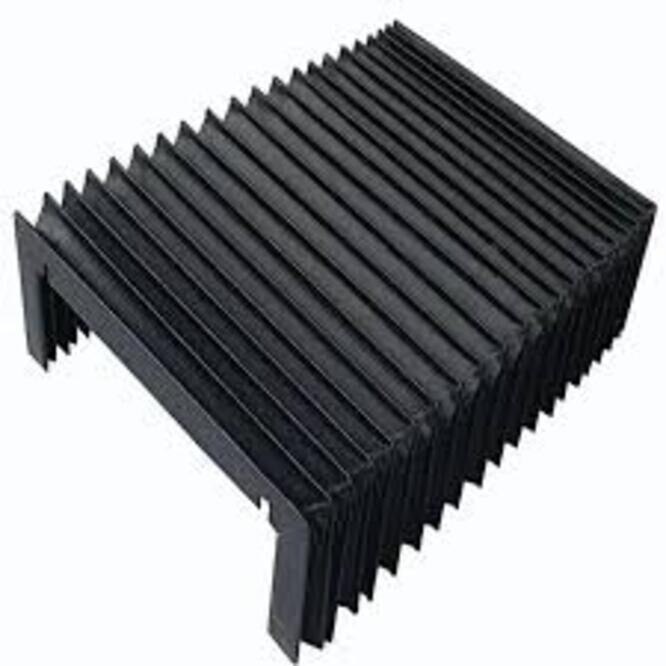
| Telescopic steel cover | Flat guideways exposed to heavy chips, coolant or impact | Needs retracted space, mounting points and clearance through the full stroke |
| Bellows, apron or roll-up cover | Guideways needing flexible coverage, low mass or frequent access | Fabric, slats or joints can wear under sharp chips and abrasion |
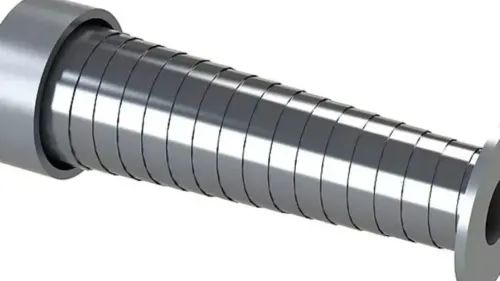
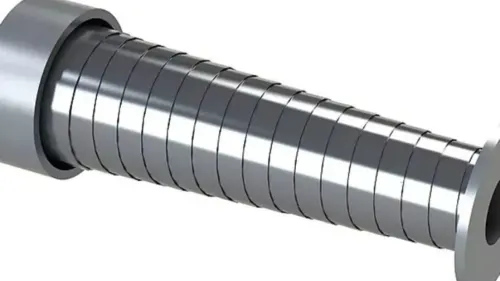
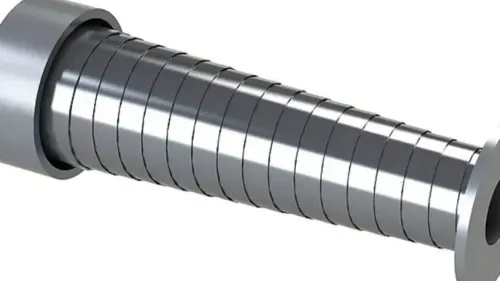
| Spiral spring | Narrow shafts, slides or guideways where compact retraction and low mass are priorities | Side loading, incandescent chips and chips entering the coil can jam or deform it |
A spiral spring expands and contracts as its spring-steel strip winds into a drum or spiral enclosure. Keep it axially aligned; a nearby tool, bracket or uneven load can force the coil sideways and shorten its life. It is a poor choice for large, heavy or hot chips.
For industrial guideway applications, check whether the protection blocks lubrication, inspection or swarf removal. Require an access panel or a defined removal method, along with replaceable wipers, bellows sections or spring elements where those parts wear.
Choosing a guideway cover or spiral spring for industrial equipment in Pune still requires machine-specific geometry: stroke, closed and extended length, width or diameter, mounting height, clearance and nearby tooling interference.
Compare protection, motion and failure risks before specifying
Choose a telescopic steel cover, bellows or apron cover for a flat machine-bed guideway; choose a spiral spring for a narrow shaft, ballscrew or cylindrical slide where installation space is tight. A spiral spring is not a universal substitute for a large cover.
| Option | Chips and coolant | Heat and motion | Main failure risk |
|---|---|---|---|
| Telescopic or bellows cover | Handles ordinary chips and splash when overlaps, wipers and seals are correctly specified; heavy chips can dent or jam sections | Greater moving mass limits acceleration, frequent reversals and usable stroke; direct washdown needs separate proof | Jammed sections, worn wipers, blocked lubrication access or coolant entering through damaged joints |
| Spiral spring | Compact barrier for light chips and splash; large or incandescent chips can strike the strip, enter the winding or jam the overlap | Low mass retracts quickly, but the coil requires axial alignment and clearance; side loading damages the strip | Coil deformation, loss of overlap, spring fatigue and binding during repeated reversals |
For industrial guideway applications, compare moving mass, opening force, friction, acceleration capability, folded length and interference with tooling rather than relying on maximum axis speed. A cover that survives constant travel can fail under rapid reversals.
Check the actual environment before specifying spiral spring equipment protection:
- State chip size, impact direction, coolant type, temperature and whether washdown uses a pressure nozzle.
- Provide nozzle pressure, distance and direction; splash resistance does not prove pressure-washer resistance.
- Include an access panel or removal procedure, plus replaceable wipers, bellows sections or spring elements. A sealed cover that prevents inspection or swarf removal can create a second failure.
Measure the machine’s full envelope before requesting a quote
Record the complete motion envelope, not just the exposed guideway length. A supplier evaluating a guideway cover in Pune needs measurements from the machine in both fully closed and fully extended positions, plus the conditions that will load the protection system.
1. Measure travel, closed length, extended length, guideway width, mounting height, cover width or diameter, and the distance between mounting faces. Record every bracket, bolt, lubrication line, drain, sensor and nearby obstruction.
2. Measure clearance above, below and beside the moving assembly throughout the stroke. Note interference with tooling, pallets, doors and chip conveyors. A spiral spring needs axial alignment and space for its coiled enclosure; side loading or impact can damage the coils.
3. Record maximum speed, acceleration, cycle frequency, rapid-traverse distance and the number of daily reversals. Include whether motion is horizontal, vertical or inverted, because gravity changes drainage and support requirements.
4. Identify the contamination precisely: dry metal chips, hot swarf, abrasive dust, cutting oil, water-soluble coolant or oil mist. Record chip size, splash direction, ambient temperature, peak nearby heat and the machine’s lubrication fluid.
Photograph the full assembly, mounting points, drain paths and access panels. Check that overlaps will direct coolant into the machine’s drainage system rather than create flat pockets. These measurements let you compare a telescopic cover with a spiral spring for industrial equipment in Pune without choosing by nominal size alone.
Use a practical selection and inspection checklist
Reject the cover before production if its drawing, full-stroke test, or wear-part plan is missing; local availability cannot compensate for absent machine-specific acceptance data.
| Option | Check before approval | Reject when |
|---|---|---|
| Guideway cover | Record width, height, stroke, folded length, mounting points, clearances, wipers, access panels, and coolant compatibility. | It blocks lubrication, inspection, or swarf removal, or interferes with tooling. |
| Spiral spring | Verify drum diameter, strip width, extension, retraction, axial alignment, overlap, and side-load resistance. | Chips can strike the strip, enter the winding, or jam the coil. |
| Bellows or apron | Confirm folded length, section replacement, heat rating, chip impact resistance, and mounting rigidity. | The material softens, tears, or cannot be replaced without removing major assemblies. |
Use this acceptance checklist:
- Approve a dimensioned drawing stating material, surface finish, corrosion protection, allowable speed, acceleration, moving mass, opening force, friction, and maximum folded length.
- Run the cover through the complete axis stroke at working speed, acceleration, and repeated reversals. Check rubbing, buckling, impact, coil binding, abnormal force, coolant leakage, and chip retention.
- Inspect replaceable wipers, bellows sections, spring elements, seals, fasteners, and guides; require part numbers and an initial spare set.
- Confirm access for cleaning, lubrication, inspection, and defined removal.
- Keep machine accuracy separate: ISO 230-1 testing does not prove sealing, coolant resistance, or cover life.
- Require packaging that protects the assembly during storage and export transit.
Specify the supplier’s drawing, test data and replacement parts
Before approving a guideway cover in Pune, require an approved manufacturing drawing, test evidence and a replacement-parts schedule—not just a quotation and catalogue dimensions.
1. Check that the drawing shows travel, closed and extended lengths, guideway width, mounting height, cover width or diameter, fixing points, clearances and nearby-tooling interference. For a spiral spring, require the drum position, axial alignment, stroke, winding direction and minimum bend radius. Side loading or impact can deform the coil and cause jamming.
2. Require material grade, sheet thickness, surface finish, corrosion protection, wiper material and coolant-compatibility details. The supplier must identify the coolant, lubricant and temperature limits used for the compatibility assessment.
3. Ask for a signed test report showing full-stroke movement at the specified speed, acceleration and cycle frequency. It must record scraping, binding, leakage, spring overlap, abnormal noise and damage after testing. ISO 230-1 accuracy results do not prove cover sealing or service life.
4. Put access panels, lubrication access, swarf-removal procedures and removal time on the drawing. A cover that prevents inspection can turn routine cleaning into a secondary machine failure.
5. List replaceable wipers, bellows sections, spring elements, fasteners and seals with part numbers, materials and lead times. Require protective packaging for storage and export transit.
A submission from SCUTES INDIA PRIVATE LIMITED should meet this same evidence standard. It applies equally when comparing a guideway cover or spiral spring for industrial equipment in Pune.
Frequently asked questions
Should you choose a guideway cover or spiral spring for industrial equipment?
Choose a guideway cover for a flat machine-bed guideway. Choose a spiral spring for a narrow cylindrical component such as a ballscrew, shaft or threaded rod.
What measurements are needed before requesting a protection quote?
Provide the protected component’s full length, width or diameter, travel, operating height, mounting points, extended and compressed envelope, nearby clearances and chip or coolant conditions.
What protection and motion risks should you compare?
Compare chip and coolant exclusion, heat and abrasion resistance, moving mass, travel speed, folded or compressed length, interference risk, sealing gaps and access for cleaning.
Which documents and spare parts should a supplier provide?
Request a dimensioned assembly drawing, material and finish details, operating limits, test data, installation requirements, inspection points and a list of replaceable wipers, seals, springs, fasteners or panels.