
A telescopic steel cover and a spiral spring cover protect different machine geometries, even though distributors and maintenance teams sometimes use the terms interchangeably. By the end, you will know which design suits your axis, which dimensions and operating details to send for a reliable quotation, and when a bellows, apron, roll-up cover or tube is the better choice.
Key takeaways
- Confirm whether you need a sliding cover or a coiled spring before requesting prices.
- Measure closed length, extended length, width, height, mounting points and travel direction.
- Specify chip type, coolant exposure, speed, stroke rate and required service life.
- Ask Pune distributors to verify drawings, materials, tolerances and replacement compatibility.
Telescopic spring cover and spiral spring: one product or two?
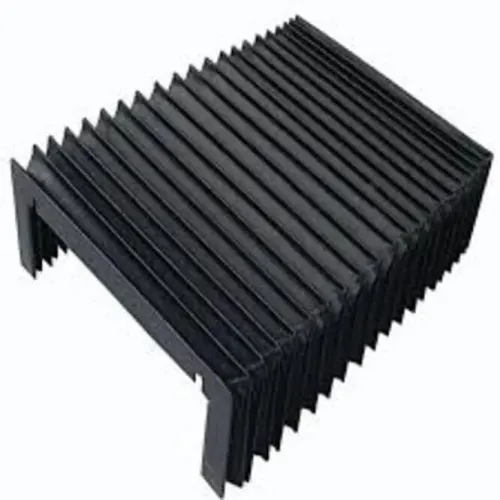
A telescopic steel cover and a spiral spring are not automatically the same assembly. A telescopic cover uses overlapping, box-like steel elements that slide along a rectangular or profiled path, protecting machine beds, guideways, columns and slides.
| Option | Construction | Typical application |
|---|---|---|
| Telescopic steel cover | Overlapping sliding elements form a barrier across the travel | Machine beds, guideways, columns and rectangular slides |
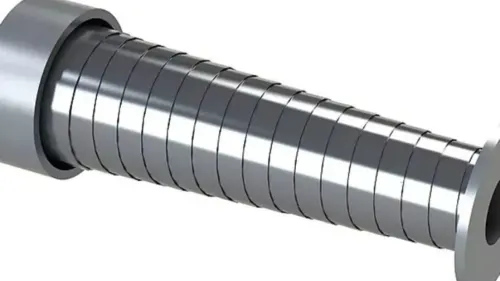
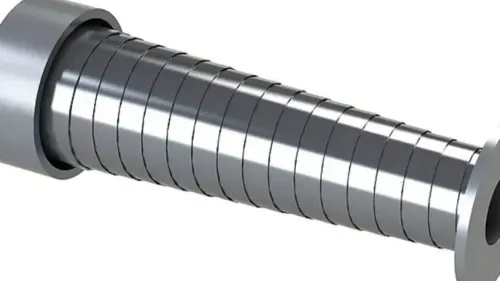
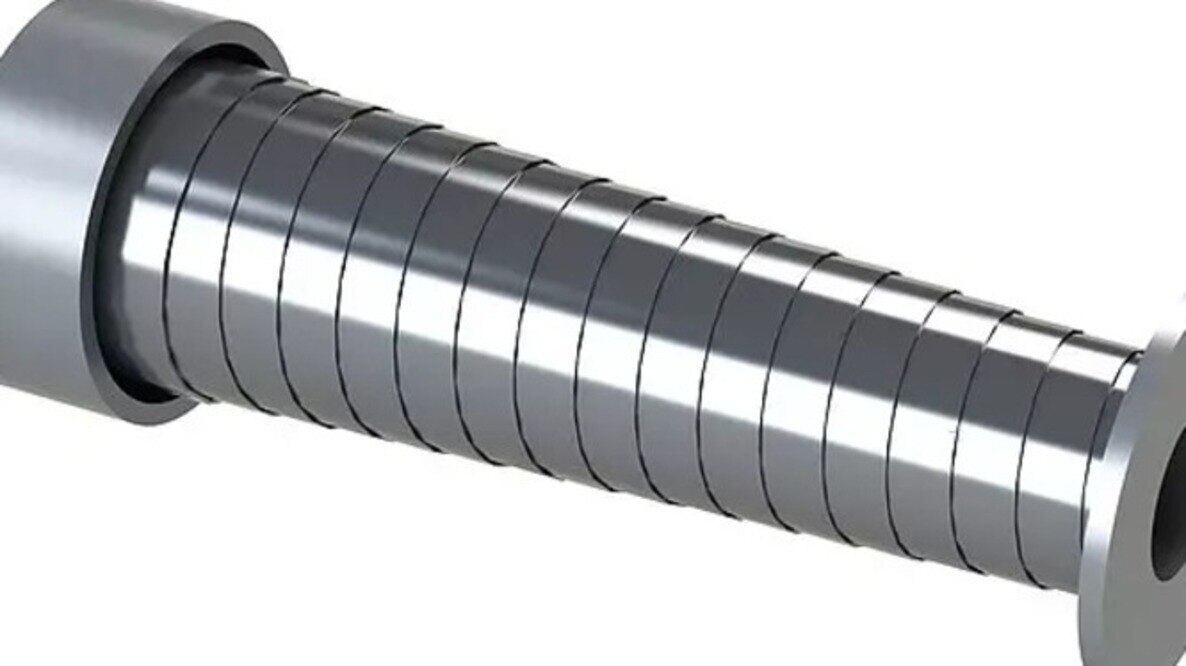
| Protective spiral cover | Wound spring-steel strip winds and unwinds around a round member | Shafts, hydraulic rods, ball screws, lead screws and spindles |
| Spiral return spring | Spring supplies retracting or power-transmitting force; it is not the contamination barrier | Mechanisms where spring force matters more than chip or coolant exclusion |
The term “telescopic spring cover” is therefore ambiguous. In one enquiry, “spiral spring” can mean a protective cover; in another, it means a mechanical return spring installed inside a separate cover.
A spiral spring alone is the wrong choice when chips, coolant or abrasive dust can reach the full travel path. Its strip does not create the broad overlapping barrier of a telescopic cover, while a telescopic cover cannot replace a concentric cover around a cylindrical shaft.
Before comparing prices, send photographs, a machine drawing and the protected component. State whether you need a complete way cover, a protective spiral cover or a power-transmitting spring. The search phrase telescopic spring cover or spiral spring for distributors in pune does not identify that distinction.
Choose protection by the part that moves
Match the protection to the moving geometry: use a telescopic steel cover for broad rectangular travel, and a spiral cover for a round moving member.
| Option | What it protects | When it applies |
|---|---|---|
| Telescopic steel cover | Guideway, bed, slide, column or rectangular axis | Overlapping elements can follow the stroke across a broad machine-tool surface |
| Spiral cover | Spindle, ball screw, lead screw or hydraulic piston rod | A compact concentric barrier fits the round member and the strip stays within its specified bend radius |
| Cable carrier | Cables, hoses and energy lines | Separation and bend control are required; neither cover replaces an articulated carrier |
| Bellows | Irregular or multi-axis components | Low-mass flexible protection suits the shape, but hot chips, coolant and sharp swarf can cut or burn unsuitable fabric |
Apron covers suit broad, flat travel where depth is limited. Roll-up covers save stored length and installation space, but they need accurate guidance and regular cleaning. A protective tube is economical for a fixed or lightly moving rod; it will obstruct a long stroke.
Before choosing, compare:
- Closed envelope and full stroke
- Speed, acceleration and reversals
- Chip form, coolant exposure and temperature
- Cleaning access and drainage
- Available clearance around tooling, guards and adjacent covers
A spiral strip alone is not a substitute for a full telescopic barrier when chips, coolant or abrasive dust can reach the travel path. The search terms telescopic spring cover in Pune and spiral spring distributor in Pune identify a market, not the protected geometry.
Ask for the component and its complete movement before requesting a quotation.
Measure the replacement before requesting a quotation
A useful quotation starts with the machine geometry, not a nominal cover size. Record the protected part, machine axis, required stroke or travel, closed length and maximum extended length. Treat spring cover equipment protection as a fit-and-duty problem.
For a telescopic cover, send:
- Guideway width and height, fixed and moving mounting positions, mounting-hole pattern, available width and height, installation orientation, and clearance around the cover when closed and fully extended.
- Machine-axis speed, acceleration, cycle frequency and direction of travel. Maximum speed alone does not describe the duty.
For a spiral cover, send:
- Shaft or rod guide diameter, required inside diameter, maximum outside diameter, protected length, stroke, mounting position and attachment method.
- Shaft alignment and concentricity details. Errors cause rubbing, uneven winding and permanent set.
| Cover type | Measurements and checks required | Failure if omitted |
|---|---|---|
| Telescopic | Guideway, mounting geometry, closed and extended envelope | Element interference, binding or unusable installation |
| Spiral | Guide diameter, inside and outside diameters, stroke and alignment | Rubbing, excessive spring force or insufficient protection |
Draw the cover envelope over the machine builder’s complete layout, showing closed and fully extended positions. Check rapid traverse and emergency-stop collisions with tooling, chuck jaws, guards, cable carriers and adjacent covers.
Confirm full final-axis travel, lubrication fittings, inspection ports, wiper replacement and chip-removal access. Keep telescopic fixed and moving mounting points parallel. Send photographs with a scale, a dimensioned sketch and old-cover part markings when available.
Match construction to chips, coolant, speed and service life
Fine abrasive dust, long stringy swarf, sharp broken chips and hot chips demand different construction, so put the chip form and temperature in the enquiry. Sharp or hot chips can dent telescopic panels, cut wipers, pack into overlaps and damage guide tracks; abrasive dust accelerates wear.
Name the fluid chemistry too: water-soluble oil, neat oil, synthetic fluid, alkaline cleaner or chlorinated chemistry can attack paint, seals and surface treatments.
| Option | Protection behaviour | Checks before selection |
|---|---|---|
| Telescopic steel cover | Overlapping panels protect broad guideways and slides | Panel impact resistance, overlap, wipers, joints and drainage |
| Spiral spring cover | A wound strip shields a round shaft, rod or screw | Return torque, bend radius, alignment and full-stroke clearance |
| Spiral spring alone | Retracts or guards locally but does not form a full-travel barrier | Reject it where chips, coolant or dust can reach the exposed path |
A chip barrier is not automatically a liquid seal. Compare painted carbon steel, stainless steel, coated steel and hardened strip for corrosion, impact, abrasion and temperature; “stainless” does not identify a grade or duty.
Ask for strip material and thickness, surface treatment, scraper material, operating temperature range, spring force or return torque, and fatigue life at the stated cycle rate.
Mass, overlap, friction, acceleration, reversals and unsupported length affect chatter, lift, binding and impact noise. On vertical or inclined spiral installations, return force can load the axis. For spring cover equipment protection, test rapid traverses, reversals, emergency stops and cleaning intervals; static extension will miss chip accumulation, wiper overheating and element lift.
Give a Pune distributor a procurement brief they can verify
Send every Pune quotation against one identical enquiry:
“Machine model: [model]; axis: [X/Y/Z]; protected component: [guideway, ball screw, spindle, shaft or rod]; travel: [mm]; closed length: [mm]; fully open length: [mm]; guideway width and height or shaft diameter: [mm]; installation orientation: [horizontal, vertical or inclined]; speed: [m/min]; acceleration: [m/s²]; cycle rate: [cycles/hour]; chip type and temperature: [details]; coolant or cutting fluid: [type]; operating temperature: [°C]; cleaning method and interval: [details]; available envelope: [width × height × length]; replacement needs: [wipers, strips, panels or springs].”
Request a drawing with the cover fully closed and extended, mounting-hole locations, wipers, drainage direction, adjacent tooling, and service clearances. Ask the distributor to state:
- Strip or panel material, thickness, surface treatment, spring force or return torque, minimum bend radius, expected fatigue life at the stated cycle rate, and speed or temperature limits.
- For a replacement, confirmation that the attachment method and hole pattern match the machine, not merely that the nominal travel matches.
Compare quotations on these points:
| Option | Check | Reject when |
|---|---|---|
| Telescopic spring cover in Pune | Panel envelope, alignment, wipers and drainage | Travel matches but tooling clearance does not |
| Spiral spring distributor in Pune | Diameters, torque, bend radius and shaft attachment | Force, fatigue life or concentricity is missing |
SCUTES INDIA PRIVATE LIMITED belongs in the comparison when its technical team reviews this data. Choose the quote that proves full travel, cleaning access, spare-part availability and process protection—not simply the lowest price.
Related products
 | TELESCOPIC SPRING COVER Telescopic Spring Covers provide protection under extreme conditions. View product → |
 | TELESCOPIC COVERS A telescopic cover protects guide-way surfaces and components of moving axis of machines. View product → |
Frequently asked questions
Are a telescopic spring cover and a spiral spring the same product?
No. A telescopic cover uses overlapping steel boxes that slide along a machine path, while a spiral spring is a coiled strip that stores force or protects a smaller moving part.
How do I choose protection by the moving part?
Use a telescopic cover for beds, guideways, columns and slides with a defined rectangular or profiled path. Consider a spiral spring when the moving part needs compact, coiled protection or spring force.
What measurements should I send when requesting a replacement quotation?
Send closed length, extended length, width, height, travel direction, mounting-hole locations, clearances, attachment details and photographs showing the installed cover.
What operating details should a Pune distributor verify?
Provide chip size and heat, coolant or oil exposure, travel speed, stroke rate, cycle frequency, machine orientation, cleaning method and expected service life.