
A spiral spring can lose torque, buckle, corrode, or fracture even when the telescopic cover panels still appear usable. You will be able to separate spring failure from alignment, wiper, mounting, and guideway faults, then decide what to record before requesting repair or replacement.
Key takeaways
- Check spring torque, anchor points, housing, and panel alignment.
- Clean chips and coolant before diagnosing a spiral spring cover failure.
- Replace a cracked or permanently deformed spring instead of forcing repair.
- Match repair decisions to the spring’s damage, travel, and operating load.
How the spiral spring fails inside a telescopic cover
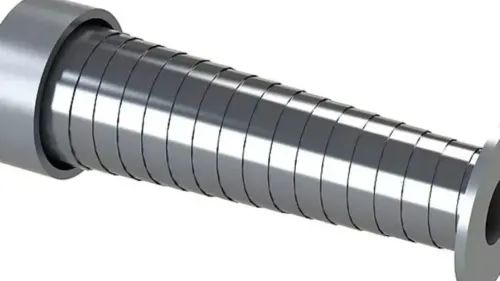
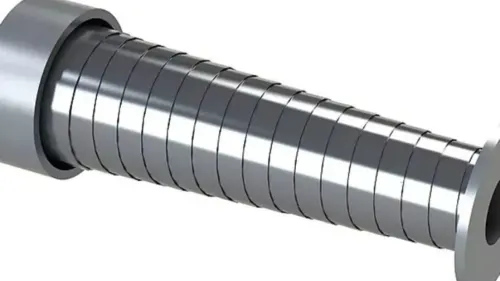
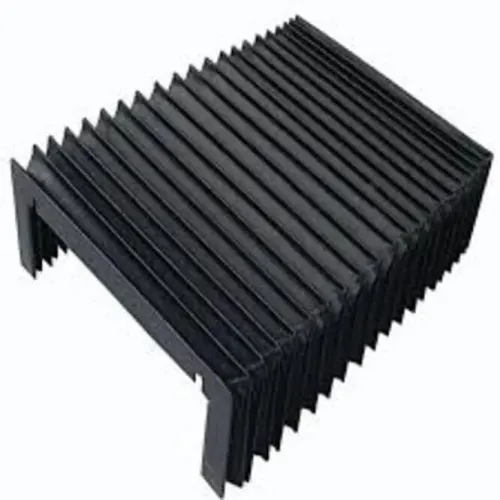
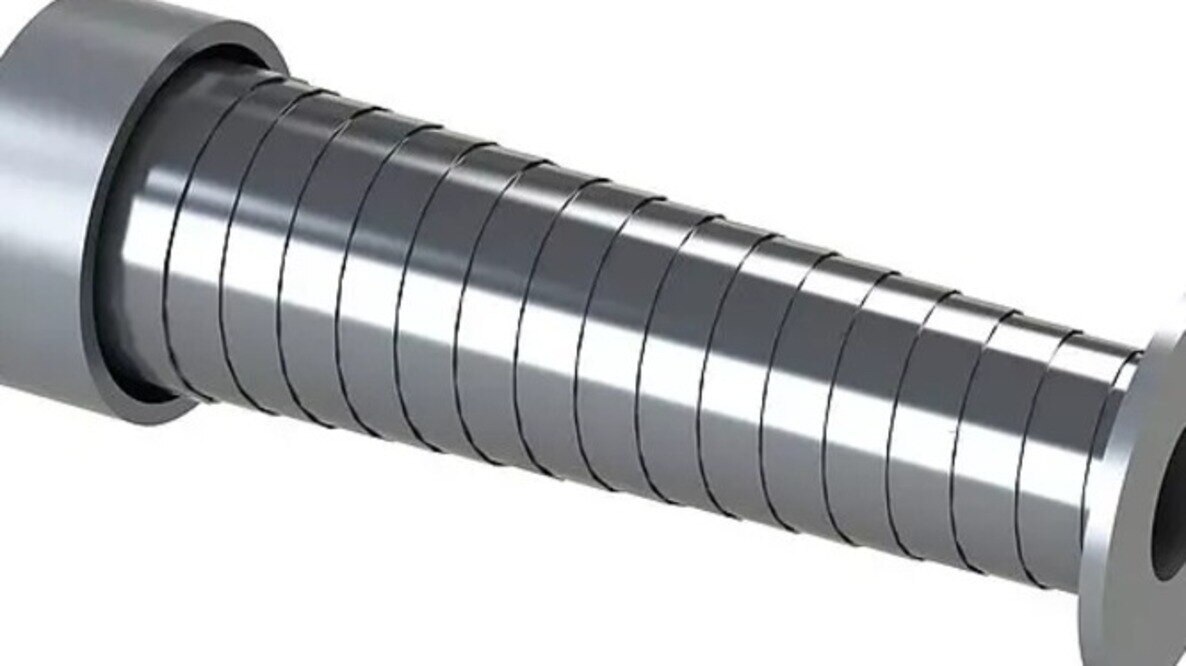
A telescopic cover for spiral spring failure in pune usually stops retracting when the spring loses torque, jams in its housing, or breaks at its anchor. The panels may still slide, but the spring no longer supplies enough force to pull them closed and maintain protection over the guideway.
Common physical failure mechanisms include:
- Permanent set: overload or excessive preload leaves the strip partly relaxed, so it retracts slowly, stops short, or leaves a sagging section.
- Fatigue: repeated winding, unwinding, and sharp bending create cracks at the hooked end, anchor hole, or bend radius before the strip finally fractures.
- Contamination: chips, coolant residue, and grinding dust enter the housing, abrade the strip, block its winding path, and increase drag until retraction fails.
- Corrosion: trapped moisture and coolant attack the strip surface, thinning it and creating rust pits that become crack-starting points.
- Buckling or coil separation: incorrect installation, side loading, or a collision distorts the spring, producing gaps between coils and uneven force.
- Excessive preload: the spring hits the stroke end violently, raising anchor stress and accelerating fatigue.
A spring can fail without an obvious break. Compare its current retraction force and final position with the machine’s original behaviour, and look for loose winding, rust, permanent deformation, or rubbing.
Isolate the machine and mechanically support the cover before opening its housing; release stored spring energy only by the maker’s procedure, because a loaded strip can unwind violently.
What the symptoms reveal about the real fault
A cover that retracts slowly does not prove a broken spring. Isolate the machine, support the cover mechanically, and release stored spring energy only by the manufacturer’s procedure; opening a loaded housing can cause rapid unwinding and serious hand or eye injuries.
Compare the symptom with the likely fault:
| Symptom | Likely fault | Check |
|---|---|---|
| Incomplete retraction, sagging, or a cover stopping short | Low preload, permanent spring set, or lost torque | Compare retraction force and end position with the original behavior; inspect for loose or unevenly wound coils |
| Sharp scraping, one-sided rubbing, or uneven gaps | Guideway obstruction, worn shoes, or axis misalignment | Check whether the cover sits level and whether adjacent boxes remain parallel |
| Impact at the stroke end | Excessive preload or a mounting stop problem | Check the maker’s preload specification; do not estimate it by feel |
| Coolant leakage, loose sections, or repeated jamming | Damaged wiper, chip ingress, or panel deformation | Inspect wiper contact, housing entry points, and trapped chips |
| Visible rust or a broken strip | Corrosion or direct spring failure | Inspect the strip only after stored energy is safely released |
A spring can lose function without snapping. If telescopic cover spiral spring problems in pune appear after maintenance, incorrect preload is a prime suspect: too little causes sag, while too much overloads anchors and panels. A cover that works freely at one end but binds at the other points to alignment, not a spring-only repair.
How Pune shop-floor conditions accelerate failure
Coolant and chips usually accelerate a spiral spring cover failure in Pune faster than ambient climate alone. A leaking or badly aimed nozzle drives fluid and chips into the spring housing; chips abrade the strip, jam its winding path, and force it to work against abnormal drag.
Incorrect coolant concentration or dirty fluid leaves residue that traps abrasive particles.
Monsoon humidity adds corrosion where condensation or coolant remains trapped. Localized pits in spring steel become crack-starting points under repeated bending. Fine grinding dust enters through worn seals and acts like grinding paste. Shop-floor heat thins lubricant, accelerates coolant evaporation, and leaves concentrated deposits that increase friction.
Cleaning practices can either remove contamination or drive it deeper. Avoid these failure-accelerating habits:
- Blowing high-pressure air toward the spring housing, which forces chips under seals.
- Directing a pressure washer at gaps, wipers, or covers.
- Using solvent that removes lubricant without replacing it.
- Leaving chip-packed channels and hardened coolant residue in place.
Incorrect preload creates a different load problem. Too little preload causes incomplete retraction, sagging, and loose coils; too much preload increases end-of-stroke impact, anchor stress, and fatigue. Installing the spring with the wrong winding direction, anchor position, strip orientation, or alignment adds bending and buckling.
Set preload from the cover maker’s service specification, not by feel.
What to inspect before requesting repair
Before requesting telescopic cover repair in Pune, isolate and lock out the machine, support the cover mechanically, and prevent axis movement. Do not open the spring housing, remove an anchor, or pull the strip free while stored energy remains; follow the cover maker’s release procedure.
Record these safe checks:
- Photograph the cover extended and retracted, including gaps, rubbing marks, bent panels, rust, loose sections, and coolant entry points.
- Measure spring-strip width and thickness with calipers, without dismantling the loaded housing.
- Measure housing length, width, and available depth; note winding direction and visible anchor position.
- Measure cover travel, machine-axis stroke, panel overlap, and the gap between the cover and guideway.
- Check guides, rollers, scrapers, wipers, mounts, welds, and fasteners for distortion or wear.
- Note scraping noise, uneven extension, slow return, incomplete retraction, and any recent collision or maintenance.
- Record coolant concentration, leaks, nozzle direction, chip buildup, grinding dust, and cleaning chemicals around the housing.
| Finding | Likely direction | Information to provide |
|---|---|---|
| Straight panels and guides, weak return | Spring-and-preload service | Strip dimensions, winding direction, and maker’s preload specification |
| Bent housing, worn guides, cracked welds | Cover refurbishment | Photos, damaged-part measurements, and machine stroke |
| Severe corrosion or repeated spring failures | Assembly replacement review | Failure history, contamination source, and full cover dimensions |
Never set preload by feel. Too little leaves sagging or incomplete retraction; too much increases end impact and anchor fatigue. Include the cover maker’s nameplate and drawings if available.
When repair is sensible and when replacement is safer
Spring-only repair is sensible when the spring has lost torque but the panels, guides, rollers, scrapers, housing, and mounting remain straight and secure. Bent boxes, cracked welds, severe corrosion, or repeated spring failures make another spring-only repair a false economy.
| Option | What it means | When it applies |
|---|---|---|
| Spring-only repair | Replace the strip and set the specified preload | Panels travel evenly, the housing is sound, and contamination or drag has been corrected |
| Cover refurbishment | Replace the spring, worn wipers, guides, rollers, seals, or damaged fittings | Several parts create drag, gaps, scraping, or uneven movement |
| Complete replacement | Install a new cover assembly matched to the machine | The box is distorted, welds are cracked, corrosion is deep, or failures recur after refurbishment |
For telescopic cover repair in Pune, give the repairer enough data to identify the spring rather than sending only a failure photograph. Record the cover maker and model, machine-axis position, cover length and stroke, spring housing dimensions, strip width and thickness, winding direction, anchor shape, and the manufacturer’s preload or torque specification.
Add clear photographs of the housing, anchor, strip, panels, and mounting points.
- Isolate the machine, support the cover, and release stored energy using the maker’s procedure.
- Do not weld, drill, heat, or grind the spring strip; replace it with the specified material and rating.
- Correct coolant leaks, blocked wipers, chip entry, and abnormal drag before fitting a new spring.
For a telescopic cover for spiral spring failure in Pune, SCUTES INDIA PRIVATE LIMITED can use these measurements to separate a spring fault from a cover-assembly problem.
Related products
 | TELESCOPIC SPRING COVER Telescopic Spring Covers provide protection under extreme conditions. View product → |
 | TELESCOPIC COVERS A telescopic cover protects guide-way surfaces and components of moving axis of machines. View product → |
Frequently asked questions
How does a spiral spring fail inside a telescopic cover?
The spring loses torque, jams in its housing, or breaks at its anchor, leaving the panels unable to retract correctly.
What do telescopic cover spiral spring symptoms reveal?
Slow retraction points to lost torque or contamination; uneven movement suggests misalignment, while sudden release indicates anchor or spring breakage.
How do Pune shop-floor conditions accelerate spiral spring failure?
Metal chips, coolant, dust, heat, moisture, and abrasive debris can contaminate the housing, corrode the spring, and increase friction.
What should you inspect before requesting telescopic cover repair in Pune?
Record the cover dimensions, travel, spring condition, anchor damage, panel alignment, housing contamination, and the machine’s operating symptoms.
When is replacing a telescopic cover spiral spring safer than repairing it?
Replacement is safer when the spring is cracked, permanently deformed, corroded through, or unable to hold the required torque.