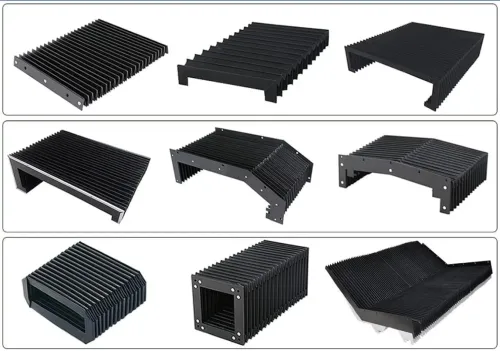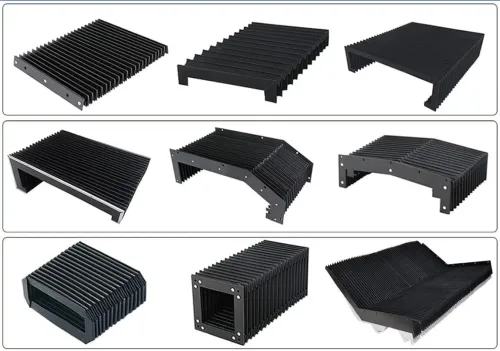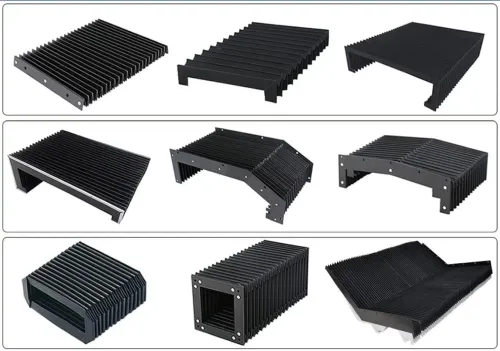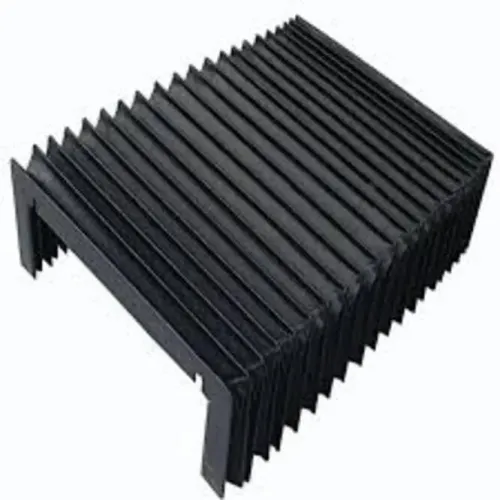

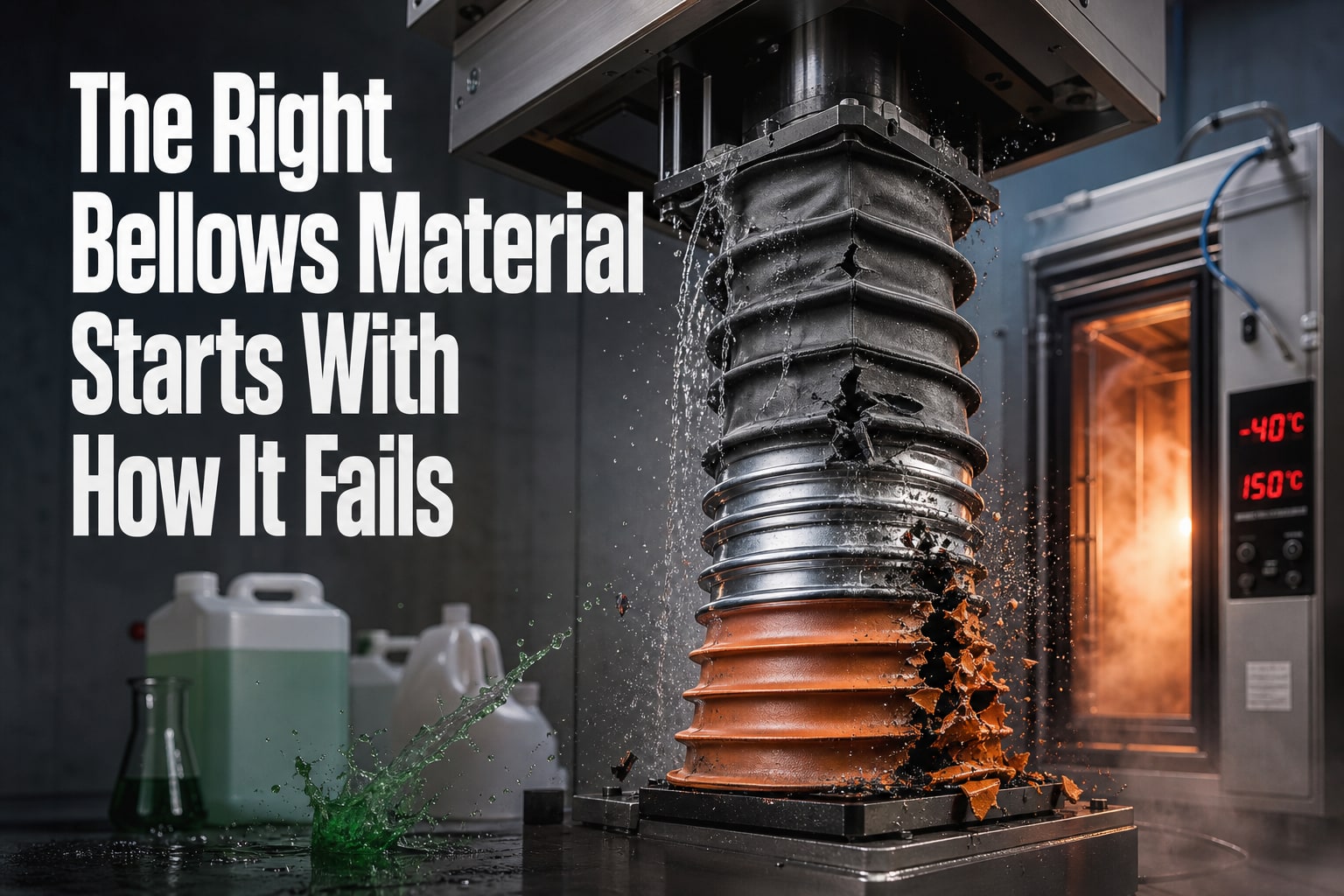
A duct bellows can fail because of a hot chip, a chemical additive, cold-weather stiffening, edge abrasion, or a seam that cannot withstand repeated folding. By the end, you will be able to match the exposure profile, movement, construction, and service-life target to a material and a specification that suppliers can verify.
Key takeaways
- Start with the failure mechanism, not the fabric name.
- Compare coated fabric, metal, and elastomer against actual exposure.
- Test temperature, chemicals, seams, and flex fatigue as one system.
- Specify geometry, acceptable alternatives, and a documented acceptance test.
Start with the failure mechanism, not the fabric name
The starting point in duct bellows material selection is the dominant failure mechanism, not a generic “best” fabric. Decide whether abrasion, hot chips, chemical attack, UV and weathering, low-temperature stiffening, or flex-fatigue will end the bellows’ life. A fabric that survives the static temperature can still crack after repeated folding or rubbing against a guideway.
Establish these facts before comparing materials:
- Identify the actual contaminant: chips, welding spatter, sparks, coolant, cutting oil, hydraulic oil, grease, cleaning chemicals, or outdoor moisture.
- Record continuous temperature and short-duration peak temperature separately.
- Define movement type, stroke, bend radius, cycle frequency, and required service life.
- State pressure difference, flexibility, available installation space, and pinch-point hazards.
- Specify whether the joint must be fluid-tight or only chip-resistant, then identify the seam method, thread or welding compatibility, edge reinforcement, and flange or clamp design.
- For lift equipment, request reaction-to-fire, smoke, toxicity, and electrical documentation for the complete construction. EN 81-20 is a lift safety standard, not a bellows material table; “flame-retardant” or UL 94 V-0 alone does not prove approval.
| Fact to establish | What to ask for | Why it changes the choice |
|---|---|---|
| Fluid exposure | Fluid name, concentration, temperature, and exposure duration | “Oil resistant” does not cover every synthetic coolant, ester, cleaner, or additive |
| Cold service | Low-temperature flex test or application-specific cycle data | Stiffening can overload attachments and cause creasing or cracking |
| Mechanical attack | Abrasion, chips, sparks, and folding-cycle conditions | Static temperature survival does not prove flex-fatigue life |
| Joint performance | Seam, thread, weld, bond, and edge details | A resistant fabric can fail at stitched holes, welded seams, bonded flanges, or clamped edges |
Compare coated fabrics, metal, and elastomers by exposure
Duct bellows material selection depends on exposure during movement, not only the surrounding air temperature. A hot chip can burn through PVC or TPU coating during a brief contact even when ambient temperature remains below the stated continuous limit. Folding heat, abrasion, chemical attack, and UV exposure also belong in the comparison.
| Option | What it means in service | When it applies |
|---|---|---|
| PVC-coated fabric | Low-cost, flexible, and suitable for ordinary dust, coolant, and light abrasion; coating can soften, crack, or burn from hot chips and low temperatures. | Enclosed machine tools with moderate heat and limited sliding contact. |
| Polyurethane-coated fabric | Better abrasion and tear resistance than ordinary PVC; polyether TPU suits hot, wet service better than polyester TPU, which is more vulnerable to hydrolysis. | Chips, rubbing guideways, cable carriers, and frequent folding. |
| Silicone-coated fabric | Retains flexibility across a wider temperature range and tolerates intermittent hot particles; repeated sliding can wear the coating. | Elevated-temperature shields when abrasion is controlled. |
| PTFE-coated fabric | Low friction, non-stick, chemically inert, and heat resistant, but expensive and difficult to sew, weld, or bond durably. | Aggressive chemicals or sticky contamination. |
| Aramid fabric | High tear and heat resistance as reinforcement; it is not automatically a fluid-tight outer surface. | Hot-chip or puncture risk where a compatible coating is added. |
| Stainless steel | Handles heat, sparks, and impact, but adds weight, noise, bending fatigue, and installation space. | Severe hot-particle exposure with limited folding. |
| Neoprene, nitrile, or EPDM elastomers | Flexible and sealed; nitrile suits oil, EPDM suits weather and many cleaners, while neoprene balances abrasion and weathering. | Short strokes, sealing duties, and oil or outdoor exposure matched to the compound. |
Specify seam construction, edge reinforcement, and fluid-tightness separately; the fabric can outlast a stitched hole or clamped edge.
Check temperature, chemicals, seams, and flex life together
Verify a duct bellows material as a system, not as a fabric sample. Heat, fluids, sparks, folding, seams, and installation loads interact: a coating that survives oil in a static test can crack after repeated folding, while a heat-resistant fabric can fail at its stitched edge.
- Record continuous temperature, intermittent temperature, hot-chip temperature, exposure duration, and the temperature reached during folding. Ask for test data at the actual temperature-time profile, not only a maximum rating.
- Test coupons against the actual coolant, cutting oil, hydraulic oil, grease, and cleaning agent. Check swelling, softening, cracking, coating lift, mass change, and loss of adhesion after exposure.
- Describe sparks and chips by temperature, size, frequency, and impact direction. A short hot-chip event can burn a PVC or TPU coating even when surrounding air is cool.
- Require flex-fatigue data at the machine’s stroke, bend radius, cycle rate, folded height, and lowest operating temperature. Cold stiffness can raise folding force and overload mounts before visible cracking appears.
- Specify the seam and edge construction: stitched, welded, bonded, or clamped; thread or weld compatibility; reinforcement; and whether the joint must be fluid-tight or only chip-resistant.
- Check the installed assembly, including attachment-point movement, allowable force, available clearance, compression, extension, and leak requirement. A material that passes exposure tests can still fail when an over-tight installation prevents free folding.
Put the exposure profile and acceptance test in the purchase specification, including sample-cycle results. This prevents a supplier from substituting another coating while keeping the same generic material name.
Use a separate material test for lifts and moving equipment
A lift bellows material selection guide should treat operator safety as a separate verification track from mechanical protection. A material described as flame-retardant, self-extinguishing, or UL 94 V-0 is not automatically approved for a lift installation. EN 81-20 covers the design and installation of passenger and goods passenger lifts, not a general bellows material table.
Obtain jurisdiction-specific evidence for reaction to fire, smoke, toxicity, electrical behaviour, and the complete bellows construction.
Use a separate material test for lifts, scissor lifts, and other moving equipment:
- Check the folded bellows at every pinch point and clearance limit. A cover that protects against dirt can still trap fingers, catch clothing, or restrict emergency movement if it bunches into the mechanism.
- Run abrasion testing against the actual guide, rail, frame, or moving edge. Silicone-coated fabric can handle heat yet wear quickly when it slides repeatedly against a rough surface.
- Expose outdoor samples to UV, rain, condensation, dirt, and wet-dry temperature cycles. Specify sealed edges, drainage, or venting where trapped water could freeze or promote cracking.
- Test the installed construction through the expected folding cycles, including low-temperature operation. Cold stiffness increases folding force and can overload fasteners, crease the bellows, and shorten its life.
Ask for application-specific cycle results, not only tensile strength or a polymer name. The test should include the attachment method, bend radius, travel speed, pinch clearances, and expected exposure.
Specify the geometry, alternatives, and acceptance test
Specify the finished geometry, not only the fabric. Record duct width and height, overall length, folded height, extension, number of convolutions, flange dimensions, bolt-hole pattern, corner radius, mounting orientation, and clearance to nearby parts. State the maximum pressure difference, allowable folding force, stroke, motion speed, cycle rate, and minimum bend radius.
Compare alternatives against the same duty:
| Option | Specify when | Detail to control |
|---|---|---|
| Coated fabric | Flexibility and moderate exposure matter | Coating, base cloth, thickness, seam method |
| Silicone or PTFE-coated fabric | Heat, cleaning agents, or release properties matter | Coating weight, temperature history, flex data |
| Neoprene or nitrile-coated fabric | Oil, coolant, or abrasion dominates | Fluid list, reinforcement, low-temperature rating |
| Metal bellows | Pressure, heat, or chemical containment dominates | Alloy, wall thickness, guides, fatigue rating |
| Elastomer bellows | Compact sealing and repeated flexing matter | Polymer grade, hardness, moulded geometry |
Your purchase specification must also name the seam method, thread or welding compatibility, edge reinforcement, flange attachment, and whether the joint must be fluid-tight or merely chip-resistant. Require a drawing, material certificate, coating identification, and test report tied to the quoted construction; a generic polymer label permits substitutions.
Ask for an acceptance test using the stated temperature/time profile, contaminants, UV exposure, stroke, and cycle count. Record leakage, folding force, cracking, delamination, seam failure, and dimensional change as pass/fail limits. For lifts, a lift bellows material selection guide must separate mechanical protection from EN 81-20, fire, smoke, toxicity, and local approval evidence.
Send SCUTES INDIA PRIVATE LIMITED this complete test basis when requesting a quotation.
Related product
 | Duct Bellows HVAC systems and industrial ducting rely on high-quality duct bellows for durability and performance. View product → |
Frequently asked questions
How do you start duct bellows material selection?
Identify the dominant failure mechanism first: abrasion, hot chips, chemical attack, UV exposure, low-temperature stiffening, or flex fatigue.
How do coated fabrics, metal, and elastomers differ for duct bellows?
Compare each material against the actual exposure, including heat, chemicals, abrasion, weathering, required flexibility, and available space.
What must you check besides the bellows material?
Check operating temperature, chemical contact, seam construction, folding radius, attachment method, and repeated-flex life together.
What is important in lift bellows material selection?
Test the material and assembled bellows under the lift's actual movement, load, bending, rubbing, temperature, and contamination conditions.