
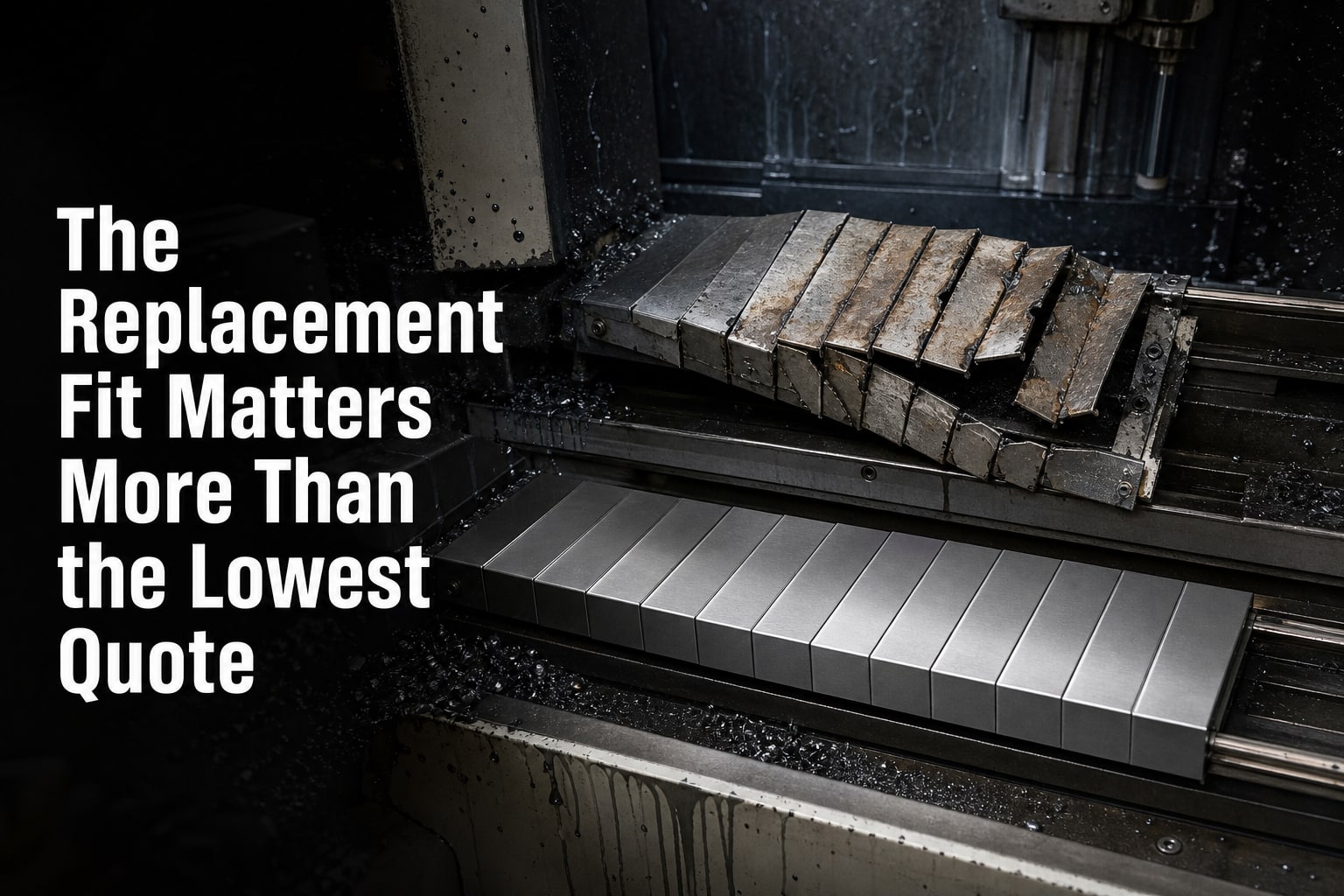
A replacement apron cover can fit the machine at both end positions and still bind, sag, leak coolant or overload the axis during travel. By the end, you will know how to diagnose the failure, prepare a complete RFQ, compare repair with replacement, choose materials and designs, and test a supplier’s finished assembly before acceptance.
Key takeaways
- Define repair, partial replacement or complete assembly before requesting quotes.
- Send folded dimensions, mounting details, clearances and failure photos to preserve fit.
- Match slats, wipers and materials to chips, coolant, heat and machine travel.
- Require drawings, tolerances, inspection points and acceptance tests in the quotation.
Decide whether the cover needs repair, partial replacement or a new assembly
Treat apron cover repair replacement as a scope decision, not a product name. A repair kit may restore individual slats, hinges or wipers; a complete assembly may include the frame, guides, drainage, end connections and adjusted clearances. State the deliverable explicitly in the purchase order.
1. Choose repair when the remaining slats are straight, the frame is square, and damage is limited to a replaceable slat, hinge, spring, scraper, wiper, fastener or mounting point.
2. Choose partial replacement when the structure remains sound but several wear parts or a defined slat section has failed. Ask the supplier to identify every included slat, hinge, wiper, guide component and installation part.
3. Choose a new assembly when slats are broadly distorted, hinges have elongated holes, guides are worn, corrosion has reduced section thickness, or the cover closes out of square. Binding, exposed guideways, repeated coolant ingress and repeated repairs also indicate a geometry or sealing problem.
4. Send photographs with the cover fully open and closed, plus closed and extended dimensions, width, slat pitch and thickness, mounting-hole pattern, attachment method, travel direction, axis stroke and available clearances.
5. Add the machine make and model, axis speed, coolant and chip type, ambient temperature, and failure history. Request separate prices for the cover, guides, hardware, installation, alignment, testing, documentation and maintenance spares.
Compare quotations only after confirming that each supplier covers the same scope. Require testing through the complete stroke, including smooth travel, parallelism, clearance, scraper contact, drainage and fastener security; checking only the two end positions can miss binding or collision.
Send measurements and failure evidence that preserve the original fit
Give an apron cover replacement supplier the interfaces that make the cover work, not only its outside envelope. Send the fully closed and extended lengths, width, travel direction, machine-axis stroke, rolled or folded clearance, and available installation space, then add:
- Mounting-hole pattern, hole sizes, attachment method, end-frame dimensions, guide arrangement, and end-stop positions.
- Slat pitch, overlap, thickness, hinge or rivet construction, cover mass, allowable deflection, and the position of scrapers, wipers, drains, and seals.
- Closed and extended photographs, cross-sectional photographs, and a drawing marked with fixed reference points rather than measurements taken from damaged edges.
- Machine make and model, axis speed, acceleration, cycle frequency, mounting orientation, unsupported length, coolant type, chip type, and ambient temperature.
- Failure evidence showing bent slats, broken fasteners, torn seals, binding marks, chip packing, impact points, corrosion, sag, and any locations where the guideway became exposed.
State whether the cover forms part of a guard or blocks access to moving hazards. The supplier must check its geometry, retention, rigidity, openings, and access clearances against your machinery risk assessment; a cover that fits the envelope can still create a safety gap.
Ask for a controlled drawing, material and coating declarations, identified wear parts, installation instructions, repair limits, and allowable speed and acceleration for the proposed mass and guide arrangement. Request warranty exclusions for collision, overtravel, impact, and chip packing before approving the quotation.
Compare apron cover replacement options against the machine’s duty
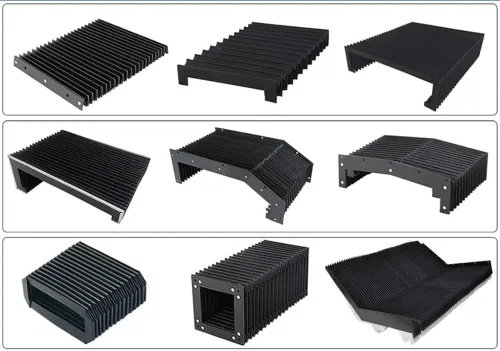
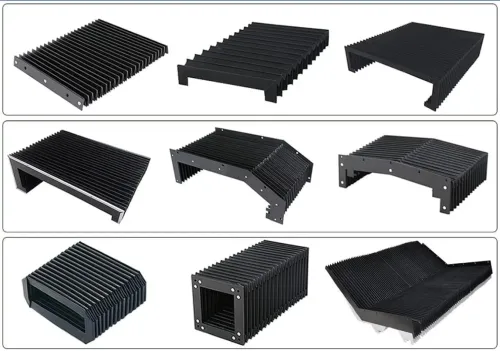
When a like-for-like apron cover is unsuitable, compare apron cover replacement options by chip, coolant, heat, sealing and space requirements—not by nominal width and length alone.
| Construction | What it handles | When to compare it |
|---|---|---|
| Conventional steel-slat apron | Hot, sharp chips and repeated sliding contact; easier to replace individual slats | Choose it for heavy machining, exposed guideways and abrasive swarf |
| Stainless-steel apron | Corrosive coolant and humid environments with the same slatted operating principle | Choose it when carbon-steel corrosion could stiffen joints or contaminate the machine |
| Roller-style cover | Retracts into a compact roll instead of a folded stack | Compare it when installation space is tight and a protected take-up can stay clear of chips |
| Bellows or flexible fabric cover | More continuous sealing across irregular or telescoping movement | Choose it for fine dust, mist and coolant; reject it where sharp swarf can cut or burn the fabric |
Ask the supplier to compare travel speed, direction, cover weight, allowable deflection, slat overlap, scraper position, drainage and end-stop loads. A roller cover with poor chip protection can jam; a bellows that seals well can fail quickly under hot swarf.
If the apron also prevents access to moving hazards, treat the choice as a guard design. Check geometry, retention, rigidity and openings against the machine-specific risk assessment, ISO 14120 and ISO 13857. A cover that protects the guideway but leaves a reach-through gap is not an acceptable replacement.
Select materials by coolant, chips, heat and motion
Make apron cover material selection from the contaminant-temperature combination and the cover’s motion, not corrosion resistance alone. A material that survives coolant can still fail when sharp chips strike it, when swarf enters the hinges, or when repeated acceleration stresses slats and fasteners.
- Carbon-steel slats suit ordinary dry machining where chips are not corrosive and washing is uncommon. They are a poor choice when water-based coolant or damp residues cause rapid rusting.
- Stainless-steel slats suit water-based coolant, frequent washing and corrosive residues. Stainless steel does not prevent abrasive wear, impact damage or chip ingestion.
- Aluminium is suitable only after you confirm chip impact, operating temperature and required stiffness. It is not a universal substitute for steel where hot, sharp swarf hits the cover.
- Fabric bellows provide more continuous sealing, but sharp chips can cut or puncture the fabric. Choose them when sealing matters more than resistance to direct swarf impact.
- Roller-style covers save folded-stack space, but their take-up mechanism needs protection from chip intrusion and enough room for reliable winding.
Check compatibility across the complete assembly, including coatings, hinges, rivets, wipers, seals, adhesives, lubricants and elastomeric rollers. A sound metal cover can still fail when coolant swells or hardens its wipers. Specify the wiper profile, contact pressure and replacement interval: excessive pressure raises drive load, while insufficient pressure lets coolant and chips reach the guideway.
Evaluate supplier capability, quotation scope and acceptance testing
A capable apron cover replacement supplier engineers the assembly around the machine envelope, not just nominal width and length. Request closed and extended dimensions, travel direction, mounting geometry, slat pitch and overlap, cover weight, allowable deflection, and the positions of scrapers, wipers, drains and end stops.
A headline travel speed means little without the proposed mass, acceleration, unsupported length, guide arrangement, orientation and cycle frequency. Ask for those limits in writing.
SCUTES INDIA PRIVATE LIMITED can be assessed with this same assembly-level request: the response should show whether it has considered guides, clearances and motion, rather than only quoted fabricated cover material.
Make the quotation comparable by requiring separate prices and deliverables for:
- Complete cover assembly, including slats, hinges and end connections
- Replacement slats, hinges, wipers, scrapers and fasteners
- Guide and roller refurbishment or replacement
- Installation, alignment and commissioning
- Inspection documentation and recommended wear-part spares
State in the purchase order whether you want apron cover repair or replacement. A repair kit restores selected slats or wipers; a complete replacement may include new guides, drainage, frame connections and adjusted clearances.
Require a documented acceptance plan covering closed-cover height, full-extension length, parallelism, smooth travel, clearance from adjacent parts, drainage or leakage behaviour, scraper contact, fastener security and the complete axis stroke. Testing only the two end positions can miss binding or collisions halfway through travel.
Related product
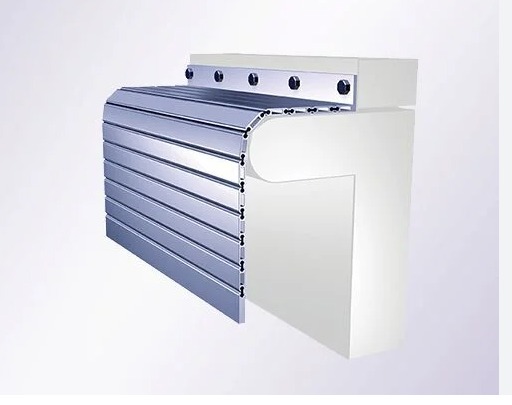 | APRON COVER Effectively engaged in offering a vast collection of outstanding quality products which include Apron Covers. View product → |
Frequently asked questions
How do you decide between apron cover repair and replacement?
Choose repair when individual slats, hinges or wipers are damaged and the frame remains serviceable. Choose partial replacement for limited damaged sections. Specify a new assembly when the frame, guides, drainage, end connections or clearances also require replacement.
What information should you send an apron cover replacement supplier?
Send folded and extended dimensions, travel direction, mounting points, guide and end-connection details, available clearances, machine duty and photos showing the failure. Include slat, hinge and wiper measurements when requesting a repair.
How should you compare apron cover replacement options?
Compare each option against machine travel, speed, acceleration, installation space, chip load, coolant exposure, heat, drainage and maintenance access. A low-cost repair is unsuitable when the existing frame or guides cannot hold the required alignment.
What should an apron cover replacement quotation include?
Require the deliverable, material grades, slat and wiper details, dimensions, tolerances, mounting interfaces, drainage provisions, drawings, lead time, warranty terms and acceptance tests. Confirm whether installation, adjustment and replacement of guides are included.