
Jerking, scraping or incomplete closing usually points to resistance inside the cover system, not a machine-drive fault. You will learn how to set a Pune-appropriate maintenance routine, isolate the cause safely, and decide whether cleaning, adjustment, repair or replacement is justified.
Key takeaways
- Inspect covers every shift and after rain, spills or unusual scraping.
- Remove chips and coolant before debris packs into overlaps or guide tracks.
- Trace jerking to contamination, misalignment, damaged rollers or guide-track wear.
- Test full travel after repair before returning the machine to production.
Set a Pune maintenance routine before movement deteriorates
Inspect the telescopic cover at the start of every shift and after any heavy rain, coolant spill or unusual scraping sound. Clean visible chips and coolant before they pack into overlaps or guide tracks. For high-pressure coolant, fine abrasive dust, cast-iron or graphite particles, inspect during each shift; clean at the end of that shift.
Clean, low-cycle service can use a weekly detailed inspection, but let travel cycles and observed wear set the interval rather than a universal monthly rule.
- Stop the machine and wait until the spindle, table and all axes have reached zero movement.
- Isolate electrical, hydraulic and pneumatic energy under your site lockout/tagout procedure. Release stored pressure and verify zero energy at the controls.
- Prevent unexpected axis movement with the manufacturer’s specified blocks or mechanical restraints. Do not rely on the drive control alone.
- Keep hands out of panel overlaps and guideways. Use a tool to remove loose chips only after isolation, and support the cover before opening or moving it manually.
- Check drain paths, low points, wiper seals, panel overlaps, guide tracks, rollers, fasteners and end stops. A freely moving cover can still retain monsoon water and corrode hidden surfaces.
Record the inspection date, travel cycles, coolant type, chip material, binding position and visible damage. This record makes telescopic cover maintenance in Pune responsive to actual exposure instead of guesswork, especially through the monsoon. Surface rust, standing water or a changed opening force requires attention before production continues.
Clean chips, coolant and monsoon moisture without creating new damage
Remove chips from panel overlaps, guide tracks, roller paths, drain holes and wiper retaining strips before they harden in coolant. Use a vacuum, soft brush and lint-free cloth; low-pressure air is acceptable only when it blows debris away from seals and overlaps. High-pressure air or water drives abrasive particles and moisture deeper into the cover.
For telescopic cover maintenance in pune, treat monsoon water separately from coolant contamination. After heavy rain, inspect low points, drain paths, fasteners and overlaps for standing water or rust, even if the cover still moves freely.
Inspect the full wiper length: a torn, hardened, swollen or permanently flattened wiper can increase resistance while allowing coolant inside.
- Clean the wiper contact edge without scraping it.
- Dry trapped moisture before closing the cover.
- Lubricate rollers, pivots or specified guide points only with the cover maker’s named product and quantity.
- Keep sliding faces dry unless the service manual explicitly specifies a lubricant.
| Method or product | Likely result | Use instead |
|---|---|---|
| High-pressure air or water | Forces chips and moisture into overlaps and seals | Vacuum and low-pressure directed air |
| Way oil, grease or penetrating oil | Attracts abrasive chips, attacks wipers or masks misalignment | Manufacturer-specified lubricant |
| Metal scraper or abrasive pad | Scores guide surfaces and accelerates corrosion | Soft brush, plastic tool and cloth |
| General-purpose spray lubricant | Leaves an incompatible film on elastomers | Confirm compatibility with the wiper material and lubrication chart |
Trace jerking, binding and scraping to the actual fault
A cover that binds at the same point on every cycle has a local mechanical fault; a bind that moves between positions points to contamination, intermittent interference or alignment change. With the machine isolated, move the cover slowly and compare opening with closing resistance.
- Chips or dried coolant: resistance varies with travel, and debris appears beneath panels, in guideways or at overlaps. Clean the track, then check whether the same symptom returns.
- Wiper wear: a torn, hardened, swollen or permanently flattened wiper drags along its full length. Its retaining strip may also be loose, while gaps let coolant and chips enter.
- Seized roller: one section feels heavy or chatters at a repeatable point. Inspect for a roller that does not rotate freely, has a flat spot or shows heat-coloured metal.
- Bent panel or damaged stop: the cover scrapes, strikes an overlap or climbs one section at the same position. Look for bright scrape marks, distorted corners and incorrect nesting.
- Loose hardware: the fault changes after vibration, and a bracket, guide, stop or fastener shows movement, witness marks or a missing nut.
- Machine-axis misalignment: resistance increases across much of the travel, the cover sits skewed, or gaps differ from one side to the other. Compare guideway parallelism with the machine axis.
Record the bind position, travel direction, hot or cold condition, and whether chips or coolant are present. Changing telescopic cover movement problems after monsoon rain also justify checking standing water in overlaps and guide tracks.
Choose repair or replacement using the right service information
Repair the cover when the fault is local: a replaceable wiper is torn or swollen, one roller is seized, a fastener is loose, or chips and standing water have contaminated the guideway. Replace a section when a dent has changed its profile, overlap clearance, stop position or wiper contact.
Do not hammer a badly dented panel while it remains installed.
Choose telescopic cover repair in Pune only after giving the service provider operating evidence, not just “it is scraping.” Record:
- Cover length when fully closed and fully open, section widths, panel height and the guideway spacing.
- Travel direction, the exact position where binding begins, and whether the fault occurs during opening, closing or both.
- Machine model, axis name, travel speed, cycle frequency, coolant type and the presence of chips or abrasive dust.
- Whether the cover is hot or cold when it binds, and whether monsoon water has collected at low points or inside overlaps.
- Photos of each section, wiper retaining strip, rollers, stops, drain paths and any gap between nested panels.
A machine telescopic cover service must inspect the complete wiper length, not only the visibly damaged spot. If SCUTES INDIA PRIVATE LIMITED supplied the cover, request its original section dimensions and stop positions before fabrication or straightening.
| Condition | Repair | Replace |
|---|---|---|
| Wiper hardened, torn or swollen | Fit the correct profile and inspect its retaining strip | Replace the section only if the seal cannot seat |
| Seized roller or loose hardware | Clean, replace and realign the part | Replace if its mounting or guideway is distorted |
| Panel dented beyond its original profile | Remove the section and restore maker dimensions | Replace when overlap or travel clearance cannot be recovered |
Related product
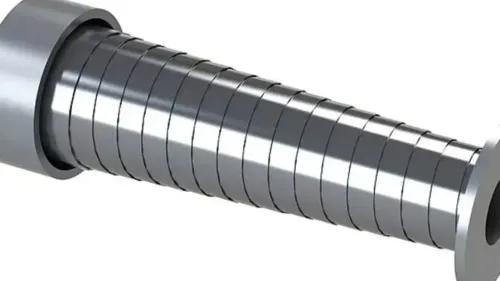
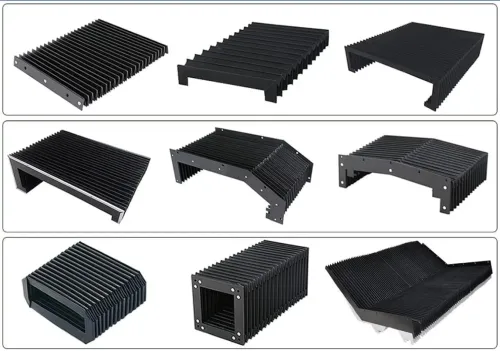
 | TELESCOPIC COVERS A telescopic cover protects guide-way surfaces and components of moving axis of machines. View product → |
Test the cover through full travel before returning to production
Run at least three complete opening-and-closing cycles after maintenance: begin by hand with power isolated, then use low-speed machine travel under supervision. One successful cycle is not an acceptance test.
1. Watch the sections nest in the designed order. Confirm that each stop contacts correctly and prevents over-travel; a loose bracket or missing stop can let one panel climb another and cause impact damage.
2. Check for smooth, consistent travel without jerking, scraping, stalls or changes in force between opening and closing. Inspect chips beneath panels, seized rollers, bent sections, guideway alignment and the full wiper length before changing motor or control settings.
3. Listen for new rattling, grinding or impact noise. Confirm that wipers maintain contact throughout travel and that no coolant or chips pass into the protected area during a supervised test.
4. Record the binding position, travel direction, machine speed, temperature and whether coolant or chips are present. These details help machine telescopic cover service identify a geometric obstruction rather than a load-related fault.
Stop operating immediately if the cover stalls, strikes a stop violently, climbs a section, leaves a dangerous gap or has a loose component. Persistent telescopic cover movement problems after cleaning, alignment and repair indicate that the cover type, stroke, rigidity or contamination protection no longer suits the machine.
Frequently asked questions
How often should you inspect a telescopic cover in Pune?
Inspect it at the start of every shift and after heavy rain, coolant spills or unusual scraping. For high-pressure coolant, abrasive dust, cast-iron or graphite particles, inspect each shift and clean at its end.
How do you clean a telescopic cover without causing damage?
Remove chips and coolant from overlaps and guide tracks before they pack in. Control high-pressure air and fluid so debris does not enter seals, rollers or adjacent machine components, then address monsoon moisture before corrosion starts.
What causes telescopic cover movement problems?
Jerking, binding and scraping can result from packed chips, coolant contamination, moisture, misalignment, damaged rollers, worn guides or distorted panels. Trace the noise and resistance through the full travel instead of replacing parts first.
How do you decide between telescopic cover repair and replacement?
Use the cover’s service information to compare panel condition, guide and roller wear, alignment, seals and the cause of failure. Repair isolated damage when the structure remains sound; replace the cover when distortion, repeated failures or extensive wear prevents reliable travel.