
A telescopic cover earns its cost only when the contamination, motion and maintenance demands of a machine justify its purchase and upkeep. By the end, you will be able to compare cover types, specify a workable design, calculate the costs it is meant to avoid and test a supplier’s proposal before installation.
Key takeaways
- Compare cover cost with damage, cleaning, corrosion and downtime costs.
- Match cover construction to chips, coolant, heat, impact and machine travel.
- Provide compressed dimensions, stroke, mounting space and travel speed to the supplier.
- Require written materials, motion limits, service intervals and a witnessed test.
Calculate the cost of leaving the guideway exposed
A telescopic steel cover pays for itself when the cost of contamination exceeds its purchase and maintenance cost. Calculate the annual exposure by adding guideway, ball-screw and linear-bearing damage; cleaning labour and consumables; coolant-related corrosion; and downtime while parts are inspected or replaced.
Use this calculation:
- Annual uncovered cost = incidents per year × (repair parts + technician hours + lost production hours) + scheduled cleaning cost
- Annual covered cost = wiper and wear-part replacements + cleaning + planned cover maintenance
- Payback period = cover price and installation cost ÷ (annual uncovered cost − annual covered cost)
For example, if one contamination event costs ₹80,000 in downtime and repairs, and the uncovered machine has two such events each year, its avoidable cost is ₹1.6 lakh before routine cleaning. A ₹2.4 lakh telescopic cover for machinery, including installation, that costs ₹25,000 annually to maintain would recover its cost in about 1.6 years.
Do not use the cheapest quotation as the baseline. Ask whether the design has replaceable wipers, standard wear parts, local repair support and a stated replacement lead time. A cover with proprietary seals that require a complete assembly replacement can erase the savings.
The investment is weaker when chips never reach the guideway, downtime has no production impact, or a simple brush wiper solves the contamination problem. It is stronger on high-value axes exposed to hot swarf, abrasive dust or coolant, where one damaged guideway or bearing set can exceed several years of cover maintenance.
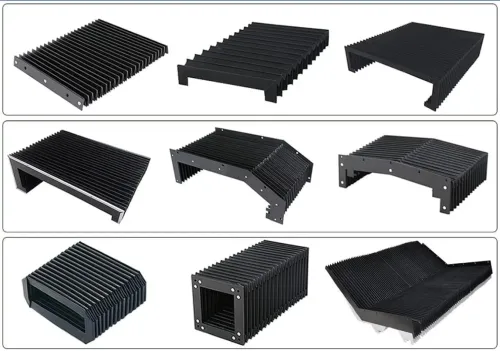
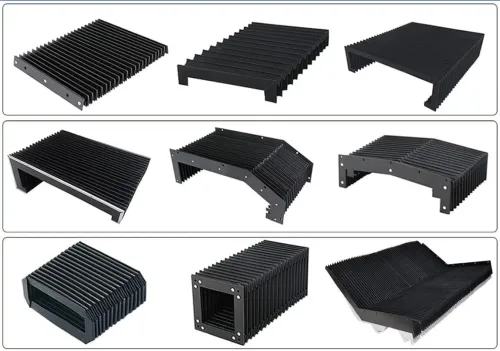
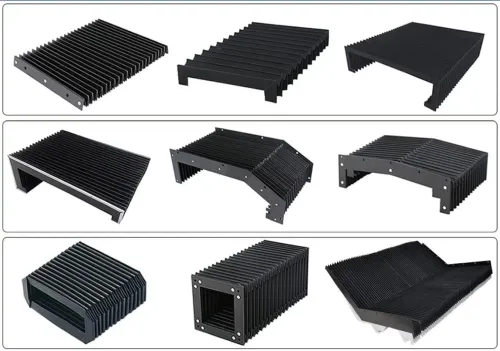
Match the cover type to the machine’s hazards and movement
Travel length and contamination load decide more than the cover’s name. Match the protection method to the machine’s motion, then check whether its stack fits the available envelope.
| Option | Best fit | Main limitation |
|---|---|---|
| Telescopic steel cover | Long linear travel, heavy chips, coolant, horizontal or vertical axes | Needs accurate guides, overlap and stack space |
| Bellows | Short or moderate travel, irregular shapes, fine dust and light coolant | Vulnerable to sharp swarf, hot chips and abrasion |
| Roll-up cover | Tight installation space and moderate contamination | Less suitable for heavy chips or high-pressure coolant |
| Apron cover | Long travel with substantial chip load | Requires room for retraction and careful slat guidance |
| Brush wipers | Light dust, exposed edges or supplementary wiping | Cannot replace a structural cover against swarf or coolant |
A horizontal axis needs chip evacuation and drainage; an inverted axis needs the same features plus protection against debris falling into the closed stack. A vertical cover can carry greater guide and slat loads, but poor acceleration data can cause binding or slat collision.
For a telescopic cover in Pune, give the supplier travel, closed and extended lengths, guideway geometry, mounting orientation, speed, acceleration, cycle frequency, chip type, coolant, temperature and cleaning method.
Fine abrasive dust and high-pressure coolant demand more than a claim that the cover is “sealed”; wipers wear, and their material, replacement interval and spare availability matter. Run a full-stroke test at production speed, then inspect for trapped chips, leakage, noise, binding and wiper lift.
Give the supplier the dimensions that determine whether it will fit
A cover can match the nominal travel and still bind because its closed length, mounting height or guideway alignment is wrong. Give the supplier a dimensioned machine drawing, not only the axis stroke, for an industrial telescopic cover in Pune.
- Axis travel, including the full usable stroke and any overtravel
- Closed length, extended length, section count, cover width and cover height
- The complete installation envelope, with clearance to the spindle, table, tooling, guards, fixtures and nearby machine structures
- Guideway geometry: rail spacing, guide height, rail width, exposed surfaces, end stops and the distance from the guideway to each mounting face
- Mounting-hole coordinates, thread sizes, datum references and the allowable parallelism, level and height tolerances
- Mounting orientation—horizontal, vertical, inclined or inverted—plus the direction of chip fall, coolant flow and drainage access
- Maximum traverse speed, acceleration, cycle frequency and any rapid reversals
- Chip form and size, such as long aluminium swarf, broken steel chips or abrasive cast-iron dust, along with coolant, oil and cleaning method
Mark collision zones and service-access limits on the drawing. Include the cover’s open and closed positions so section overlap, wiper contact and stack clearance can be checked at both extremes. A static fit does not prove safe movement.
Require a trial cycle through the complete stroke at operating speed and acceleration. Inspect for slat collision, noise, binding, wiper lift, leakage, trapped chips and mounting movement before approval.
Specify materials, motion limits and service requirements in writing
Put the survival requirements in the purchase specification, not in a verbal promise. A telescopic cover for industrial equipment manufacturers in Pune must be matched to chip shape, coolant chemistry, axis orientation, speed, acceleration and temperature; a dimensionally correct cover can still bind or leak during production.
| Item | Specify in writing | Failure if omitted |
|---|---|---|
| Steel | Grade, thickness, folded geometry and corrosion resistance; select coated carbon steel or stainless steel such as 304/316 for corrosive coolant | Slats dent, corrode or lose stiffness |
| Wiper | Polyurethane, nitrile or FKM compound; hardness, coolant compatibility, temperature rating and replaceable profile | Wipers swell, harden, lift or leave coolant behind |
| Guides | Rail or roller design, allowable side load, lubrication method and alignment tolerance | Repeated acceleration causes rattle, skewing and binding |
| Seals | Contact locations, drainage paths and leakage limit; state that fine dust and high-pressure coolant are not hermetically excluded | Trapped liquid carries abrasive debris into the stack |
| Motion | Full travel, closed and extended lengths, maximum speed, acceleration, cycle frequency, orientation and end clearances | Sections collide, overlap fails or the cover outruns its guides |
| Performance | Test speed, acceleration, chip type, coolant, temperature, cleaning method and acceptance criteria | A static inspection hides dynamic failure |
Also require these service terms:
- State the wiper inspection and replacement interval, spare-part identification and delivery time.
- Include access for cleaning, chip evacuation and coolant drainage in the quotation drawing.
- Require complete-stroke testing at production speed and acceleration, checking noise, binding, wiper lift, leakage, trapped chips and mounting movement.
- Record the allowable temperature range and cleaning chemicals; abrasive blasting or high-pressure washing can destroy wipers and seals.
Use local support and a witnessed test to make the decision
A local supplier earns your shortlist by reducing response time, not by location alone. Compare a telescopic cover manufacturer in Pune on site measurement, design documentation, replacement parts and repair access, then require the supplier to test the finished cover on your machine.
| Supplier evidence | What to compare | Reject when |
|---|---|---|
| Site support | Measurement at your machine and confirmation of travel, envelope, mounting and guide geometry | The quote relies only on your dimensional sketch |
| Design basis | Written speed and acceleration rating tied to slat mass, width, span, guides and synchronization | A headline speed is offered without your acceleration profile |
| Service plan | Wiper material, replacement interval, stocked slats and response time for repairs | Wipers are described as permanent seals |
| Test record | Test conditions showing stroke, speed, acceleration, chips, coolant and cleaning method | Results cover static dimensions only |
A company such as SCUTES INDIA PRIVATE LIMITED becomes easier to compare when it supplies these records rather than only a catalogue specification.
Put the cover through a witnessed acceptance test on the actual machine:
- Cycle the complete stroke at production speed and acceleration for the intended duty cycle.
- Check for slat collision, binding, abnormal noise, wiper lift and mounting movement.
- Apply the real coolant and representative chips, then inspect for trapped debris and leakage.
- Record closed length, extended length, clearances and any temperature rise after cycling.
Sign acceptance only after the supplier corrects failures and documents the final settings. A cover that fits while stationary can still damage its guides or wipers in motion.
Related product
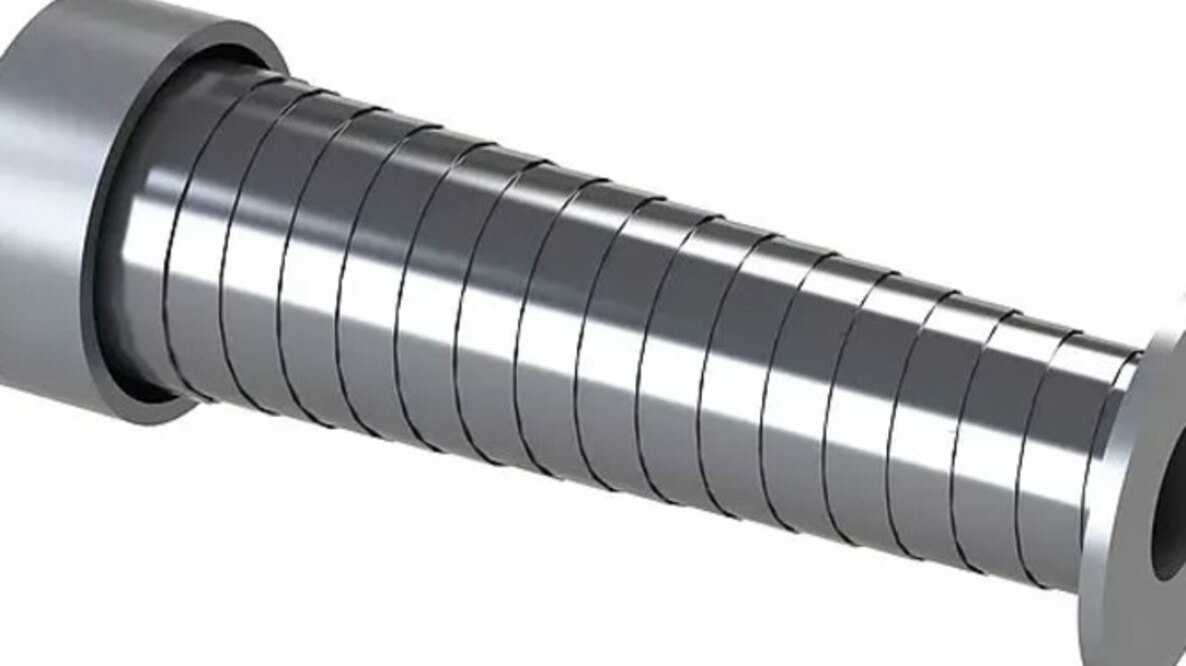
 | TELESCOPIC COVERS A telescopic cover protects guide-way surfaces and components of moving axis of machines. View product → |