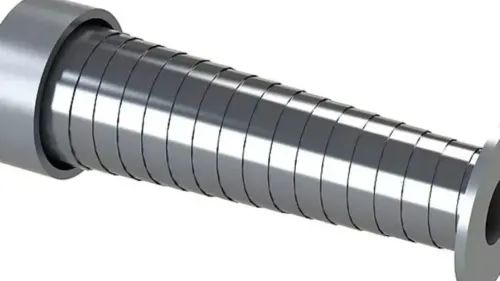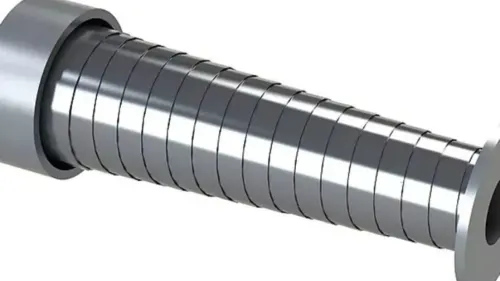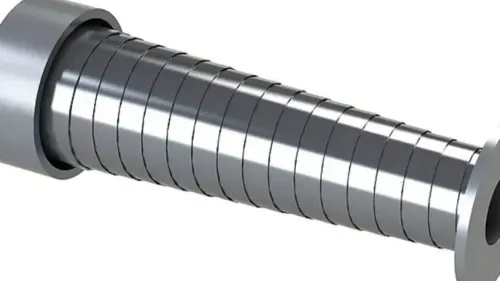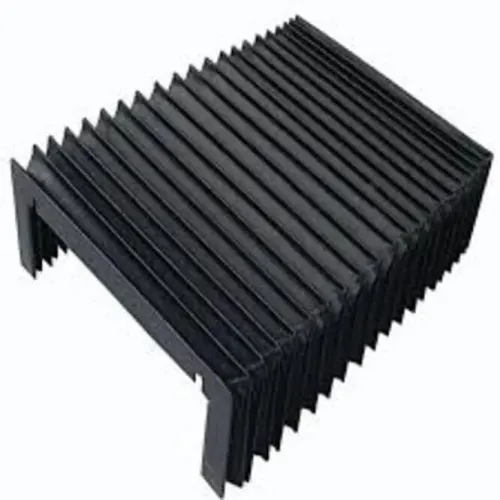

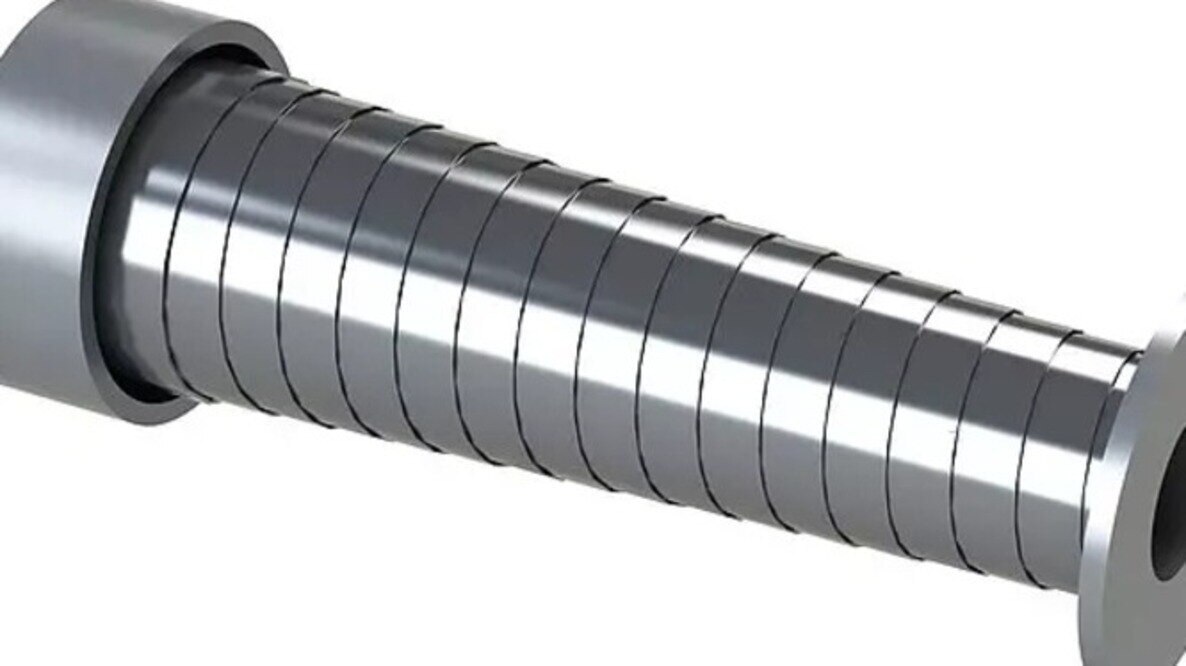
The right cover depends less on whether your machine is a mill or lathe than on the chips, coolant, motion and available space around the protected axis. By the end, you will be able to compare steel telescopic sections with flexible bellows, measure the installation correctly and prepare a supplier brief that avoids interference, leakage and premature failure.
Key takeaways
- Choose steel telescopic covers for hot, sharp, heavy or impact-prone chips.
- Choose bellows covers for dust, oil mist, splash and irregular low-mass protection.
- Measure travel, closed length, extension, width, height and mounting clearances.
- Specify coolant, chip type, temperature and movement cycles in your supplier brief.
Choose by exposure: chips, coolant, dust or heat
Choose an interlocking formed-steel telescopic cover for hot, heavy, sharp or impact-prone chips; choose a flexible bellows for fine chips, dust, oil mist, splash and irregular, low-mass protection. The CNC machine telescopic cover comparison should follow exposure, not whether the machine is a mill, lathe or machining centre.
| Option | Construction and best exposure | Main limitation |
|---|---|---|
| Formed-steel telescopic cover | Overlapping boxes with scrapers, wipers and drains; resists heat, impact and heavy chips | Adds moving mass, inertia and reversal loads; gaps and wipers still require drainage control |
| Bellows cover | Sewn, welded or bonded coated fabric, elastomer-coated textile, laminate or thermoplastic; suits dust, mist, splash and irregular spaces | Sharp chips puncture or abrade folds; repeated flexing can damage seams, welds or bonds |
| Either design | Protection depends on overlaps, seals, interfaces, drains and jet direction | Neither design is automatically coolant-tight |
Specify the exposure before requesting a design. Oil and coolant can attack coatings, seams or adhesives, while high-pressure wash-down can drive fluid through joints, folds or wipers even when the cover appears closed.
- Chip material: aluminium, steel, cast iron or abrasive composite
- Chip temperature and impact severity
- Coolant chemistry, concentration and temperature
- Jet direction, pressure and high-pressure wash-down practice
Match the cover to axis geometry and machine movement
Axis orientation changes the cover’s load case. Horizontal saddle movement lets chips settle on the cover and guideway, while vertical columns make gravity, drainage and cover weight more significant. Z-axis travel adds risks around spindle movement, tool-changer clearance and falling debris.
| Geometry | Main risk | Selection cue |
|---|---|---|
| Horizontal saddle | Chip accumulation, drainage and long exposed travel | Telescopic steel suits rigid deflection; bellows suit low-mass, irregular clearance |
| Vertical column | Gravity, coolant run-off and moving cover weight | Check drainage and acceleration before selecting steel sections |
| Z-axis travel | Frequent reversals, spindle-path interference and tool-changer access | Bellows fit compact spaces; steel suits impact where clearance permits |
Long travel and exposed guideways favour steel when hot or sharp chips demand rigid deflection, but its section mass increases inertia, guide loads and reversal impact. Frequent short strokes and high-speed reciprocation favour bellows, provided you verify minimum folded length, fold height, bend radius and allowable compression.
Tight folded dimensions or multi-axis spaces can rule out a telescopic cover even when its extended travel is adequate.
Before choosing a telescopic cover versus bellows cover, check:
- Work envelope, neighbouring components, cable carriers, hoses and lubrication lines
- Spindle and tool-changer paths, mounting faces and service access
- Open and closed positions, drainage direction and removal clearance
- Acceleration, reversal frequency and expected chip loading
A stated cover speed is incomplete without acceleration, reversal frequency and chip loading. Bellows reduce moving mass but folds need space to compress without buckling, abrasion or trapped coolant.
Measure the protected axis before requesting a quotation
1. Identify the exact way, rail, or guide surface requiring protection. Mark its usable width and the points where chips, coolant, or dust can enter.
2. Record maximum axis travel, then measure the machine in both open and closed positions. Mark the fixed end and moving end so the quotation cannot reverse the installation direction.
3. Measure every attachment face and bolt pattern, including hole centres, edge distances, and mounting height. Photographing a flange without these dimensions invites a wrong frame.
4. Measure the available folded-space envelope and extended-height envelope. For a bellows, record fold height and minimum folded length; for a telescopic cover, record the space available for stacked sections.
5. Locate cables, hoses, lubrication lines, neighbouring covers, tool changers, and access panels. Mark their movement and removal paths on a drawing.
Cover travel is not equal to axis stroke. Add section overlap, minimum box or fold length, mounting clearance, wiper compression, drainage space, cable and hose clearance, and the space needed to remove a section.
Ask for a dimensioned drawing with datums, centre-lines, and coordinate references, not photographs alone. For a CNC machine telescopic cover or bellows cover in Pune, require the supplier to return the proposed closed height, extended length, section or fold count, mounting orientation, and interference clearances for approval before fabrication.
Test the trade-offs under real coolant and chip conditions
Compare performance claims by reproducing the loads that will reach the cover, not by accepting a catalogue speed or “sealed” label.
| Design | What to examine | Failure to expose |
|---|---|---|
| Telescopic steel | Box overlap, guide geometry, scraper pressure, hardened wipers, end seals and drains under chip loading | Chips entering an overlap can jam sections; poor drainage sends coolant onto the guideway |
| Bellows | Fold abrasion, puncture resistance, seam or weld quality, delamination resistance and fatigue during repeated compression | Sharp chips can crack folds, puncture fabric or separate bonded layers |
| Hybrid | Steel protection in the impact zone and flexible, low-mass coverage elsewhere; inspect the joint | A snag, chip trap, leakage path or mismatched motion rate can defeat both sections |
Require application-specific confirmation or testing for speed, acceleration, short-stroke reciprocation and reversal impact. Equal linear-speed ratings do not prove equal performance when acceleration, guide friction, section mass and chip accumulation change.
Run drainage and leakage trials using the actual coolant concentration, temperature, pressure and jet direction. IEC 60529 IP ratings classify enclosure ingress protection; they do not prove that a moving cover survives machine-tool wash-down through changing gaps, seams and wipers.
Set inspection points for:
- Torn or hardened wipers, damaged scrapers and loose fasteners
- Distorted sections, blocked drains and trapped chips
- Cracked folds, abnormal force or noise during reversal
A cover that still moves can already be leaking coolant or chips.
Build a Pune supplier brief and acceptance checklist
Your RFQ must convert the machine geometry and operating exposure into drawings, dimensions and acceptance tests, not just a catalogue label.
1. Attach machine and axis drawings with datums, guideway or rail width, travel, orientation, fixed and moving ends, mounting points, bolt patterns, service access, cable carriers, hoses, lubrication lines and tool-changer envelope. Mark open and closed positions, available folded space, removal clearance, and required replacement or inspection intervals.
2. State maximum speed and acceleration, reversal frequency, chip material, size and temperature, coolant type, concentration, temperature and pressure, jet direction, high-pressure wash-down use, ambient temperature and cleaning method. Cover travel is not axis stroke: require the supplier to include overlap, minimum box or fold length, mounting clearance, wiper compression, drainage space and interference.
3. Require materials, section overlap or bellows construction, wiper and seal arrangement, drainage, allowable motion, folded length, mass, maintenance requirements and predicted section or fold count. Ask for proposed extended dimensions and clearances on the returned drawing.
A buyer seeking a cnc machine protection cover in pune can question SCUTES INDIA PRIVATE LIMITED against these criteria, then compare test evidence and replacement support.
4. After installation, check full-axis travel, tool-changer clearance, reversal behaviour, abnormal force or noise, drainage and representative chip and coolant exposure at the stated pressure.
5. Keep safeguarding decisions separate: document risk assessment under ISO 12100, guard design under ISO 14120 and safety distances under ISO 13857. A cover alone does not establish machine safety compliance.
Frequently asked questions
When should you choose a telescopic cover instead of a bellows cover?
Choose an interlocking formed-steel telescopic cover for hot, heavy, sharp or impact-prone chips. Choose a bellows cover for fine chips, dust, oil mist, splash and irregular low-mass protection.
How does axis geometry affect cover selection?
Match the cover to the axis travel, available mounting space, movement direction, folded or closed length, extension length and any clearance limits around the machine.
What measurements should you provide for a CNC cover quotation?
Provide the protected travel, closed length, extended length, cover width and height, mounting points, clearance envelope, guideway dimensions and machine movement details.
What should you test before accepting a CNC machine protection cover?
Test the cover under the actual coolant, chip shape, chip temperature, movement speed, cycle frequency and cleaning conditions expected on the machine.
What should a Pune supplier brief and acceptance checklist include?
Include exposure details, axis geometry, dimensions, materials, mounting requirements, movement cycles, inspection points, delivery documents and pass-fail conditions for the completed cover.