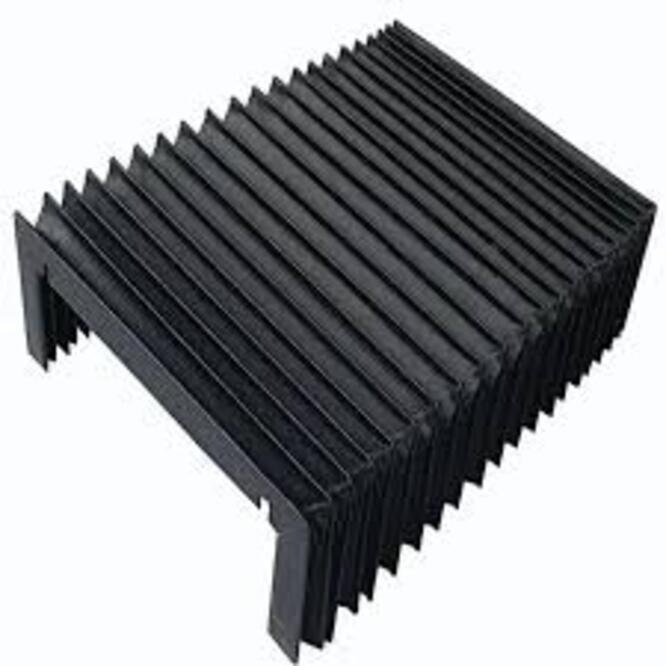
An open carrier is not always enough when chips, coolant, dust, oil or accidental snags reach a moving cable bundle. You will be able to compare enclosure types, decide whether your machine needs one, size the chain correctly and specify installation details that prevent early cable failure.
Key takeaways
- Choose an enclosed chain when chips, coolant or oil can reach the cable route.
- Size the chain from cable bend radius, bundle diameter and separation requirements.
- Calculate travel length from machine stroke, fixed end and chain sag allowance.
- Confirm load, speed, environment and replacement-part details before ordering.
What an enclosed chain adds beyond an open carrier
An enclosed cable drag chain for machines adds a physical barrier that an open carrier does not provide. Hinged covers or enclosed links keep chips, swarf, dust, coolant and oil away from cables as the route bends and travels, while reducing abrasion, cable slap and accidental snagging.
A tray protects a fixed run, not a moving one; conduit follows motion poorly; a loose hose bundle can rub, snag or separate.
| Option | Protection during motion | Main limitation |
|---|---|---|
| Open carrier | Holds and guides cables with direct exposure to debris and tools | Fast visual inspection and replacement |
| Cable tray | Supports a stationary or lightly moving route | No effective enclosure around a travelling bend |
| Conduit | Shields a continuous cable run | Stiff, difficult to route through repeated travel |
| Loose hose bundle | Simple and inexpensive to install | Cables can rub together, sag, snag or twist |
| Enclosed chain | Covers the moving route against chips, dust and snagging | More space, weight and access work |
That protection requires trade-offs: greater packed width, mass and bend radius can reduce the available travel envelope or payload. Hinged covers also increase inspection time and make cable replacement slower than opening an exposed carrier.
Do not assume enclosure creates a liquid-tight route or an IP rating. Assess the chain material, cover joints, end fittings and cable-entry points together; coolant can enter through an open joint or uncovered end. For sharp or hot swarf, check the material and temperature rating rather than assuming a polymer chain is suitable.
When a machine actually needs an enclosed chain
An enclosed chain is justified when moving cables face sharp chips, hot swarf, abrasive dust, product debris or snagging hazards; an open carrier is enough when the route is clean, enclosed, and free from falling material.
| Application | Exposure to assess | Practical choice |
|---|---|---|
| CNC and metalworking | Sharp chips, coolant, oil, tooling or workpieces near the travel path | Choose an enclosed chain when debris can land on, cut or catch the cables; use an open carrier in a clean guarded route |
| Transfer systems and gantries | Long exposed travel, falling parts or accidental contact | Choose enclosure where the moving path is accessible; use an open carrier inside a protected machine frame |
| Packaging lines | Powder, film scraps, granules or product dust reaching the cable route | Choose enclosure when debris accumulates on the route; use an open carrier where guarding keeps the path clean and dry |
Hot or abrasive swarf requires more than an enclosed label. Check the polymer’s continuous and peak temperature limits, cover construction, joint gaps, and resistance to abrasion; welding spatter or red-hot chips can damage a polymer chain that suits ordinary machining.
An enclosure does not make the route liquid-tight or grant an IP rating. Assess the chain, covers, end fittings and cable-entry points together, then install cables without twist, crossover or forced pre-bend.
A six-axis arm needs different guidance. An enclosed cable drag chain for robots must accommodate simultaneous bending and twisting at axis transitions, while robotic continuous-flex cables, torsion-rated routing, controlled dress packs or 3D energy chains and a defined service loop address that motion.
Use test data covering the actual torsion angle, cycle count, speed and acceleration; a linear chain’s bend-cycle rating is not enough.
How to size the chain around the real cable bundle
Size the chain from the real cable-and-hose bundle, not from nominal conductor size. Measure the outside diameter of every cable and hose, then choose internal width and height that leave clearance around the bundle without packing the carrier solid.
1. Record each line’s outside diameter, weight, stiffness, function and minimum dynamic bend radius. Set the chain’s minimum bend radius at or above the largest dynamic bend-radius requirement in the bundle. The chain’s outside dimensions do not determine this value.
2. Allow roughly 10% clearance around individual lines and use separators where different diameters, weights or functions could rub, cross or press together. A heavy hose can pinch a signal cable inside an otherwise correctly sized carrier.
3. Check the chain’s payload rating against the combined cable-and-hose weight. Confirm the unsupported length, travel distance, speed and acceleration; excessive unsupported length causes sag, rubbing or chain buckling. Add a guide trough or support rollers when the span requires them.
4. Confirm that every cable and hose is rated for continuous motion, the actual bend radius, cycle life, speed and acceleration. A non-flexing cable remains unsuitable for continuous travel regardless of chain size.
For robots, evaluate simultaneous bending, torsion and changing bend planes across each axis transition. A linear-machine chain and ordinary flexible cable can fail near the wrist even when the stated bend radius appears acceptable.
How to route, anchor and calculate the moving length
Install the chain around the machine’s actual motion, then anchor the bundle so the chain guides it without pulling the conductors. Calculate moving length as L = machine travel + two bend-radius portions created by the fixed-end position + the manufacturer’s specified reserve at both ends. Never order from travel alone.
1. Fix the chain brackets and cable clamps at the manufacturer’s stated positions. Use strain relief outside the chain so repeated motion does not reach conductors or connector contacts; terminating directly at the chain end creates a common failure point.
2. Lay every line into the chain without twist, forced pre-bend or crossover. Separate heavy hoses and power cables from signal cables, keep each line free to move, and prevent compression between adjacent lines or against the chain.
3. Match the installation to its orientation. Horizontal chains need support for long unsupported spans; excessive length causes sag, rubbing and buckling, so use a guide trough or support rollers. Vertical and suspended runs need restraint against falling and cable loading. Rotary layouts need controlled bend planes and torsion clearance.
4. Treat robot dress packs and three-dimensional chains as a separate application. Specify robotic-rated cables, torsion control, strain relief and a defined service loop, then demand test data for the actual axis combination: torsion angle, cycle count, speed and acceleration. A linear bend-cycle rating does not prove wrist-axis life.
What to check before choosing a supplier or specification
Before choosing a supplier or specification, compare the protection gained with the maintenance burden added by the enclosure. Evaluate manufacturers such as SCUTES INDIA PRIVATE LIMITED against the complete machine-protection assembly, not a catalogue chain treated as a universal fit.
Ask for:
- Cable and hose data sheets showing outside diameter, minimum dynamic bend radius, continuous-flex or robotic rating, cycle life, speed and acceleration limits.
- Chain material, cover design and operating temperature range matched to chips, swarf, coolant, oil, dust and abrasive debris.
- Ingress details for covers, joints and cable entries; an enclosed chain is not automatically liquid-tight or IP-rated.
- Internal separators that prevent cable rubbing, plus mounting brackets and strain relief at both ends.
- Unsupported-span, travel and speed ratings for your installed payload, not an empty-chain test.
- Inspection access, cleaning method and replacement time. Ask whether contamination can be removed from inside rather than trapped against the cables.
Compare the options against these dimensions:
| Protected travel envelope | Added width and mass | Check whether guarding the route reduces machine clearance or overloads the axis |
|---|---|---|
| Chain bend radius | Cable’s minimum dynamic radius | Reject any radius smaller than the most demanding cable or hose requirement |
| Payload and unsupported span | Travel and speed rating | Confirm the loaded chain will not sag, strike the machine or shorten service life |
| Access and ingress control | Cleaning and replacement effort | Prefer covers and entries that can be opened without dismantling the route |
Related product
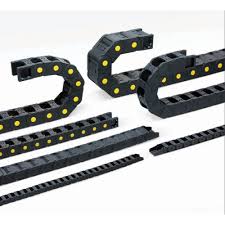 | Cable Drag Chain Cable drag chains are a vital component in modern industrial equipment and automation systems. View product → |
Frequently asked questions
What does an enclosed cable drag chain add beyond an open carrier?
Hinged covers or enclosed links create a barrier against chips, swarf, dust, coolant and oil while reducing cable abrasion, slap and snagging.
When does a machine need an enclosed cable drag chain?
Use one when machining debris, cutting fluid, oil, dust or accidental contact can reach cables as the route bends and travels.
How do you size an enclosed cable drag chain around the cable bundle?
Measure every cable and hose, allow the manufacturer’s minimum bend radius, and add internal width and height for separation and free movement.
What should you check before choosing an enclosed cable drag chain supplier?
Check the chain’s internal dimensions, bend radius, travel, speed, load, cover design, mounting system, environmental suitability and replacement-part availability.