Distributors must balance compact inventory, accurate quotations and dependable application fit when industrial buyers need protection for a moving machine axis. By the end, you will know when a telescopic spiral spring cover is commercially sensible, which dimensions and operating conditions to collect, and how to compare standard stock with an engineered assembly.
Key takeaways
- Collect travel, retracted length, diameter, speed, environment, and mounting details before requesting prices.
- Choose standard stock for repeatable dimensions and engineered assemblies for unusual travel or exposure.
- Screen chips, coolant, heat, speed, stroke, and mounting space before promising protection.
- Check material traceability, dimensional inspection, lead times, and after-sales support before appointing a supplier.
Why the compact spiral format earns a place in a distributor’s range
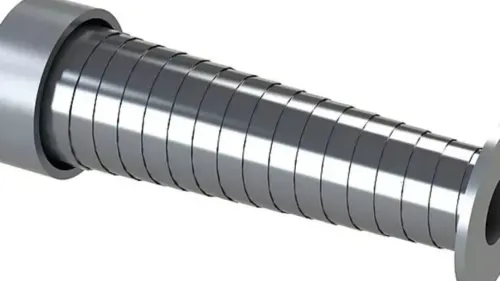
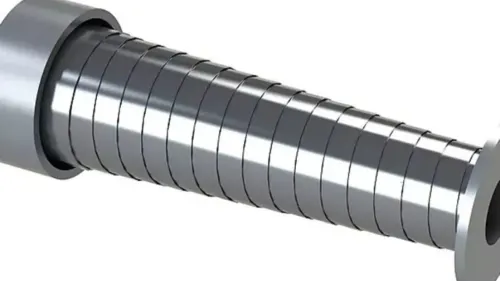
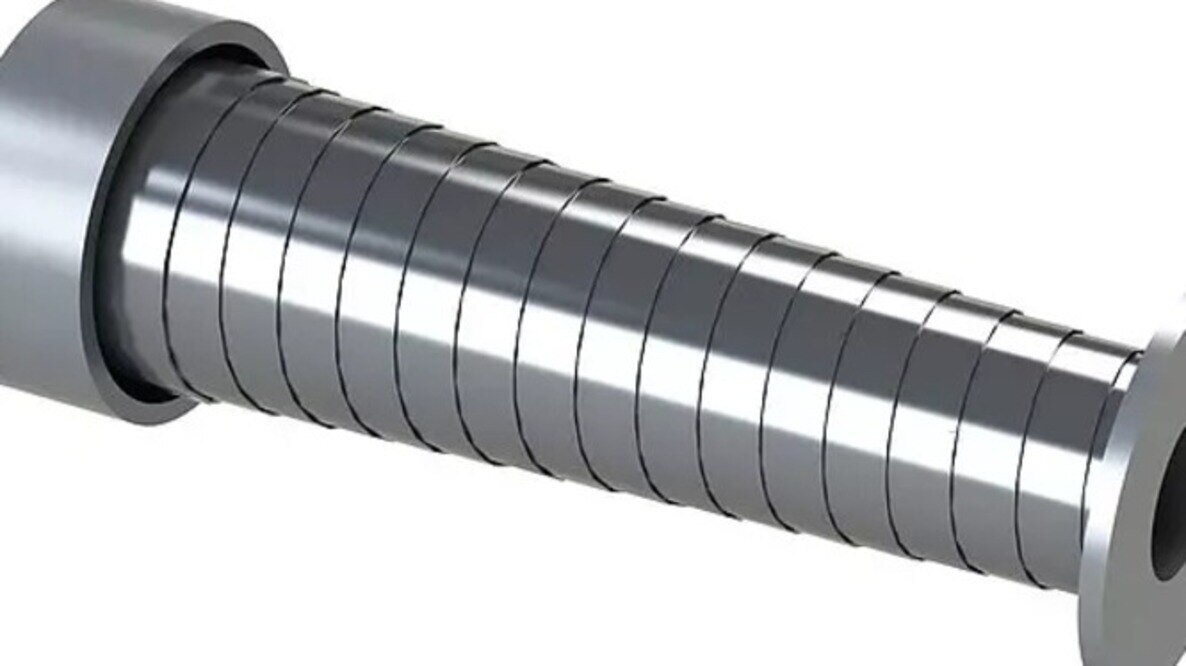
Distributors choose a wound spring-steel cover when installation space and repeatability matter more than maximum shielding. Unlike a box-style telescopic way cover, this assembly expands along the protected axis and winds into a compact spiral when retracted.
That reduces storage volume, transport size and quotation complexity for standard dimensions, while creating repeat-order potential for machines using the same cover.
| Option | Why a distributor may stock it | Important limitation |
|---|---|---|
| Spiral spring cover | Compact package, quick dimensional comparison and efficient freight | Narrow strip width or poor overlap can admit large chips and coolant |
| Bellows | Broad coverage and good separation from dust, coolant and chips | Larger folded volume; replacement sizing and mounting are less interchangeable |
| Apron cover | Tough protection against heavy chips and impact | Needs more space and precise guide arrangements |
| Roll-up cover | Useful where a flexible curtain must retract | Roller, tension and mounting faults complicate service |
| Fixed guard | Low moving-part count and strong physical separation | Cannot protect a moving axis without restricting access or travel |
The telescopic spiral spring cover benefits for distributors in Kolkata include compact local stock for standard replacement dimensions, simpler packing and quicker dispatch. Yet spiral spring cover distributor benefits disappear when covers are held by appearance alone: verify compressed length, extended length, flange geometry, strip thickness and scraper arrangement before stocking.
Custom CNC-axis applications still need drawings and engineering confirmation, because a speed rating from one diameter cannot be transferred to another. Choose a bellows, apron or fixed guard when chip load, coolant sealing or impact resistance exceeds the spiral format’s design capacity.
What a distributor must collect before requesting a quotation
A quotation based on outside diameter and overall length alone is a trap. A nominally similar cover can fail because its spring-strip thickness, winding direction, compressed length, scraper profile, flange, or mounting-hole pattern does not match the machine.
Collect these items before asking for a price:
- A dimensioned machine drawing showing the protected guideway, ball screw, or linear rail
- Axis travel, cover extension and compressed length, available axial space, and clearance to adjacent parts
- Mounting-face dimensions, flange arrangement, hole pattern, fastener size, and required winding direction
- Operating speed, acceleration, cycle frequency, and motion orientation, including horizontal, vertical, or inverted installation
- Coolant type, expected temperature, chip size and shape, abrasive dust, chip nests, and any coolant pooling
- Photographs of the existing cover, damaged areas, mounting points, and surrounding machine envelope
- The required protection target: chips, grinding dust, cutting fluid, heat, or a combination
- Any acceptance checks for smooth motion, interference, sealing behaviour, temperature, and scraper contact
| Detail | Why it determines the proposal | What goes wrong if missing |
|---|---|---|
| Machine drawing and travel | Sets geometry and stroke | Binding, excess extension, or uncovered travel |
| Mounting and axial space | Determines flange and compressed-length fit | The cover cannot be installed or fully retract |
| Speed, acceleration, orientation | Defines spring and guidance demands | Shock loading, sag, or premature wear |
| Coolant, chips, and temperature | Selects scraper and material arrangement | Leakage, abrasion, or chip-driven damage |
Use ISO 230-3 to discuss machine thermal effects, not as a performance rating for the cover. In industrial cover distribution, request the drawing and inspection record before treating a replacement as interchangeable.
Standard stock or an engineered-to-order assembly?
Stock standard covers when replacement demand repeats around known dimensions, the machine population is local, and you can verify compressed length, outer diameter, strip thickness and flange geometry before dispatch. Compact storage and transport are among the telescopic spiral spring cover benefits for distributors in Kolkata.
| Option | Commercial case | Main control |
|---|---|---|
| Standard stock | Repeat replacements with verified dimensions and predictable lead-time demand | Stock only documented sizes; visually similar parts can become dead stock or cause incorrect dispatch |
| Configured assembly | Custom CNC-axis covers, unusual travel, mounting, orientation, coolant or chip conditions | Obtain engineering confirmation and a drawing before quoting |
A configured assembly is the safer commercial choice when the existing cover’s dimensions do not match a catalogue size. Its price includes fit confirmation, mounting details and operating limits; that work prevents a low-value sale from becoming a costly return or installation dispute.
- Classify the request as standard or configured using the machine drawing and existing-cover photographs.
- Confirm travel, retracted length, flange geometry, axis speed, acceleration and orientation.
- Check strip thickness, scraper arrangement, coolant, chip form and temperature against the proposed design.
- Record the approved drawing and replacement-part source with the quotation.
- Do not copy a speed rating from another diameter or strip design; spring dynamics, guide friction and centrifugal effects change with the assembly.
Stock depth should follow verified repeat demand, not the number of similar-looking covers in a catalogue.
How to screen the application before promising performance
A cover that clears the machine at both end positions can still collide during travel. Screen the complete motion before promising performance.
1. Confirm that the machine needs protection along one axis and has limited installation space. The spiral assembly suits applications where it can expand over the exposed guideway and retract into a compact diameter without obstructing nearby components.
2. Map the full travel envelope, including retracted diameter, intermediate positions, lateral deflection and acceleration. Check for collisions while chips accumulate between turns; a static check at the two end positions is not enough.
3. Match the operating conditions to the proposed design. Record travel speed, acceleration, cycle frequency, temperature, coolant type, chip size and mounting orientation. Never transfer a speed rating from another diameter, strip thickness, scraper arrangement or number of turns.
4. Recommend a design review when the cover faces high acceleration, frequent reversing, heavy or tangled chips, unusual heat, long travel, guide friction or uncertain flange geometry. Request a drawing with compressed length, maximum diameter, mounting details and operating limits before quoting performance.
5. Recommend bellows or an apron cover when continuous sealing against fine dust, coolant mist or large chip loads matters more than the compact retracted size. Use a fixed guard when the area does not move, and use another engineered solution when the spring cover cannot maintain clearance through the cycle.
6. Treat ISO 230-3 as a reference for machine-tool thermal effects, not as a spring-cover rating. Acceptance checks still need defined limits for motion, temperature, interference and sealing behavior.
What separates a dependable Kolkata supply partner from a trader
A Kolkata address does not prove manufacturing capability. Ask whether you are dealing with a manufacturer, an authorised distributor, or a trader, then make the seller name the party responsible for dimensional errors, replacement parts and warranty claims.
Request these documents before approving the order:
- Design drawing showing extended and compressed lengths, flange geometry, retracted diameter and mounting details
- Material specification for the spring-steel strip, scraper and fasteners
- Dimensional inspection record against the approved drawing
- Written lead time for standard and nonstandard sizes
- Replacement-part source, especially scraper availability
Treat ISO 230-3 as a reference for thermal effects in machine tools, not as a performance rating for the cover. The quotation still needs operating limits and acceptance checks for motion, temperature, sealing behaviour and interference.
Compare delivered cost, not unit price. Check export-worthy or transit-rated packaging, freight responsibility, damage-report deadlines and whether the supplier supports installation. A static check at the two end positions is insufficient; confirm clearance through full travel, including intermediate extension, acceleration, retracted diameter and chip build-up. Put coolant and chip-related warranty exclusions in writing.
For telescopic spring cover suppliers in Kolkata and telescopic spring cover distributors in Kolkata, SCUTES INDIA PRIVATE LIMITED is worth evaluating against these same records rather than accepting a catalogue claim.
A dependable partner approves the drawing before dispatch, identifies incorrect fit as a shared technical issue, and provides a defined replacement route instead of redirecting every complaint to the machine builder.
Related products
 | TELESCOPIC SPRING COVER Telescopic Spring Covers provide protection under extreme conditions. View product → |
 | TELESCOPIC COVERS A telescopic cover protects guide-way surfaces and components of moving axis of machines. View product → |
Frequently asked questions
Why do distributors stock telescopic spiral spring covers?
Their compact spiral format suits applications with limited installation space and repeated extension along one protected axis. They offer a focused alternative to box-style telescopic way covers when maximum shielding is not the priority.
What information must a distributor provide for a quotation?
Provide protected travel, extended and retracted lengths, cover diameter, mounting arrangement, operating speed, cycle frequency, and exposure to chips, coolant, dust, heat, or moisture.
When should a buyer choose engineered-to-order instead of standard stock?
Choose standard stock when dimensions, travel, mounting, and operating conditions match a repeatable catalogue configuration. Request an engineered assembly for unusual travel, restricted space, nonstandard mounting, high cycle duty, or demanding contamination and temperature conditions.
How can distributors evaluate a Kolkata supply partner?
Ask for dimensional drawings, material details, inspection records, packaging standards, lead-time commitments, and clear warranty or replacement terms. A dependable partner also screens the application before confirming performance and supports repeat orders.