A damaged CNC cover does not automatically require a complete replacement, and a spiral spring is not a universal substitute for a telescopic steel cover. You will be able to identify the failure, separate repairable wear from lost geometry, collect the dimensions suppliers need, and choose the correct protection system.
Key takeaways
- Repair the cover when damage is local; replace it when stages, seals, or geometry are compromised.
- Confirm whether the fault is cover damage or spring force loss before measuring.
- Measure the installed cover, stage clearances, stroke, and mounting points—not only the machine model.
- Require spring force, geometry, attachment details, installation scope, and an acceptance test in every quote.
Start with the failure: cover repair, full replacement, or spiral spring
Lifted or buckled boxes, excessive gaps between stages, scraping, trapped chips, broken welds, coolant leakage, exposed guideways, and abnormal axis noise point first to a telescopic-cover fault. Loss of retraction or spring deformation points to a separate spring assembly.
Choose a CNC machine telescopic cover or spiral spring replacement by construction and movement, not by appearance.
| Option | Construction and duty | Choose it when |
|---|---|---|
| Repair or replace a worn part | Retains overlapping rigid boxes protecting linear guideways and broad flat areas | Sections remain straight and tracks, brackets, and mounting faces are sound; replace wipers, seals, fasteners, or a worn guide part |
| Replace the complete telescopic cover | New rigid, overlapping steel-box assembly | Boxes are buckled, welds are cracked, tracks are distorted, guideways are exposed, or collision damage has altered the geometry |
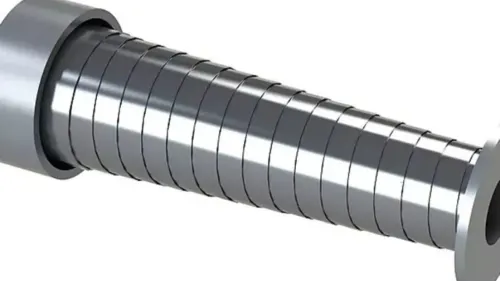
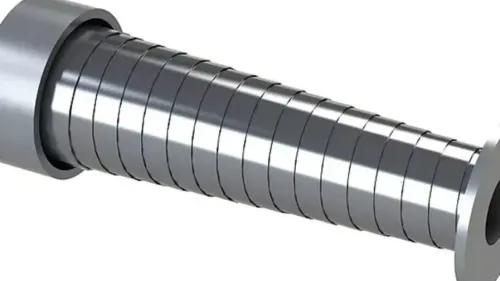
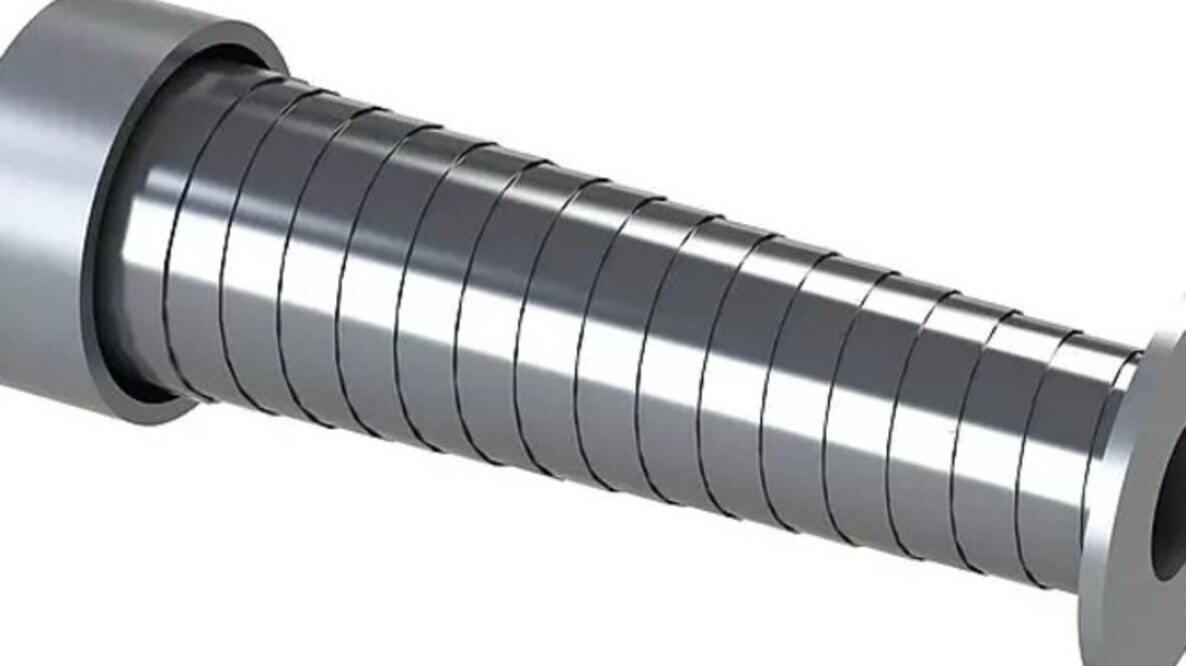
| Replace the conical spiral spring assembly | Wound strip protecting shafts, ballscrews, rods, and other cylindrical components | Retraction is lost or the spring is permanently deformed; specify force and attachment, not length alone |
A spiral spring replacement cover is not a direct substitute for a way cover. Reject it for heavy chips, broad horizontal ways, large coolant volumes, collision exposure, or any rigid flat-surface requirement.
Reject a telescopic cover where radial space is restricted, the application is concentric around a shaft, or motion requires flexible bellows or a roll-up cover.
- Treat coolant leakage as a clue, not proof: inspect wipers, drains, overlap, end seals, and alignment.
- Do not force a scraping cover; an axis collision, blocked wiper, or failed bracket may be the real fault.
Isolate the fault before you measure or order
A tight or leaking cover does not prove that its steel sections have failed. Use these telescopic cover repair options before approving a cnc machine telescopic cover replacement.
1. Stop the CNC machine, isolate electrical and stored mechanical energy, and prevent axis movement. Record the axis position, alarm code, and any recent collision or overtravel event.
2. Do not force a tight cover by hand. Remove packed chips with a vacuum or soft brush, working away from the guideway; do not push debris into the guideway, wipers, or drain openings.
3. Inspect the guideway, wipers, scrapers, rollers, guide shoes, mounting brackets, drainage paths, and fasteners. Look for a misaligned guideway, obstructed wiper, failed bracket, incorrect travel limit, or collision damage before blaming the cover.
4. Trace coolant leakage to its source. A torn or hardened wiper, blocked drain, damaged end seal, poor stage overlap, or mounting misalignment can leak while the steel sections remain usable.
5. Repair the cover when sections are straight, tracks remain serviceable, and the damage is limited to a replaceable wiper, loose fastener, minor bracket fault, accessible seal, roller, scraper, or guide shoe. A new wiper will fail quickly against a bent carrier, burred mating edge, or misaligned section.
6. Specify replacement for buckled sections, torn telescoping geometry, cracked welds, distorted tracks, moved mounting faces, or a spiral spring that no longer retracts concentrically. These faults indicate lost geometry, not routine wear.
Measure the installed cover instead of ordering by machine model
A quotation for a cnc machine telescopic cover replacement must describe the installed assembly, not just the machine model. Record these dimensions and operating conditions:
- Closed length, maximum extension, maximum stroke, number of sections, each box section’s length and cross-section, stage overlap, cover width and height, guideway envelope, and retracted package length.
- Mounting height and position, mounting-hole pattern, travel direction, axis speed and acceleration, and space available for removal.
Photograph the cover fully closed and fully extended, plus damaged corners, mounting faces, wipers, guideway, chip accumulation, coolant direction, and the machine nameplate. Include adjacent guarding, access constraints, lifting support, and whether tooling or way components must be removed.
| Reference | What it tells you | What it cannot prove |
|---|---|---|
| CNC model and axis drawing | Nominal machine and travel information | Actual cover fit, overlap, clearance, or mounting alignment |
| Measured installed cover | Required geometry and installation envelope | Whether hidden guideway damage caused the failure |
| Photographs | Damage, contamination, coolant path, and access conditions | Exact dimensions without scale or measurement |
Compare the drawing and photographs with measured dimensions. Ordering by appearance or nominal axis travel alone can cause interference, insufficient overlap, excessive retracted length, uneven loading, poor chip evacuation, or a mounting mismatch. These details let a supplier assess installation effort without inventing a downtime estimate.
Specify a spiral spring by force, geometry, and attachment
A separate spiral spring assembly must be specified by force, geometry, and attachment, not by appearance. Record:
- Spring outside diameter and inside diameter
- Strip width and strip thickness
- Number of turns
- Extended length and closed length, or free coil diameter
- Shaft or mandrel size
- Winding direction
- End-hook or anchor geometry
- End attachment
- Required spring travel
- Retraction force or torque at relevant positions
Force changes as the strip winds and unwinds. Selecting by outside diameter or nominal length alone can overload the axis, fail to retract, unwind from its anchor, or create uneven movement.
A broken or permanently deformed spring normally requires replacement, not field rewinding: stored elastic energy makes disassembly hazardous, and rewinding can alter fatigue life and force characteristics.
Inspect the spring path before ordering. Metal chips packed between turns can score the strip, prevent closure, and increase drag; check the end seals and mounting alignment as well. Do not approve a CNC machine telescopic cover or spiral spring replacement until the available envelope matches the duty.
| Option | Envelope | Suitable application |
|---|---|---|
| Spiral spring replacement cover | Compact, concentric, cylindrical | Shafts, rods, or ballscrews with restricted radial space |
| Telescopic cover | Rigid, overlapping sections | Broad flat guideways needing chip and coolant protection |
Compare quotations, installation scope, and the acceptance test
Choose the quotation that documents fit and service scope, not the lowest price. For a cnc machine telescopic cover replacement, require a dimensional drawing showing closed length, maximum extension, section count, overlap, mounting height, hole pattern, and clearance envelope.
| Option | Quotation and installation details |
|---|---|
| Repair | Section construction, material and finish, strip thickness, wiper or seal specification, alignment, cleaning, every-section inspection, warranty, delivery, and support |
| Complete telescopic cover | Full drawing, mounting details, guarding removal, lifting support, guideway cleaning, alignment, test cycles, warranty, delivery, and installation support |
| Spiral spring | Strip width and thickness, force or torque, winding direction, anchor geometry, material, finish, mounting, retraction test, warranty, and delivery |
Select stainless steel or coated carbon steel, the wiper elastomer, and corrosion protection against the actual coolant chemistry, abrasive chip type, humidity, and operating temperature. Coolant leakage alone does not prove that the sections need replacement; hardened wipers, blocked drains, damaged end seals, poor overlap, or misalignment may be the cause.
Use this installation sequence:
- Document damage and axis position; clean chips without pushing debris into the guideway.
- Measure, obtain the drawing, confirm material and finish, then install and align.
- For repair, replace seals or wipers and inspect every section. For complete replacement, provide bolt access, guarding removal, and lifting equipment.
- Run low-speed cycles, then the full stroke at intended speed. Check equal stage movement, overlap, end positions, smooth retraction, fasteners, wipers, rubbing, noise, coolant entry, and tooling or guarding interference.
SCUTES INDIA PRIVATE LIMITED is one supplier to discuss machine-specific dimensions and repair scope. Maintain the cover by removing packed chips, inspecting wipers and fasteners, never standing on or pushing it, investigating collisions immediately, and recording the axis position when damage occurs.
Related products
 | TELESCOPIC SPRING COVER Telescopic Spring Covers provide protection under extreme conditions. View product → |
 | TELESCOPIC COVERS A telescopic cover protects guide-way surfaces and components of moving axis of machines. View product → |
Frequently asked questions
Should you repair or replace a CNC machine telescopic cover?
Repair local damage such as a broken weld when the stages, seals, geometry, and mounting remain sound. Choose full replacement when stages are buckled, clearances are excessive, guideways remain exposed, or damage affects several sections.
How do you isolate a telescopic-cover fault from a spiral-spring fault?
Inspect the cover for buckled boxes, scraping, trapped chips, broken welds, excessive gaps, and coolant leakage. Loss of retraction or visible spring deformation indicates a separate spring assembly fault.
What should you measure before ordering a CNC telescopic cover?
Measure the installed cover, including closed and extended lengths, stage widths and heights, stroke, guideway clearances, mounting points, travel direction, and available space around the cover.
What information does a spiral spring replacement require?
Specify the spring force or torque requirement, strip width and thickness, coil and arbor geometry, winding direction, travel, preload, end attachment, mounting orientation, and operating environment.
How should you compare telescopic-cover replacement quotations?
Compare material and seal details, drawings, dimensions, lead time, installation scope, chip and coolant protection, removal of the old cover, alignment, and the documented acceptance test.