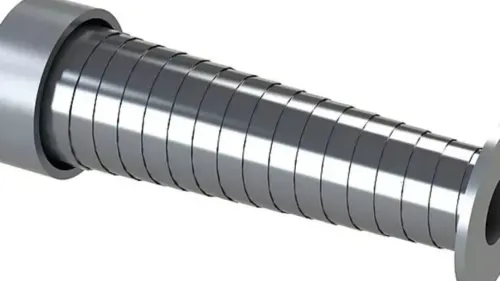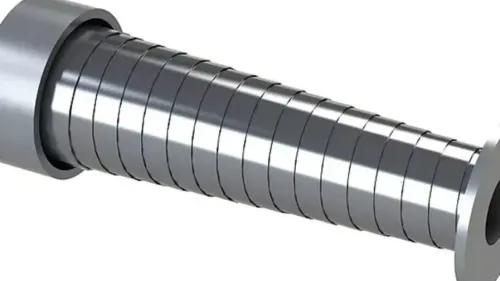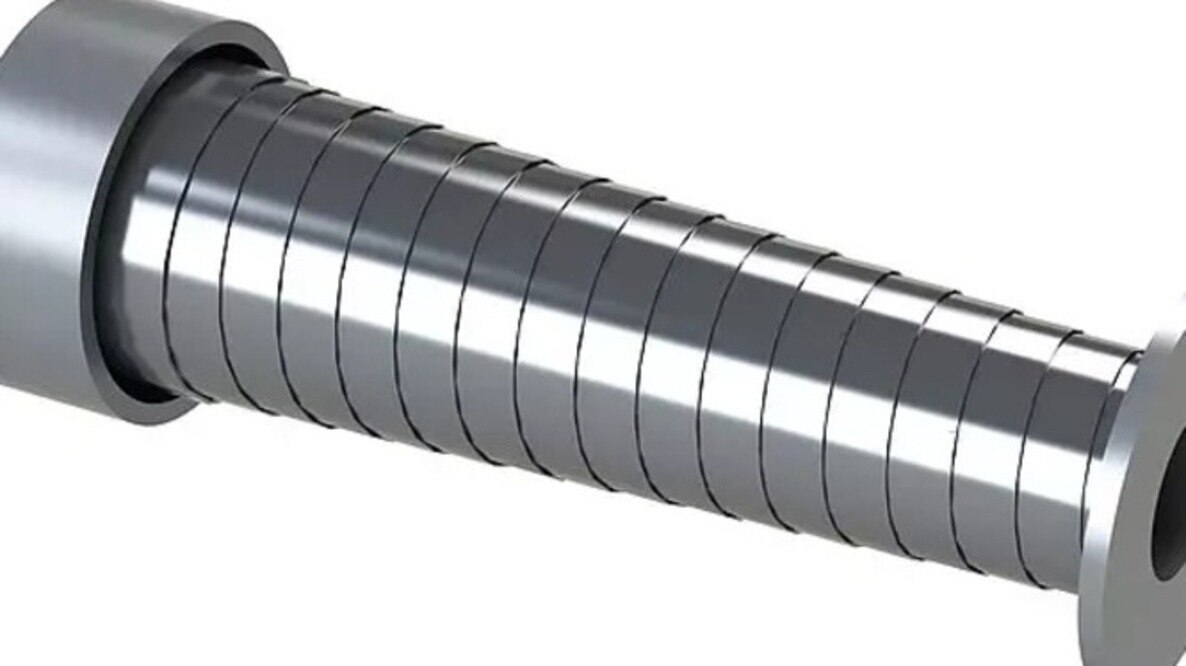
A spiral spring must balance the cover’s moving mass, orientation, friction, acceleration, and travel without forcing the mechanism into a hard stop or masking binding. By the end, you will know what to measure, which cover construction fits the machine, what spring data to request, and how to verify the assembly before approving it.
Key takeaways
- Calculate gravity, acceleration, friction, and cover mass before choosing spring force.
- Measure stroke, closed height, section lengths, clearance, and mounting points on the machine.
- Match cover construction to orientation, chips, coolant, speed, and available installation space.
- Require spring force data, cycle testing, and acceptance criteria in the quotation.
Start with the force balance, not the cover width
A light horizontal telescopic cover may move without spring assistance. A heavy, vertical, inclined, fast-moving, or frequently cycled cover needs balancing when gravity, acceleration, or friction overwhelms the drive.
Decide which telescopic cover uses the right spiral spring in this order:
1. Determine the moving mass and usable stroke, then calculate the gravity component created by the cover’s orientation. A vertical cover carries nearly its full weight; an inclined cover carries only the component acting along its travel.
2. Add friction from guides and wipers, plus the force needed for acceleration. Include the effective drum radius and the spring’s working range, not just the cover width.
3. Convert spring torque into linear assistance: approximately, force equals torque divided by drum radius. A larger radius gives less force from the same torque, while a changing drum or coil-pack radius changes force across the stroke.
4. Choose a conventional changing-torque spiral or torsion spring when the mechanism accommodates varying assistance. Choose a constant-force spiral spring when the cover needs nearly uniform pull throughout its travel.
5. Set controlled residual force, not zero force at every position. An undersized spring causes sagging, slow return, and incomplete closure; an oversized spring causes bounce, slat separation, guide loading, end-of-stroke impact, and unstable seating.
A vertical cover also needs anti-drop protection if preload is lost or the spring breaks. The spiral spring for telescopic cover must support motion without allowing the cover to fall, bind, or strike its stops.
Measure the machine before specifying the cover
For telescopic cover selection, collect the machine’s complete envelope and motion profile before anyone sizes a spiral spring. A compact closed length is not free: tightly packed segments can reduce maintenance access, overlap, drainage space, spring-housing room, or clearance from the moving axis.
Provide a machine drawing or scaled photographs with a ruler, not only nominal axis dimensions.
- Record closed length, open or extended length, usable stroke, cover width and height, slat or segment dimensions, guideway profile, mounting faces, mounting-hole locations, and clearance above, below, and beside the axis.
- Record maximum travel speed, acceleration, cycle frequency, travel direction, moving mass, and every stop or reversal shock.
The supplier drawing must make the fit visible before manufacture.
| Check | Require | Why it matters |
|---|---|---|
| Cover geometry | Cover-box geometry, segment overlap, wiper position, guide shoes, spring housing, anchor points, travel direction, and the spring’s drum dimensions | These details determine packing, friction, retention, and available spring travel. |
| Spring sizing | Starting force based on overlap, guide clearance, wiper drag, and box geometry—not width alone | The same-width cover can require a different spring torque. |
| Full-stroke fitment | A movement check from fully closed to fully extended | Confirm clearance from the spindle, column, cable carrier, tooling, and adjacent guards; otherwise binding or impact can damage the cover. |
Match the construction to orientation, contamination, and available space
Rigid overlapping steel segments suit hot chips, heavy abrasive swarf, and exposed guideways when the machine has room for a cover box. They provide the strongest rigidity and sealing, but need overlap, drainage, and spring balancing matched to the travel.
| Option | Rigidity and packing | Flexibility, sealing, and debris handling |
|---|---|---|
| Spring-assisted telescopic steel | High rigidity; needs box space; spring-dependent | Tight overlaps, strong chip shedding, good sealing; drainage must be designed |
| Conventional telescopic steel | High rigidity; similar packing length | No spiral-spring dependence, but manual or separate counterbalance force may limit travel |
| Bellows | Low rigidity; compact and flexible | Handles irregular movement and seals well; sharp chips and hot swarf can cut the fabric |
| Apron cover | Moderate rigidity; broad, low-profile coverage | Suits wide sliding surfaces; chip sealing and travel depend on apron construction |
| Roll-up cover | Smallest retracted space | Works where debris suits the fabric or coated material; limited resistance to sharp chips and heat |
Use bellows when flexibility and irregular movement matter more than sharp-chip resistance. Choose a roll-up cover where space is severely limited and the debris load matches its material; use an apron design for broad sliding surfaces where its construction fits the travel.
Horizontal covers need chip evacuation and drainage. Vertical covers need gravity balancing and anti-drop retention; inverted covers need underside protection against packed chips, while inclined covers require a calculated gravity component rather than a horizontal assumption.
For telescopic cover selection, compare spring-steel thickness or grade, surface treatment, stainless or coated spring parts, scraper and wiper arrangement, overlap, weld quality, drainage paths, and protected spring cartridges. Match them to coolant concentration, washdown, corrosion, heat, abrasive chips, and service access.
Ask a supplier for an engineered quotation and acceptance test
Send the supplier a complete duty sheet before comparing telescopic cover options in Kolkata. Include orientation, closed and extended lengths, usable stroke, moving mass, speed, acceleration, cycle frequency, guide arrangement, mounting details, ambient temperature, coolant and chip conditions, installation envelope, and required service life.
1. Require the quotation to state spring preload, working torque or force range, drum geometry, spring dimensions, anchor details, safety retention, replacement procedure, cover material and slat thickness, wipers, guide shoes, spring housing, and mounting interfaces. A spring part number alone cannot prove compatibility.
2. Ask for site measurement, machine access, fabrication or replacement lead time, spare-spring availability, commissioning support, and a drawing for approval before manufacture. SCUTES INDIA PRIVATE LIMITED can be evaluated on these deliverables, not on the lowest spring price or stock availability.
3. Put operating limits in writing: maximum travel speed, acceleration, cycle rate, temperature, chip load, coolant exposure, and tested service life or cycle count. Require an installed test that measures opening and closing force at several stroke positions, checks creep or falling when stopped, records end-of-stroke impact, and runs representative dry-chip and coolant cycles.
A bench test of an unloaded spring is not enough; it ignores guide friction, wipers, drum geometry, mounting alignment, and cover mass. Approve the assembly only after the installed cover completes those tests without unstable movement or damaging impact.
Related product
 | TELESCOPIC SPRING COVER Telescopic Spring Covers provide protection under extreme conditions. View product → |
Use symptoms and maintenance checks to confirm the spring is right
Slow return does not prove that the spiral spring is undersized. It may indicate packed chips, a crushed wiper, guide binding, or a damaged segment. Use these checks to decide which telescopic cover uses the right spiral spring:
1. Inspect spring preload and return through the full stroke. Slow return or a cover that falls when stopped points to lost spring force; uneven extension, rubbing, or excessive noise points to binding or misalignment.
2. Remove packed chips, then inspect wipers, segment overlaps, guide shoes, and the entire guide path. Visible gaps, rattling, and movement that fails to match axis travel often result from obstructed guides, worn overlaps, or damaged shoes.
3. Check dents, cracked welds, distorted mounts, and inadequate clearance beside adjacent machine parts. Trace coolant leakage paths; trapped coolant can corrode the spring housing and contaminate guides.
4. Do not fit a stronger spring to overcome misalignment, contaminated guides, crushed wipers, or insufficient clearance. Extra force increases guide loads, rubbing, bounce, and eventual failure.
Replace the spiral spring alone when the housing, anchors, segments, overlaps, guides, and wipers remain within specification and the spring has lost force without other distortion. Replace or refurbish the complete cover when spring damage accompanies bent segments, worn wipers, distorted mounting, cracked welds, severe corrosion, repeated binding, or obsolete fitment.
Approve the repair only when the cover closes completely, remains seated, returns at every position, does not fall when stopped, clears adjacent parts, drains coolant, and runs without abnormal impact or rattling.
Frequently asked questions
When does a telescopic cover need a spiral spring?
A light horizontal cover may run without spring assistance. Specify balancing when gravity, acceleration, friction, cover mass, or frequent cycling exceeds the drive’s available force margin.
What measurements are needed for telescopic cover selection?
Record the required stroke, closed and extended heights, section count, section lengths, guideway dimensions, mounting points, travel speed, acceleration, and available clearance.
How do orientation and contamination affect telescopic cover construction?
Vertical and inclined covers need force balancing against gravity. Chips, coolant, dust, heat, and abrasion determine material, seals, wipers, drainage, and protection details.
What should you request in an engineered telescopic cover quotation?
Request spring force and torque data across the stroke, mounting details, operating limits, materials, cycle-test results, inspection points, and written acceptance criteria.
What symptoms indicate an incorrectly selected spiral spring?
Stalling, uneven travel, cover bounce, excessive drive load, spring noise, premature fatigue, rubbing, and inconsistent opening or closing indicate a force or installation problem.