Monsoon rain, high humidity, coolant, chips and airborne dust create different failure risks for guideway covers and cylindrical shaft protection. You will be able to choose the right cover type, collect the dimensions a supplier needs, and specify materials, drainage, wipers and installation details for reliable service in a Kolkata machine shop.
Key takeaways
- Slope covers toward clear drains; never allow water to pool between folded stages.
- Specify travel, speed, acceleration, chip load, coolant and temperature on the supplier drawing.
- Choose steel covers for heavy chips and bellows for flexible, low-load protection.
- Require wiper material, corrosion protection, drainage details and a service-access plan.
How Kolkata’s Weather and Coolant Attack Machine Protection
Rainwater trapped inside folded stages can corrode a cover from within. Way cover weather conditions in Kolkata include hot, humid pre-monsoon air, southwest monsoon rain, condensation, airborne dust and repeated wet-dry cycles. A level installation or blocked drain holds rainwater and standing coolant in stage pockets, while drying leaves concentrated salts and residue.
- Painted steel loses protection when chips or wipers scratch the coating; exposed edges then rust through repeated wetting.
- Stainless steel resists atmospheric corrosion better, but chlorides, stagnant coolant and crevices can still stain or pit it.
- Spring steel corrodes rapidly at damaged coatings, cut edges and trapped-water contact points, weakening the spring or reducing its protective overlap.
- Fasteners rust first when ordinary carbon-steel hardware sits in wet joints; use protected hardware and inspect washers and threads.
- Seals and wipers can harden, swell, crack or lose wiping pressure under heat, dust, rain and incompatible chemicals.
Specify sloped drainage, visible low points and cleaning access on the drawing. Durable wipers matter because rain and dust increase abrasive wear, while excessive pressure can accelerate failure and raise travel resistance.
Do not treat “oil resistant” as proof of coolant compatibility. Check the actual water-miscible coolant, concentration, temperature, alkaline cleaner and biocide package against the wiper, bellows coating, adhesive, seals and spring material. Test standing exposure as well as wet-dry cycling; a material that survives oil can swell or crack in a water-based system.
Choosing Between Steel Way Covers, Bellows, Aprons and Spiral Springs
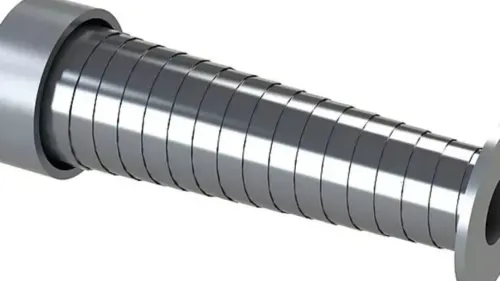
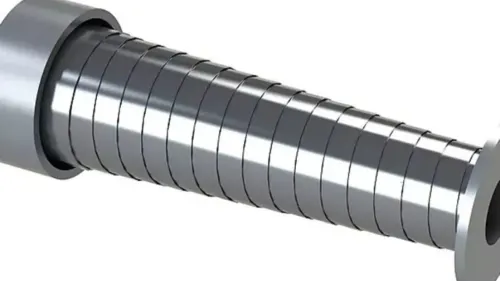
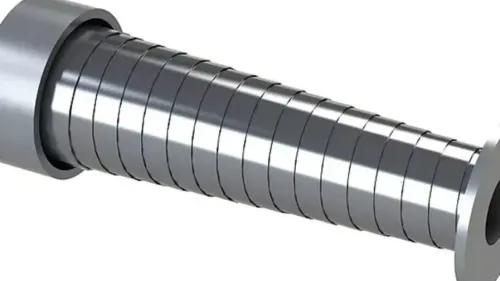
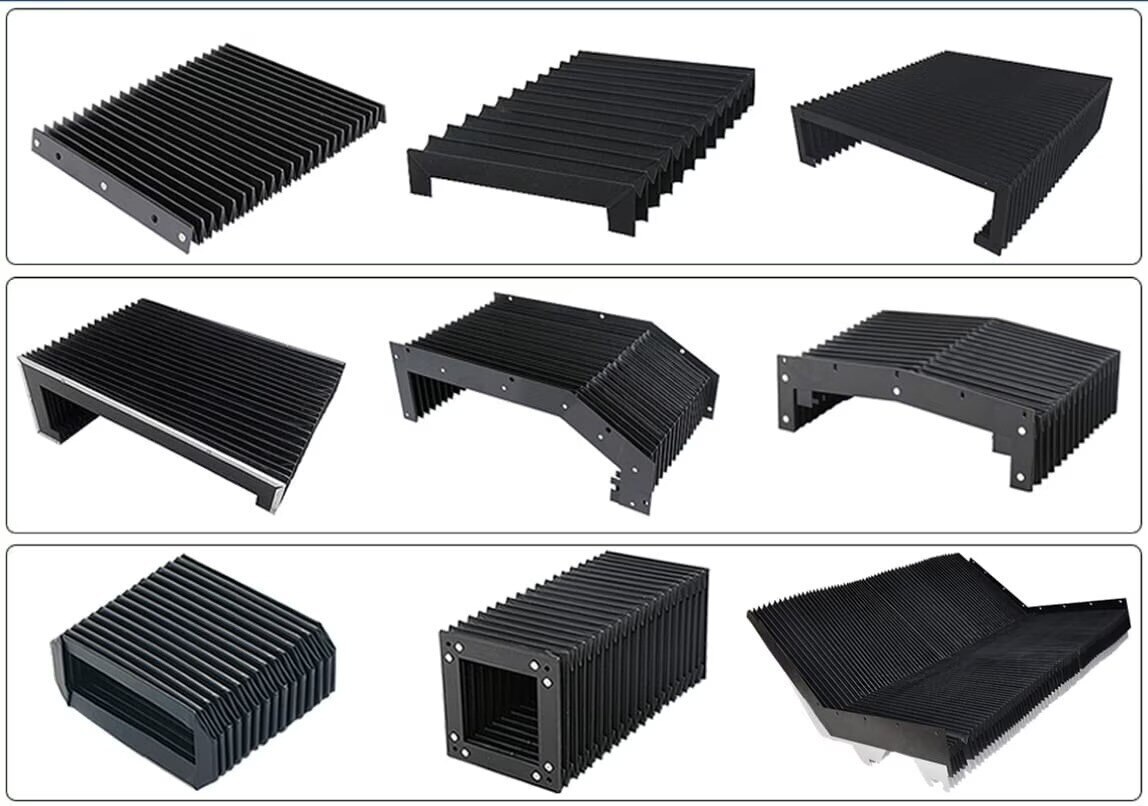
Choose by the protected geometry: use a broad way cover for a table or guideway, and spiral spring protection for a spindle, ballscrew, shaft, rod guide, coupling or other cylindrical moving part.
| Option | Best fit | Main limitation |
|---|---|---|
| Telescopic steel way cover | CNC lathes, machining centres and grinders producing hot, sharp or heavy chips | Needs accurate guides, overlap, wipers and drainage |
| Telescopic spiral spring cover | Compact protection around a rotating or reciprocating shaft, ballscrew or coupling | Does not shield a wide table or guideway |
| Fabric bellows | Automation axes and clean, low-impact travel | Needs coated fabric, laminate or lamella protection near grinding dust, sparks and abrasive coolant |
| Apron cover | Long table travel where flexible slats can sweep over the guideway | Slat gaps, wear and tension require inspection |
| Roll-up cover | Compact automation equipment and moderate contamination | Not a substitute for a rigid cover under heavy chip impact |
Steel stages tolerate chip impact and heat better than ordinary bellows. A bellows exposed to welding sparks or grinding dust needs a specified outer fabric and protection layer, not simply a fabric appearance.
For way cover and spiral spring protection for machine shops in kolkata, specify the spring only for a cylindrical moving element; this is the central choice in spiral spring machine protection in kolkata. A spiral spring is not a personnel guard.
An IEC 60529 IP rating also does not prove resistance to machine-tool chips, telescoping-stage wear, guideway wiping or coolant compatibility. Assess access protection separately against ISO 12100 and ISO 14120.
Measurements and Operating Data to Put on the Supplier Drawing
A cover that matches the machine’s travel can still fail if its folded stack strikes the column, table, tooling, fixtures or guarding. Give the supplier the complete envelope, not only the stroke.
1. Record the way-cover geometry: closed length, fully extended length, stroke, cover width, cover height, mounting-face dimensions, travel direction, guideway clearance, allowable folded height and attachment-hole pattern. Mark fixed and moving ends, reference datums and the exact mounting position.
2. Check the folded stack through the entire machine cycle. Measure clearance beside the column, above the table, around fixtures and below guarding; include tool holders and workholding at their largest positions. A cover that bottoms out, rubs or collides will bind before it reaches rated travel.
3. For spiral spring machine protection in Kolkata, specify the protected shaft diameter or opening, maximum extension, compressed length, spring force, rotation or reciprocation, mounting arrangement and available radial clearance. State whether the spring protects a shaft, ballscrew, coupling or rod guide; outside diameter alone cannot prevent rubbing or loss of overlap.
4. Add maximum speed, acceleration, cycle frequency, nearby heat, chip type, coolant formulation, concentration and temperature, plus cleaning chemicals. Ask for a dimensioned drawing stating cover mass, support requirements, wiper condition and allowable acceleration, and confirm that its speed rating applies with those wipers and fluids.
This is the data a way cover machine shop in Kolkata needs to design rather than guess.
Materials, Wipers, Drainage and Installation Details That Prevent Ingress
Choose stainless steel for persistent coolant, condensation and monsoon exposure; use painted steel when the coating can be maintained and the chip load is moderate. Specify corrosion-resistant spring material, compatible wiper lips and seals, and plated or stainless fasteners. Way cover weather conditions in Kolkata make trapped water a design concern.
| Material | Specify | Failure if overlooked |
|---|---|---|
| Stainless steel | Grade and finish suited to coolant and cleaning chemicals | Pitting beneath wet swarf |
| Painted steel | Coating system, edge protection and touch-up method | Rust at scratches and joints |
| Spring assembly | Corrosion-resistant spring material and protected ends | Loss of force or broken coils |
Chips and coolant enter through joint gaps, worn or over-tight wipers, blocked drains, excessive telescoping speed and misalignment. Show drainage holes and accessible low points on the drawing; a level cover with no escape path retains rainwater and coolant inside folded stages.
Install with these checks:
- Mount the cover level, keep guideways parallel, and confirm each box overlaps correctly throughout travel.
- Provide radial clearance around a spiral spring; identify fixed and free ends, end restraint, and the correct spring orientation.
- Check clearance from tools, fixtures, columns and guards before connecting travel.
- Verify alignment at closed, intermediate and extended positions; stop if any stage rubs or binds.
For way cover and spiral spring protection for machine shops in Kolkata, clean stage pockets, inspect wiper lips and scrapers, and check drains. Remove swarf with a controlled brush, vacuum or low-pressure wash, never compressed air that drives contamination beneath wipers. Do not force binding through travel.
What to Require in a Kolkata Way-Cover or Spring-Protection Quotation
A quotation is incomplete if it gives only cover width, stroke and price. Those figures do not show whether the folded cover will foul the machine, whether wipers suit the coolant, or whether hot chips and abrasive dust will destroy the protection.
Ask every supplier for these documents and statements:
- A dimensioned general-arrangement drawing showing closed length, extended length, stroke, width, height, mounting faces, travel direction, folded-stack clearance and attachment holes.
- A material and surface-finish schedule covering steel grade, spring material, coatings, fasteners and corrosion treatment.
- Wiper and seal materials, joint details, drainage provisions and a written coolant-compatibility statement.
- Maximum speed, allowable acceleration, cover mass, stroke frequency, support requirements and guide arrangements.
- Maintenance intervals, expected cycle life or the test basis used to support that life.
- Spare-part identification for wipers, seals, springs, panels and fasteners.
- Explicit exclusions for hot chips, grinding dust, welding sparks, abrasive carryover and unsuitable cleaning chemicals.
For a way cover machine shop in Kolkata, ask whether the stated rating applies with your specified coolant and wipers. SCUTES INDIA PRIVATE LIMITED is one supplier a buyer may ask to document these points rather than accept a catalogue number.
| Option | Evidence to compare | Failure left exposed without it |
|---|---|---|
| Steel way cover | Drawing, wipers, drainage, speed rating | Binding, ingress and stage collision |
| Spiral spring cover | Diameter, extension, compression, rotation and heat limits | Rubbing, bottoming-out and lost overlap |
| Bellows or roll-up cover | Fabric, coating, spark and chip exclusions | Tearing, burn-through and abrasive wear |
This is the practical standard for comparing way cover and spiral spring protection for machine shops in Kolkata.
Related products
 | TELESCOPIC SPRING COVER Telescopic Spring Covers provide protection under extreme conditions. View product → |
 | TELESCOPIC COVERS A telescopic cover protects guide-way surfaces and components of moving axis of machines. View product → |
Frequently asked questions
How do Kolkata weather conditions damage machine way covers?
Humid pre-monsoon air, monsoon rain, condensation, dust and wet-dry cycles promote corrosion. Level covers or blocked drains trap water and coolant inside folded stages, where residue concentrates as surfaces dry.
When should a machine shop choose steel way covers, bellows, aprons or spiral springs?
Use steel way covers for rigid protection against heavy chips and coolant. Use bellows where flexible coverage and low mass matter. Use aprons for simpler sliding coverage, and spiral springs for compact protection of rotating or linear components.
What information belongs on a way-cover or spiral-spring supplier drawing?
Provide protected component dimensions, travel, retracted and extended lengths, speed, acceleration, mounting points, chip type, coolant, temperature, orientation and available service clearance.
How can a Kolkata machine shop prevent water and coolant ingress?
Install the cover with a drainage slope, keep drain paths open, specify suitable wipers, seal mounting interfaces and inspect folded stages for trapped chips, residue and corrosion.
What should a quotation for machine protection include?
Request material and thickness, stage geometry, wiper specification, corrosion treatment, drainage design, operating limits, mounting details, inspection requirements, delivery scope and warranty terms.