A damaged cover is not automatically a replacement-cover problem: the first decision is whether the machine slide, guideway, spindle, shaft or rod is the component that needs protection. You will be able to triage the failure, choose the correct cover type, collect usable dimensions, compare repair with replacement, and prepare a Kolkata supplier enquiry without repeating the original failure.
Key takeaways
- Choose telescopic covers for linear guideway travel and rigid chip protection.
- Use spiral spring covers for compact protection around rotating or confined moving parts.
- Stop the machine before checking bent sections, torn seals, exposed guides or trapped chips.
- Send travel, dimensions, environment and damage photographs with your Kolkata enquiry.
Choose by the motion and the component being protected
The motion decides the cover type before any dimension does. Choose a telescopic steel cover when damage affects protection that follows a machine table, slide, guideway or way surface through linear travel. Its overlapping sections create a rigid, chip-shedding enclosure, but stacked sections add mass, need retracted-end space and can increase drive load.
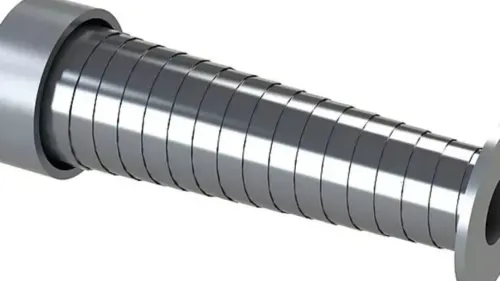
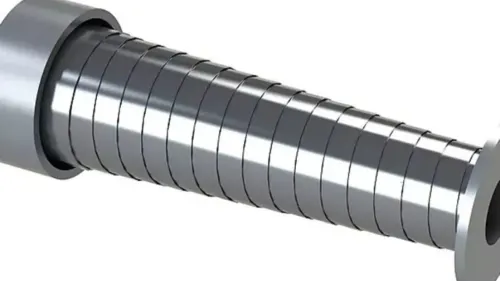
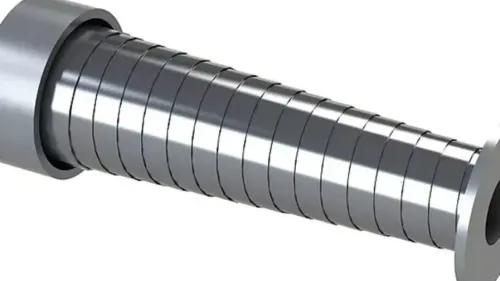
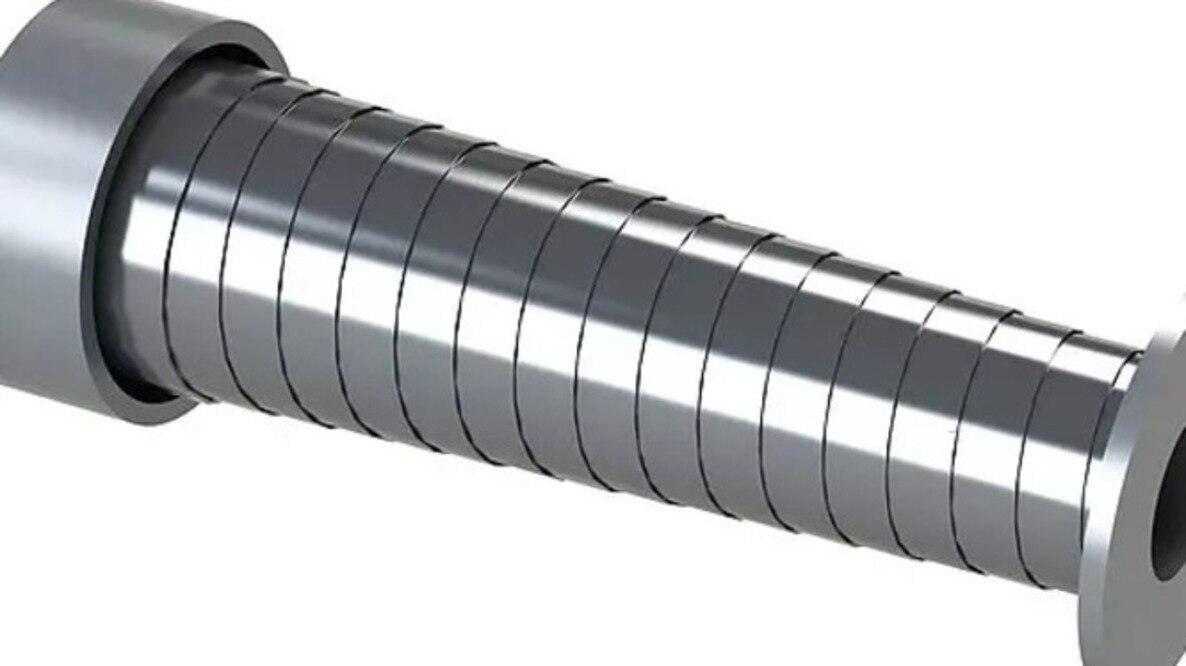
Choose a spiral spring cover when the protected part is cylindrical or axial: a spindle, shaft, lead screw or hydraulic rod. The metal strip winds and unwinds around that component. It cannot replace a telescopic box cover’s stiffness, overlap or guideway protection.
| Option | Travel and acceleration | Retracted envelope and service consequences |
|---|---|---|
| Telescopic steel cover | Guided linear travel; check speed, acceleration and stacked-section mass | Needs end space; inspect overlaps, wipers, drains and mounting; removal may require slide access |
| Spiral spring cover | Axial or cylindrical travel; check winding force and acceleration | Coils around the component; confirm sealing, radial clearance, service access and removal without dismantling the machine |
Do not select from the old cover’s outside diameter. A seized overlap can raise drive load, while inadequate retraction exposes the guideway at one end of travel.
Use bellows for flexible geometry or heat-sensitive layouts, apron covers for long open ways, roll-up covers where installation space is tight, and dedicated cable protection for drag-chain or cable movement. A search for “telescopic cover or spiral spring cover damaged machine in kolkata” still requires the same motion-based decision.
Stop safely and classify the damage before touching the cover
1. Stop the machine immediately and isolate electrical, hydraulic and pneumatic energy. Apply lockout/tagout, release stored pressure, secure moving axes and prevent unexpected start-up before touching the cover. Do not hammer a dented section while it remains installed; impact can transfer damage to the guide, mount or slide.
2. Inspect the cover through its complete stroke only after isolation makes movement safe. Record whether the failure is a crushed or buckled section, torn wiper, seized overlap, cracked spring, loose fastener, failed seal, coolant ingress or damaged mounting.
For telescopic cover damage in kolkata, photographs and measurements are more useful than “bent cover” as a diagnosis.
3. Keep the machine isolated if any section catches during travel, guideway surfaces are exposed, steel has sharp deformation, scrapers are missing, travel resistance is abnormal, or chips have reached the slide. Do not force a contaminated overlap; trapped chips can score sliding surfaces and overload the axis.
4. Check the guideway, slide, shaft or spindle for scoring, packed chips, displaced brackets and blocked lubrication paths. A cover that moves freely does not prove alignment after a crash: a bent mount or guide rail can impose side loads, bind the replacement and damage it again. Correct the machine geometry before recommissioning.
Inspect, measure and decide whether repair is realistic
A realistic repair starts with the machine, not a copied old cover. For machine protection cover repair in kolkata, inspect the complete assembly after isolating energy and record damage before ordering parts.
1. Cycle the cover across its full stroke at safe speed. Confirm section overlap, wiper contact, closed and extended positions, travel, section count, envelope, and clearance at both ends and at maximum tool or fixture position.
2. Photograph every mounting face. Verify alignment, hole locations, fasteners, rollers, guides, drain paths, and coolant leakage between sections. Check interference with tooling, fixtures, drag chains, coolant nozzles, chip conveyors, and way-lubrication points.
3. Treat wipers, seals, rollers, guides, scrapers, and fasteners as repairable wear parts when the structure remains straight. Crushed sections, distorted telescopic boxes, cracked welds, damaged mounting plates, or guideway scoring favour replacement or machine repair first.
4. For a spiral spring cover replacement in kolkata, measure shaft or spindle diameter, spring diameter, closed and extended lengths, stroke, end connection, material, strip thickness, and radial and axial clearance. Also check permanent set, cracked or kinked strip, uneven winding, damaged attachments, and lost retraction force.
5. For a telescopic cover, provide section dimensions, closed height, extended length, speed, acceleration, orientation, guideway geometry, chip and coolant load, wiper material, and scraper arrangement. Do not approve repair if the cover binds, leaks coolant, or the machine guideway is scored; correct the underlying damage first.
Match the replacement to the environment and prevent a second failure
Coolant chemistry, abrasive chips, hot swarf, grinding dust, washdown and humid ambient conditions determine steel, wiper profile, seals, drain paths and service intervals. Do not assume one material or temperature rating suits every machine.
Ask the manufacturer to confirm allowable speed and acceleration, extension or retraction force, temperature range, sealing performance, material, wiper profile and maintenance access from the machine drawing and inspection photographs.
- Avoid ordering by outside dimensions alone, reusing hardened wipers, blocking drain holes, or fitting a replacement without correcting misalignment or guideway damage. A spiral spring is wrong where a rigid telescopic enclosure must resist chips and protect a guideway.
- Treat telescopic cover damage in kolkata as a machine-condition problem, not a catalogue match. Compare disassembly, cleaning, alignment checks, site measurement, parts, trial cycling and recommissioning before choosing the remedy.
| Option | Work involved | Suitable use |
|---|---|---|
| Repair | Clean, replace wear parts, align and trial-cycle | Local wiper, seal, roller or fastener damage |
| Like-for-like replacement | Measure on site, remove, fit and recommission | Geometry and machine alignment remain sound |
| Redesigned replacement | Correct failure cause, modify details and validate | Repeated ingress, poor drainage or access |
| Temporary protection | Secure limited protection while isolated | Short delay only; unsafe with exposed ways or moving damage |
Before commissioning, clean exposed ways, inspect lubrication, hand-cycle the axis, run slowly, confirm overlap and scraper contact, then inspect the cover after the first production cycle.
Prepare a Kolkata enquiry that produces a usable recommendation
Send a technical enquiry, not only a photograph, when searching for “telescopic cover or spiral spring cover damaged machine in Kolkata,” “spiral spring cover replacement in Kolkata,” or “machine protection cover repair in Kolkata.”
1. State the machine make, model, axis name, protected component, existing cover type, failure history, travel, acceleration, coolant and chip conditions, operating temperature, washdown exposure, and whether a site visit is requested.
2. Attach available drawings, clear photographs of every mounting face and damaged area, and measured dimensions: retracted and extended lengths, section count, travel, envelope, mounting-hole locations, end clearances, shaft or guideway dimensions, and closed and open positions.
3. Request confirmation of fit at both travel limits, mounting arrangement, all clearances, wipers, seals, drainage, installation sequence, alignment checks, replacement-part scope, and commissioning test. Ask the technician to inspect the complete stroke and the guideway or shaft; Kolkata location does not determine suitability.
4. Ask SCUTES INDIA PRIVATE LIMITED to assess the enquiry as a machine-specific industrial machine-protection problem, not as a catalogue match. Require confirmation that temporary protection is safe; isolate the machine until guideway or shaft damage, sharp deformation, abnormal resistance, or exposed ways are corrected.
5. Record the cost of failure before approving work: machine stoppage, removal, cleaning, measurement, alignment inspection, replacement parts, trial cycling, and recommissioning. Test by hand or at low feed across full travel before controlled production.
Related products
 | TELESCOPIC SPRING COVER Telescopic Spring Covers provide protection under extreme conditions. View product → |
 | TELESCOPIC COVERS A telescopic cover protects guide-way surfaces and components of moving axis of machines. View product → |
Frequently asked questions
When should you choose a telescopic cover over a spiral spring cover?
Choose a telescopic cover for machine tables, slides, guideways and way surfaces with linear travel. Choose a spiral spring cover when a compact cover must protect a rotating or confined moving component.
What should you do before inspecting a damaged machine protection cover?
Stop the machine, isolate its energy sources and prevent unexpected movement. Do not force bent sections open or reach beneath an unsupported cover.
Which measurements help determine whether a damaged cover can be repaired?
Record closed and extended lengths, cover width and height, section pitch, mounting-hole locations, available retracted-end space and the component’s travel. Photograph bent sections, broken fasteners, torn seals and chip accumulation.
What should you include in a Kolkata enquiry for a replacement cover?
Include the machine and axis, protected component, travel, closed and extended dimensions, installation space, operating speed, chip and coolant conditions, temperature exposure, mounting details and clear damage photographs.