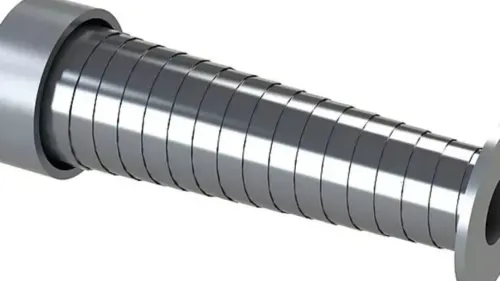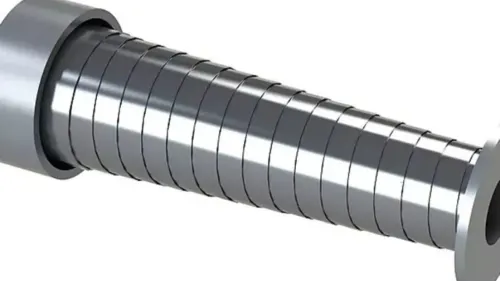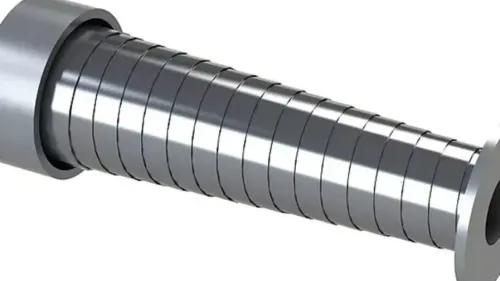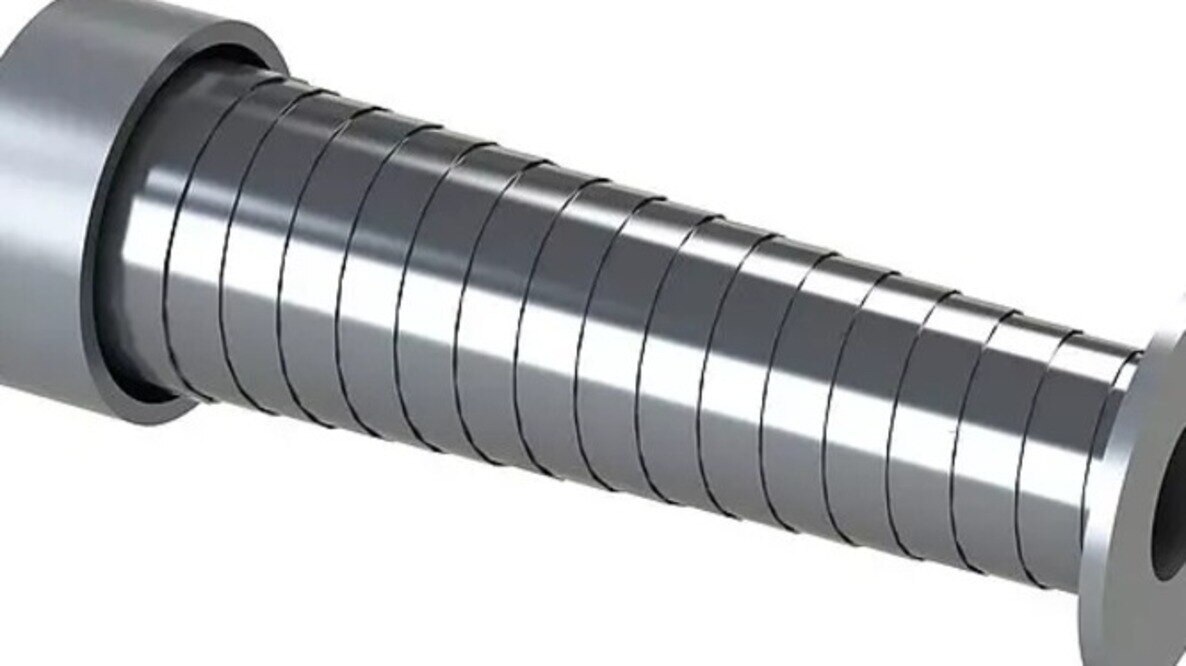
A spiral spring cover can bind, scrape, collapse unevenly, or overload the machine axis when its centreline, mounting direction, clearances, or fasteners are wrong. You will be able to measure the installation, identify the fault from operating symptoms, correct contamination and attachment problems, and test the cover safely before production.
Key takeaways
- Measure axis travel, mounting centres, cover diameter, and clearance before drilling.
- Keep the cover square to the axis; never force holes into alignment.
- Separate excessive spring preload from the normal force needed for retraction.
- Test smooth travel at low speed before returning the machine to production.
What to measure and confirm before mounting the cover
A compatible cover must match the axis geometry before you drill, slot, or force any mounting hole into alignment. Spiral spring cover installation errors begin when installers stretch, compress, rotate, or reverse the cover to suit an incorrect measurement.
| Item | Confirm before mounting | Failure if wrong |
|---|---|---|
| Axis geometry | Shaft or guideway diameter, axis centerline, and fixed-to-moving-end distance | Off-centre nesting, rubbing, or binding |
| Travel | Usable stroke, closed length, and extended length | Coil separation, collapse, or insufficient protection |
| Envelope | Cover outside diameter, flange dimensions, radial clearance, and unsupported span | Contact with the guideway, chuck, tool holder, or enclosure |
| Mounting | Hole pattern, bolt size, flange orientation, and moving/fixed end locations | Reversed travel or distorted brackets |
| Machine duty | Maximum speed, acceleration, reversal rate, coolant type, chip size, and operating temperature | Impact at reversal, contamination, or premature damage |
- Confirm the winding direction and nesting sequence against the machine’s travel direction. The moving end must reach its full stroke without collision, and the fixed end must sit squarely on its bracket.
- Check that the machine is isolated, the mounting faces are clean, and the axis is at the intended reference position before measuring.
- Verify clearance at both fully closed and fully extended positions. Include cable carriers, clamps, guards, and nearby tooling, not only the guideway.
- Record the specification and photographs. Do not accept a cover that requires preload, twisting, or clamping while compressed to make the holes line up.
How to install a spiral spring cover without creating misalignment
Prevent binding by treating the cover’s axis as a precision alignment task: isolate the machine, confirm the fixed and moving ends, and never use mounting bolts to pull an offset cover into position.
1. Lock out electrical and hydraulic power, release stored energy, and support the machine axis. Remove chips, coolant residue, rust, and burrs from both mounting faces.
2. Match the cover’s fixed end, moving end, winding direction, and nesting sequence to the machine drawing. Reversing the ends can make the cover open toward the structure instead of the protected area.
3. Check the cover’s centreline against the shaft or guideway centreline. Use temporary supports to hold it concentric, then inspect radial clearance from the guideway, chuck, tool holder, enclosure, and nearby clamps.
4. Set the closed position with the designed end stop or mounting geometry. Do not drive the axis farther to crush tight coils, and do not stretch, compress, or rotate the cover to align its holes.
5. Insert every fastener finger-tight. Snug them in a crosswise sequence, then apply the specified torque evenly; tightening one side first can tilt the flange and create binding.
6. If a hole misses, stop and correct the mounting position. Do not force the bolt, enlarge holes, or slot the frame without rechecking the axis.
7. Move the axis slowly through its usable stroke while watching the coils. Stop for scraping, uneven telescoping, delayed return, rattling, or a partially open cover.
These checks directly address machine cover installation problems in Kolkata, where coolant, abrasive chips, and wash-down residue can expose a small alignment error quickly.
Why the cover binds, scrapes, or moves unevenly
Most spiral spring cover fitting issues begin with an axis that is not concentric with the protected guideway or shaft. An offset or angularly misaligned fixed and moving end makes nested sections rub, telescope unevenly, and load the drive even when the cover moves by hand.
Inspect the first damaged turn and each end bracket separately: damage at one end indicates attachment misalignment or a local obstruction, while uniform polishing across several turns points to skew, contamination, or insufficient clearance.
Check the following during a slow, stopped full-stroke movement:
- Look for contact at intermediate positions, not only when the cover is fully open or closed. Way covers, cable carriers, coolant pipes, clamps, guards, tooling, and castings can enter the envelope mid-travel.
- Confirm the cover is not beyond its specified stroke, speed, acceleration, orientation, or unsupported span. Excessive travel can collapse the coils; acceleration can make sections strike at reversal; sag creates guideway friction.
- Do not stretch, compress, or rotate the cover to align holes. Forcing the flange into position permanently distorts the spring.
- Tighten fasteners evenly in sequence. One fully tightened bolt can pull the flange off centre, while a protruding screw head or wrong spacer creates a local scrape.
| Symptom | Likely installation mistake | What to inspect |
|---|---|---|
| One-end damage | Bracket or attachment misalignment | End face, hole position, and local obstruction |
| Polishing across many turns | Skew, contamination, or inadequate clearance | Radial gap throughout the stroke |
| Delayed or uneven movement | Offset axis or uneven fastener loading | Concentricity and flange seating |
| Rattle at reversal | Excessive acceleration or travel | Rated limits and end-stop position |
How to distinguish spring preload faults from normal spring force
Normal spring force feels smooth and progressive: resistance rises as the cover opens, then falls smoothly during return without scraping, rattling, sticking, or sudden release. A drive-load spike, uneven extension, delayed return, or cover that remains partly open indicates a fault rather than ordinary spring resistance.
1. Disconnect power and move the axis slowly by hand through its full usable stroke. Excessive preload produces heavy resistance from the first movement; insufficient preload produces slack, delayed return, or a cover that needs assistance to close.
2. Mark the first damaged turn and inspect both end brackets separately. Damage concentrated at one end points to a reversed end, attachment misalignment, or a local obstruction. Do not confuse that pattern with general spring wear.
3. Examine the coils for bright, continuous polishing, flattened edges, or grooves. Uniform marks along several turns indicate inadequate radial clearance, a skewed axis, or contamination rubbing through the travel.
4. Check the closed and extended positions against the specified stroke. Rattling, coil separation, impact at reversal, or sudden collapse indicates excessive travel, acceleration, or an unsupported span.
5. Remove chips and dried coolant before testing again. Grit causes intermittent scraping and stiffness; if the symptom remains after cleaning, inspect for a bent section, distorted coil, cracked bracket, or permanent telescoping.
Among spiral spring cover installation errors, forcing the ends into alignment by stretching, compressing, or rotating the cover is especially revealing: irregular force that repeats at the same stroke position usually means permanent distortion, not normal spring force.
How to test the installation and specify a replacement in Kolkata
Run the newly fitted cover through its complete travel before production, not just the first few millimetres. A slow test exposes binding while the machine is still safe to stop.
- Isolate the machine, clean chips from the mounting area, and confirm the cover sits concentric with the shaft or guideway. Check every fastener and verify that neither flange touches the enclosure, chuck, tool holder, or guideway.
- Move the axis manually or at low speed through several complete cycles. Watch for uneven nesting, clicking, scraping, delayed return, sudden collapse, or a partially open cover.
- Stop and inspect the coils after each cycle. Rubbing marks, packed chips, a changing gap between layers, or loss of concentricity indicates a fitting or clearance fault.
- Repeat the test at operating speed and acceleration only after the slow cycles pass. Check motor current, coolant direction, chip entry, and access for cleaning; do not release the machine if current rises sharply or the cover shifts.
For machine cover installation problems in Kolkata, specify the actual environment, not only the location. Give the installer or supplier the axis orientation, usable stroke, closed and extended lengths, outside diameter, flange and mounting-hole pattern, radial clearance, speed, acceleration, coolant type and concentration, chip material and size, wash-down method, enclosure layout, and operating temperature.
SCUTES INDIA PRIVATE LIMITED can assess a replacement more accurately from those measurements than from the phrase spiral spring machine cover for installation problems in Kolkata alone. Never stretch, compress, rotate, drill, or slot the cover to make holes align.
Related products
 | TELESCOPIC SPRING COVER Telescopic Spring Covers provide protection under extreme conditions. View product → |
 | TELESCOPIC COVERS A telescopic cover protects guide-way surfaces and components of moving axis of machines. View product → |
Frequently asked questions
What should you measure before installing a spiral spring machine cover?
Confirm axis travel, mounting-hole centres, cover diameter, retracted and extended lengths, axis height, and surrounding clearances before mounting.
How do you prevent spiral spring cover installation errors?
Align the cover with the machine axis, support it without twisting, and fasten mounting points only after checking free movement through the full stroke.
Why does a spiral spring cover bind, scrape, or move unevenly?
Binding usually points to angular misalignment, incorrect mounting centres, interference with nearby parts, a twisted cover, or uneven fastening.
How can you distinguish spring preload faults from normal spring force?
Normal spring force rises during extension and returns the cover smoothly. Excessive preload causes high starting resistance, sudden movement, or uneven force before the cover reaches full travel.
How should you test a replacement cover in Kolkata?
Run the axis slowly through its complete stroke, inspect for scraping and gaps, measure mounting alignment, and record the required dimensions before requesting a replacement.