Wind-driven rain, persistent humidity, muddy floors and wet-dry cycling can reach the lift mechanism through folds, seams, fasteners and service openings. By the end, you will know how to measure the lift, specify a suitable bellows, verify drainage and safety, and compare suppliers before installation.
Key takeaways
- Measure travel, compressed length, extended length and mounting clearances before ordering.
- Specify rain-resistant fabric, sealed mounting, drainage and compatibility with oil and coolant.
- Choose another cover when access, heat, abrasion or ventilation exceeds bellows limits.
- Approve protection with a full-travel test, then inspect seams, fasteners and drains regularly.
What Kolkata’s monsoon exposes on a scissor lift
Wind-driven rain, floor splash and standing water attack more than the scissor arms. They reach hydraulic cylinders and rods, pivot points, rollers, limit switches, sensors, cable runs, platform edges and floor-level mechanisms; mud and fungal growth block movement, while salt and industrial contaminants accelerate corrosion.
UV exposure and repeated wet-dry cycles crack coatings, swell seams and draw moisture through fastener holes.
| Lift location | Main monsoon exposure | Protection and access priority |
|---|---|---|
| Indoor lift beside open doors | Wind-driven rain, splash, humidity, mud and contaminants at the threshold | Cover moving mechanisms, rods, pivots, rollers, sensors and cable runs; keep platform edges, emergency controls and service openings visible |
| Permanently outdoor lift | Rain from multiple directions, UV, salt, fungal growth, standing water and wet-dry cycling | Protect the complete moving envelope and floor-level hardware; preserve drainage, ventilation, heat dissipation and maintenance access |
| Any lift over a pit or wet floor | Splash, pooled water and mud entering from below | Protect low mechanisms and provide drains; keep clearances, inspection points and emergency access open |
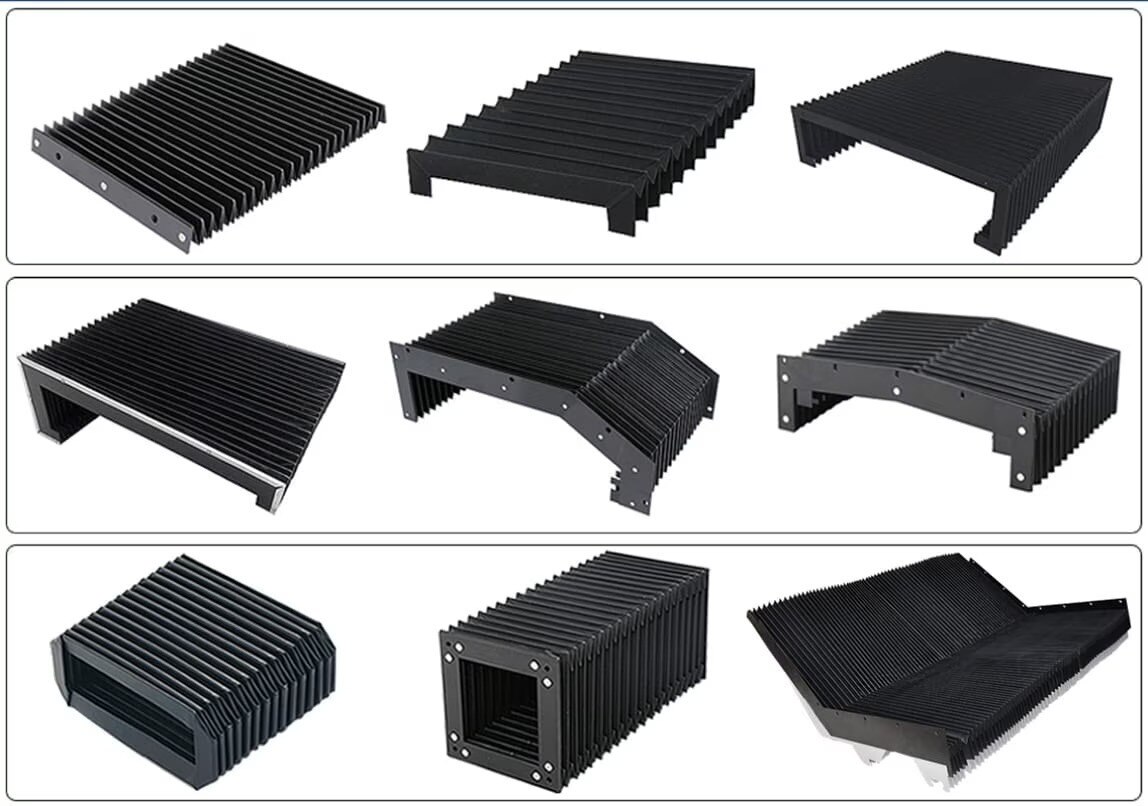
A bellows can shield the scissor arms, cylinder bodies, rods and moving cable runs, but it must not conceal limit switches, sensors, emergency access, platform visibility or service points. Do not seal heat-producing hydraulics without allowing ventilation and heat dissipation.
This is essential monsoon lift protection in Kolkata, but a bellows is not a substitute for fixed guards, interlocks or safe clearances. Apply ISO 12100 for risk reduction and ISO 13857 for safety distances; crushing and shearing hazards remain if the cover fails.
How to measure the lift before ordering a bellows
Measure the complete kinematic envelope, not only the lift’s highest and lowest positions. For scissor lift bellows in Kolkata, record these details before requesting a drawing:
1. Measure the lift fully collapsed and fully extended, then calculate the stroke. Record the bellows width and mounting perimeter at both positions.
2. Map the scissor-arm geometry, including arm thickness, pivot locations, diagonal movement and changing plan area. Note the platform overhang and every proposed mounting point.
3. Measure clearance to the pit or floor, the available folded height, access openings and the space available for mounting frames. Record the manufacturer’s minimum fold height and minimum bend radius.
4. Record travel speed, cycles per hour or day, maximum platform load and sideways movement caused by an off-centre load or guide wear. These forces affect pleat tracking and attachment loads.
5. Run the lift slowly through several intermediate positions, stopping to inspect each fold. A pleat can strike an arm, roller, fastener, platform edge or pit wall before either end of travel.
6. Complete a full-motion interference check with the platform loaded. Check that no fabric, rail or fastener restricts the stroke, snags during acceleration or rubs against a moving part.
7. Mark low points and provide drains that discharge away from bearings, switches, brakes and connectors. Add controlled air exchange through protected vents or pressure-relieving geometry; a sealed volume can balloon or collapse as it moves, while an open vent can admit rain and dust.
What makes a bellows suitable for rain, oil and factory hazards
“Weatherproof” is not a performance specification. Define whether the cover must resist rain and splash, hose spray or temporary immersion, then demand repeated-folding and rain-ingress evidence for the complete design.
| Material | Strengths | Risks and duty limits |
|---|---|---|
| PVC-coated polyester | Good abrasion resistance, weldability, water resistance and cost control; suitable for many outdoor bellows | Check UV ageing, fungal resistance, coating adhesion, flex-cracking, oil and grease compatibility; reject it when temperature or flame data misses the duty |
| TPU- or polyurethane-coated textile | Flexible, often better at low temperature, with good hydrolysis resistance when specifically documented | Verify UV, fungal, oil, grease, sharp-chip and cleaning-chemical resistance; coating adhesion can fail at folds |
| Neoprene | Good resistance to oil, grease, weathering and repeated flexing | Confirm temperature range, flame behaviour, abrasion life and resistance to the actual coolant and detergent |
| Silicone | Handles high temperatures and welding heat better than most coated textiles | Usually offers weaker abrasion and sharp-chip resistance; verify tear strength, flame rating, oil compatibility and attachment adhesion |
Match the fabric to coolant, welding sparks, hot surfaces, chips and cleaning chemicals. Reject any fabric without temperature and flame data covering the duty.
Specify welded seams where the coating permits; specify sewn seams with sealed needle lines when it does not. Use clamp strips or bolted flanges, protected fasteners, replaceable panels and inspection zips.
- Design sloped surfaces, overlapping skirts, drip edges and low-point drains; discharge water away from seals, switches, brakes, connectors and bearings.
- Treat IEC 60529 IP ratings as complete-assembly claims, including joints, drains, penetrations and flaps—not fabric claims. Require samples or records showing flex-cycle durability, seam adhesion and rain ingress.
When a folding bellows is the wrong cover choice
A folding bellows is the wrong choice when the hazard demands rigid protection, exceeds fabric limits, or creates a motion path the pleats cannot follow without rubbing. A bellows fixed to the moving scissor assembly follows lift geometry; a loose cover can snag on arms, rollers or floor hardware.
| Option | Movement and protection | Trade-offs |
|---|---|---|
| Moving bellows | Follows the scissor assembly; flexible enclosure | Moderate installation downtime; panels clean and replace easily; failure can expose mechanisms |
| Loose cover | Drapes over the lift without guided movement | Quick installation but prone to snagging, water pockets and difficult access |
| Roll-up cover | Winds onto a controlled shaft | Needs a clear, aligned roll path; cleaning and mechanism access take more time |
| Apron cover | Suits straight or guided movement across an opening | Wrong for complex scissor geometry; replacement sections can cost more |
| Telescopic steel cover | Provides rigid impact and chip protection | Higher downtime, weight and cost; limited access and slower replacement |
Choose another arrangement for large hot chips, open flame, severe abrasion, rigid guarding, or an unavoidably complex motion envelope. A telescopic steel cover protects against impact; it does not provide the flexible enclosure of industrial lift bellows in West Bengal.
Treat cables and hoses separately. Check minimum bend radius, travel length, strain relief, connector sealing, abrasion and torsion; use a cable carrier or guided service loop when the bellows cannot control those movements. Forcing hoses to follow pleats can cause early fitting or conductor failure.
Do not infer IP65 or IP66 from coated fabric. If ingress protection matters, test the complete installed assembly, including joints, drains, penetrations and access flaps.
How to approve, install and maintain monsoon protection
Do not accept scissor lift bellows for monsoon in Kolkata on the word “weatherproof.” Accept the installation only after the supplier proves fit, movement, drainage and material performance against your actual lift.
1. Approve a drawing showing lowered and raised dimensions, intermediate clearances, attachment hardware, mounting rails, drain paths and responsibility for installation. Record the sample fit check before production, including interference at every lift position.
2. Demand material data and test records stating fabric mass, coating, seam construction, cycle rate, expected cycles, outdoor temperature range, UV and fungal exposure, oil exposure and the specified cleaning method. Ask for repeated-folding evidence, not only static water-repellent claims.
3. Define the water-ingress acceptance test: rain and splash, hose spray or temporary immersion. Record the test method, duration, access openings and pass criteria. Also confirm spare-panel availability, warranty and lead time.
SCUTES INDIA PRIVATE LIMITED can be considered alongside other manufacturers when it supplies these drawings, material records and test results and supports a site fit check. Reject a design that leaves fastener holes, corners or moving-to-fixed transitions untested.
After heavy rain, dry the bellows and remove mud before it dries against the fabric. Inspect seams, fasteners and abrasion points; check drains and mounting rails; and replace damaged panels before water reaches cylinders, switches, bearings or other mechanisms. Keep emergency access and service openings usable during every inspection.
Related product
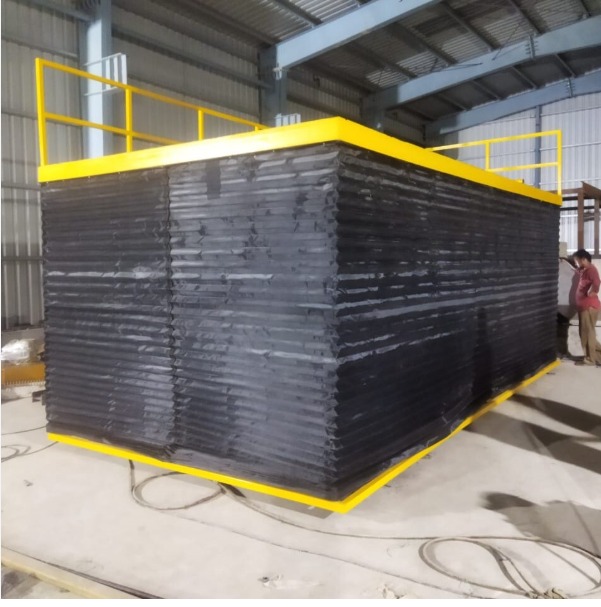 | SCISSOR LIFT BELLOWS Scissor Lift Bellows are one of the broadly demanded stabilizer for which we are considered an acclaimed designed in the market. View product → |
Frequently asked questions
What does Kolkata’s monsoon expose on a scissor lift?
Wind-driven rain, floor splash and standing water can reach hydraulic cylinders, rods, pivots, rollers, sensors, limit switches, cable runs and floor-level mechanisms.
What measurements are needed for scissor lift bellows?
Record the lift’s full travel, required compressed and extended lengths, mounting dimensions, available clearance, movement direction and interference points throughout the cycle.
What should a weatherproof scissor lift cover resist?
Specify resistance to rain, mud, oil, coolant, chips, abrasion and the temperatures present near the lift, along with sealed mounting and a way to drain trapped water.
When is a folding bellows the wrong cover choice?
Use another protection method when the area requires frequent access, exceeds the bellows material’s temperature or abrasion limits, needs ventilation, or leaves insufficient clearance for folding.
How do you approve and maintain monsoon lift protection?
Test the installed cover through the complete lift cycle, check for rubbing and trapped water, and inspect seams, mounting points, folds and drains after heavy rain and at scheduled intervals.