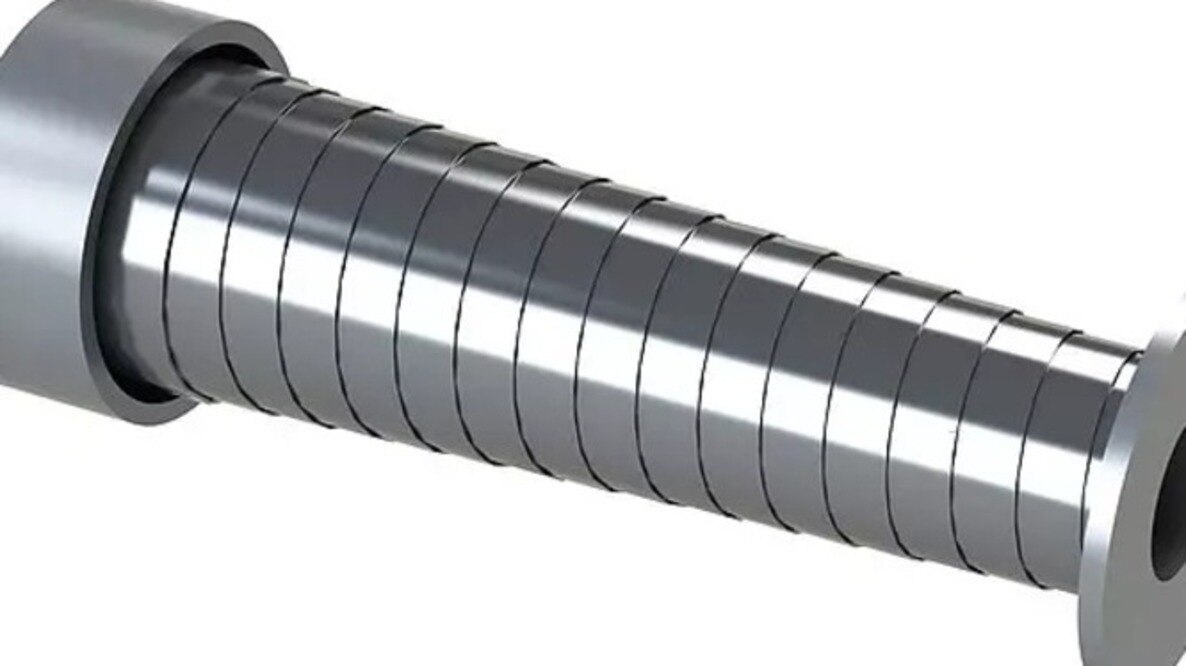
A roll-up cover can work for a dusty machine, but suitability depends on whether the contamination is fine dust, oily paste, sharp swarf, hot chips or coolant spray. You will be able to match the hazard, machine geometry, sealing design and operating limits to a cover specification before requesting comparable quotations.
Key takeaways
- Choose roll-up covers for dry, airborne, non-hot and non-sharp particles.
- Measure travel, opening size, clearances and mounting points before requesting a quote.
- Specify seals, reinforced edges, wiping arrangements and material compatibility.
- Compare suppliers using drawings, test details, service access and replacement-part plans.
What kind of dust is the machine producing?
Start with the particle, not the cover. A roll up machine cover for dusty machines in Kolkata is a sensible starting point when exposure is mainly dry, airborne, non-hot and non-sharp, and the protected opening can be sealed around its edges.
| Contamination | Suitability | Main failure |
|---|---|---|
| Dry airborne dust | Suitable starting point | Fine particles pass through small clearances and settle on guides, seals and rollers |
| Mineral, carbon, cement or flour-like dust | Use sealed edges and protected bearings | Abrasive deposits accelerate wear and clog winding parts |
| Oily swarf or coolant-laden debris | Usually needs another barrier or a specified material | Deposits become heavy, sticky and difficult to remove |
| Sharp chips | Poor choice without sacrificial protection | Chips cut fabric or get dragged into the winding mechanism |
| Hot swarf, welding spatter or grinding sparks | Choose heat- and spark-rated protection | The exposed face can burn, puncture or abrade |
| A clean dry workshop | Favourable condition | Basic designs still fail if side gaps remain open |
Kolkata’s monsoon changes the calculation. Condensation and trapped water can turn dust into a conductive or abrasive paste, while corrosion attacks shafts, springs, fasteners and bearings. Specify drainage, corrosion-resistant parts, shielded bearings and coolant compatibility; do not judge performance from dry-dust claims alone.
Confirm what the cover protects: a complete enclosure, or only an opening, guideway, conveyor, control panel or moving axis. Use the roll-up design when its perimeter sealing contains the airborne load. Choose a bellows, telescopic cover, fixed enclosure or sacrificial screen when the face receives direct thermal, impact or abrasive attack.
Will the cover fit the machine’s geometry and motion?
The cover fits only if its envelope and motion match the axis, not merely its required travel. Measure the machine before asking suppliers for prices.
- Record opening width, full travel length, available retracted height, mounting space, roller diameter, minimum bend radius and unsupported span.
- Measure clearance from tools, pallets, guards and operators at every stopping position.
- Record maximum speed, acceleration, reversal frequency, stopping position and cycles per shift.
- Mark the attachment point and confirm whether the cover can remain aligned throughout the complete stroke.
| Orientation | Main risk | Design check |
|---|---|---|
| Vertical | Dust sheds, but side tracks can load up | Check guides, seals, spring torque and bottom-bar alignment |
| Horizontal | Chips and dust collect on the upper face | Add a supported surface, chip deflector or cleaning arrangement |
A cover that is long enough on paper can still fail when spring torque cannot move the loaded cover, the winding radius changes the effective travel, the attachment pulls at an angle, or the unsupported length sags into the axis. Expect wrinkles, telescoping, edge damage or incomplete closure when those values do not match.
Treat cables and hoses as a separate design check. Use an energy chain, drag-chain guide or protected fixed entry; never route a moving cable through the roll-up cover’s pinch zone, where abrasion, extra winding torque or jamming can result. Check the cable loop and cover stroke together.
Which construction details control roll-up cover dust protection?
Leakage depends more on interfaces than on the fabric. For roll-up cover dust protection, request the fabric or coated-material specification, seam construction, edge reinforcement, roller or drum type, side guides, tensioning method, mounting brackets, bottom bar and sealing arrangement.
Specify overlapping side seals, a bottom seal or wiper, and protected or shielded roller bearings where dust exclusion matters. Inspect edges, end plates, bottom bar and cable-entry points first; these gaps turn a dustproof claim into dust deflection. Provide cleaning access to the roller, guides and lower seal.
A continuously contacting elastomer seal excludes fine dust better, but adds friction and wear. A brush seal follows irregular surfaces with less contact force, yet it is not equivalent for fine-particle containment.
| Option | Opening, load and motion | Access and sealing |
|---|---|---|
| Roll-up cover | Straight openings; light airborne dust; fast motion | Good access when retracted; seals require careful interfaces |
| Bellows cover | Guided axes; moderate chips; reciprocating motion | Stronger enclosed sealing; consumes travel space |
| Telescopic steel cover | Heavy chips and impact; slower motion | Robust face; limited access and added mass |
| Apron cover | Broad openings; chip load; moderate speed | Flexible access; weaker edge sealing |
| Fixed enclosure | Static or infrequently accessed openings | Best containment; poorest access |
| Brush wiper or flexible curtain | Irregular gaps; light debris; frequent access | Convenient; not fine-dust-tight |
For an industrial roll-up cover in Kolkata, do not accept IEC 60529 IP5X or IP6X from material data alone: those ratings describe the tested complete assembly, with IP5X allowing limited ingress and IP6X meaning dust-tight.
What operating limits and machine roll up cover problems must you plan for?
Plan for failure, not just coverage: request written limits for ambient and surface temperature, chemical compatibility with your specific cutting fluid and cleaning agent, permissible travel speed, cycle frequency, puncture resistance, tear strength, abrasion resistance and expected service life.
| Hazard | Likely failure | Evidence or control |
|---|---|---|
| Hot chips, sparks, sharp swarf | Melting, burning, cuts or punctures | Rated material test; sacrificial shield or different cover type |
| Constant abrasion or heavy coolant spray | Rapid wear, swelling or leakage | Abrasion and chemical test data using your fluids |
| Dust in side tracks or chips in guides | Rising winding torque and stalled travel | Accessible guides and a cleaning procedure |
| Deposits on the roller | Uneven winding, telescoping, wrinkles and edge damage | Roller-cleaning access and inspection records |
PVC-coated textile is not automatically suitable for hot chips, sparks, sharp swarf, constant abrasion, heavy coolant spray or high-speed reciprocation. Use sacrificial protection or another cover type when the hazard reaches the exposed face.
Require a defined inspection interval for the roller, guides and lower seal, with access that does not require dismantling the machine.
Specify vacuum extraction or the machine builder’s cleaning method instead of routine high-pressure air; OSHA 29 CFR 1910.242(b) limits compressed-air cleaning in the United States to below 30 psi unless chip guarding and PPE controls apply.
These machine roll up cover problems worsen when maintenance is delayed. Ask for test reports, declared methods and service-life assumptions, not “dustproof” wording alone.
What should your Kolkata specification and supplier comparison include?
Turn suitability into a written specification before comparing an industrial roll up cover in Kolkata. Record these inputs:
1. State the dust type and particle size, or describe the process producing it. Note hot-chip and spark exposure, oil or coolant type, cover orientation, opening width, travel, speed, acceleration and cycles per shift.
2. Add ambient temperature, humidity and condensation risk. Specify corrosion resistance, drainage, bearing protection and the cable-entry arrangement; trapped moisture can turn dust into conductive paste and corrode shafts, springs, fasteners and bearings.
3. Define the cleaning method and target leakage or enclosure requirement. Include the expected service life, and require access for cleaning the roller, side guides and lower seal without dismantling the machine.
4. Request drawings of the complete installed assembly, including seal interfaces, retracted envelope, bend radius, mounting brackets, service access and every exclusion from performance testing. Check the design against the actual horizontal or vertical installation.
5. Ask for test reports or declared methods covering material, tear, puncture, abrasion, chemical and temperature limits. Do not assign IP5X or IP6X without relevant IEC 60529 testing of the complete protected assembly; material data alone proves neither rating.
6. Ask SCUTES INDIA PRIVATE LIMITED for an application review covering the machine layout and contamination profile. Compare its evidence with other suppliers, not a generic protective roll up machine cover on price alone.
Approve the cover only when its stated limits match the actual hazard and motion profile.
Related product
 | Roll Up Cover A roll-up cover is a highly durable and flexible protective solution designed to safeguard machinery, equipment, and valuable assets from dust,... View product → |
Frequently asked questions
What kind of dust is suitable for roll up cover dust protection?
Roll-up covers suit dry, airborne, non-hot and non-sharp dust when the opening can be sealed around its edges. Hot particles, sharp chips, wet sludge and abrasive debris require a different protection assessment.
How do you check whether a roll-up cover will fit a machine?
Record the protected opening, travel length, cover width, mounting points, retracted envelope, guide clearances and nearby moving parts. Check the cover through its full motion, not only at the parked position.
What construction details affect a roll-up machine cover’s dust protection?
Edge sealing, reinforced attachment edges, guide arrangements, roller housing, material selection and the treatment of joints determine how well the cover limits dust entry and withstands repeated movement.
What machine roll up cover problems should you plan for?
Plan for dust packing in guides, seal wear, wrinkles, tracking errors, excessive roller resistance, collision damage and reduced access for cleaning or maintenance. Define inspection and replacement procedures before installation.
What should a Kolkata supplier specification include?
Include machine drawings, dimensions, travel speed, cycle frequency, particle description, temperature and coolant exposure, mounting constraints, required seals, service access and acceptance checks. Compare suppliers on drawings, materials, testing and after-sales support.