The correct choice starts with the shape and movement of the part you need to protect, not with a general claim about durability or cost. By the end, you will be able to match a telescopic way cover or spiral spring to the machine geometry, debris load, motion cycle, installation envelope, and maintenance demands.
Key takeaways
- Choose from the protected geometry before comparing cover materials.
- Use guideway covers for broad exposed ways and spiral springs for compact cylindrical protection.
- Check chip size, coolant exposure, travel, retracted length, and clearance.
- Give suppliers dimensions, motion data, contamination details, and service-access requirements.
Start with the protected geometry, not the cover material
The protected machine component determines whether you need a guideway cover or a spiral spring.
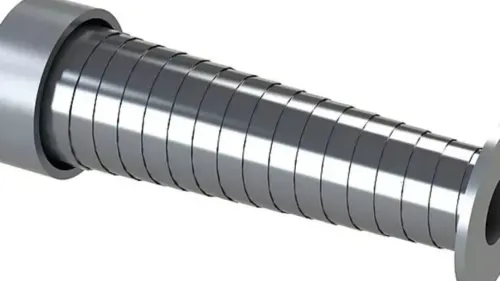
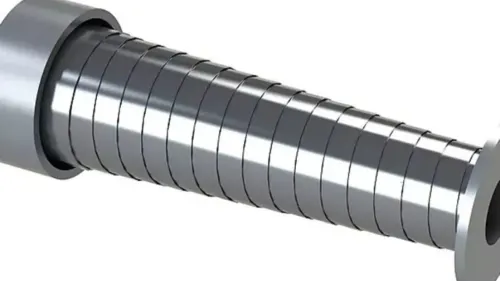
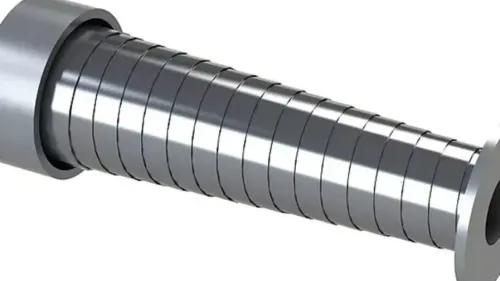
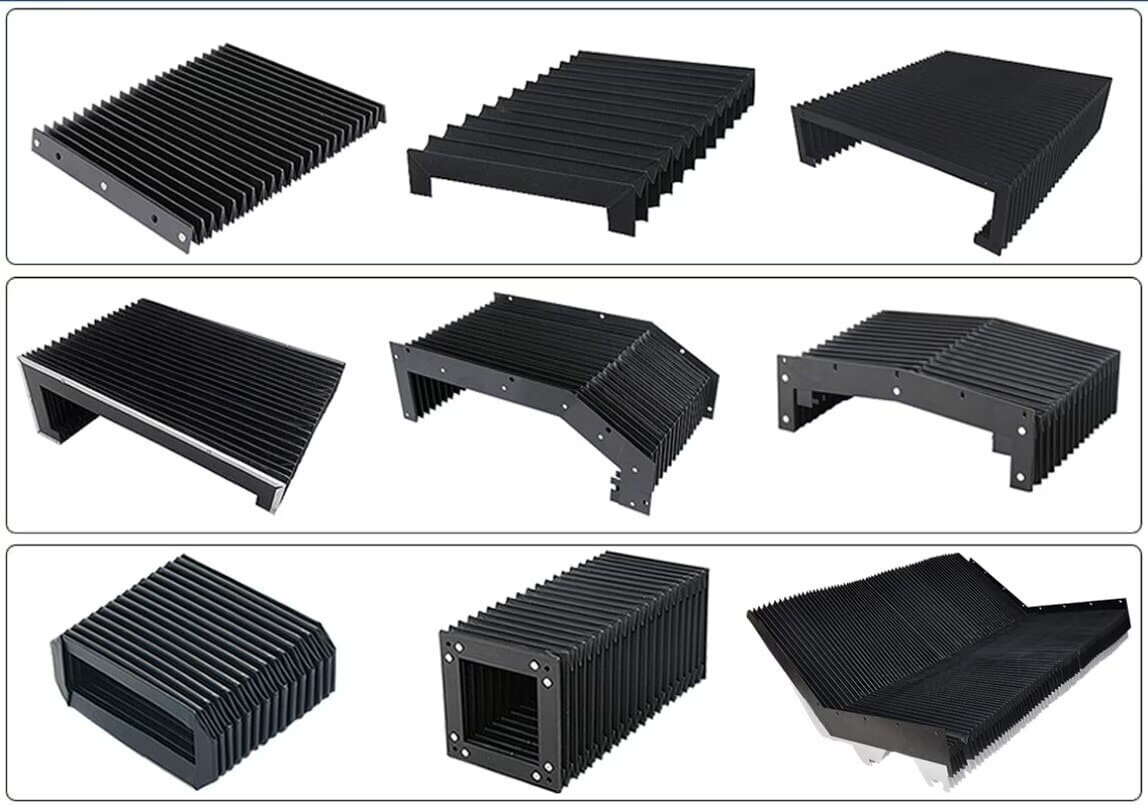
For a way cover versus spiral spring decision, identify the shape and exposed area first: a broad rectangular guideway, linear rail, machine slide, or table opening needs surface coverage, while a shaft, ballscrew, spindle, rod, or narrow axial opening needs cylindrical protection.
| Option | Protected geometry | When it applies |
|---|---|---|
| Telescopic guideway cover | Broad, flat guideway or rectangular slide | The moving table exposes a wide surface, several adjacent ways, or an opening vulnerable to direct chip impact |
| Spiral spring | Shaft, ballscrew, spindle, rod, or narrow linear opening | The protected member has a defined axis, concentric mounting, and enough radial clearance for the wound strip |
| Hybrid arrangement | Guideway plus separate shaft or screw | One machine exposes both a broad slide and an axial drive component |
A spiral spring follows its own axis; it does not seal the neighbouring guideway, mounting gap, or unsupported underside. Choosing it for a wide machine slide leaves those areas exposed. A telescopic cover is the stronger geometric match when the protection boundary is flat and broad, while a spiral spring suits a compact cylindrical envelope.
This is the key guideway cover comparison before you consider material, wiper design, debris, travel, or maintenance.
Match the cover to chips, coolant, and contamination
For hot, sharp swarf and heavy chip loads, telescopic sections usually provide the safer barrier. Their overlapping steel boxes take impact, while replaceable wipers close the interfaces. Spiral coils suit compact shafts, ball screws, or rods where low mass and short retracted length matter more than broad surface coverage.
| Environment | Telescopic guideway cover | Spiral coil |
|---|---|---|
| Hot swarf | Resists direct impact and shields a wide guideway; specify heat-tolerant wipers and chip deflection | Vulnerable to red-hot or long stringy chips striking or lodging between coils |
| Abrasive dust | Overlapping sections and wipers restrict dust reaching rails, but worn wipers create paths inward | Exposed coil gaps can admit abrasive fines; add a scraper or secondary bellows |
| Cutting oil and coolant | Handles broad splash exposure when joints, drains, mounts, and wiper preload are designed correctly | Protects mainly along its axis; adjacent surfaces and mounting gaps remain exposed |
| Fine contamination | Better for enclosed linear guides and table ways, but it is not hermetically sealed | Compact, but coil movement can carry trapped fines into the protected shaft or screw |
Treat spiral spring machine protection as a complete system, not an isolated coil. A deflector can stop impact chips, and a scraper can remove oil or dust, but neither fixes inadequate radial clearance or a poorly protected adjacent guideway.
Inspect wipers for hardening, tears, uneven wear, and chemical attack; replace them before contamination reaches the sliding surfaces.
Check travel, retracted length, and motion before choosing
A cover that fits at full stroke can still fail if its retracted length blocks the machine or its mass exceeds the axis dynamics. Choose by geometry: guideway cover versus spiral spring for machines depends on the protected width, travel path, installation envelope, and motion profile.
| Option | Dimensional fit | Motion limits |
|---|---|---|
| Telescopic guideway cover | Requires the extended length to cover the full stroke and enough closed length, mounting depth, and section clearance when retracted. Suits broad rectangular ways and adjacent surfaces. | Check section mass, rapid-traverse speed, acceleration, vibration, orientation, and chip impact. Excessive acceleration can cause friction, rattling, or premature wear. |
| Spiral spring | Requires a defined axial centreline, concentric mounts, radial clearance for the wound strip, and room for its winding diameter. Suits a shaft, ballscrew, spindle, rod, or narrow opening. | Obtain rated travel, speed, cycle life, winding geometry, and mounting orientation. Misalignment or contamination can cause coil rubbing, uneven winding, fatigue, or lost spring force. |
Measure the axis at both limits: extended length, retracted length, stroke, cover width or spring diameter, and every nearby obstruction. Include mounting faces, service access, cable movement, and the required gap at full compression; a nominal travel figure alone will not prove physical fit.
For a telescopic design, compare moving mass with the axis acceleration and cycle frequency. For a spiral spring, confirm that the spring reaches full extension without coil separation and retracts without bottoming.
If one device cannot cover a wide way and a separate axial component, combine a guideway cover with a spiral spring or bellows rather than forcing one cover to do both jobs.
Compare rigidity, coil behaviour, and service requirements
Choose a telescopic guideway cover when you need structural stiffness and broad sealing; choose a spiral spring when a narrow axial opening and compact retraction matter more.
| Option | Rigidity and motion | Service trade-off |
|---|---|---|
| Telescopic guideway cover | Overlapping steel sections resist chip impact and guide themselves through the stroke. They suit broad ways, but poor alignment or excessive acceleration can cause binding, section lifting, or noise. | Inspect section alignment, clean trapped chips, clear drainage paths, and replace worn wipers. Lubricate sliding or rolling interfaces only as specified. |
| Spiral spring | The wound strip retracts compactly around a shaft, ball screw, rod, or spindle. It is a debris barrier, not a load-bearing bridge or guide; forced contact can permanently deform the coil or stop retraction. | Check concentric mounting, radial clearance, coil tension, and end attachments. Inspect for dents, cracks, loss of overlap, and sluggish return. |
| Hybrid arrangement | A guideway cover handles the broad guide surface while a spring protects a separate shaft or screw. Each device operates within its proper geometry. | Service both devices independently and prevent one cover from transferring loads or chips into the other. |
In a guideway cover comparison, wipers deserve the same attention as steel thickness. Hardened, torn, unevenly worn, or over-preloaded wipers let coolant and fines reach the way despite an intact cover. Match the profile and material to chip shape, coolant chemistry, temperature, and abrasive dust, then confirm replacement access before approving the design.
Turn the decision into a supplier specification
Send a drawing package, not a product label. For a way cover versus spiral spring decision, give the manufacturer enough detail to test the geometry, clearances, motion, and contamination risks against a specific design.
- Mark the protected component: guideway, linear rail, ballscrew, spindle, shaft, column, rod, or table opening.
- Show its width, height, length, exposed stroke, travel direction, and the surfaces that need coverage.
- State extended length, permitted retracted length, available installation envelope, radial clearance, and every fixed or moving mounting point.
- Record maximum speed, acceleration, cycle frequency, orientation, and the required cycle life.
- Describe chip size, hot-swarf temperature, cutting-oil exposure, coolant type, abrasive dust, moisture, and cleaning method.
- Identify neighbouring covers, hoses, cable carriers, lubrication points, access panels, and collision hazards.
- Specify whether the machine needs broad overlapping protection, a concentric opening, or a hybrid arrangement.
For spiral spring machine protection, include the shaft diameter, winding direction, mounting orientation, minimum winding geometry, and allowable coil movement. Do not let strip thickness stand in for a rated design.
Give SCUTES INDIA PRIVATE LIMITED these inputs with photographs of the installed area and one complete machine-cycle video. The supplier can then return a checked proposal showing cover dimensions, mounting details, travel limits, seals or scrapers, expected service points, and any dimension that must change before manufacture.
Related products
 | TELESCOPIC SPRING COVER Telescopic Spring Covers provide protection under extreme conditions. View product → |
 | TELESCOPIC COVERS A telescopic cover protects guide-way surfaces and components of moving axis of machines. View product → |
Frequently asked questions
What determines whether you need a guideway cover or a spiral spring?
Start with the protected geometry. A broad, flat guideway usually suits a formed or telescopic guideway cover, while a compact cylindrical or annular opening can suit a spiral spring.
Which option handles chips and coolant better?
Match the design to the contamination. A guideway cover can use overlapping sections and seals across a broad way; a spiral spring suits compact protection when its coil gaps, wiping action, and material resist the chips and coolant present.
What dimensions must you check before choosing?
Check total travel, maximum extended length, retracted length, available installation space, opening dimensions, moving mass, speed, acceleration, and interference throughout the stroke.
What should you include in a supplier specification?
State the protected geometry, travel, retracted length, speed and acceleration, chip type and size, coolant or oil, temperature, mounting points, clearance, cleaning access, and expected service conditions.
Related products
 | Roll Up Cover A roll-up cover is a highly durable and flexible protective solution designed to safeguard machinery, equipment, and valuable assets from dust,... View product → |
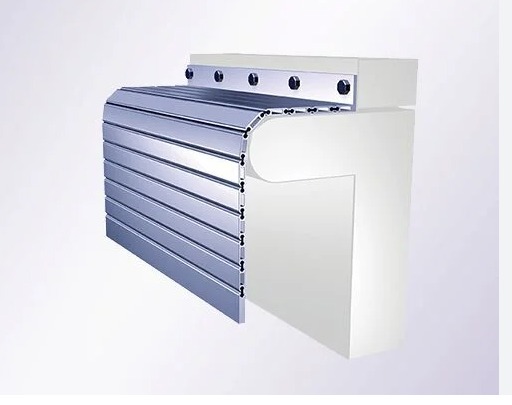 | APRON COVER Effectively engaged in offering a vast collection of outstanding quality products which include Apron Covers. View product → |
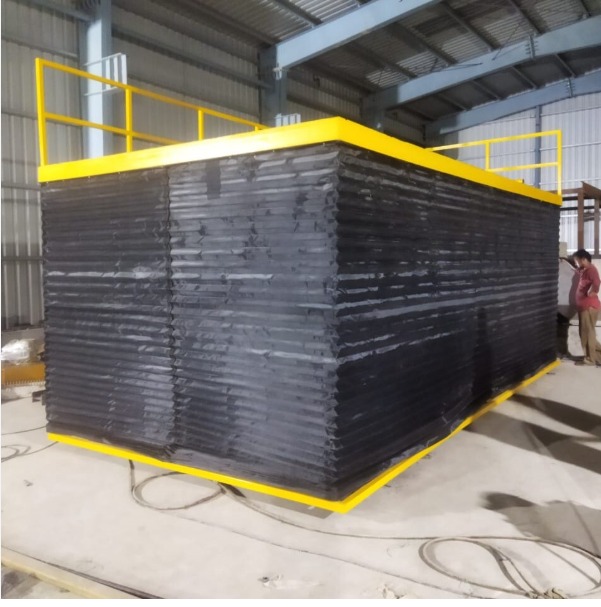 | SCISSOR LIFT BELLOWS Scissor Lift Bellows are one of the broadly demanded stabilizer for which we are considered an acclaimed designed in the market. View product → |
 | Machine Covers Machine covers are specially designed shields used to protect industrial equipment and machinery from environmental elements. View product → |