A reliable apron-cover specification starts with the machine’s travel path, not its table width or a guessed surface area. By the end, you will have a measured dimensional schedule, a cover-length calculation, and an itemized basis for comparing supplier quotations.
Key takeaways
- Define the cover type before recording dimensions or requesting prices.
- Measure opening width, exposed travel, retracted length and mounting space.
- Add strip pitch, bending clearance and retraction space to the size calculation.
- Price slats, hinges, frames, rollers, guides, fasteners and installation separately.
Define the apron cover dimensions before measuring price
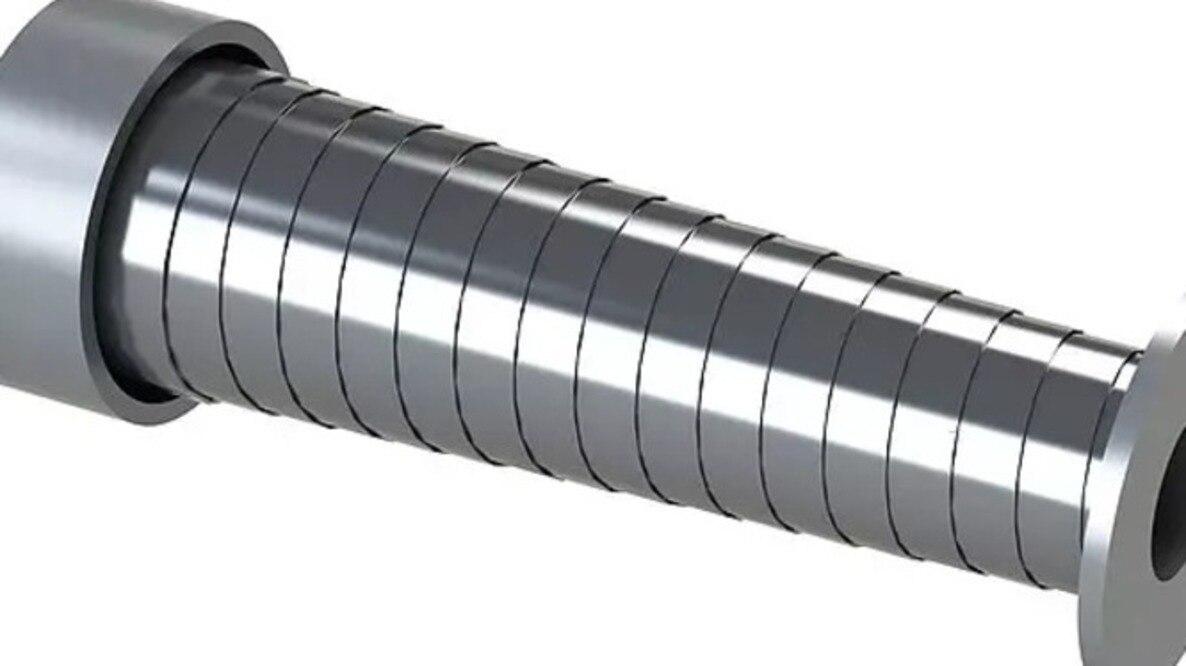
Define the cover as a complete moving assembly before discussing apron cover dimensions and pricing. “Apron cover” can mean articulated slats, a roll-up curtain, a roller shutter, or flexible bellows; these designs are not interchangeable. Record the protected opening width, maximum exposed travel, extended length, retracted length, and available mounting space.
Your apron cover size requirements should also specify:
- Slat or strip width, thickness, pitch, material, and minimum bending radius
- Mounting-edge dimensions, hole pattern, end attachments, side overlap, and required clearances
- The portion captured by the attachment, supported or wrapped when retracted, and any end overlap
- Wiper type, guide construction, intermediate supports, take-up method, and allowable travel
- Chip size, abrasive dust, coolant pressure, fluid type, temperature, alkaline washdown, tramp oil, and drainage needs
| Construction | Dimensions to fix | Comparison consequence |
|---|---|---|
| Articulated slats | Slat pitch, thickness, radius, guides, and stack length | Smaller pitch may reduce the retracted package but adds joints, wear, and cost |
| Roll-up curtain | Curtain thickness, drum diameter, side guides, and take-up travel | Drum size controls the retracted length |
| Roller shutter | Slat profile, barrel, guide clearance, and end load | A compact roll may require stronger guides |
| Flexible bellows | Fabric thickness, folds, slack, and mounting frames | It protects against contamination but is not automatically a safety guard |
Size the assembly for chip impact, coolant force, wiper drag, acceleration, vibration, and operator contact—not its own weight. If it must prevent access to a hazard, assess the complete guard, including impact resistance and interlocking, separately.
Measure the machine and separate coverage from manufactured size
Measure the machine’s protected opening and travel path, then convert those coverage figures into a manufactured cover by adding engagement, attachment, and movement allowances. Do not use nominal table width alone: rails, side frames, wipers, brackets, and thermal expansion can reduce the usable opening.
Record these measurements at full extension and full retraction:
- Maximum opening width that must remain sealed during the complete stroke
- Longest exposed travel along the movement axis
- Available mounting envelope, including height above the protected surface
- End clearances, mounting-hole pattern, obstructions, and guide positions
- Maximum extension, minimum retracted length, and the direction of movement
For the apron cover size calculation, use width equal to the maximum sealed opening plus the specified left and right side engagement or overlap. Required cover length equals the longest exposed travel plus the length captured by end attachments, the portion supported or wrapped when retracted, and any overlap at both ends.
The manufactured length must also fit the available mounting envelope and retracted stack space.
A machine drawing is more useful for quotation than “1,000 mm wide by 2,000 mm long.” Mark the travel path, attachment faces, obstructions, clearance at both positions, and the coverage zone. Those details establish the apron cover size requirements and separate usable protection from strip width, fabric slack, joint movement, and installation tolerance.
Include coolant pressure, temperature, fluid type, and chip size because these conditions can change wipers, materials, drainage, and joint protection even when the dimensions fit.
Calculate travel, retraction, strips and bending clearance
An apron cover size calculation separates maximum extension from the stored package, then checks bending clearance. Extended length must cover machine travel plus both end-attachment captures, the portions that remain supported or wrapped at retraction, and any required overlap at each end. End-position distance alone can leave the opening exposed.
- Extended length: Lext = required travel + end captures + retraction reserve + two end overlaps. Use the longest exposed travel, including any movement beyond the nominal end positions.
- Retracted package: Lstored ≈ Nstored × slat pitch + cassette length + end-frame and clearance allowances. The supplier must confirm the final stack height or roll diameter because slat thickness and hinge geometry change the package.
- Strip count: N = ceiling of the effective cover length ÷ slat pitch. Add terminal slats or attachment sections shown on the selected design; do not assume the mathematical result is the manufactured count.
- Allowable travel: Tallowable = extended cover length − fixed attachment, overlap and supported-length allowances. Specify usable travel separately from maximum extended length so the cover is not quoted at its physical limit.
Check the minimum bending radius before approving the layout. Available wrap radius must equal or exceed the slat design’s specified minimum; otherwise the apron can buckle, bind, fatigue its joints or overload the end attachment. Smaller pitch can reduce the package and bending radius, but adds joints, wear points and cost.
Include the radius, retracted envelope and travel in the drawing or quotation schedule.
Build an apron cover cost estimate from its bill of materials
Build an apron cover cost estimate from a bill of materials, not from width multiplied by length. Treat apron cover dimensions and pricing as separate until the construction type—articulated slat, roll-up, roller shutter, or flexible bellows—and its take-up arrangement are fixed.
Use a quote schedule that itemises:
- Cover assembly: protected width, maximum extended length, material, finish, slat pitch or thickness, and usable travel.
- Sealing parts: side engagement, wipers, guides, overlaps, and end attachments.
- Take-up hardware: roller, cassette, folding arrangement, brackets, and support frames.
- Machine-specific engineering: mounting adaptation, hole-pattern changes, drawings, and approval work.
- Site costs: installation, commissioning, packaging, and freight.
- Operating-duty allowance: speed, acceleration, duty cycle, coolant, chip load, ambient temperature, and target service life.
For a slat apron, smaller pitch can reduce the bending radius and retracted package, but it adds joints and may increase wear and maintenance. Price that choice as a design variable rather than assuming every cover with the same length has the same construction cost.
Ask suppliers to return each line with a quantity, unit price, and extended price. Include a machine drawing showing movement direction, mounting envelope, and the full travel path; a nominal size alone can hide guide or cassette costs.
SCUTES INDIA PRIVATE LIMITED can be included in the same comparison only when its quotation identifies these assembly and engineering items separately. Your total is the cover assembly plus engineering, installation, and freight—not the cheapest area-rate multiplied by nominal dimensions.
Related product
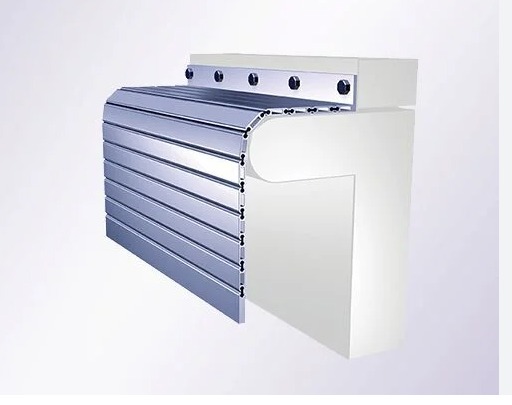 | APRON COVER Effectively engaged in offering a vast collection of outstanding quality products which include Apron Covers. View product → |
Prepare a quotation schedule and check the design against duty
Build a defensible quotation schedule from the apron cover size requirements and the machine’s operating duty, not dimensions alone. Request an itemized apron cover cost estimate: cover assembly + guides and mounting hardware + take-up or cassette + wipers and seals + engineering or customization + installation + freight and taxes.
This exposes omitted components behind a low cover price.
Send these details with the enquiry:
- Finished width, maximum extended length, usable travel, retracted envelope, minimum available radius, mounting-hole pattern, guide arrangement and orientation.
- Speed, acceleration, duty cycle, target service life, ambient temperature, material or finish, and required slat pitch or thickness.
- Coolant name and pressure, operating temperature, washdown chemistry, chip size and type, cast-iron dust, abrasive debris, and tramp-oil exposure.
- Drawings or photographs showing mounting faces, obstructions, drainage direction, end attachments and available installation access.
Check the design against these service conditions before accepting the quotation:
| Condition | Specify | Check before approval | Failure if missed |
|---|---|---|---|
| Fine or hot chips | Size and temperature | Slat joints, wipers and heat rating | Abrasion or warping |
| High-pressure coolant | Pressure and spray direction | Seals, overlaps and drainage | Leakage behind the cover |
| Alkaline washdown or oil | Fluid and concentration | Material and coating compatibility | Swelling, corrosion or cracking |
| Fast cyclic motion | Speed, acceleration and cycles | Slat pitch, guides and take-up | Flutter, jamming or early wear |
A flexible apron cover is not automatically a safety guard. Assess interlocking, impact resistance and fixed-distance protection separately under the machine risk assessment.
Frequently asked questions
What dimensions do you need before pricing an apron cover?
Record the protected opening width, maximum exposed travel, extended length, retracted length and available mounting space. Also identify whether the cover is an articulated slat, roll-up curtain, roller shutter or flexible bellows assembly.
How do you calculate apron cover size?
Separate the machine opening from the manufactured cover size, then calculate the required travel, retraction length, strip or slat pitch and bending clearance. Include mounting frames, guides and end allowances in the manufactured dimensions.
What belongs in an apron cover cost estimate?
List the slats or strips, hinges, guide frames, rollers, shafts, bearings, stops, fasteners, seals, surface treatment, assembly, testing, packing, freight and installation as separate cost items.
How do you check an apron cover quotation against machine duty?
Compare the quoted materials and construction with exposure to chips, coolant, oil, heat, impact, speed, cycle frequency and unsupported span. Confirm that the cover has enough clearance throughout its full travel and retraction.