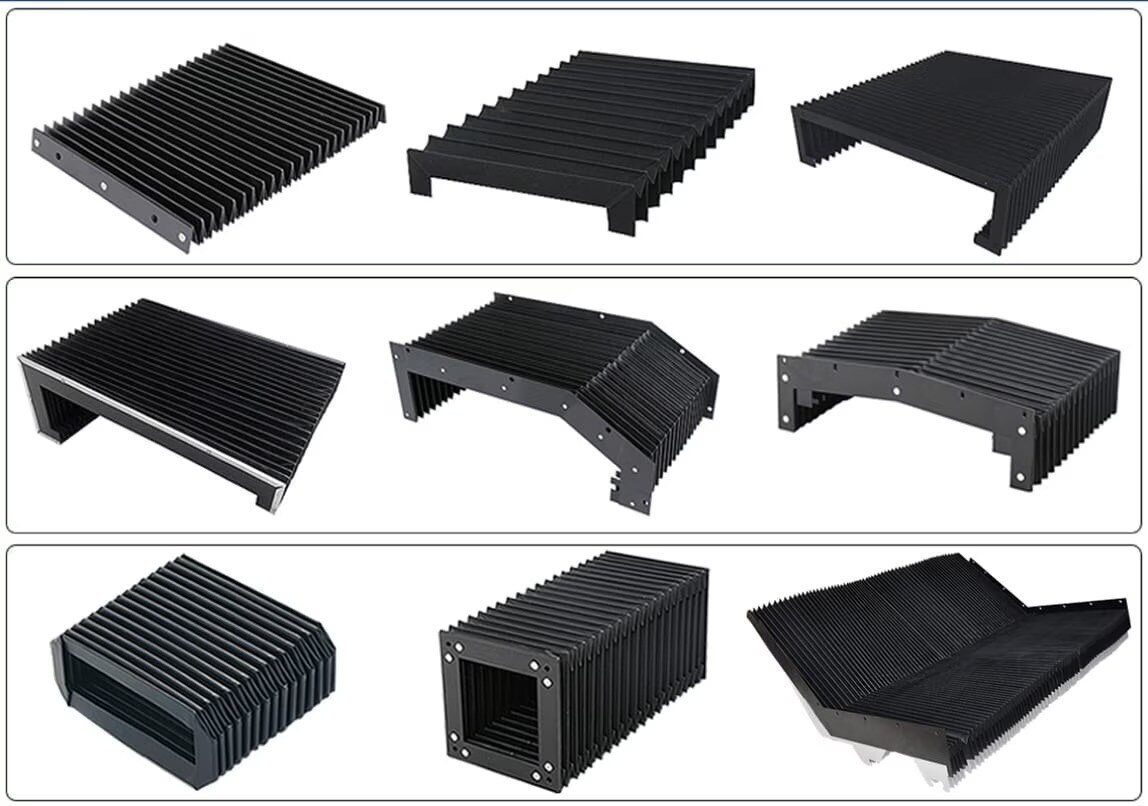
The wrong bellows can tear at full extension, trap against a scissor arm, or fail after contact with oil and cleaning chemicals. Use the lift’s movement data, hazard profile, mounting geometry and test requirements to compare manufacturers before you approve a custom part or pay for a replacement.
Key takeaways
- Measure closed, extended and folded dimensions before requesting a quote.
- Match bellows material to coolant, oil, chips, heat and abrasion exposure.
- Require drawings, samples and full-motion tests before approving production.
- Compare replacement cost with installation time, lead time and support.
Start with the lift position, hazard and guarding duty
Start by stating where the lift moves, what it exposes, and whether the bellows controls contamination, access, or both. Scissor lift bellows for protection are useful when dust, chips, oil, coolant, water, abrasion, or moving pinch and shear areas threaten components or people.
- Beneath a platform: use scissor lift bellows for platforms to shield the folded mechanism and lower structure from falling debris, fluids, and hand access.
- Between scissor arms: protect the closing gaps where clothing, fingers, chips, or abrasive particles could enter.
- Around a hydraulic actuator: contain oil spray and dirt while allowing the cylinder to extend and retract without rubbing on the bellows.
- Around a cable or hose route: reduce exposure to abrasion, coolant, water, and chips along the moving route.
Before proposing a design, the manufacturer needs the ISO 12100 risk-assessment assumptions, required access prevention, visibility needs, and openings that the bellows must address. A flexible cover is not automatically a compliant machine guard; define the required strength, retention, clearance, and inspection access instead of asking the supplier to infer them from a drawing.
A cable or hose bellows does not define minimum bend radius, strain relief, separation, or guided routing. Specify those separately, including the cable carrier or hose guides, attachment points, and permitted movement; otherwise the cover can fold correctly while the hose kinks or the cable pulls loose.
Turn machine movement into a complete custom size
Turn scissor lift movement into a complete custom size by sending the manufacturer the machine’s full travel envelope, not just platform width and length. A custom scissor lift bellows must follow the arms without overcompression, overextension, buckling or contact with arms, rollers or nearby structure.
- Minimum and maximum platform height, vertical stroke, closed height, extended height and folded height.
- Bellows width and length at every position.
- Number and pitch of folds, allowable compression, fold direction and the full folded-and-extended envelope.
- Lateral and vertical clearances throughout travel, including corner geometry and any pinch points.
- Mounting-hole pattern, available flange or clamping surfaces, attachment method and every end stop.
- Travel speed, cycle rate, acceleration and representative operating load.
- The actual minimum and maximum positions, including stops, pauses and reversals.
- Clearance changes caused by hoses, cables, rollers or scissor arms as the platform moves.
- A dimensioned drawing with tolerances.
- Photographs taken from several sides with a ruler or other scale.
- Envelope dimensions and machine-movement data.
- A marked-up installation view showing mounting faces, fold direction, hazards and end stops.
This scissor lift bellows custom sizing information determines fold geometry, support and attachment—not merely width, length and material. Ask for a motion trial across the full envelope; a bellows that looks correct when stationary can buckle, stretch or rub during repeated operation.
Select material and construction for the real exposure
Compare scissor lift bellows material selection against the actual exposure list, not a generic label. List hydraulic oil, grease, coolant, cleaning chemicals, UV, humidity, heat, sparks, sharp chips and abrasion, then request compatibility data for the exact fluid and concentration; coating, reinforcement, thickness, seams and fold geometry change performance.
| Material | Compare for | Confirm before choosing |
|---|---|---|
| Coated fabric | Oil, coolant, abrasion and flexible movement | Coating, seam method, UV and chemical limits |
| Neoprene | Oil, grease, humidity and moderate heat | Exact oil, solvent and temperature compatibility |
| Polyurethane | Abrasion, oils and repeated flexing | Coolant, cleaning-agent and hydrolysis limits |
| PVC | Moisture, coolant and economical coverage | Plasticiser loss, cold flexibility, UV and solvent limits |
| Silicone | Heat, humidity and clean surfaces | Oil resistance, tear strength and spark exposure |
| Aramid-reinforced fabric | Sharp chips, abrasion and high tear resistance | Coating, fold radius and flame performance |
| Leather | Abrasion and sparks in selected applications | Oil, washdown, humidity and maintenance limits |
Ask the manufacturer for the operating-temperature range, flame requirement, outdoor UV rating, washdown pressure, anti-static specification, and cleanroom or food-contact restrictions. A temperature rating alone does not select the scissor lift bellows material.
Construction also determines service life. Confirm pleat depth, reinforced corners, wear strips, internal frames, guide belts, drainage, end flanges, protected fasteners, and hook-and-loop or bolted attachment. The manufacturer must match each feature to the requested motion; adding every feature can restrict travel, increase folded height or create snag points.
Ask for the minimum fold radius and an installation drawing before approval.
Qualify the manufacturer with drawings, samples and motion tests
A capable scissor lift bellows manufacturer proves the design, not merely its ability to copy a sample. Require a controlled drawing showing folded and extended dimensions, fold pitch and count, seam orientation, mounting-hole pattern, material construction, reinforcement layout and allowable tolerances. Include the lift’s clearances and attachment details.
- Request an engineering review based on the lift’s kinematics, including minimum and maximum platform positions, speed, acceleration, cycle frequency and load.
- Record the seam or welding method, reinforcement locations, material batch traceability, chemical and temperature limits, fold requirements and inspection criteria.
- Require installation instructions, permitted repair methods and declared exclusions for oils, solvents, welding spatter, sharp chips, outdoor UV and other identified exposures.
- Approve a first sample against the drawing, then document every change before production release.
- Inspect the sample at full stroke, maximum speed and the actual cycle frequency; a stationary visual check will not reveal buckling, snagging, fold fatigue or seam failure.
- Run a motion or endurance trial through minimum and maximum platform positions with representative load, expected dust, chips, oil, coolant or water, and repeated cycles.
Use this comparison for SCUTES INDIA PRIVATE LIMITED and every alternative:
| Evidence | Capable manufacturer | Sample-matching fabricator |
|---|---|---|
| Engineering record | Controlled drawing and signed review | Verbal dimensions or catalogue size |
| Production control | Traceable materials, tolerances and inspection records | Material name without batch or process evidence |
| Validation | Recorded full-envelope motion test | Stationary inspection or generic cycle-life claim |
| Support | Installation, repair limits and exclusions | No defined remedy after failure |
Related product
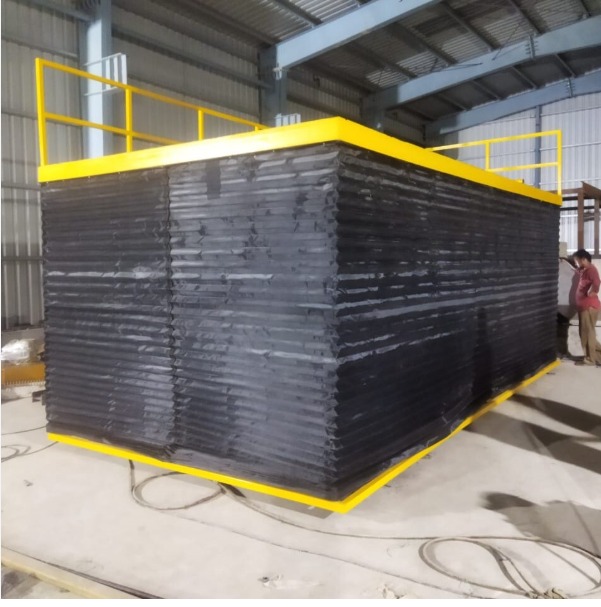 | SCISSOR LIFT BELLOWS Scissor Lift Bellows are one of the broadly demanded stabilizer for which we are considered an acclaimed designed in the market. View product → |
Evaluate replacement cost, installation and after-sales support
Compare scissor lift bellows replacement options by identifying why the old part failed before copying its dimensions. Record fold fatigue, seam failure, abrasion at the mounting edge, snagging, trapped debris, misalignment, unsupported weight, chemical swelling, embrittlement and incorrect folded length. Then request a controlled replacement drawing, not an “equivalent” part based on photographs alone.
Separate scissor lift bellows replacement cost into these quote lines:
| Cost item | Include | Why it matters |
|---|---|---|
| Recurring part | Bellows, reinforced flanges, special coatings and inspection | Shows the repeat purchase price |
| Nonrecurring engineering | Engineering, pattern or tooling charges, low-quantity production | Prevents setup costs being hidden |
| Installation and delivery | Installation labour, access, expedited delivery | Exposes the real changeover cost |
| Downtime | Shutdown hours and production loss | Connects the replacement to operational impact |
Ask the supplier for clear after-sales responsibility:
- Who supplies replacement wear strips, and what repair policy applies?
- Who provides installation guidance and dimensional support after delivery?
- Does the quote state lead time, dimensional tolerances, material limits, exclusions and the acceptance test?
Require the acceptance test to cover full stroke, folded length, clearance and attachment security. A lower part price is not a saving when installation requires repeated shutdowns or the replacement reproduces failed geometry. Reject any supplier that cannot explain how its design prevents snagging, overcompression and overextension.
Frequently asked questions
What should you assess before choosing scissor lift bellows?
Identify the lift’s travel path, exposed components and hazards, then decide whether the bellows must control contamination, prevent access to pinch and shear points, or perform both duties.
What measurements are needed for custom scissor lift bellows?
Provide closed, extended and folded lengths; width and height; mounting-hole positions; fold height; clearance to the scissor arms; and the required travel direction.
How do you choose scissor lift bellows material?
Match the material and construction to the actual exposure, including dust, chips, oil, coolant, water, heat, abrasion, cleaning chemicals and repeated flexing.
How can you qualify a scissor lift bellows manufacturer?
Request a dimensioned drawing, material specification and prototype, then test the bellows through the complete lift motion while checking rubbing, buckling, stretching and mounting security.
What should you compare when buying a scissor lift bellows replacement?
Compare the part price with installation time, shipping, production downtime, lead time, expected service life, spare-part availability and after-sales technical support.