A laser machine needs a cable drag chain only when its cables, hoses or optical conduits move repeatedly with an axis and require controlled bending. By the end, you will be able to identify whether your machine needs a carrier, choose its size and configuration, and reject designs that risk cable failure or interfere with the work envelope.
Key takeaways
- Use a drag chain when cables or hoses move repeatedly with an axis.
- Choose a fixed loop for light, slow movement with adequate bend space.
- Size the carrier from bundle diameter, bend radius, weight and travel.
- Protect the carrier from hot slag, sharp chips, coolant and laser debris.
When a laser machine actually needs a cable drag chain
A laser machine needs a cable drag chain only when cables, hoses or optical conduits travel repeatedly with a moving axis. Fixed electrical connections and static hose runs on a fixed-head machine need no carrier.
| Machine arrangement | Decision | Reason |
|---|---|---|
| Fixed-head laser | No, unless services move | Stationary connections and hose runs remain controlled without a carrier. |
| Moving-head CO2 or fibre laser | Yes, or verify with the builder | The head’s repeated travel needs controlled routing for power, feedback, sensor and process services. |
| Gantry or moving Z-axis | Usually yes | Long travel, vertical movement, acceleration and unsupported weight can cause sagging, buckling or cable fatigue. |
| Rotary attachment | Yes, if services rotate or translate | Coolant, pneumatic lines and wiring need a designed movement path. |
| Existing engineered routing | Verify before ordering | A supported fixed loop, flexible conduit or separate routing system may already control the movement. |
For a cable drag chain for laser machine in kolkata, check travel length, each cable’s dynamic bend radius, cable and hose weight, speed, acceleration, mounting orientation and the builder’s routing design together. A standard static cable is not automatically suitable for continuous flexing.
The carrier guides and separates services; it does not shield the laser beam, protect the work area or replace guarding. Request a chain only after confirming that no fixed loop, flexible conduit or builder-designed routing system already performs that job.
Choose between a drag chain, fixed loop and laser bellows
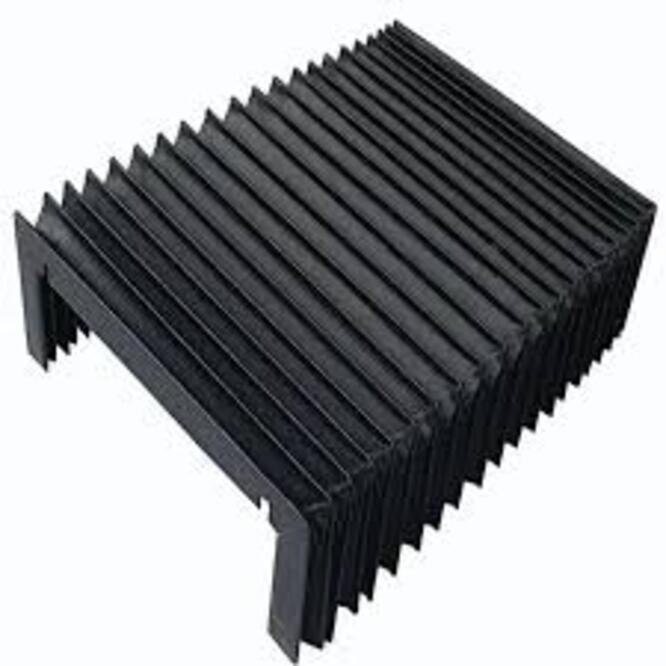
Choose a drag chain when services travel repeatedly with an axis and need controlled routing. A laser-machine bellows is different: it covers guideways or internal machine parts, while a carrier manages moving servo cables, feedback wiring, sensor lines, pneumatic and cooling hoses, and approved optical conduits.
| Option | What it means | When it applies |
|---|---|---|
| Drag chain | Linked carrier guiding a moving bundle | Gantry, moving head, Z-axis or rotary travel with repeated motion |
| Fixed loop | Supported cable or hose loop with no chain | Limited movement, with the loop relaxed, supported and outside the beam path |
| Flexible conduit | Bendable protective sleeve with secured ends | Only when its bend radius suits every service and the builder has designed secure end fittings |
| Energy chain | Engineered cable carrier, often used as another name for a drag chain | When its bend radius, separators, mounting and load data match the bundle |
| Laser bellows | Flexible cover for guideways or internal machine parts | Contamination control; it does not organise moving services |
Do not treat a cable hose carrier in Kolkata as interchangeable with a carrier for encoder, fibre-optic and power cables. Compare the internal layout, dynamic bend radius, separators and mounting hardware. A hose-only carrier can leave signal cables cramped, unsupported or bent beyond their rated radius.
Confirm the machine builder’s routing design before substituting a fixed loop, conduit or energy chain.
Size the carrier from the actual cable and hose bundle
Do not choose a laser machine cable carrier by outside dimensions or internal width alone. Build the specification from the complete moving bundle and the axis that carries it.
1. List every servo, power, encoder, sensor, fibre-optic line, pneumatic hose, coolant hose and protective conduit. Record each service’s outside diameter, width, height, weight, dynamic minimum bend radius, travel, speed, acceleration and required replacement length.
2. Set the carrier radius from the cable manufacturer’s dynamic minimum bend radius, not from the chain’s external size. A smaller radius can fatigue conductors, damage shields and create intermittent encoder faults. Add movement clearance rather than packing the cavity; roughly 10% clearance around round cables is a practical starting point.
3. Separate services that differ in weight or motion. Use internal shelves or vertical separators to keep heavy coolant and pneumatic hoses from crushing signal, encoder and fibre lines. Lay all services parallel, never crossed or twisted.
4. Check chain length against travel, end geometry and replacement needs. Confirm the unsupported span, guide-trough requirement, mounting orientation and whether the carrier will sag or buckle on a long gantry or vertical Z-axis. Clamp every cable and hose at both ends so connectors carry no tensile load.
A short horizontal X-axis may need no trough; a long, fast or vertically mounted run often does. Specify the complete routing arrangement, not a chain that merely fits the bundle.
Route and commission the carrier around laser-cutting hazards
Route the carrier inside the machine envelope, not along the shortest path. Keep it outside the laser beam path and clear of hot metal spatter, sharp swarf, smoke, dust, coolant mist, radiant heat, moving workholding and rotary attachments.
A short horizontal X-axis run may work with an open polymer carrier. A long gantry or vertical Z-axis run adds cable weight, unsupported length and gravity; it may need a guide trough, higher-load construction or a different mounting orientation to prevent sagging and buckling.
Choose an enclosed or covered carrier when abrasive dust, metal chips, coolant mist or frequent washing can enter an open design. Specify coolant-compatible polymer, coated hardware or stainless hardware when humidity, chemicals or heat would corrode carbon steel. These choices add weight and cost, and some plastics retain less heat capability.
An IP rating for one component does not prove that the complete carrier, fittings and cable exits are sealed.
Lay every cable and hose parallel, without crossing or twisting. Separate heavy coolant or pneumatic hoses from encoder, signal and fibre lines, and preserve their dynamic bend radius through the entire stroke.
Commission with this checklist:
- Run at low speed and inspect both stroke limits.
- Confirm cables remain relaxed and separated, with no reverse bend or sharp end fitting.
- Check for rubbing, flattening, migration and trapped debris.
- Increase to operating acceleration and inspect for sagging, buckle or pull at the end fittings.
- Recheck after initial operation, when settling can expose a routing fault.
What to ask an industrial cable-chain supplier in Kolkata
Give an industrial cable-chain supplier in Kolkata a machine-specific brief, then compare replies against the same checklist.
1. Request the allowable bend radius, permissible cable and hose diameters, recommended fill percentage, unsupported length, guide-trough requirement, material compatibility, operating temperature range, mounting drawing and installation instructions.
2. State the machine’s travel, speed, acceleration and orientation. Identify every service: power, encoder, feedback, fibre, sensors, pneumatic lines and coolant hoses. Include humidity, dust, coolant, cleaning chemicals and the required replacement length.
3. Ask whether the proposed cable drag chain for laser machine in Kolkata suits a short horizontal X-axis, long gantry or vertical Z-axis. Weight, unsupported span and acceleration together determine whether the carrier sags, buckles or needs a trough.
4. Check construction against the environment. Carbon-steel hardware can corrode in damp or contaminated service; stainless steel, coated hardware or engineered polymer costs more, while some polymers trade corrosion resistance for lower temperature or load capability.
5. Confirm that separators, end fittings and clamps suit signal and fibre cables, not only large hoses. A cable hose carrier is not automatically interchangeable with a laser-machine carrier.
SCUTES INDIA PRIVATE LIMITED can be considered when you want to discuss bellows or other protective machine components alongside routing, but the specification must come from the machine layout and service data.
Select the complete routing system, not a chain that merely fits the bundle.
Related product
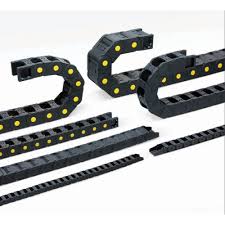 | Cable Drag Chain Cable drag chains are a vital component in modern industrial equipment and automation systems. View product → |
Frequently asked questions
When does a laser machine need a cable drag chain?
Use a drag chain when power cables, signal cables, hoses or optical conduits travel repeatedly with a moving axis. Fixed connections and static hose runs do not need a carrier.
Should you use a drag chain, fixed loop or laser bellows?
Choose a drag chain for guided repeated movement, a fixed loop when the cable has enough open bend space and light duty, and laser bellows when flexible protection from dust, fumes, sparks or heat is the priority.
How do you size a laser machine cable carrier?
Measure the actual cable and hose bundle, then check its total weight, minimum bend radius, travel length, unsupported span and separation requirements. Do not size the carrier from the machine name alone.
What hazards must you check when routing a laser cable carrier?
Keep the carrier clear of hot slag, sharp sheet offcuts, chips, coolant, oil, pinch points and the laser work envelope. Confirm smooth travel at full stroke before commissioning.
What should you ask a cable-chain supplier in Kolkata?
Ask for the carrier’s internal dimensions, supported bend radius, load and travel limits, material, temperature range, mounting details, replacement-part availability and application experience with laser machines.