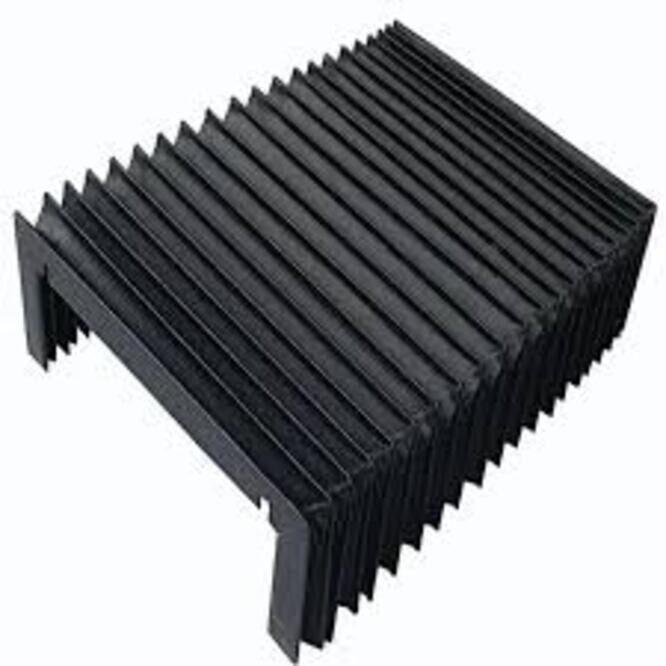
A laser axis can lose motion accuracy when metal dust, hot particles, coolant mist or cutting residue reaches its guideways, ballscrew, rack, bearings or seals. By the end, you will know how spiral spring protection works, when it suits a Coimbatore laser machine, how to specify and install it, and how to compare supplier quotations without overlooking service or fit.
Key takeaways
- Match cover travel, retracted length and clearance to the laser axis.
- Confirm spring material, seal design and coolant compatibility before ordering.
- Check smooth travel, full coverage and fastener security during acceptance.
- Compare Coimbatore quotations by drawings, test records, warranty and service scope.
How spiral spring protection works on a laser axis
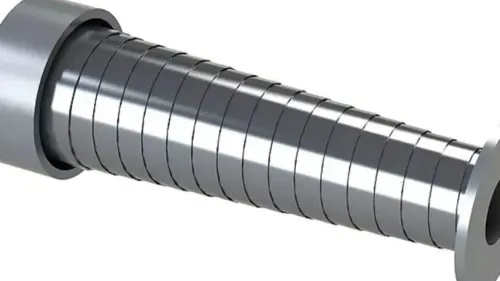
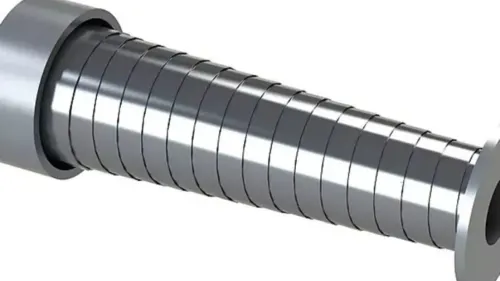
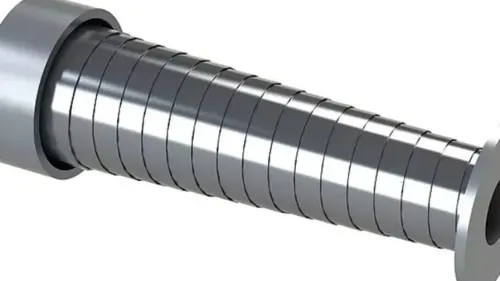
A spiral spring way cover is a moving shield made from overlapping spring-steel coils or slats. As the laser axis travels, the elements wind into a compact roll instead of stacking in a long retracted package. Its short folded length suits crowded enclosures and limited side clearance.
This is spiral spring guideway protection: it blocks chips, abrasive dust, coolant splash, hot particles, and incidental contact from motion hardware. It does not replace the machine enclosure, fume extraction, or laser safety enclosure.
The covered machine elements can include:
- Linear guideways, rails, and bearing blocks exposed beneath a moving axis
- Ball screws, screw nuts, and their seals
- Racks, pinions, and exposed linear-drive surfaces
- Moving optical-axis mechanisms near the laser head, where the cover cannot obstruct beam travel
- Cable routes only when the cover geometry and flexible-cable movement are designed together
For way cover benefits for spiral spring protection laser equipment in Coimbatore, match the cover to fiber-laser dust, sheet-metal scale, coolant exposure, humidity, washdown practice, and axis duty cycle—not nominal laser power alone.
| Cover type | Retraction and sealing | Best-fit situation |
|---|---|---|
| Spiral spring | Very compact; end gaps and wipers need careful design | Fast axes with restricted side clearance |
| Telescopic steel | Longer retracted package; rigid chip deflection | Heavy chips and severe impact |
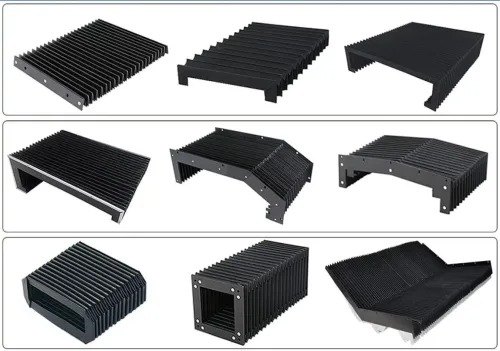
| Fabric bellows | Folds easily; broad enclosure coverage | Irregular geometry or larger sealing areas |
The practical benefits and limits for laser equipment
A spiral spring cover improves laser-axis motion by keeping abrasive dust, sheet-metal debris and smoke residue away from the guideway and ballscrew while the axis travels. Its overlapping steel coils retract into a short roll, preserving side clearance in a crowded enclosure and reducing the chance that a long folded cover obstructs nearby components.
The machine way cover benefits include cleaner bearing interfaces, longer guideway and screw service intervals, and steadier motion as seals and rolling elements wear less. These are reliability benefits, not a promise of better cut quality; focus, beam delivery, assist gas, calibration, rigidity and process settings still control the cut.
The compact design has limits. Gaps at end connections or mounting transitions can admit fine dust, while spring steel is not automatically pressure-tight against a high-pressure coolant jet. Specify spray direction, coolant pressure, chip size, hot-particle exposure and axis duty cycle before selecting it.
| Option | Main advantage | Better choice when |
|---|---|---|
| Spiral spring cover | Short retracted length and rapid repeated travel | Side space is tight and protection targets dust, chips or splash |
| Telescopic steel cover | Rigid deflection against severe impact | Large machine-tool chips or heavy mechanical contact are expected |
| Fabric or coated-fabric bellows | Flexible enclosure around irregular geometry | The axis shape needs broad sealing or complex folds |
| Roll-up or apron cover | Simple coverage over a longer opening | The travel path permits a larger roll and moderate protection |
The way cover benefits laser machines disappear if the cover rubs, blocks head movement or leaves a beam-path obstruction. Choose another type when sealing, rigidity or impact resistance matters more than compactness.
Dimensions and operating data to specify before buying
Measure the cover envelope in both positions: fully extended length, retracted length, outside diameter or folded height, width, travel, and mounting-plane location. Include the guideway, ballscrew, rack, cable route, and laser-head clearance; a cover that fits the rail can still obstruct the head or enclosure door.
Specify these operating data before requesting a drawing:
- Axis speed, acceleration, stroke frequency, daily cycles, travel orientation, and permitted moving mass.
- End-connection geometry, side clearance, coil diameter, overlap, wiper contact, and the minimum distance from the beam path and hot-work zone.
- Fiber-laser dust, sheet-metal scale, chip size and temperature, coolant type, pressure, spray direction, washdown practice, ambient humidity, and enclosure temperature.
| Cover type | Space and motion data | Process conditions |
|---|---|---|
| Spiral spring | Short retracted length; repeated linear travel; clear side space for coil diameter | Chips, abrasive dust and splash; not a high-pressure coolant jet |
| Telescopic steel | Room for nested boxes and greater folded height | Heavy chips, hot particles and stronger impact protection |
| Bellows | Allowance for folded pack height and guided extension | Fine dust, fumes and splash when sealed fabric and wipers suit the process |
| Roll-up or apron | Drum or return space and controlled travel path | Broad guideway coverage where compact storage matters |
Ask for the extended and retracted dimensions, maximum speed, acceleration, cycle-life basis, temperature limit, and sealing details in the quotation. Assess machine way cover benefits through cleaner guideways, screws and bearings—not a guaranteed improvement in cut quality. Beam delivery, focus, assist gas, rigidity and calibration still control that result.
Installation, acceptance checks and maintenance routine
Mount the cover with its centreline parallel to the axis and connect both ends to rigid, machine-designed brackets. Set the retracted roll clear of the laser head, cable route and enclosure, then confirm that the extended cover cannot contact the guideway, screw or rack.
Fit wipers squarely against the protected surface; an offset wiper creates a continuous leakage path for dust and coolant. These way cover benefits laser machines only appear when the cover, end seals and mounting transitions work as one system.
- With power isolated, move the axis slowly through its full travel. Watch for rubbing, coil binding, buckling, vibration or a wiper that lifts from the surface.
- Measure clearance at both travel limits and at the point where the spring roll changes direction. Check the laser head and cable carrier separately.
- Inspect every end connection and joint for open corners, screw gaps or exposed guideway. Seal the machine-side transition without blocking spring movement.
- Run the axis at its rated speed, then inspect for heat, noise and uneven winding. Stop if the roll climbs, twists or stalls.
- Shine a light from the dirty side and confirm that no direct opening reaches the guideway.
Schedule cleaning around the cutting process, not just calendar time. Remove settled smoke residue and abrasive dust from the coil and wipers using the approved method; replace a hardened, torn or permanently curled wiper. Record travel hours, rubbing marks and spring damage so spiral spring guideway protection is corrected before it obstructs motion.
How to evaluate a Coimbatore supplier and quotation
A quotation is useful only when it proves the cover fits your axis, not when it merely names a way cover supplier in Coimbatore. Request a drawing and test evidence before comparing prices.
- Ask for the required travel, retracted length, open and closed height, cover width, mounting pattern and side-clearance dimensions.
- Require the spring-steel material grade, thickness, surface treatment, wiper material and end-connection details.
- Provide axis speed, acceleration, cycle profile, mounting orientation and allowable moving mass; request cycle-test results at comparable duty.
- Specify fiber-laser dust, sheet-metal scale, coolant pressure, spray direction, hot or sharp chips, humidity and washdown practice, then require the supplier to state the tested limits.
- Request inspection records for dimensions, welds, spring tension, wiper contact and leakage paths, plus a drawing marking beam-path and head-clearance zones.
- Ask whether the proposed design is a spiral cover, telescopic cover, bellows, roll-up cover or combination, and why its folded height and sealing method suit your machine.
The same evidence should come from SCUTES INDIA PRIVATE LIMITED as from any shortlisted manufacturer. Do not accept generic claims about machine way cover benefits or the way cover benefits for spiral spring protection laser equipment in Coimbatore without figures tied to your axis.
A poor fit costs more than the quotation gap: excessive moving mass raises drive demand and following error; imbalance creates vibration; tight clearances cause rubbing; end gaps admit dust and coolant; and premature wiper or spring failure adds installation rework, lost production and guideway or bearing contamination.
Frequently asked questions
How does spiral spring protection work on a laser axis?
Overlapping spring-steel coils or slats wind into a compact roll as the axis moves, shielding the guideway while requiring less retracted space.
What are the practical benefits and limits of spiral spring way covers for laser equipment?
They save enclosure space and protect against chips, dust and incidental coolant, but you must verify travel speed, heat exposure, sealing, access and resistance to abrasive debris.
What dimensions and operating data should you specify before buying?
Provide axis travel, extended and retracted lengths, cover width and height, mounting points, operating speed, acceleration, temperature, contamination type and available clearance.
How should you evaluate a Coimbatore supplier and quotation?
Compare the supplier’s dimensional drawing, material and seal details, operating limits, inspection records, installation instructions, warranty and local service response.