A spring-driven cover can save installation space on a laser axis, but it also adds moving mass, friction, maintenance and a second set of dynamic limits. You will be able to identify the cover type, check whether it fits your machine, compare it with alternatives and decide whether its protection justifies its operating and lifecycle cost.
Key takeaways
- Match the cover to axis travel, guideway length, debris, coolant, and heat exposure.
- Confirm retracted length, extended length, mounting points, and clearance before ordering.
- Choose added spring-cover mass when contamination costs exceed cleaning and repair time.
- Request drawings, material details, spring-cycle data, and maintenance instructions from the supplier.
What a spiral-spring guideway cover actually does during axis travel
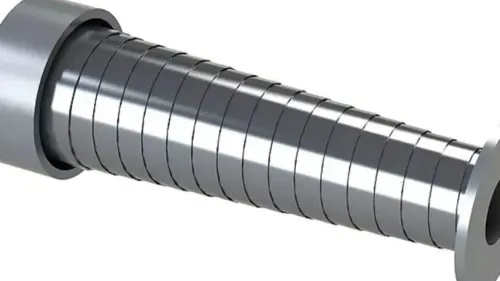
A guideway cover spiral spring is a spring-loaded slat assembly that shields a machine guideway while allowing the axis to move. As the laser axis retracts the cover, the slats wind into a fixed spring barrel or compact roll; as the axis travels outward, stored spring torque extends them across the exposed guideway.
The spring supplies return torque, not a constant closing force. Torque changes with the number of turns and the effective winding diameter, so the cover’s behaviour changes across its stroke.
A laser machine guideway cover therefore needs end supports, guided travel, side seals or wipers, and a defined clearance envelope around the barrel and moving slats.
Check these conditions before selecting the mechanism:
- Vertical mounting and long strokes can cause sagging or edge opening when available torque falls.
- Frequent reversals and high acceleration can create vibration, slat impact at travel ends, joint wear, or loss of alignment.
- The spring barrel, supports, guides, and retraction zone must remain clear of cable carriers, brackets, and other moving parts.
The cover protects rails, screws, and moving components from dust, dross, smoke residue, and debris. It is not a laser-safety enclosure and does not replace Class 4 guarding, interlocks, optical protection, fume extraction, or fire controls.
Which cover design matches the laser axis and its contamination
Match the cover to the contamination, not merely the laser axis. A spiral spring machine cover suits a clean or moderately contaminated axis with restricted space; heavy molten dross or sharp offcuts may justify a conventional telescopic steel cover or guarded tray instead.
| Option | Practical strength | Main limitation |
|---|---|---|
| Spiral spring cover | Heat-resistant steel or stainless-steel slats tolerate localized sparks and dross in a short retracted package | Abrasive residue can jam joints, and the slats can transmit vibration |
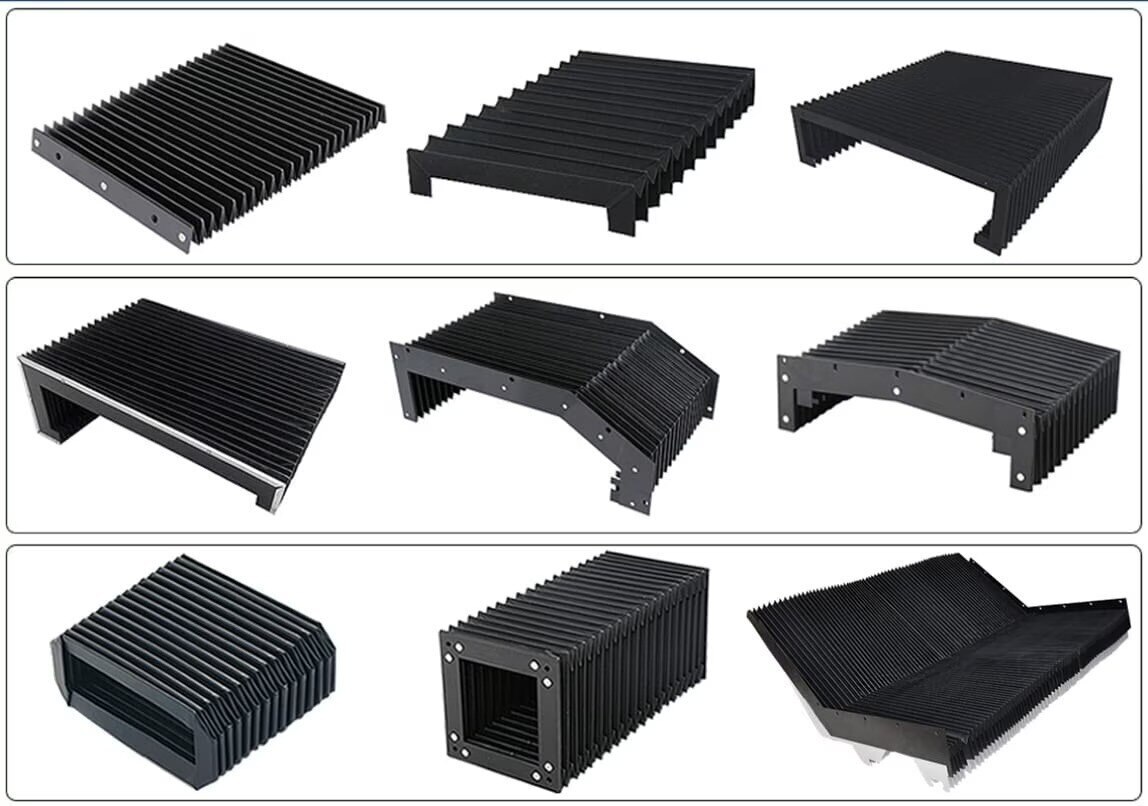
| Fabric bellows | Flexible coverage around irregular movements | Hot particles and sharp cutting debris can puncture or abrade the fabric |
| Roll-up or apron cover | Useful for layouts needing a particular opening direction | Requires winding space, accurate guidance and protected edges |
| Telescopic steel cover | Strong shielding against severe contamination | Adds mass, noise and package space |
Specify the exposure before choosing: hot dross, fine metal dust, smoke residue, sparks, assist-gas flow, coolant mist, cutting debris and the cover’s distance from the beam path or cutting head all change the risk. A nearby cutting head demands more heat and edge protection than a distant guideway.
For a laser machine guideway cover, require heat-resistant slats, a protected spring barrel, compatible side wipers and a written cleaning method. Remove residue before it reaches the joints; abrasive dust can seize the mechanism, while excessive wiper contact increases drag.
Confirm whether the axis needs a flexible bellows, guided roll-up system or heavier steel shielding rather than assuming one design fits every machine.
How to prove the cover will fit before you order it
Nominal machine travel is not enough to prove fit. Measure the guideway cover spiral spring against the exposed guideway and the space around it.
1. Record the protected guideway width and height, moving-axis stroke, travel direction, mounting orientation, open length, closed length and minimum available retracted package.
2. Draw the mounting-hole pattern, end clearances and full cover envelope. Add the spring-barrel diameter, compressed height and access space needed to remove slats, inspect wipers or replace the spring.
3. Map interference through the full axis stroke, including cable carriers, cutting heads, nozzle assemblies, trays, brackets, guards and sheet-loading paths. A laser machine guideway cover that clears at one end can still collide during reversal or loading.
4. Give the supplier maximum speed, acceleration, reversal frequency, expected vibration and coolant exposure. State the required seal compression, because excessive wiper compression raises drive load and wear, while insufficient compression lets fine dust and coolant mist through.
5. Require confirmation of dynamic limits for the actual cover length and mounting orientation, not only the machine’s axis rating. Ask for a drawing-and-motion review before fabrication showing the cover fully open, fully retracted and at both travel limits; check the spring barrel, slats, wipers and every mapped clearance in each position.
When the protection is worth the added mass and maintenance
A spiral spring machine cover is worth its mass and maintenance when it prevents recurring rail cleaning, abrasive contamination, bearing or screw wear, alignment loss, or residue-related downtime. Compare that avoided cost with added moving mass, friction, noise, installation space, cleaning time, and any loss of acceleration, positioning consistency, or travel speed.
| Axis condition | Preferred decision | Reason |
|---|---|---|
| Clean or moderately contaminated axis | Spiral spring cover | Frequent access and restricted space favour its compact package |
| Heavy molten dross, sharp offcuts, or abrasive dust | Guarded tray, separated guideway, or engineered telescopic steel cover | Stronger shielding can outweigh added mass and package size |
Require dynamic limits for the actual cover length and orientation, including acceleration, reversal frequency, vibration, and end-of-travel impact. A quoted laser-axis speed proves nothing about the cover’s limit. For machine protection in Coimbatore, include this production acceptance test:
- Run the real sheet material, cutting parameters, dross condition, extraction or coolant arrangement, axis speed, and cleaning routine.
- Check rail cleanliness, cover movement, positioning consistency, noise, friction-related drive load, and residue entering the retraction zone.
- Repeat after the planned production cycle, not only on a clean demonstration machine.
Inspect spring tension or breakage, slat deformation, joint freedom, wiper wear, loose fasteners, and residue in the retraction zone. Reject the design when cleaning or spring replacement is inaccessible; a damaged spring can leave the guideway exposed or move the cover suddenly.
What to confirm when sourcing and maintaining one in Coimbatore
Treat a guideway cover spiral spring laser machine solution in Coimbatore as a documented fit, not a catalogue choice. Ask each supplier for:
- A dimensional drawing showing compressed and extended lengths, spring-barrel clearance, cover envelope and mounting-hole locations.
- Slat material, spring material and heat-resistance limits matched to dross, smoke residue and abrasive dust.
- Allowable speed, acceleration and reversal rate for your axis orientation and stroke.
- Seal or wiper specification, required compression and a cleaning method that will not force residue into the joints.
- A production acceptance test using your sheet material, cutting parameters, dross condition, extraction or coolant arrangement, axis speed and cleaning routine.
| Evidence | Why it matters | Failure if missing |
|---|---|---|
| Fit drawing | Confirms holes, clearances and travel limits | Collision or exposed guideway |
| Service procedure | Defines spring replacement and tension adjustment | Sudden movement or poor retraction |
| Consumables list | Confirms springs, slats, wipers, seals and hardware | Long downtime awaiting parts |
The spring is a maintenance component, not a lifetime-free mechanism. Confirm inspection points for tension or breakage, slat deformation, joint freedom, wiper wear, loose fasteners and dross in the retraction zone, plus local stock and service response time.
SCUTES INDIA PRIVATE LIMITED is a local manufacturer and exporter to evaluate alongside other suppliers for machine protection in Coimbatore; compare documented fit, dynamics, consumable availability and test results, not location alone.
The cover is worth it when limited space and recurring contamination justify its mass, friction and maintenance. Reject it when severe dross exceeds its design or the supplier cannot prove fit, dynamics, serviceability and laser-safety integration.
Related products
 | TELESCOPIC SPRING COVER Telescopic Spring Covers provide protection under extreme conditions. View product → |
 | TELESCOPIC COVERS A telescopic cover protects guide-way surfaces and components of moving axis of machines. View product → |
Frequently asked questions
What does a spiral-spring guideway cover do during laser axis travel?
It shields the guideway with spring-loaded slats that retract into a barrel or roll and extend as the axis moves.
How do you choose a guideway cover for a laser machine?
Match the design to axis travel, available installation space, debris type, heat, coolant, and the required sealing level.
How can you prove a spiral-spring machine cover will fit before ordering?
Check extended and retracted lengths, slat width, cover height, mounting holes, travel direction, spring clearance, and interference with cables or optics.
When is a spiral-spring guideway cover worth its added mass and maintenance?
It is worth considering when dust, chips, smoke residue, or coolant can damage guideways and the resulting cleaning or repair time exceeds cover upkeep.
What should you confirm when sourcing a laser machine guideway cover in Coimbatore?
Confirm drawings, materials, dimensions, travel and cycle requirements, contamination conditions, inspection access, replacement parts, and local service support.