A machine axis needs protection that follows its travel without adding excessive length, weight, or drive load. You will learn how the nested sections and spiral spring work together, where this arrangement fits, what dimensions and operating conditions to specify, and how to detect failure before contamination reaches the machine.
Key takeaways
- Overlapping metal sections create a long cover from a compact retracted package.
- A spiral spring supports extension and retracts the cover as sections move.
- Specify travel, retracted length, width, height, load, speed, and contamination conditions.
- Inspect guides, stops, seals, fasteners, and section alignment before damage reaches the machine.
How the nested sections and spiral spring are built
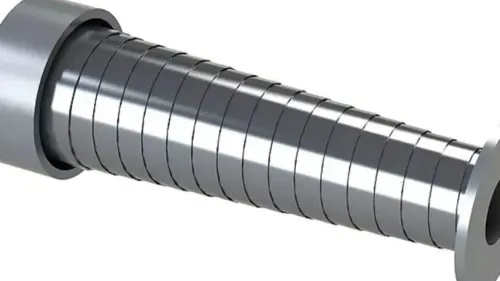
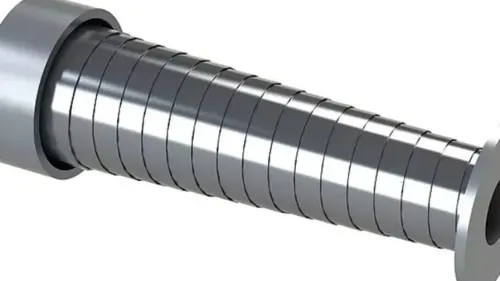
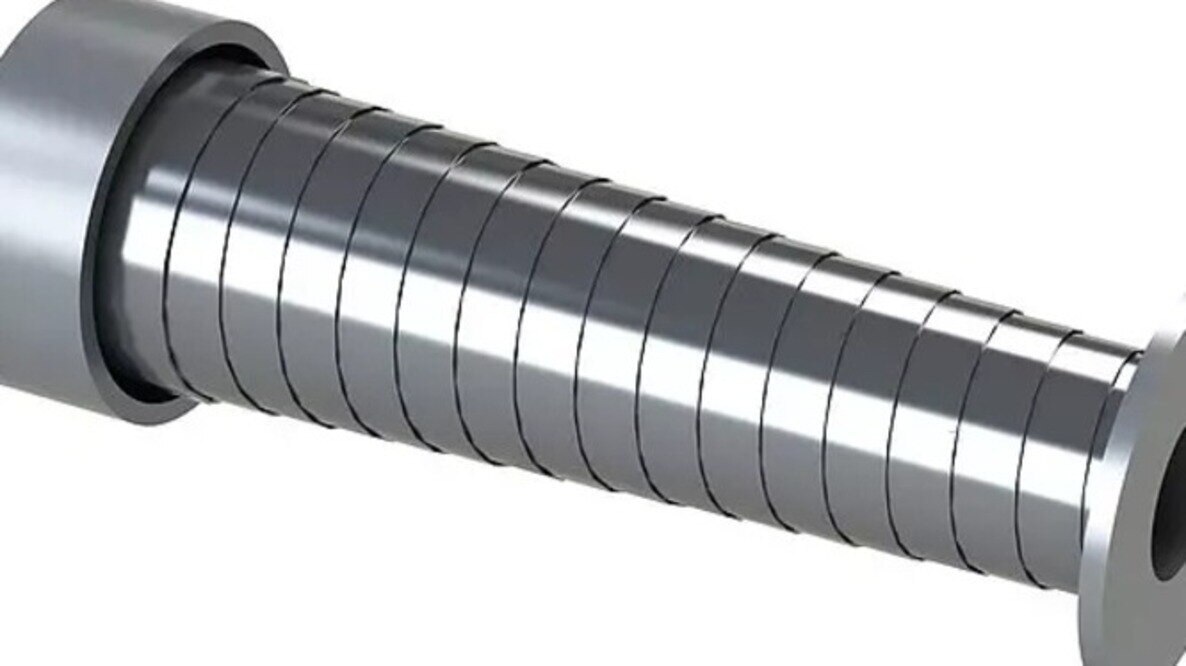
A telescopic spring cover with spiral spring is built from overlapping metal boxes, not one continuous sheet. Each section has side walls, a top plate, guide surfaces, end stops, and mounting points. The sections slide inside one another, creating a long guarded span from a short retracted package.
A telescopic spring cover explained in practical terms has two separate systems:
- Nested steel sections carry the cover’s shape and shield guideways, shafts, or machine axes.
- One or more flat spiral springs sit in housings at the fixed or moving end.
- Spring anchors connect the spring to the cover and its mounting frame.
- Guides and stops control alignment, section overlap, and maximum extension.
The spring assists movement; it is not a structural support for tooling or workpieces. This construction differs from other covers in both its rigidity and its method of retraction.
| Construction | Physical arrangement | Main difference |
|---|---|---|
| Telescopic spring cover with spiral spring | Nested metal sections plus housed spiral springs | Rigid protection with spring-assisted movement |
| Conventional telescopic steel cover | Nested metal sections without balancing springs | Similar rigidity, but the axis carries more cover mass |
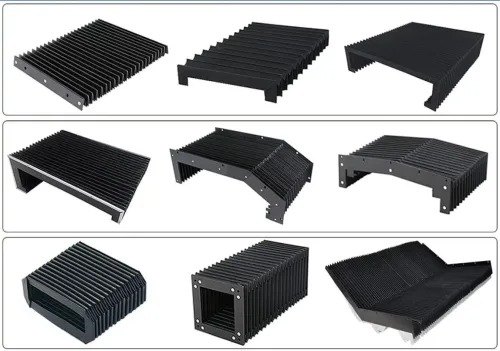
| Bellows cover | Folded fabric, coated material, or elastomer bellows | Flexible and lighter, but less resistant to sharp chips |
| Roll-up cover | Spring-steel strip wound into a spiral housing | Smaller package and high speed, but less rigid and more vulnerable to dents |
| Apron cover | Interlocking metal slats joined by hinges | Strong sliding protection, with a different jointed construction |
| Standalone spiral spring | One spring element without protective sections | Stores force but provides no machine protection |
How the cover expands, retracts, and balances its own weight
During machine-axis travel, the nested sections slide apart to cover the exposed guideway and slide together into a shorter package. The spiral spring assists this movement by offsetting part of the cover’s moving mass; it does not carry tooling or workpiece loads.
The movement follows the axis direction:
- As the axis travels toward the protected length, the front section pulls the next section outward.
- Overlapping sections continue extending until the cover reaches its required stroke.
- As the axis reverses, the spring’s stored force helps draw the sections back into one another.
- In the retracted position, the sections sit in a compact stack instead of occupying the full travel length.
A spiral spring balances the cover by producing force through its winding and unwinding action. On a vertical or inclined axis, that force supports part of the extended cover’s weight, reducing the load on the machine drive and preventing the sections from dropping or dragging heavily.
This is the central benefit of telescopic spring protection where space is tight.
The spring force must match the cover’s orientation, mass, friction, and travel. Too little force leaves the cover short of full extension or increases drive load; too much force can make it run ahead, close violently, or overload guides and mounts.
Friction from seals, chips, guides, and misalignment remains, so an industrial spiral spring cover still needs correct alignment and controlled axis acceleration.
Where this protection works and how it compares with alternatives
Spiral spring cover applications suit CNC machining centres, turning and grinding machines, transfer equipment, automation axes, laser equipment, and compact linear mechanisms with limited room for a long rigid guard or conventional bellows. They work especially well on vertical or inclined axes, where spring assistance offsets the extended cover’s weight.
| Protection option | Best installation conditions | Choose another design when |
|---|---|---|
| Spiral-spring-assisted telescopic cover | Vertical or inclined travel, restricted retracted length, high chip and coolant exposure, controlled linear motion | Spring balance cannot match the cover mass, speed, acceleration, or installation direction |
| Conventional telescopic steel cover | Horizontal axes with ample room and heavy chip or hot-metal exposure | The axis is vertical or inclined and cover weight would overload the drive |
| Bellows cover | Wide, flexible coverage around guides or irregular envelopes with moderate debris | Sharp hot chips, severe abrasion, or a very compact retracted length would damage the fabric |
| Roll-up cover | Long travel where a small housing and low moving mass matter | Heavy chips, impact, or high structural stiffness are required |
| Apron cover | Rugged horizontal protection against chips and coolant over broad machine beds | The path is vertical, narrow, or requires closely guided telescoping movement |
Confirm chip temperature, coolant chemistry, travel speed, acceleration, guide arrangement, and available spring-housing space before choosing. A spring reduces movement effort; it does not support tooling, remove friction, or correct misalignment. Poor balance can leave the cover open, make it run away, or overload the axis.
What to measure and specify before ordering
Measure the machine before discussing price: a telescopic spring cover with spiral spring can fit its overall envelope yet fail because the retracted length, spring housing, or guide path has been overlooked.
Record these specification points:
- Extended length and required stroke, plus the retracted length available at the closed end.
- Width, section height, number of telescoping sections, and the clearance between the cover and nearby tooling.
- Axis orientation: horizontal, vertical, or inclined; identify which end moves and which end is fixed.
- Travel speed, acceleration, cycle frequency, and the moving mass the spring must balance.
- Guide arrangement, support rails, mounting faces, bolt patterns, and permissible misalignment.
- Coolant name, concentration, temperature range, cleaning chemicals, chip size, and exposure to abrasive dust.
- Required stainless-steel or corrosion-resistant parts, especially for high-chloride coolant.
| Construction | Space and motion implication | Specify before ordering |
|---|---|---|
| Telescopic spring cover with spiral spring | Needs section overlap, guide clearance, and room for the spring housing | Closed length, section count, orientation, speed, acceleration |
| Roll-up cover | Needs a winding cassette rather than telescoping section space | Cassette diameter, strip travel, mounting axis |
| Standalone spiral spring | Supplies force but does not shield the machine | Spring force, torque, cycle life, separate protective enclosure |
Give SCUTES INDIA PRIVATE LIMITED the machine drawing with these figures marked, not only the axis stroke. Incorrect spring balance can make the cover run away, stop short, or transfer excess load to the machine drive.
Related product
 | TELESCOPIC SPRING COVER Telescopic Spring Covers provide protection under extreme conditions. View product → |
How to inspect a cover before damage reaches the machine
Inspect the cover with the machine stopped, isolated, and the sections clean. A telescopic spring cover is best explained by its failure points: overlapping boxes, guide surfaces, seals, mounting brackets, and the spiral spring must move together without rubbing or twisting. Check after heavy chip loads, coolant exposure, or an unexpected impact.
- Look along each section for dents, buckled corners, lifted edges, or distorted overlaps.
- Move the axis slowly through its travel and listen for scraping, knocking, or sudden spring-assisted movement.
- Check the cover fully extended and retracted; neither position should leave a gap or force the sections against their stops.
- Inspect seals and wipers for tears, hardening, missing pieces, or coolant leaking behind the sections.
- Remove chips and dried coolant before deciding that stiff movement is a spring fault.
| Defect | What it indicates | Action |
|---|---|---|
| Dented or misaligned section | Reduced overlap and collision risk | Stop the axis; repair or replace the damaged section before operation. |
| Scraping, binding, or uneven travel | Debris, bent guides, poor alignment, or incorrect spring balance | Isolate the machine and correct the obstruction or alignment; do not increase drive force. |
| Broken, cracked, or corroded spiral spring | Loss of return force or uncontrolled movement | Replace the spring with the specified force and material; inspect its housing. |
| Torn seal or open joint | Chips and coolant can reach the guideway | Replace the seal and clean the protected machine surface immediately. |
| Cover fails to retract or runs away | Spring force no longer matches moving mass | Stop using the cover and have the spring balance checked. |
These checks matter across spiral spring cover applications, especially vertical axes where a small balance error can overload the drive.
Frequently asked questions
How is a telescopic spring cover with spiral spring built?
It uses overlapping metal box sections with side walls, top plates, guide surfaces, end stops, and mounting points. A spiral spring connects the moving assembly and supports its operation.
How does the spiral spring help the cover expand and retract?
The sections slide inside one another. The spiral spring supplies return force and helps balance the cover’s weight as the machine axis moves.
Where are telescopic spring covers used?
They protect CNC and machine-tool guideways, slides, and moving components from chips, coolant, dust, moisture, and mechanical contact. Compare them with bellows, roll-up covers, and other guards based on travel, speed, temperature, contamination, and available space.
What should you measure before ordering a telescopic spring cover?
Record the required travel, closed length, extended length, cover width and height, mounting dimensions, guideway clearance, movement speed, acceleration, chip and coolant exposure, temperature, and installation orientation.