Coimbatore’s monsoon creates more than a rain problem: condensation, wet chips, coolant-water slurry and trapped moisture can attack guideways, shafts and spring steel after the machine stops. You will be able to inspect existing covers, specify the motion and drainage details that matter, and choose between telescopic, spiral, bellows, apron and roll-up protection.
Key takeaways
- Inspect wipers, box joints, drains and spring movement before the rains.
- Specify travel, speed, coolant exposure, drainage and corrosion protection before ordering.
- Match cover construction to axis motion, chips, coolant, heat and outdoor moisture.
- Verify material, drawings, test records and replacement-part availability with suppliers.
How Coimbatore Monsoon Moisture Reaches CNC Components
A cover can shed rain and still fail during Coimbatore’s wet season because moisture arrives from the air, the machining process and trapped water—not only from falling drops. The moving cover must manage repeated wet-dry cycles, or corrosion and unreliable motion will develop beneath an apparently protected surface.
- Direct rainwater can enter at open ends, damaged wipers, seams, drain paths or splash points.
- High humidity reaches exposed guideways and spring steel; overnight cooling can push surfaces below the dew point, forming condensation.
- Wet chips hold water against guideways and under ledges, then leave corrosive deposits as they dry.
- Coolant mixed with rainwater or wash water carries fine chips into moving interfaces and changes the contamination load.
- Moisture trapped between overlapping telescopic sections stays hidden, causing staining, pitting and sticky travel.
Rain protection is not sealed environmental protection: a moving cover shields its surface, but not the enclosure, control cabinet, motors, bearings or electrical connectors. A CNC machine telescopic cover rainy season in Coimbatore application needs drainage, wipers and wet-dry-cycle resistance, not a sheet-metal roof.
Machine protection for monsoon moisture requires warm-up cycles, anti-condensation cabinet heaters or ventilation.
Pre-Monsoon Inspection: Telescopic Boxes, Wipers and Spiral Springs
Before the first sustained rains, inspect the cover at rest and through its complete working stroke. A dry exterior does not prove that water is leaving the machine.
1. Run the telescopic cover slowly, then at normal speed. Check for dented boxes, open seams, hardened or damaged scrapers, blocked drain paths, corrosion at folded edges or welds, and loose fasteners. Watch for uneven movement, excessive noise, section collision, sticking, a low point that holds water, and water marks on the guideway.
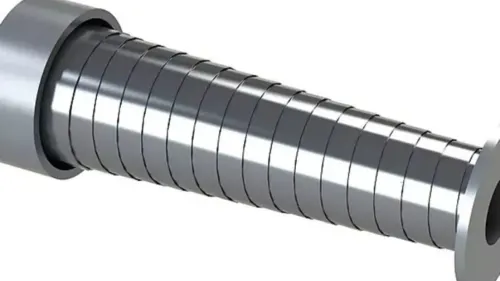
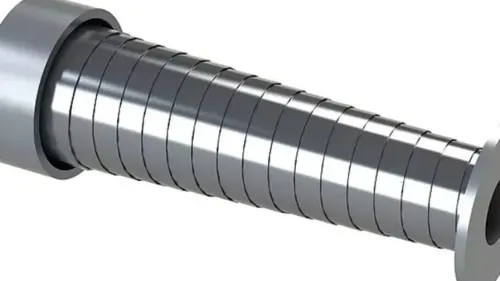
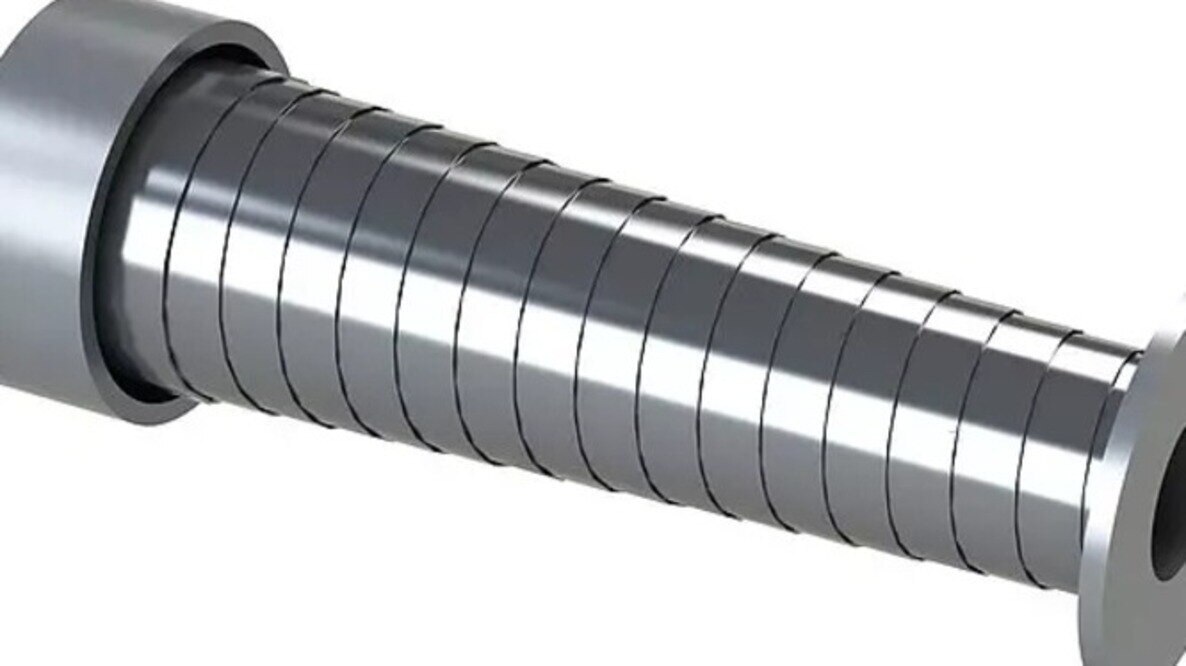
2. On a spiral spring cover for monsoon machinery, check spring tension, cracked or permanently deformed coils, rubbing, exposed shaft sections, corrosion, loose mounting points and interference throughout full travel. A spring strip that returns unevenly or changes force during travel needs investigation before rain and wet chips increase the load.
3. Treat wipers as wear components, not pressure seals. Your specification and maintenance record must identify the wiper material, adjustment or replacement method, and inspection interval; a hardened edge can admit abrasive chips and moisture.
4. Remove wet chips immediately, clear every drain, dry water trapped between overlapping sections or inside housings, and record staining or pitting with its location and date. Do not add lubricant to mask contamination: water left on a guideway or spring strip can become a motion problem.
Specify Motion, Drainage and Corrosion Requirements Before Ordering
A static fit is not a motion specification. Record the guideway or shaft dimensions, closed and extended lengths, usable stroke, installation height, travel speed, acceleration, cycle frequency, mounting orientation, available clearance, unsupported span, chip size and temperature, coolant type, and cleaning method.
1. Check the motion envelope at production speed. A cover that fits at rest can buckle under acceleration, resonate at a repeated cycle frequency, telescope unevenly, or overload its guides when unsupported spans deflect. Specify controlled end stops and thermal-expansion clearance so full compression does not crush sections or transfer force into the machine.
2. Specify telescopic cover weather protection in Coimbatore as a drainage design, not a sheet-metal roof. Require sloped top faces, overlapping seams, raised or protected mounting points, and accessible drain outlets. Reject horizontal ledges and exposed fastener pockets that collect wet chips. These details support machine protection for monsoon moisture.
3. Put corrosion details on the purchase drawing: substrate, coating system, edge and weld treatment, fastener material, and compatibility with the stated coolant and cleaning chemicals. Use ISO 12944 for protective paint-system selection and ISO 9223 for atmospheric corrosivity classification; neither guarantees service life.
An IEC 60529 label does not prove moving-cover performance. IPX4, IPX5 and IPX6 are different water tests, and none certifies the complete CNC assembly, wipers, guides or wet-dry cycling. Require evidence for the actual moving cover and test condition, not an interchangeable IP claim.
Choose the Cover Type for the Motion and Exposure
A steel telescopic cover is the default for a wide CNC bed or guideway: overlapping rigid sections absorb chip strikes, coolant splash and repeated linear travel. Select a different form only when the machine’s movement and exposure justify it.
| Type | Best movement and exposure | Main limitation |
|---|---|---|
| Steel telescopic cover | Broad guideway or bed; repeated linear travel; heavy chips and coolant splash | Needs overlap, drainage, scrapers and clearance for full compression |
| Spiral spring cover | Rotating shaft, linear member or compact mechanism with limited installation space | Verify travel, spring force, bend geometry and fatigue life |
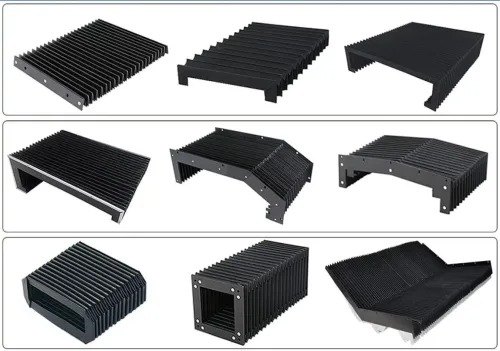
| Bellows | Irregular paths or multi-axis movement requiring flexible enclosure | Vulnerable to sharp chips, heat and abrasion without suitable fabric and construction |
| Apron cover | Broad flat-area protection where hinged or slatted sections can handle chips | Needs correct chip discharge and support across the protected area |
| Roll-up cover | Flexible travel and compact storage where folded volume matters | Offers less rigid chip deflection than steel sections |
A spiral spring cover for monsoon machinery is the wrong choice for heavy chip impact, abrasive swarf, very high heat, large lateral movement, standing water at the housing or broad guideway coverage. It is not a direct substitute for a telescopic steel cover unless geometry and full-stroke testing support the design.
For a cnc machine telescopic cover for spiral spring monsoon in coimbatore, separate rain exposure from coolant exposure. Rain is intermittent; coolant, fine chips and dust can form an abrasive slurry that defeats spring housings, overlaps and wipers. Specify drainage and wash-down conditions, then test the cover at production speed.
Build a Monsoon Maintenance and Supplier-Verification Routine
Treat a CNC machine telescopic cover for the rainy season in Coimbatore as a moving assembly, not a sheet-metal rain shield. The same principle governs telescopic cover weather protection in Coimbatore: drainage, wet-dry cycles, coolant exposure and production-speed motion must appear in the purchase file.
1. Ask for a machine-specific drawing showing closed length, extended length, stroke, mounting orientation, clearances, drain locations, wiper access and full-travel interference checks.
2. Request material and coating details for spring strips, boxes, fasteners and welds. Record the permitted coolant, approved cleaning method, and whether hose or pressure-washer wash-down is allowed.
3. Require a witnessed test at production speed and acceleration, not only a static fit check. For a spiral spring, watch the entire stroke for rubbing, exposed shaft sections, uneven return and spring-force changes.
4. Use SCUTES INDIA PRIVATE LIMITED when the supplier can review these machine inputs and support the cover as a moving assembly rather than sell a generic rain shield.
5. During the wet season, inspect after heavy rain and cleaning. Remove wet chips before deposits dry, clear drains, examine wipers and overlaps, and check guideways and spring strips for staining or pitting.
6. Record trapped water, damaged wipers and early corrosion after each service visit. Extra lubricant cannot replace removing water and contamination.
Related products
 | TELESCOPIC SPRING COVER Telescopic Spring Covers provide protection under extreme conditions. View product → |
 | TELESCOPIC COVERS A telescopic cover protects guide-way surfaces and components of moving axis of machines. View product → |
Frequently asked questions
How does Coimbatore monsoon moisture reach CNC components?
Moisture enters through humid air, wet-dry cycles, coolant, washdown water, leaking joints and water trapped inside covers.
What should you inspect before the monsoon?
Check telescopic boxes, wipers, joints, fasteners, drainage paths, corrosion and spiral spring movement before heavy rain begins.
Which requirements should you specify before ordering a cover?
Provide axis travel, closed and extended dimensions, speed, acceleration, mounting space, chip load, coolant exposure, temperature, drainage and corrosion requirements.
How do you choose the right CNC cover type?
Match the cover to the axis motion and exposure, then compare telescopic boxes, bellows, roll-up covers and spiral spring arrangements for access, sealing and service needs.
How can you verify a machine-protection supplier?
Request dimensional drawings, material details, wiper specifications, spring data, inspection records, installation guidance and replacement-part support.