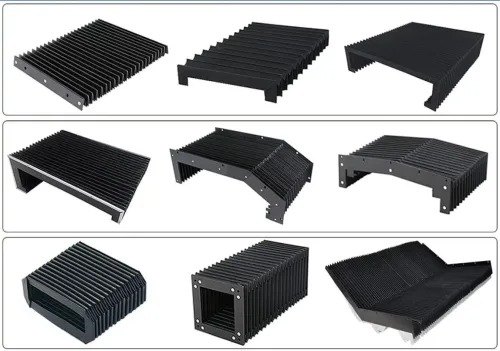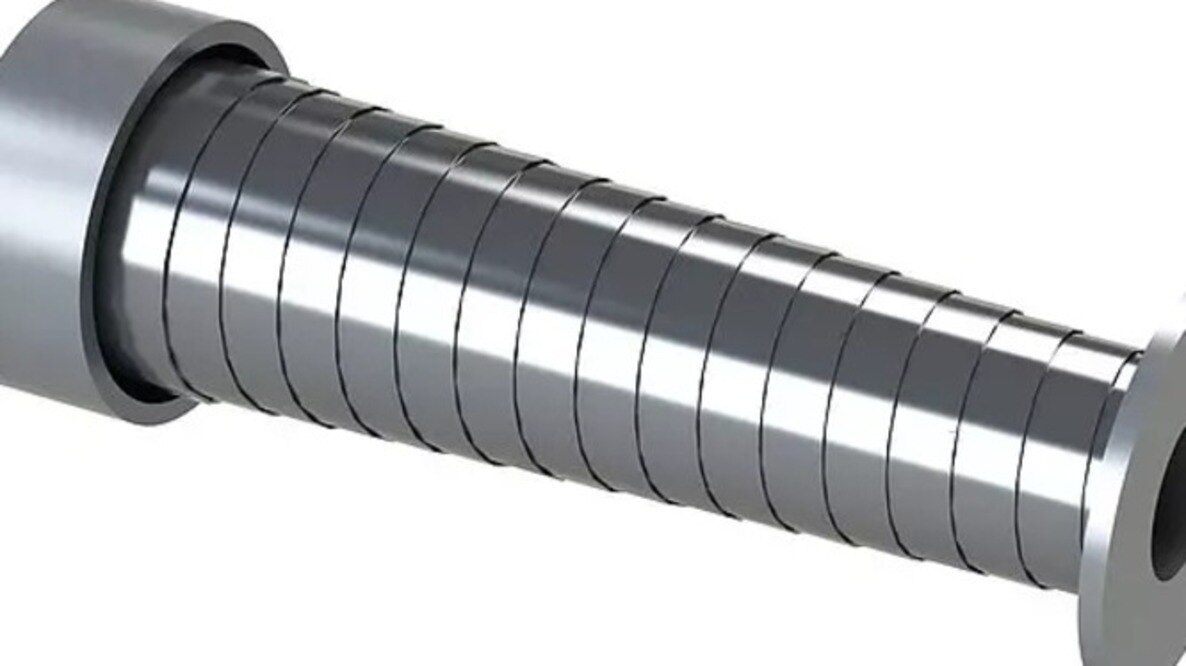
A CNC bellows cover earns its cost when it prevents chips, coolant and abrasive dust from reaching guideways, ball screws, scales or other expensive moving parts without restricting axis motion. By the end, you can assess the hazards, measure the machine, compare cover types and request a quotation with performance criteria instead of relying on the vague term “duct bellows.”
Key takeaways
- Compare cover cost with contamination repairs and lost production time.
- Do not confuse CNC duct bellows with HVAC expansion bellows.
- Measure travel, compressed length, height, width, mounting points, and clearances.
- Demand material, construction, dimensions, service limits, and warranty in writing.
When does a CNC bellows cover justify its cost?
A CNC bellows cover justifies its cost when contamination threatens linear guides, ball screws, linear scales, hoses or other moving assemblies, and the resulting repair or downtime would exceed the cover’s purchase and replacement cost. That is the practical answer to “duct bellows cover worth it for cnc machines.”
- Buy one when aluminium or steel chips, abrasive dust, heavy coolant or cutting oil can reach exposed guideways. Repeated axis motion increases the value of protection because contamination is carried through the travel cycle.
- Prioritise it when the existing enclosure leaves a guideway, screw, scale or moving assembly exposed. A small puncture or open seam can admit abrasive particles long before the fault is obvious.
- Treat it as a weaker investment when a complete enclosure already blocks ingress. Do not choose fabric where large hot or sharp chips will quickly cut, burn or lodge in the folds.
- Reject any installation that invites operators to use the cover as a step, load-bearing surface or chip bin. It is a machine-protection component, not structural equipment.
A bellows does not replace the complete enclosure, interlocked guarding or safe access controls. Evaluate openings, retention, crushing and shearing hazards as part of the full guarding system. Compare low-mass flexible covers with rigid covers next: flexible designs suit compact, fast-moving axes, while rigid designs address harsher contact and chip loads.
Treat either as a consumable part with inspection and replacement costs.
Is a duct bellows for a CNC machine the same as an HVAC bellows?
A duct bellow for a CNC machine is a way bellows, not automatically an HVAC component. A CNC way bellows follows an axis to shield guideways, ball screws, linear scales and other moving assemblies.
An HVAC or process-duct connector joins mostly stationary duct runs, handling pressure, airflow and limited movement; an industrial duct bellows is not designed automatically for acceleration, repeated folding, chip impact or coolant contact.
On a CNC machine, map the protection requirement before buying: X, Y and Z guideways, linear rails, ball screws, laser heads, cable carriers, hoses and exposed moving slides can all need separate protection. The cover must withstand the actual hazards:
- Steel and aluminium chips
- Abrasive dust
- Coolant and cutting oil
- Heat and sparks
- Repeated flexing, acceleration and folding
A bellows protects cables only when designed for them. It does not automatically provide controlled routing, a defined bend radius or strain relief; use a correctly sized cable carrier for power, signal and coolant lines.
| Option | Best suited to | Key limitation |
|---|---|---|
| Telescopic steel cover | Hot, heavy or sharp chips | Higher mass and space requirement |
| Apron cover | Broad guideway protection | Less suited to compact folded storage |
| Roll-up cover | Long travel with limited parked space | Needs suitable winding and tension control |
| Protective sleeve | Individual hoses or rods | Does not shield a broad machine way |
| Covered cable carrier | Controlled cable routing | Not a substitute for a way cover |
What measurements prove that a bellows cover will fit the axis?
A bellows cover fits an axis only when its folded and extended dimensions match the complete motion envelope, not just the nominal stroke.
1. Measure compressed length, extended length, axis travel, available width and height, fold pitch, number of folds, mounting-hole pattern, attachment orientation and moving mass.
2. Record over-travel, homing position, machine tolerances, thermal growth, compression clearance and any opening through which chips or fixtures could enter.
3. Ask the supplier to review travel direction, maximum speed, acceleration, sag, folded-pack clearance and the minimum bend radius of every nearby cable or hose. Include the cycle count as a design input; nominal travel does not predict service life.
4. Test the proposed bellows cover through the full axis movement, including homing, over-travel and thermal-clearance conditions. An incorrect design can buckle, rub, stretch, bottom out, restrict travel or collide with the slide, fixture or machine structure when folded.
5. Require a drawing before approval. It must show compressed and extended positions, mounting plates, hole locations, attachment orientation and clearances around the moving assembly.
Do not approve a quotation that shows only “axis stroke.” A cover can reach the endpoints and still fail because its folded pack has nowhere to go, sags into the way, or leaves insufficient clearance for a hose bend. The drawing and motion test expose those problems before installation.
Which bellows material and construction will survive your cutting process?
The cutting process decides whether a flexible bellows cover will survive, not the material name alone. Compare the cover with rigid protection against chip temperature, shape, mass, speed and contact risk.
| Construction | Main advantage | Verify before selection |
|---|---|---|
| PVC-coated polyester | Low mass and compact folding | Coolant, abrasion and fold-cycle performance |
| Neoprene-coated fabric | Flexible fabric with useful oil resistance | Actual cutting oil, temperature and seam durability |
| Silicone-coated fabric | Higher-temperature flexibility | Solvent compatibility, chip cutting and delamination |
| PTFE/glass-fabric laminate | Strong chemical and heat resistance | Flex fatigue, minimum bend radius and edge abrasion |
| Telescopic steel | Rigid resistance to hot, heavy or sharp chips | Weight, clearance, contact loads and guideway support |
Ask for:
- Coating type, allowable temperature range and a chemical-compatibility statement naming your coolant, cutting oil and cleaners.
- Abrasion and chip-resistance evidence, minimum bend radius and fold-cycle test results.
- Seam construction, because stitched seams can wick coolant into the fabric.
Chemical resistance does not guarantee mechanical life. Sharp chips can cut the outer layer, chips can lodge between folds, mounting edges can abrade, folds can fatigue and coatings can delaminate.
Specify fold geometry, internal supports or wipers, drainage paths and clearance around horizontal spans to prevent chip nests, coolant pools and sag. Choose telescopic steel for very hot, heavy or sharp chips and contact loads; choose coated fabric for high acceleration, low moving mass, long travel or restricted space.
Provide inspection access and a replacement plan. A CNC bellows cover is a consumable protection part, not a permanent machine structure.
What should a CNC bellows quotation guarantee before you approve it?
Approve a CNC bellows quotation only when it states measurable limits, not a promise of “durable protection.”
- Require extended and compressed dimensions, travel direction, maximum speed, acceleration, fold height, fold pitch, attachment details, moving mass and inspection access.
- Specify allowable temperature, coolant and cutting-oil compatibility, fabric construction, seam method, expected cycle count and replacement-part availability.
- Ask whether the design carries chips, coolant pressure or contact loads. Do not assume it does.
Reject “oil resistant” unless the supplier names the tested fluid or chemical family and exposure conditions.
| Claim | Acceptable evidence | Reject |
|---|---|---|
| Temperature | Rated operating range in °C | “Heat resistant” |
| Chemical compatibility | Named coolant or oil, concentration and exposure time | “Oil resistant” |
| Service life | Expected cycle count and test basis | “Long lasting” |
For a safety-related installation, assess the cover with the complete guarding system: openings, retention, crushing and shearing hazards, and maintenance access. A bellows that is safe alone can create a pinch point when fitted to the machine.
When comparing suppliers searching for duct bellows in Coimbatore, send each bidder the same drawing, photographs of chip and coolant conditions, axis data and acceptance criteria. SCUTES INDIA PRIVATE LIMITED belongs in that comparison only when it reviews those inputs and documents a construction suited to the machine.
Buy when documented contamination control protects higher-value components or prevents downtime. Choose another cover when the hazard exceeds the selected construction’s limits.
Frequently asked questions
When does a CNC bellows cover justify its cost?
It earns its cost when chips, coolant, oil, dust, or heat threaten linear guides, ball screws, scales, hoses, or other moving parts. Compare the cover and replacement cost with one contamination-related repair and the downtime it causes.
Is a duct bellows for a CNC machine the same as an HVAC bellows?
No. A CNC duct bellows protects moving machine components from chips, coolant, oil, abrasion, and repeated flexing. An HVAC bellows or flexible duct handles airflow and pressure, not the cutting environment or axis motion.
What measurements prove that a bellows cover will fit the axis?
Provide axis travel, fully compressed length, fully extended length, folded height and width, mounting-hole pattern, flange dimensions, guideway clearance, bend direction, and nearby obstruction measurements. Confirm these against a drawing before ordering.
Which bellows material and construction will survive a cutting process?
Match the fabric, coating, fold construction, support frames, and wipers to the chips, coolant, oil, temperature, speed, acceleration, and bend radius in your process. Abrasive dry chips and hot chips require a different build from light dust and water-based coolant.
What should a CNC bellows quotation guarantee before approval?
Require a dimensioned drawing, material and coating specification, travel and compressed dimensions, mounting details, temperature and speed limits, delivery scope, inspection criteria, warranty terms, and confirmation of compatibility with your coolant and chip conditions.