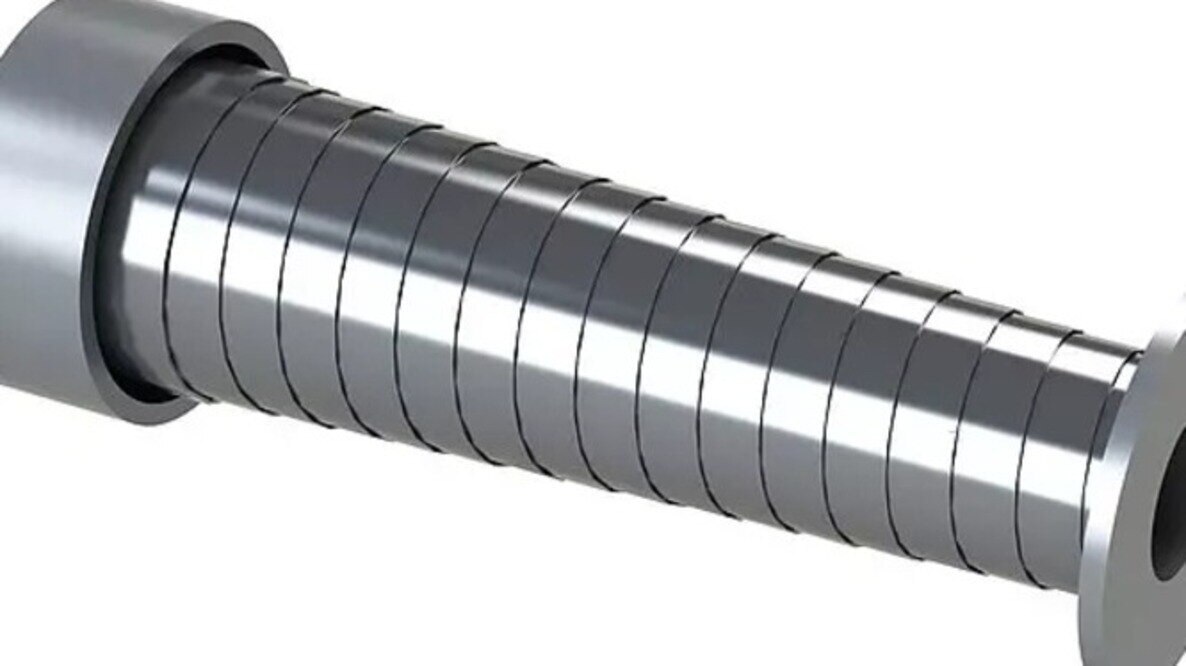
A spiral spring gives a telescopic cover the stored force it needs to extend, retract, and keep its sections balanced instead of relying entirely on the axis drive or gravity. By the end, you will be able to distinguish a failed spring from resistance caused by chips, wipers, alignment, or mounting, and identify the measurements required for a safe replacement.
Key takeaways
- The spiral spring stores energy as cover sections nest during axis closure.
- Uneven travel, scraping, gaps, and delayed extension indicate possible spring failure.
- Isolate power and inspect spring tension, section alignment, guides, and obstructions.
- Specify spring force from travel, section mass, stroke, mounting, and operating conditions.
What the Spiral Spring Actually Does Inside the Cover
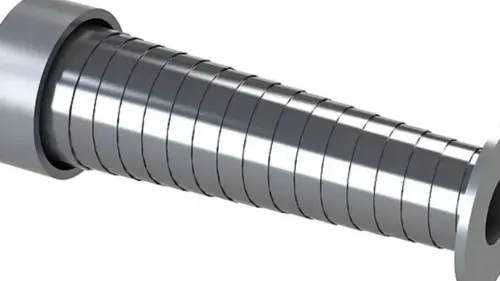
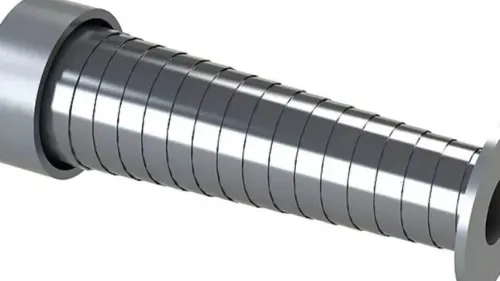
The spiral spring supplies the force that moves and supports telescopic cover sections as the CNC axis travels. As sections nest during axis closure, the spring coils and stores energy; as the axis opens, it releases that energy to help extend the sections in sequence.
Without this assistance, a long or vertically mounted cover can sag, stall, or place excessive load on the axis drive. The spring provides an outward bias that keeps nested sections moving toward their extended position and balances their weight and friction.
It assists both cover extension and retraction, depending on the spring’s mounting and winding arrangement.
A spiral spring is a constant-force or constant-torque element, not a sealing part. It does not stop coolant or chips from reaching the guideway. That protection comes from section overlap, properly adjusted wipers, stiff cover boxes, drainage, and compatible materials or surface treatments.
The spring protects the cover’s movement function; this is the mechanical purpose of spiral spring cnc protection.
Check the spring’s actual role before blaming it for poor movement:
- It stores energy while the cover sections compress or nest.
- It releases energy to help the sections extend as the axis opens.
- It reduces the drive force needed to move the cover.
- It helps maintain section contact and prevents unsupported sag.
- It cannot compensate for packed chips, hardened coolant, damaged wipers, bent sections, or misalignment.
A spiral spring is not universal. Gravity, counterweights, gas springs, chains, belts, or motorized drives suit other cover sizes and mounting orientations.
How the Spring Behaves Through CNC Axis Travel
As the axis closes, the telescopic sections compress and slide into a nested stack. The spiral spring coils tighter, stores energy, and maintains enough bias to prevent sections from collapsing loosely or striking one another. It does not seal the nesting gaps; wipers, overlap, and drainage handle that job.
As the axis opens, the spring releases stored energy and assists each section outward in sequence. The sections extend until their stops or travel limits are reached, while the spring reduces the force required from the machine axis.
If chips, hardened coolant, a damaged wiper, or a bent box adds resistance, the spring can appear weak even when its output is correct. That is a common cnc machine cover movement issue.
Mounting direction changes the load the spring must overcome:
- Horizontal travel: the spring mainly counters friction from rollers, guides, wipers, and section overlap.
- Vertical upward travel: the spring must assist both extension and the weight of the moving sections.
- Vertical downward or inclined travel: gravity assists one direction and opposes the other, changing the apparent force through the stroke.
A wrong winding direction can make the spring unwind during the wrong movement, bend the strip backward, or pull against its anchor. Match the original handedness, anchor position, and mounting orientation; do not rotate the replacement by guesswork.
Spring Failure Symptoms Versus Ordinary Cover Resistance
A telescopic cover that stops short does not prove a spring fault. A weak or broken spiral spring usually leaves too little return force: sections fail to extend, sag, drift open or closed, or lose smooth movement across most of the travel.
A broken anchor can produce the same symptoms, with a loose or unwound spring visible at one end.
| Observation | More consistent with spring failure | More consistent with ordinary resistance |
|---|---|---|
| Cover stops before nesting | It lacks force even after the tracks and gaps are clean | Chips, hardened coolant, a damaged wiper, or a blocked roller stops one section at a specific point |
| Movement pattern | Sections move weakly, drift, jerk, or strike the end of travel | Scraping, tight spots, and uneven movement occur at one location or one side |
| Physical evidence | Spring is unwound, cracked, detached from its anchor, or visibly slack | Bent boxes, shifted brackets, loose fasteners, compressed wipers, or side-loading marks are visible |
| Hand check | Resistance remains low, but the cover will not return or stay extended | Resistance rises sharply through part of the stroke |
For a cnc spiral spring cover problem, isolate the machine, clean accessible chips and residue, then move the cover by hand through its full travel. Compare resistance at the beginning, middle, and end; a local tight spot points to contamination, alignment, rollers, wipers, or a bent section.
A uniform loss of assist supports telescopic cover spring failure, but inspect the anchor before ordering a stronger spring.
A Safe Fault-Isolation Check Before You Keep Running
Do not jog the axis to test a suspect cover. Stop the machine, isolate its electrical and stored-energy sources, and support the cover if its position could change. Check free movement by hand only after confirming that the axis cannot move.
1. Clear chips from every telescoping gap, guide track, roller, and drain. Remove hardened coolant residue from sliding surfaces, then inspect wipers for tearing, swelling, incorrect contact, or trapped debris. Check section overlap and look for a bent box or distorted edge.
2. Move the cover slowly through its travel by hand. Resistance at one location points to contamination, a blocked roller, guideway damage, or section misalignment; resistance throughout the stroke points to mounting or spring force.
3. Inspect mounting brackets, fasteners, guide height, and parallelism. A cover forced sideways by incorrect installation can mimic a weak spring. Correct loose hardware or alignment before testing the spring.
4. Inspect both spring anchors and the spring body without putting fingers near the coil. An unwound coil, broken anchor, displaced end, loss of preload, or drifting cover supports a telescopic cover spring failure diagnosis.
5. Recheck movement after cleaning and alignment. If the cover still stops before nesting, moves jerkily, scrapes, impacts at travel limits, or cannot remain in position, keep the machine isolated and obtain the spring specification and service assessment.
Stop operating immediately if a section is bent, a guideway is exposed, a spring or anchor is loose, the cover can enter the tool path, or powered travel forces the cover sideways. A later successful cycle does not make a binding or damaged cover safe.
How to Specify the Right Spring or a Different Return System
Measure the cover’s resistance across its full travel before ordering more spring capacity. A higher-output spring will not cure chips in the telescoping gaps, a bent section, seized rollers, hardened coolant, or misalignment; it can instead cause impact at the end of travel.
Record cover mass, section travel, nested length, orientation, axis speed, cycle frequency, and the force required to start and sustain movement.
- Match spring capacity to the measured resistance plus a controlled margin, not to cover size alone. Specify force or torque at both nested and extended positions.
- Set preload high enough to prevent sagging and incomplete extension, but low enough to avoid violent opening, wiper wear, or drive overload.
- Choose winding direction from the spring’s installed position and shaft rotation. Confirm whether clockwise or counterclockwise unwinding produces the required cover movement; a reversed spring assists travel in the wrong direction.
- Give SCUTES INDIA PRIVATE LIMITED the cover drawing, mounting orientation, travel, spring dimensions, anchor locations, and operating temperature and coolant details when requesting a replacement.
| Option | What it means | When it applies |
|---|---|---|
| Spiral spring | Compact constant-force or torque assistance | Horizontal or vertical covers with predictable resistance and limited space |
| Gas spring or counterweight | Balances section weight without a coiled strip | Heavy covers where force varies strongly with orientation |
| Chain, belt, or motor drive | Actively controls movement and timing | Long, heavy, fast, or high-resistance covers |
A cnc machine telescopic cover for spiral spring problem in bengaluru needs the same checks as any installation; local coolant, corrosion, maintenance, and spare-part conditions affect the choice. For spiral spring cnc protection, remember that the spring supports movement; overlap, wipers, drainage, and section stiffness provide contamination protection.
Related products
 | TELESCOPIC SPRING COVER Telescopic Spring Covers provide protection under extreme conditions. View product → |
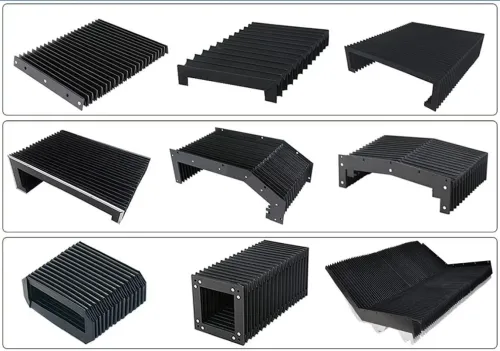
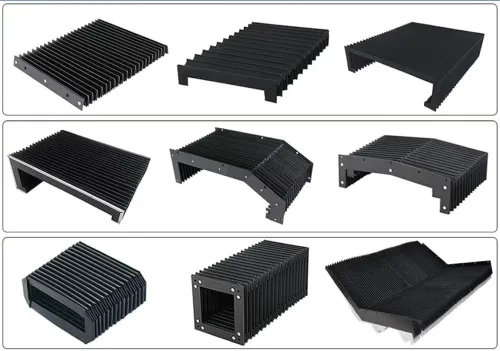
 | TELESCOPIC COVERS A telescopic cover protects guide-way surfaces and components of moving axis of machines. View product → |
Frequently asked questions
What does the spiral spring do inside a CNC telescopic cover?
It stores energy while cover sections close and releases that energy to extend and support the sections as the CNC axis opens.
How does a spiral spring behave during CNC axis travel?
The spring coils as sections nest during closure, then unwinds in a controlled sequence as the axis travels open.
How can you distinguish spring failure from normal cover resistance?
Normal resistance stays smooth and consistent. Spring failure causes uneven movement, delayed extension, scraping, gaps, sagging, or sections that stop short.
What should you check before continuing to run a CNC machine?
Stop the machine, isolate power, inspect for chips or coolant buildup, check section alignment and guides, and look for a loose, broken, or deformed spring.
How do you specify a replacement spring or another return system?
Provide cover travel, section mass, stroke, mounting geometry, operating speed, temperature, contamination, and the required extension force to the cover manufacturer.