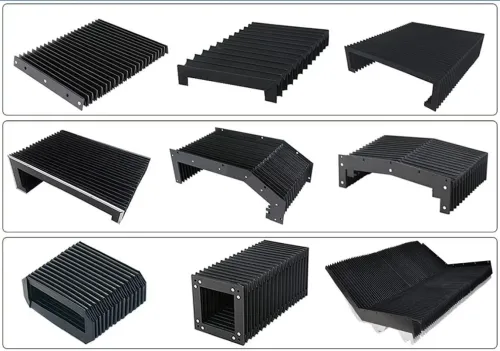
A spiral-spring telescopic cover must match the machine axis, chip pattern, coolant practice, and available installation envelope—not just the advertised travel. By the end, you will be able to identify suitable Bengaluru CNC applications, measure the cover space, compare protection methods, and define installation and maintenance checks before requesting a quotation.
Key takeaways
- Match cover travel, speed, acceleration, and chip load before ordering.
- Use spiral springs to control telescopic box extension and retraction.
- Compare steel, bellows, roll-up, and apron protection against coolant and debris.
- Check alignment, wipers, lubrication, and clearances during commissioning.
Where telescopic covers with spiral springs fit in Bengaluru CNC production
A telescopic steel cover with spiral-spring protection suits CNC axes where chips, coolant, abrasive debris, smoke, or repeated motion threaten guideways and slide assemblies. The practical map of telescopic cover applications for CNC machines in Bengaluru is:
| Application | Dominant hazard | Suitable protection focus |
|---|---|---|
| Machining-centre X, Y, Z axes | Chips and coolant | Shield linear guideways, ballscrews, and slide assemblies |
| Vertical machining-centre column | Gravity, pooling coolant, hot chips | Check spring force, drainage, stack clearance, and vertical load |
| Turning-centre slides; horizontal or vertical turning | Long chips, chuck-side coolant, restricted space | Use compact mounting and confirm chip shedding around the chuck |
| Grinding-machine ways | Abrasive dust and slurry | Validate wipers, joints, drainage, and material compatibility |
| Transfer lines and automation slides | Repeated cycling and friction | Confirm cycle life, low-friction guides, acceleration, and predictable movement |
| Laser and plasma axes | Smoke, spatter, and heat | Check heat resistance, spatter impact, ventilation clearance, and thermal growth |
These CNC machine telescopic cover with spiral spring applications in Bengaluru require axis-specific dimensions. Do not transfer a cover size from milling to turning or grinding: verify extended length, closed stack, width, height, guideway geometry, mounting faces, and every interference point.
The cover protects machine components, not operators, chucks, tools, or crush points. Assess those hazards separately under ISO 12100 and design fixed or movable guarding with ISO 14120 in mind. Validate movement at operating temperature; thermal expansion or coolant heat can reduce clearance and cause binding.
How the spiral spring moves and supports the telescopic boxes
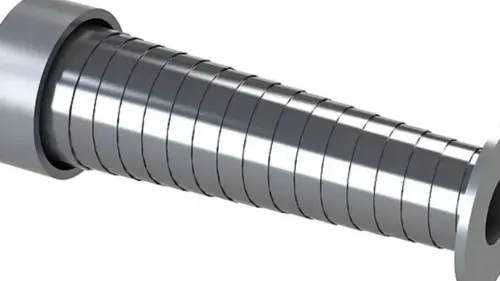
A spiral spring inside or alongside a telescopic cover controls how the nested boxes move; it is not a complete specification for a spiral spring for cnc machine telescopic cover in bengaluru.
- It can assist extension and retraction by balancing the moving cover mass.
- It can maintain pressure between a wiper or scraper and the protected surface.
- It can sit in a separate guarded housing, isolated from the box movement while supporting the cover system.
As the cover compresses into its minimum stack length, the spring stores energy. As the boxes extend, it releases that energy through a housing and defined attachment points that control the path. Ask the supplier to identify the spring location, stored-energy range, service access, failure-safe position, and exposure to chips and coolant.
For cnc machine cover motion protection in bengaluru, check these points during the complete axis stroke:
- Match spring force to cover mass, guide friction, orientation, acceleration, deceleration, and available drive force.
- Check preload: excess force raises motor load and can make boxes strike end stops; insufficient force can cause separation or collapse.
- Treat vertical and horizontal axes differently because gravity can assist or oppose extension.
- Verify clearance around the spring housing, spindle head, tooling, chip conveyor, adjacent guards, and thermal-growth movement.
- Confirm parallel guide strips, even wiper pressure, smooth travel, drainage, and no spring overload at either end.
A spring that moves well by hand can still bind under production acceleration, coolant, chips, or repeated cycling.
Measurements and motion data to request before selecting a cover
Measure the actual axis envelope, not the machine’s nominal travel, before specifying a cover for telescopic cover applications for CNC machines in Bengaluru.
1. Record maximum extended length, minimum closed or stack length, usable travel, cover width, box height, and the complete guideway dimensions. Measure fixed and moving mounting-hole patterns, mounting-face locations, end clearances, fastener access, and every interference point near the spindle head, tooling, chip conveyor, way covers, and guarding.
2. Record axis speed, acceleration, deceleration, cycle rate, moving cover mass, available drive force, and installation orientation. Include the guide or rail arrangement, unsupported span, allowable deflection, and operating temperature range. A cover that meets travel but exceeds stack height can foul nearby equipment.
3. Ask whether the design uses overlapping joints, wipers, drainage paths, and guide strips. A telescopic cover is not automatically a fine-dust or coolant seal. For cnc machine telescopic cover with spiral spring applications in bengaluru, specify spring force, spring stroke, housing clearance, attachment points, and end-stop design.
4. Specify sheet material, thickness, coating, corrosion exposure, and the coolant or cleaning chemicals used. Test representative ferrous hooked chips, aluminium packing chips, cast-iron fines, and composite dust against the proposed joints and wipers.
5. Require a dimensioned layout drawing showing the full stroke, closed stack, mounting envelope, spring movement, end clearances, and nearby equipment. Approve manufacture only after that drawing confirms free movement at every position.
Choosing steel, bellows, roll-up, or apron protection for Bengaluru conditions
A spiral-spring telescopic steel cover is the right choice for hot, sharp chips and impact when its box span, sheet thickness, unsupported length, and allowable deflection match the axis. Thicker sheet increases stiffness, but also adds moving mass and drive-force demand.
| Option | Protection method | Best process fit |
|---|---|---|
| Telescopic steel | Overlapping steel boxes, wipers, and drainage | Milling and turning with hot chips, impact, and coolant |
| Bellows | Flexible coated fabric with folded sections | Compact or irregular spaces and fine contamination control |
| Roll-up cover | Flexible material wound onto an external reel | Limited space where the reel stays outside the travel envelope |
| Apron cover | Overlapping slats supported across a broad surface | Chip deflection over wide beds or guideways |
| Exposed guideway | No moving cover, with separate fixed guarding | Clean processes where contamination risk is low |
Bellows fail quickly when sharp hot chips cut the fabric or embed in folds. Roll-up covers save space but need a clear reel location; apron covers need correct overlap and support or chips enter beneath them. Exposed guideways leave components vulnerable to coolant, abrasive dust, chips, and washdown.
For CNC machine cover motion protection in Bengaluru, test flood-coolant concentration, cutting-oil chemistry, tramp oil, alkaline cleaners, humidity, temperature variation, and washdown pressure. Check corrosion at folds, welds, fasteners, spring ends, and damaged coating, including galvanic contact with the machine frame.
Specify stainless steel or coated carbon steel only after that review. Require drainage and wiper tests using the real coolant, chips, and cleaning method. That is the practical basis for telescopic cover applications for CNC machines in Bengaluru, not price or appearance.
Installation, commissioning, and maintenance checks that prevent binding
Install the fixed and moving ends at the specified mounting points, support long spans, and keep rails or guide strips parallel to the machine axis. Misalignment creates rubbing, skewing, uneven wiper compression, and spring overload before the first production cycle.
1. Confirm the closed length, extended length, mounting-hole pattern, and fastener access against the approved drawing. Verify spring preload, housing clearance, end-stop position, and free movement through the complete stroke by hand or at low speed.
2. Run the actual spindle, tooling, coolant flow, and representative work cycle. Check for box impact, rubbing, skewing, blocked drainage, and reduced clearance after the machine reaches operating temperature. This is essential for cnc machine cover motion protection in bengaluru, where flood coolant and chip packing can change movement.
3. Ask SCUTES INDIA PRIVATE LIMITED to review the measured axis envelope, mounting drawing, orientation, cycle data, chip type, coolant chemistry, and cleaning practice—not a generic cover request—when selecting a spiral spring for cnc machine telescopic cover in bengaluru.
4. Set inspection intervals for chip removal, wipers, guide strips, drainage openings, loose fasteners, dents, spring fatigue or fracture, and seal condition. Remove packed chips from box overlaps before replacing a wiper, then identify hardened wipers, corrosion, or spring damage behind the leak path.
5. Never aim compressed air at guideways or seals; it drives chips and coolant inward. Replace seals when they harden, tear, flatten permanently, or allow recurring contamination after adjustment.
Related products
 | TELESCOPIC SPRING COVER Telescopic Spring Covers provide protection under extreme conditions. View product → |
 | TELESCOPIC COVERS A telescopic cover protects guide-way surfaces and components of moving axis of machines. View product → |
Frequently asked questions
Where do telescopic covers with spiral springs fit in Bengaluru CNC production?
They fit CNC axes exposed to chips, coolant, abrasive debris, smoke, and repeated movement, including machining centres, turning centres, and other automated equipment.
How does a spiral spring support a CNC telescopic cover?
The spiral spring stores and releases force as the telescopic boxes extend and retract, helping control movement and reduce uncontrolled collapse or binding.
What measurements should you request before selecting a telescopic cover?
Request axis travel, closed and extended lengths, cover height and width, mounting dimensions, movement direction, speed, acceleration, cycle frequency, coolant exposure, chip type, and available clearances.
How do you prevent telescopic cover binding during installation and maintenance?
Align mounting faces, verify guideway clearances, set wipers correctly, check spring movement, remove packing debris, lubricate specified points, and test the full stroke before production.