A spiral spring cover is suitable only when its speed, acceleration, travel, orientation and contamination limits match the machine axis. By the end, you will be able to define the operating envelope, identify movement limits, compare cover types and prepare the measurements a supplier needs for a safe selection.
Key takeaways
- Record speed, acceleration, travel, cycle rate and mounting orientation.
- Get maximum speed and movement limits in writing before purchase.
- Match the cover material and construction to chips, coolant, heat and impact.
- Measure compressed length, extended length, diameter and mounting space.
What operating conditions define suitability on a fast machine axis?
Suitability on a fast machine axis depends on the complete motion and environment, not speed alone. The specification must record:
- Maximum and average linear speed
- Acceleration and deceleration
- Stroke length and reversal frequency
- Cycles per hour and duty cycle
- Moving mass and installation orientation
Spiral spring cover conditions for fast moving machines in bengaluru have no separate Bengaluru speed standard. Combine the supplier’s tested operating envelope with local humidity, workshop dust, coolant exposure, washdown practice and temperature. Rapid reversals create transient strip tension, torque and slap even when steady travel appears safe.
Horizontal and vertical mounting are not interchangeable because gravity changes spring balance and torque.
| Orientation | Design effect | Possible consequence |
|---|---|---|
| Horizontal | The strip and moving mass act mainly along the travel path; spring torque must match the guide resistance. | Poor balance can cause rubbing, uneven winding or premature fatigue. |
| Vertical | Gravity adds or subtracts from spring torque through the moving mass and travel direction. | Incorrect balance can cause sag, creep, unexpected retraction or failure to extend. |
Strip width and thickness, drum diameter, guide geometry, travel length, spring torque and mounting direction determine usable speed. A catalogue figure without that exact configuration is not a valid comparison. Obtain the rated speed for the proposed cover, not a generic “high-speed” value.
Which speed and movement limits must you obtain in writing?
Obtain a configuration-specific movement rating in writing before approving the cover. For spiral spring cover speed conditions in Bengaluru, require maximum extension and retraction rates in metres per minute or millimetres per second, not “high speed” alone.
Ask the supplier to state:
- Maximum acceleration and deceleration, in metres per second squared
- Maximum reversal frequency and allowable cycle rate, in cycles per minute or cycles per hour
- Expected travel cycles before inspection or replacement
- Whether testing used the proposed strip width, thickness, travel, orientation and guide arrangement
- The frequency at which spring resonance, strip slap or coil-jamming begins
Record these physical limits for your spiral spring cover movement limits in Bengaluru:
- Minimum compressed length and maximum extended length
- Usable stroke and drum or coil capacity
- Permitted lateral offset and angular misalignment
- Required radial clearance
- Minimum bend radius or minimum deflection the cover tolerates
| Supplier figure | What you must confirm | Why it matters |
|---|---|---|
| Maximum speed | Extension and retraction rate in a named unit | A single speed figure cannot describe both directions |
| Cycle life | Travel cycles, duty cycle and inspection interval | Frequent reversals can exhaust the spring before the speed limit |
| Test rating | Strip, travel, orientation and guide arrangement | A catalogue rating may not match your installation |
Pulling past the specified extension permanently deforms the strip. Forcing the cover into its end stop can remove spring preload or jam the coil, even when the axis speed remains below the quoted maximum.
Which cover construction matches the motion and the workshop hazard?
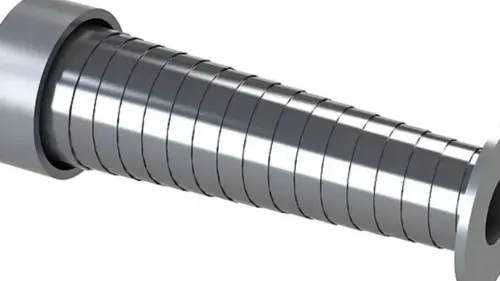
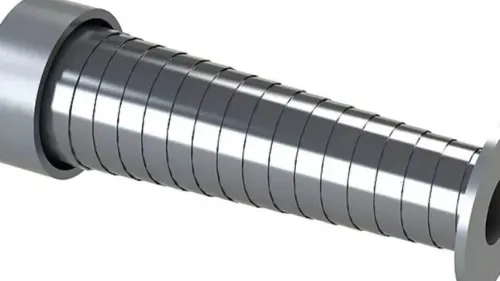
A spiral spring for high speed machinery in Bengaluru suits compact linear travel or a rotating-shaft arrangement when installation space is restricted. It does not automatically suit every fast axis: choose by motion, contamination and access risk.
| Option | Motion and space | Suitable direction |
|---|---|---|
| Spiral spring cover | Compact linear travel or rotating-shaft protection | Restricted installation space |
| Telescopic steel or enclosed way cover | Rigid, guided travel under heavy contamination | Chips, abrasive debris and high-contamination guideways |
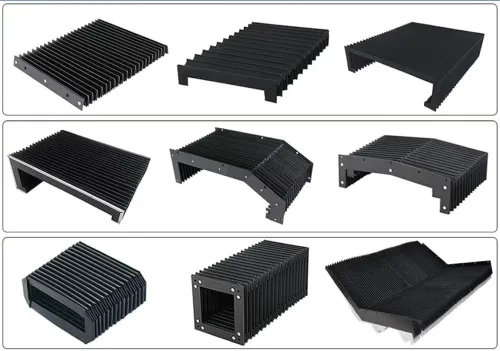
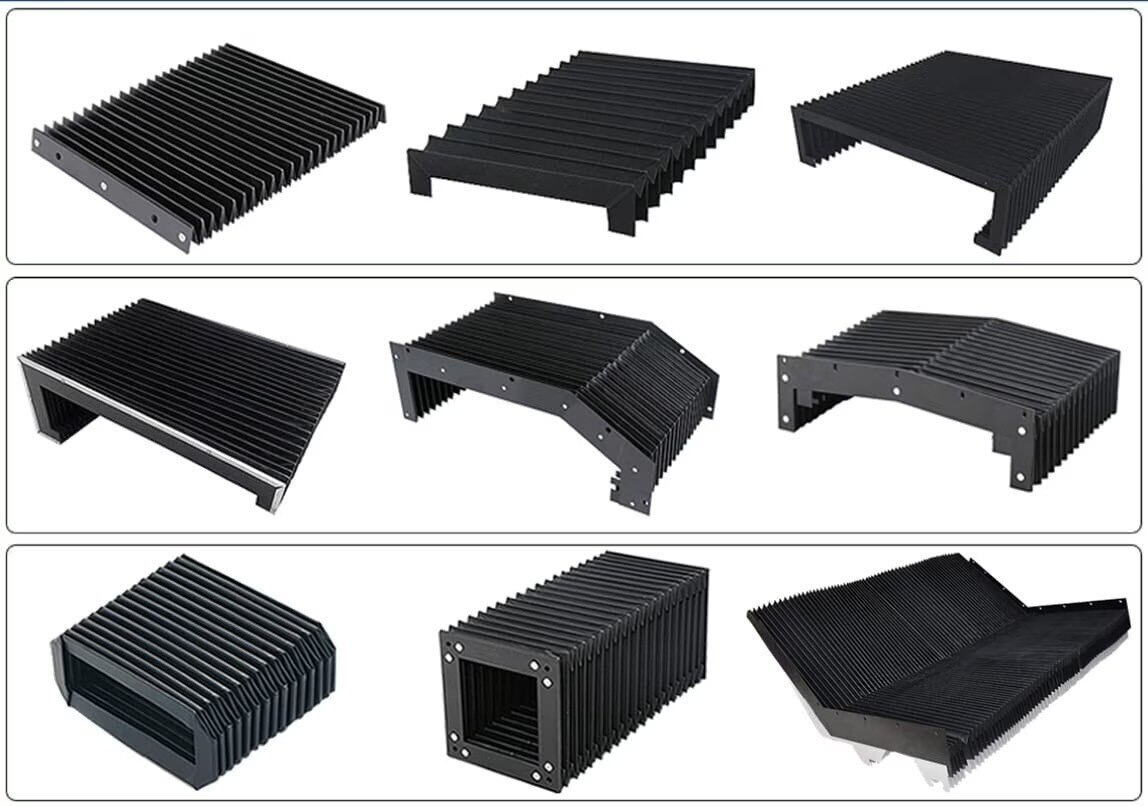
| Bellows cover | Flexible expansion across changing or multi-axis paths | Multi-axis motion and irregular geometries |
| Apron cover | Broad, flat sliding coverage | Wide guideways and large horizontal surfaces |
| Roll-up cover | Flexible winding into a confined package | Tight installations with limited storage space |
A spiral cover remains a barrier against chips and splash, not a pressure-tight seal or personnel guard. Review abrasive chips, aluminium fines, coolant, cutting oil, hot chips, welding spatter, laser dust, humidity, workshop dust and washdown before approval; high-pressure coolant, packed debris or complete contaminant exclusion can require a telescopic or enclosed way cover instead.
Specify the spring-steel grade and strip thickness, stainless or coated strip, corrosion-resistant fasteners, scraper or wiper material and pressure, end mounting, sealing and chip evacuation. Coolant chemistry and washdown can attack strip, coatings, fasteners and wipers.
Where operators can reach hazardous motion, apply ISO 12100 risk assessment and provide separate guarding; never treat the spiral cover as the sole safeguard.
What must you measure before ordering a spiral cover?
Do not select a spiral cover from machine travel alone. Build a fit sheet that captures the package, motion, hazards and installation forces.
1. Measure the shaft or guideway diameter, available mounting space, closed or compressed length, open or extended length, required stroke and cover width. Record travel direction, fixing-hole pattern, drum position, surrounding obstructions, maintenance access and clearance from tooling.
2. Confirm that the compressed package fits when the axis reaches its home position. A cover can meet nominal travel yet collide with tooling, lose clearance or buckle at the stroke end.
3. Record maximum and average speed, acceleration, deceleration, reversal frequency and required service life. Add chip size, coolant chemistry, temperature range and washdown pressure; these conditions determine more than a “high-speed” label.
4. Require parallel attachment points and aligned guides. Skew, lateral offset or uneven brackets cause edge contact, rattling, uneven winding and premature fatigue. Check the mounting structure for transient strip tension, and review spring torque for a vertical axis so the cover does not sag, creep or retract unexpectedly.
5. Ask the supplier to verify the exact fit sheet, including the allowable misalignment, radial clearance and end positions. Reject the layout if the cover contacts tooling, reaches an end stop before the required stroke or lacks room for inspection and cleaning.
How should you validate a supplier’s rating and maintain the cover?
Validate a spiral cover against its exact machine configuration, not a catalogue speed. Reject any quotation that says only “high speed” or gives speed without travel length, cover width, acceleration and orientation.
1. Send every manufacturer the completed fit sheet and request a configuration-specific drawing. Require maximum speed and acceleration, mounting orientation, minimum compressed length, maximum extension, allowable lateral or angular misalignment, temperature range, chemical compatibility, expected cycle life, inspection interval and test conditions.
Ask for speed in metres per minute or millimetres per second, plus the reversal frequency and cycle rate used in testing.
2. Compare the written envelope with your machine’s travel, cover width, acceleration profile, duty cycle and installation direction. Confirm that the rating applies to the proposed guide arrangement and that the cover will not reach its end stop, lose spring preload or jam at maximum extension.
SCUTES INDIA PRIVATE LIMITED can use the fit sheet to match the cover to these inputs; you still need the supplier’s operating envelope and installation tolerances in writing.
3. During commissioning, run the axis slowly through its complete stroke, then at operating speed. Check free movement, even winding, scraper contact, strip alignment and clearance from tooling. Record noise and retraction behaviour as a baseline.
4. Stop the machine for inspection if the cover scrapes, rattles, winds unevenly, cracks, develops edge burrs, takes a permanent set, loses retraction force or leaves a gap between turns. Treat stored spring energy as hazardous, and never use the cover as the sole safeguard for an accessible pinch point or moving axis.
Frequently asked questions
What operating conditions define suitability on a fast machine axis?
Record axis speed, acceleration, travel, cycle frequency, movement direction, mounting orientation, temperature, coolant exposure, chip size and access for cleaning. Speed alone cannot establish suitability.
Which speed and movement limits must you obtain in writing?
Ask for the rated maximum speed, acceleration limit, extension and compression limits, permissible stroke, cycle frequency, rotation or lateral movement limits, and any restrictions on mounting orientation.
Which cover construction matches the motion and workshop hazard?
Choose construction based on the axis movement and the hazard. Check material and strip thickness against sharp chips, abrasive dust, coolant, oil, heat, moisture, impact and required flexibility.
What must you measure before ordering a spiral cover?
Measure the protected component diameter, available mounting diameter, compressed and extended lengths, travel, clearance to adjacent parts, mounting-hole pattern, and the space required for cleaning and removal.
How should you validate a supplier’s rating and maintain the cover?
Request a written rating linked to your motion profile and environment, then confirm dimensions and mounting details. Inspect for distortion, rubbing, seized turns, corrosion, loose fasteners and chip buildup during maintenance.