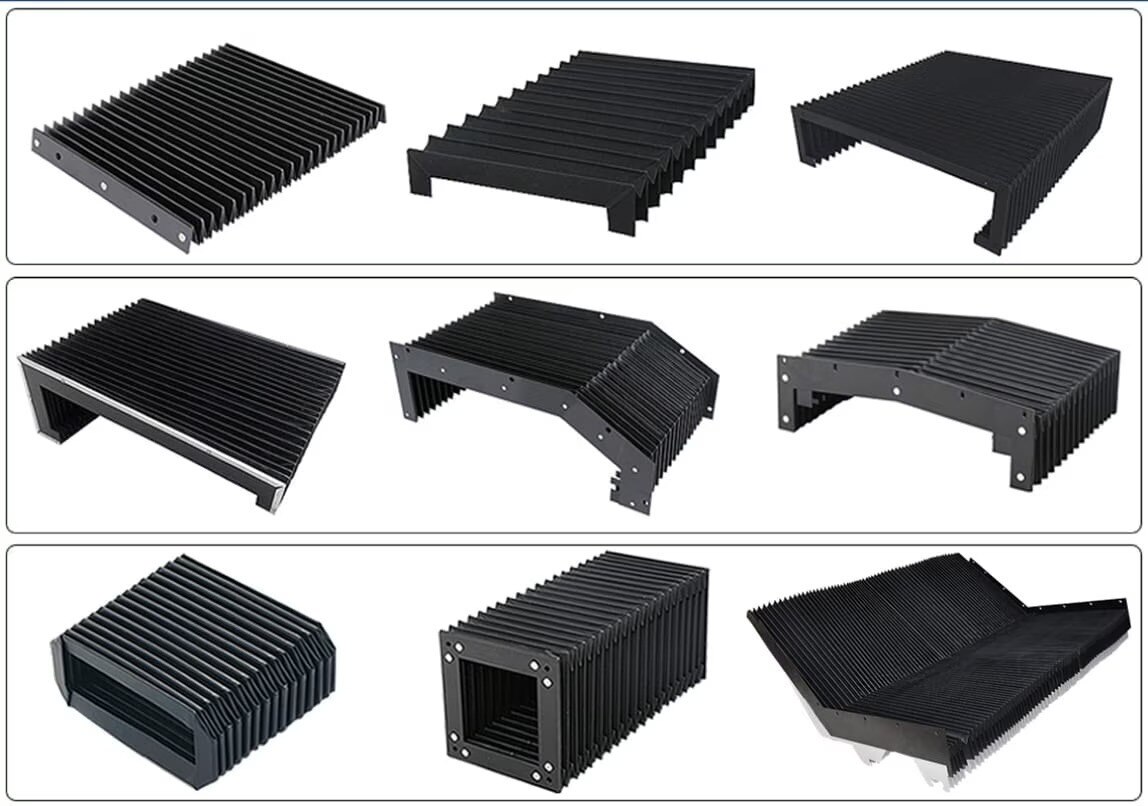
A failed duct bellows becomes a sourcing problem when the supplier receives only a duct diameter and a photograph. You will be able to identify the correct bellows type, prepare a usable measurement and duty pack, and test whether a Bengaluru supplier’s promised turnaround covers fabrication, inspection and dispatch.
Key takeaways
- Confirm whether the failure involves an expansion joint, flexible connector or fabric bellows.
- Send diameter, length, movement, temperature, media and mounting details with your enquiry.
- Use reference measurements and photographs when dismantling the failed bellows is not possible.
- Accept the replacement only after checking dimensions, materials, seams, flanges and movement clearance.
Start by Identifying Which Duct Bellows Has Failed
Do not request a quote using only the duct diameter or a photograph. “Duct bellows” can describe three different products, and a supplier may price the wrong one with confidence.
| Type | How to identify the failed item | What the quote must address |
|---|---|---|
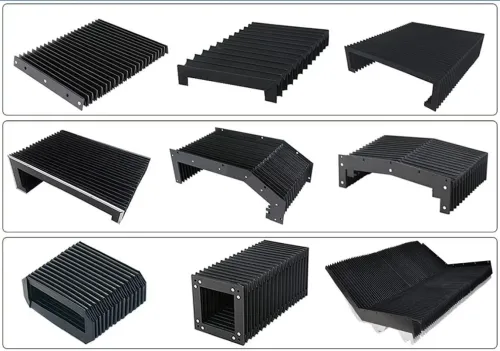
| Machine-tool way cover | Folded protective cover over a moving guideway, carriage or screw | Collapsed and extended lengths, width, height, mounting holes, flange details and travel direction |
| Fabric expansion joint | Flexible fabric connection on process-air, dust-extraction or exhaust ducting | Temperature, pressure or vacuum, fabric layers, reinforcement, frame and movement |
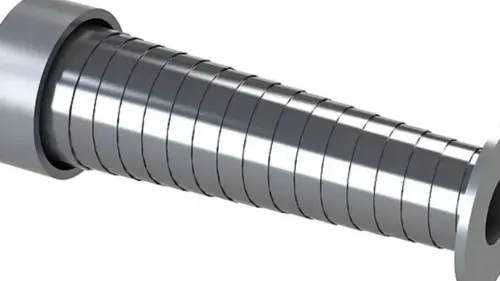
| Metallic expansion joint | Corrugated metal element with welded ends or flanges | Alloy, bellows geometry, pressure, temperature, guide hardware and cycle duty |
For a custom duct expansion bellows, record axial compression or extension, lateral offset, angular movement, operating temperature, pressure or vacuum, and cycle frequency. Equal nominal duct sizes do not make two bellows interchangeable.
Ask the supplier to identify the product type in writing and return a marked-up drawing or inspection sketch. It should show the mounting interface, travel limits, material construction, reinforcement method and acceptance dimensions; a catalogue photograph proves none of these.
If the damage includes torn folds, failed edge reinforcement, delamination, distorted frames or contamination through several plies, request a full replacement assessment rather than a patch. For duct bellows replacement in Bengaluru, also ask where cutting, sewing or welding, assembly and final inspection will occur.
A quick quotation from an outsourcing broker does not prove local repair capability.
Send a Measurement Pack That Can Produce a Replacement
A supplier cannot reproduce a bellows from duct diameter alone. Send one measurement pack containing the failed part’s identity, interface, movement and service conditions before requesting a price for duct bellows repair replacement.
- State whether the part is a machine-tool way cover, fabric expansion joint for process air or dust extraction, or metallic expansion joint. Add the machine make, model, quantity and required delivery date.
- Record collapsed length, extended length, overall width and height, duct diameter where relevant, flange thickness, bolt-hole count, hole diameter, pitch-circle or edge distances, and the mounting-face shape.
- Specify axial compression or extension, lateral offset, angular movement, total stroke, movement direction and cycle frequency. A custom duct expansion bellows with the right size but the wrong travel will fail early.
- Add operating temperature, pressure or vacuum, dust, coolant, oil, chips, chemicals and outdoor exposure. Include full-stroke photographs with a scale, close-ups of damaged seams and mounting faces, plus the removed bellows or a dimensioned drawing.
- Ask the supplier to confirm where cutting, sewing or welding, assembly and final inspection will occur. Request a marked-up drawing showing the mounting interface, travel limits, material construction, reinforcement method and acceptance dimensions.
Send photographs before dismantling if the part remains installed, then provide corrected measurements after removal. This pack lets a Bengaluru supplier quote the actual replacement instead of starting repeated clarification calls. Also ask whether the quoted lead time begins at enquiry, drawing approval, site measurement or purchase order.
Measure a Failed Bellows Without Dismantling the Duct
Photograph the installed bellows from all four sides, including the fixed and moving attachments. Add a scale, machine tag and arrow showing the direction of travel; a catalogue photograph cannot reveal a mounting mismatch.
Use the fixed flange or frame as your datum. Without removing the bellows, record the overall width, height, collapsed length, extended length, flange thickness, hole diameter and hole-to-hole pitch. Measure with a steel rule, caliper and depth gauge where access permits; note whether each value is taken at rest, compressed or extended.
- Mark the fixed and moving ends on a sketch.
- Measure the gap to guards, guideways, duct walls and nearby cable carriers with a feeler gauge or steel rule.
- Record lateral offset, angular misalignment and the available clearance at both stroke limits.
- Take photographs of folds, stitching, edge reinforcement, rubbing marks, torn plies and contamination.
- Record the machine’s actual travel from controller limits or a safe jog, then state axial, lateral and angular movement separately.
Do not force a damaged bellows to prove its full stroke. If movement is restricted, record the accessible position and ask maintenance staff for the designed travel and cycle frequency.
Send the marked-up sketch and measurements to suppliers handling duct bellows replacement in Bengaluru. Request a drawing that shows the interface, travel limits, construction and acceptance dimensions; confirm those details before fabrication.
Compare Bengaluru Suppliers by Proven Scope and Real Lead Time
A nearby address does not prove local capability. Ask each industrial duct bellows supplier where measurement, cutting, sewing or welding, assembly, and final inspection will occur; outsourced fabrication can shorten neither the inspection loop nor the delivery date.
| Claim to verify | Evidence to request | Turnaround clock |
|---|---|---|
| Replacement fabrication | Marked-up drawing showing interface, travel, materials, reinforcement and acceptance dimensions | Enquiry or drawing approval |
| Site measurement | Bengaluru visit area, technician availability and measurement report | Site measurement |
| Repair | Inspection note explaining whether folds, plies, frames and attachment remain usable | Inspection approval or purchase order |
| Complete assembly | Separate prices for cover-only and cover, frame, flange, wire support or sliding-strip replacement | Purchase order |
For duct bellows repair replacement, reject a cosmetic patch when folds are torn, edge reinforcement has failed, plies are delaminated, frames are distorted, or contamination runs through the material. Reusing old hardware saves time only after the supplier records its dimensions and condition.
Send the same enquiry to every duct bellows manufacturer in Bengaluru and require a dated delivery promise tied to one trigger. Ask whether technicians cover your site, whether pickup is available, and whether “dispatch” excludes transport to your plant.
Include SCUTES INDIA PRIVATE LIMITED in the comparison only after confirming these points in writing; its relevant scope must be demonstrated by the inspection sketch and stated fabrication location, not a catalogue photograph.
Choose the Construction and Inspect the Replacement Before Acceptance
A bellows that fits at rest can tear on its first full extension. Specify a custom duct expansion bellows against axial compression or extension, lateral offset, angular movement, pressure or vacuum, temperature, exposure and cycle frequency—not duct diameter alone.
| Service condition | Construction to evaluate | Acceptance evidence |
|---|---|---|
| Dust, chips and frequent flexing | Abrasion-resistant coated fabric with stated reinforcement | Material datasheet and cycle requirement |
| Coolant, cutting oil or cleaning chemicals | Coating and seams proven compatible with each fluid | Chemical-resistance confirmation |
| Heat, hot chips or UV | Temperature-rated fabric, barrier or protective outer layer | Rated operating range and exposure limits |
Before approving an industrial duct bellows supplier, request a marked-up drawing or inspection sketch showing the mounting interface, travel limits, fabric layers, reinforcement method, seam or weld details and acceptance dimensions. A catalogue photograph proves neither fit nor durability.
- Cycle the sample or installed bellows through the actual minimum and maximum stroke, including lateral and angular movement; check that it does not buckle, rub, stretch over its limit or become taut.
- Measure flange hole pattern, compressed and extended lengths, clearances and seal contact against the approved drawing.
- Inspect every seam, corner, clamp, reinforcement strip and fastener for gaps, peeling, exposed threads or distortion.
- Record the batch or material identification and obtain written confirmation that construction matches the temperature, chemicals, dust and operating-cycle data you supplied.
Frequently asked questions
What information does a supplier need for duct bellows replacement in Bengaluru?
Provide the bellows type, duct diameter, face-to-face length, movement, temperature, internal media, pressure, material, flange details and installation photographs.
Can you measure a failed duct bellows without dismantling the duct?
Yes. Record the installed length, outside diameter, flange or clamp dimensions, bolt-hole pattern, movement direction and accessible material details, then mark each measurement in photographs.
How should you compare an industrial duct bellows supplier?
Compare proven experience with your bellows type, drawing approval, material traceability, inspection documents, manufacturing capacity and a written lead time rather than a verbal promise.
What should you inspect before accepting a replacement bellows?
Check face-to-face dimensions, diameter, flange alignment, bolt-hole spacing, fabric or elastomer condition, seam quality, welds, surface damage and free movement against the approved drawing.