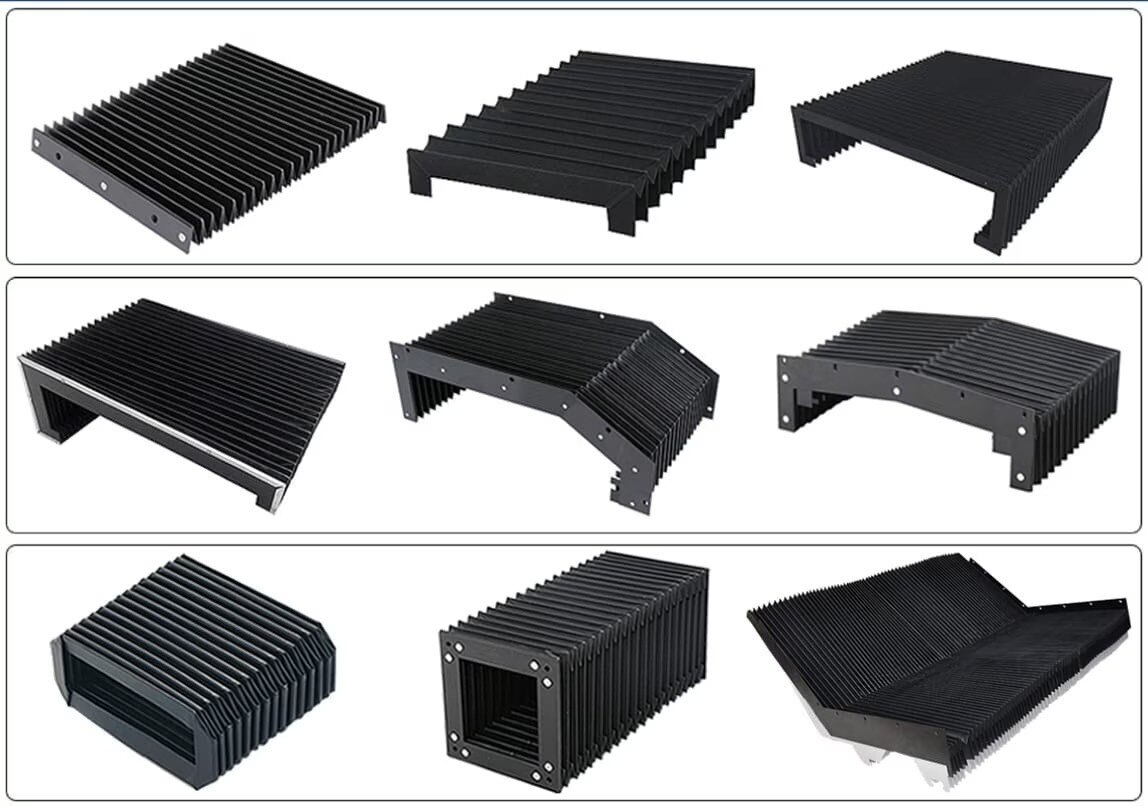
Steel becomes worthwhile when heat, impact, sharp swarf or sustained abrasion is the failure mechanism that defeats a polymer carrier. By the end, you will be able to match the carrier material and protection level to the machine, then check the dimensions, loads, orientation and cable arrangement before specifying it.
Key takeaways
- Choose steel for hot chips, sharp swarf, impact, spatter or sustained abrasion.
- Use plastic, covers or fixed routing when steel adds unnecessary weight and cost.
- Size the chain for cable bend radius, clearance, separation and travel length.
- Specify unsupported, vertical or side-mounted travel before requesting supplier quotations.
Which machinery conditions justify a metal cable drag chain?
Steel is justified when the carrier faces hot chips, welding spatter, sharp swarf, molten-metal splash, impact or sustained external abrasion. Strong metal cable drag chain applications include CNC lathes, machining centres, transfer lines, saws, presses, foundry equipment and steel-processing machinery. Choose for the actual failure mechanism, not machine size.
Check these conditions before specifying it:
- High radiant heat, ultraviolet exposure, oil, coolant or temperatures outside the polymer carrier’s operating range favour steel.
- Verify the cable and hose jackets, separators, pins, lubrication and mounting hardware against their temperature limits; metal links alone do not make the assembly high-temperature rated.
- Set the carrier’s minimum bend radius at or above the largest dynamic bend radius required by every cable and hose inside it.
- Avoid standard steel carriers in cleanrooms or low-particle areas unless the carrier, lubrication and wear data are approved for that environment.
| Option | What it handles | When it applies |
|---|---|---|
| Open steel chain | Large chips, impact and external abrasion | CNC machining, saws, presses and heavy-chip axes where access matters |
| Enclosed carrier or separate chip guard | Fine abrasive dust, grinding swarf and high-pressure coolant | Use when exclusion matters more than low mass, inspection access and heat dissipation |
| Polymer chain | Lower mass, quieter movement and cleaner operation | Use when temperatures and impact loads remain within its rating |
An open steel chain does not seal out fine dust or coolant. Enclosure adds mass, cost, heat retention and a larger bend envelope.
When should steel lose to plastic, a cover or another cable-routing method?
Steel should lose when the failure mechanism is mass, noise, corrosion, particles or routing complexity rather than impact, heat or abrasive chips. Compare what will actually fail before selecting a steel cable drag chain for machines; machine size alone is not a reason to add steel.
| Option | What it solves | When it applies |
|---|---|---|
| Polymer chain | Low moving mass and noise | High acceleration, long cycles, chemical exposure or corrosion risk |
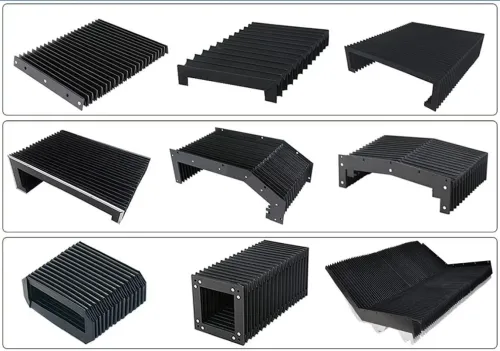
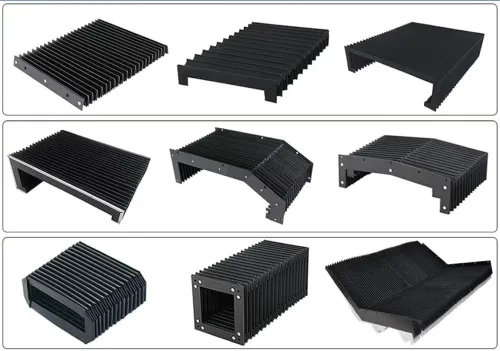
| Telescopic cover or bellows | Encloses and shields a machine surface | Chips and coolant threaten a guideway, slide or machine body rather than a moving cable bundle |
| Cable reel | Continuous cable payout and retraction | Long travel with repeated extension and return |
| Fixed cable tray | Stationary cable support | Cables do not move with an axis |
| Steel chain | Impact, hot chips and high mechanical abuse | Metal cable drag chain applications involving abrasive swarf, sparks or severe impact |
A steel chain increases moving mass, inertia, guide load, stopping force, installation effort and noise. Include chain mass, cable mass, travel length, unsupported span and acceleration in the axis-load calculation; choose polymer when those penalties outweigh impact strength or heat resistance.
Ordinary carbon steel is a poor choice for salt, corrosive coolant or washdown. Stainless steel improves resistance, but inspect the grade, pins, fasteners, separators, brackets and trapped contaminants rather than treating the assembly as corrosion-proof.
Metal also suits cleanroom or low-particle equipment poorly unless its lubrication, materials and wear test data are approved. Heat does not change that rule: cable jackets, separators, seals and mounting hardware can fail before the steel links.
How do you size the chain around the cables and hoses?
Size the chain around the largest cable or hose, not the machine’s travel distance. Measure every cable and hose’s outer diameter, then choose inner height and width with visible clearance around each item. A steel cable drag chain for machinery should not be filled to its nominal opening.
- Set the carrier’s minimum bend radius equal to or greater than the greatest minimum dynamic bend radius specified for every cable and hose inside it. Choosing the radius from the chain catalogue alone can over-bend a servo cable, feedback cable, hydraulic hose or coolant line.
- Confirm that every cable and hose is rated for continuous flexing at the planned travel, speed, acceleration, temperature, coolant exposure and torsion. Fixed-installation cable can fail while the chain remains intact.
- Use roughly 60–70% of the available cross-sectional area as a planning limit, then follow the carrier manufacturer’s stated fill, side-clearance and height-clearance rules.
- Add separators between electrical cables and hydraulic or pneumatic lines. They stop heavy hoses pressing on smaller cables during acceleration and reversal.
- Provide strain relief at both fixed and moving ends. The chain must guide the flexible length rather than pull on connectors, glands, plugs or terminals.
Include chain mass, cable mass, payload, travel, acceleration and unsupported length in the axis-load calculation. The heavier steel cable drag chain for machines increases guide and motor loads, acceleration forces, stopping distance and noise; an apparently suitable chain can overload the axis when its moving mass is ignored.
What changes when the installation is unsupported, vertical or side-mounted?
Installation geometry changes the load on a steel cable drag chain for machines: a short, supported horizontal travel is far easier than a long unsupported stroke.
On a long horizontal axis, use a guide trough, support rollers, or a carrier rated for the required unsupported length; otherwise the chain can sag, buckle, rub, or climb out of alignment.
Check these installation conditions before selecting the carrier:
- For vertical travel, account for the chain’s own weight and the cable load acting along the travel direction.
- For side-mounted travel, provide accurate alignment and firm mounting support because the load shifts sideways.
- For rotating movement, account for changing cable orientation and torsional risk; a standard linear chain may be unsuitable.
- Include chain mass, cable mass, travel distance, speed, acceleration, and unsupported span in the axis-load calculation.
- Confirm the fixing arrangement, allowable sag, and load table for the actual mounting orientation.
Do not transfer a horizontal rating to a vertical, side-mounted, or rotating installation. A longer stroke and a heavier steel carrier increase guide loads, acceleration forces, stopping distance, and noise, so verify the manufacturer’s data for unsupported length, travel distance, speed, acceleration, payload, mounting orientation, and allowable sag.
The cables also need continuous-flex construction for the bend radius, torsion, temperature, and coolant exposure.
How do you turn the application into a supplier-ready specification?
Turn the application into a supplier-ready specification with a drawing or measurement sheet, not a travel distance alone. Show cable and hose diameters, the greatest required dynamic bend radius, chain inner height and width, total travel, speed, acceleration, unsupported span, mounting space, orientation and payload.
1. Record the exposure: hot chips, welding sparks, molten splash, abrasive swarf, oil, coolant, ultraviolet light, corrosive washdown and direct radiant heat. State whether the carrier must be open, covered or enclosed, and identify any stainless-steel requirement.
2. Ask the supplier to provide chain mass, orientation-specific load data, unsupported-length rating and temperature limits for every component, including links, separators, lubrication, seals, mounting hardware, cables and hoses. Request the separator layout and recommended fill so the contents do not rub or crowd during motion.
3. Set the minimum carrier bend radius at or above the greatest dynamic bend radius specified for any cable or hose. Confirm that every cable and hose is rated for continuous flexing under the stated travel, speed, acceleration, temperature and fluid exposure, with strain relief at both ends.
For a steel cable drag chain for machinery, include chain mass and cable mass in the axis-load calculation; extra moving weight increases guide loads, stopping distance and noise. Compare manufacturers, including SCUTES INDIA PRIVATE LIMITED, using these machine conditions rather than a catalogue size chosen from travel alone.
This specification shows whether a steel cable drag chain for machines is justified, or whether a lighter polymer carrier or separate guarding method is better.
Related product
 | Cable Drag Chain Cable drag chains are a vital component in modern industrial equipment and automation systems. View product → |
Frequently asked questions
Which machinery conditions justify a metal cable drag chain?
Use metal when the carrier faces hot chips, welding spatter, sharp swarf, molten-metal splash, impact or sustained external abrasion. CNC machines, transfer lines, saws, presses, foundry equipment and steel-processing machinery are common applications.
When should steel lose to plastic, a cover or another cable-routing method?
Choose plastic when temperatures, impact and abrasion are moderate and lower weight, quieter movement or corrosion resistance matters. Use a cover for short exposed sections or fixed protection, and fixed routing when there is no repeated relative movement.
How do you size a metal cable drag chain around cables and hoses?
List every cable and hose, confirm each minimum dynamic bend radius, add internal separation, then allow clearance around the bundle. Check the carrier’s inner height, width, bend radius, travel length and permitted fill before ordering.
What changes when the installation is unsupported, vertical or side-mounted?
Unsupported travel requires a chain rated for the span and payload without sagging. Vertical and side-mounted installations require checks for cable weight, mounting orientation, bend direction, support points and the chain maker’s load limits.
What belongs in a supplier-ready metal cable drag chain specification?
Provide machine type, travel, speed, acceleration, orientation, mounting position, ambient temperature, chips or chemicals present, cable and hose details, bend radii, carrier dimensions, end connections and required tests.