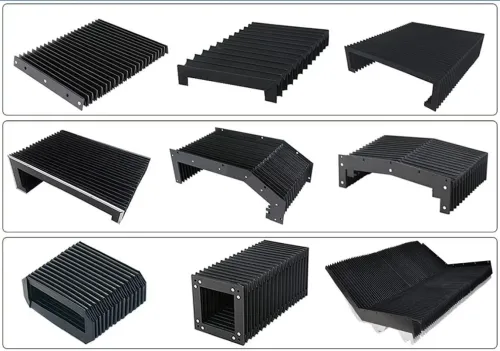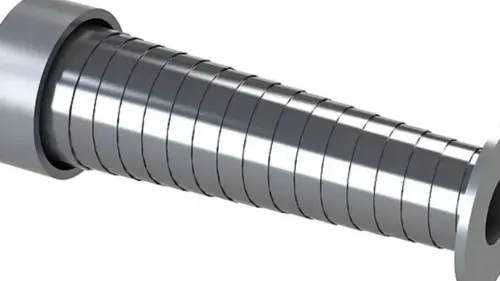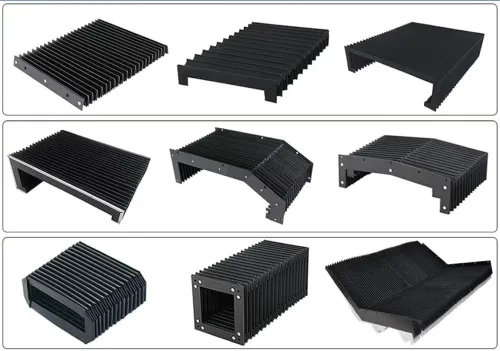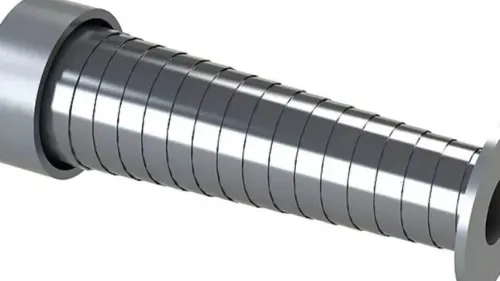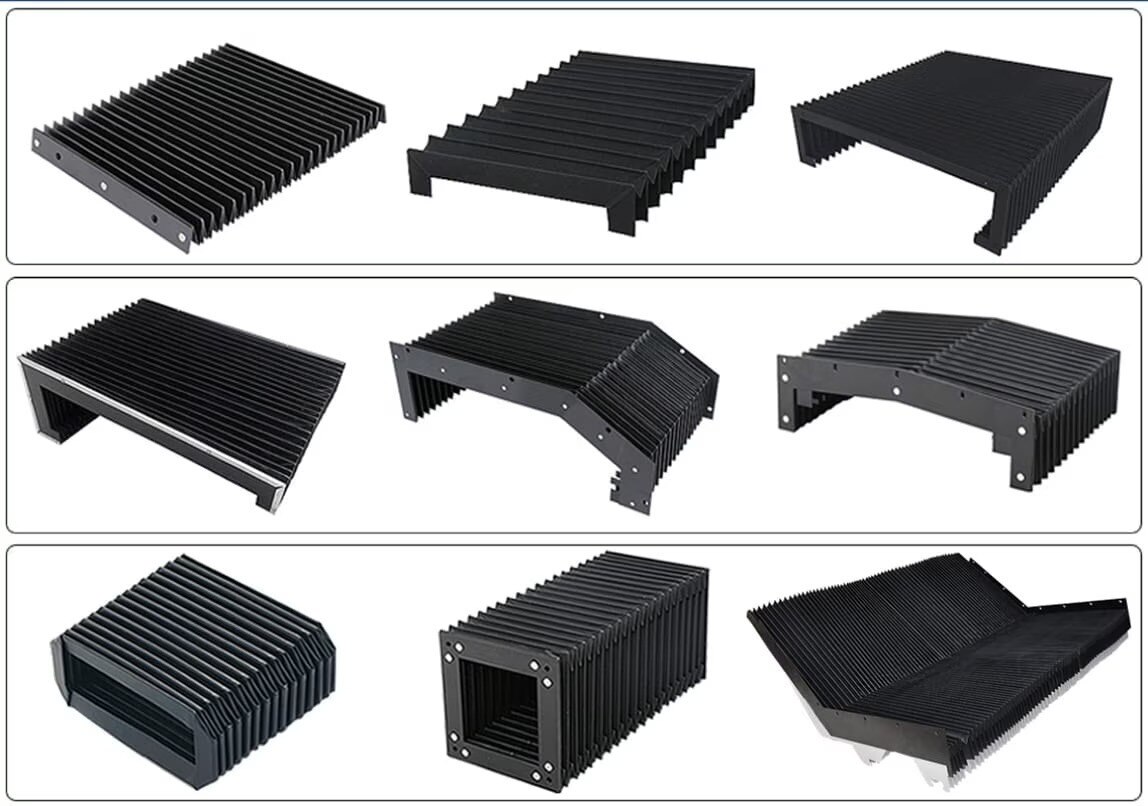
Choosing between a purpose-built bellows and a general machine cover starts with the moving hazard, not the platform’s outside dimensions. By the end, you will be able to define the protection boundary, compare cover constructions, prepare the measurements a Bengaluru supplier needs, and test the finished cover before production use.
Key takeaways
- Map the lift’s full motion envelope before selecting a cover.
- Use bellows for enclosed mechanisms, aprons for broad access openings.
- Specify folded length, stroke, temperature, chip load and cycle count.
- Demand drawings, inspection access and replacement-cost details in Bengaluru quotes.
Start with the protection boundary and the lift’s full motion envelope
Define the protection boundary before choosing a cover. A bellows around a lifting mechanism, hydraulic cylinder, screw drive or guideway is a contamination barrier against dust, oil, coolant and chips; it is not a personnel guard, floor shield or operator-facing perimeter.
It is neither structural nor load-bearing, and cannot replace platform guardrails, emergency stops or other safety controls.
Review the complete motion envelope, not the platform stroke alone. Check raised and collapsed positions, platform travel, arm articulation, folding direction, lateral offset, tilt, compression, extension, stroke, cycle rate, minimum bend radius and allowable interference. A cover that fits at full height can bottom out when collapsed or pull on its mounts.
Record:
- Closed and open height, width and length
- Mounting perimeter, attachment points and folded height
- Number and height of folds
- Clearance from crossed arms, cylinders, hoses and pivots
Run the lift through its entire stroke while checking switches, emergency stops, access doors, overload sensing, emergency lowering and cable carriers. A cable carrier controls line bend radius and travel; a bellows shields machinery. Check loop length, carrier mounting and crush points separately.
Scissor lift protective cover options must match the boundary:
| Option | Best fit | Main limitation |
|---|---|---|
| Accordion bellows | Compound motion and contamination | Not impact protection |
| Apron or roll-up cover | Straight travel or access opening | Poor fit with changing offsets |
| Rigid shield | Impact or fixed exposure zone | Needs clearance and guidance |
| Exposed or guarded mechanism | Clean, accessible mechanisms | Leaves contamination risk |
If the cover safeguards people, assess openings and strength under ISO 13857, ISO 14120 and ISO 13849-1. Do not treat a flexible machine cover for scissor lift as automatic safety equipment.
Compare bellows, aprons, roll-up covers and rigid shields against the exposure
Accordion bellows usually fit compound scissor motion because they add little moving mass and tolerate changing angles. A machine cover for a scissor lift is preferable when travel is straight, contamination comes from one fixed zone, access requires rolling the cover away, or impact demands a rigid barrier.
| Option | Strength | Best fit | Wrong choice |
|---|---|---|---|
| Accordion, sewn or heat-welded fabric bellows | Light, flexible, low moving mass | Compound motion, repeated compression and extension | Severe impact without reinforcement |
| Flexible aprons or segmented/reinforced bellows | Simple coverage with added tear resistance | Arms, cylinders and guideways needing flexible protection | Tight folds that exceed the material’s bend limit |
| Roller blinds | Retractable access and compact storage | Straight travel with a fixed contamination zone | Changing lateral offsets from platform movement |
| Telescopic steel covers | Strong resistance to chips and impact | Guided straight travel | Linkages lacking guide space, alignment accuracy or installation room |
| Fixed enclosure or rigid shield | Highest impact resistance | A stationary hazard or defined strike zone | Any moving joint that needs unrestricted articulation |
| Exposed or guarded mechanism | No cover mass or maintenance burden | Clean, controlled areas with separate guarding | Oil, coolant, abrasive dust or chip exposure |
Choose polyurethane-coated fabric for abrasion and oil, PVC-coated fabric for defined indoor contamination, and neoprene-coated fabric where oil and flexing coincide. Use silicone-coated or aramid-containing construction for heat, sparks and hot chips; use rigid covers for impact. Ordinary PVC is not a welding-spatter specification.
State these conditions in the purchase specification:
- Hydraulic oil, coolant, chips, abrasive dust, rain, ultraviolet exposure, welding, hot chips and cleaners
- Washdown temperature, indoor or outdoor location, stroke, cycle rate and allowable interference
A scissor lift bellows comparison is incomplete without those exposures. A roll-up cover fails when offsets change; steel fails when guides and alignment are unavailable.
Specify the cover so it survives folds, heat, chips and repeated cycles
Turn the motion envelope into a drawing that states closed and open dimensions, stroke, cycle rate, folded package space and allowable clearance. Specify fabric weight in g/m², coating, fold count, crease reinforcement and support between mounting points; excessive tension at full extension will tear folds, while inadequate support lets fabric sag into shear zones.
| Construction | Specify | Failure controlled |
|---|---|---|
| Sewn seams | Thread, stitch pattern, sealed or coated seam allowance | Chip penetration and seam tearing |
| Heat-welded seams | Weld width and compatibility with the coating | Oil ingress and delamination |
| Coated hems and flanges | Reinforced perimeter, hole spacing and edge protection | Fastener pull-out |
| Frame, wipers and hardware | Removable frame, contact wipers, captive fasteners and protected mounts | Abrasion, debris entry and long replacement time |
Record peak temperatures from hydraulics, nearby welding and hot chips, plus washdown temperature, cleaners, oil and coolant exposure. Select the coating from those conditions, not from appearance; oil-softened fabric and heat-brittle folds fail quickly. Keep the frame and every fastener outside pinch zones and preserve mechanical clearance.
- Leave enough folded height for the most compressed folds; check maximum lateral offset for rubbing against scissor arms, trapped folds, exposed loops and chip accumulation.
- Use a reinforced mounting hem or removable frame so replacement does not require dismantling the scissor pack or disturbing hydraulic and electrical safety components.
- Treat the bellows separately from the cable carrier: verify cable bend radius, loop length, carrier mounting and crush points. A machine cover for scissor lift protection cannot control cable travel; the scissor lift bellows comparison is incomplete without that independent check.
Commission, inspect and maintain the cover before relying on it
Prove the cover on the moving lift, not on a drawing or sample. Record the cycle count and exposure, then accept it only after maintenance access and emergency lowering remain available with the cover fitted.
1. Run the lift through its complete stroke. Confirm full extension and compression, usable stroke, folded height, and clearance at maximum lateral offset. Stop the test if folds rub, trap, loop outward, or interfere with cylinders, hoses, switches, emergency stops or access points.
2. Inspect the most compressed folds after a representative cycle test. Check crease fatigue, seam separation, oil swelling, heat damage, chip cuts, water retention, corrosion, loose fasteners and blocked drainage.
3. Set inspection triggers by cycle count and exposure: inspect after commissioning, after abnormal rubbing or impact, and at the recorded production interval. Remove indoor debris before abrasive particles pack between folds.
4. For outdoor Bengaluru use, specify water-shedding folds, drainage where geometry permits, corrosion-resistant hardware and a defined cleaning method. Replace the cover for a torn seam, exposed mechanism, permanent deformation, failed mounting, reduced travel, repeated rubbing or softened material.
| Option | Repairability | Replacement effort |
|---|---|---|
| Fabric bellows | Patchable; seams and panels can be renewed | Usually low if mounting remains sound |
| Aprons | Simple panel replacement | Low, but alignment affects coverage |
| Roll-up covers | Replace roll, spring or slats | Moderate; access and tensioning take time |
| Telescopic steel covers | Repair is difficult after denting | High; alignment and guided removal are required |
Use this acceptance record to compare scissor lift protective cover options without sacrificing safe access.
Prepare a Bengaluru quotation request that exposes the real cost
A replacement cover is not a new design: send the old cover, part or drawing number, failure photographs, mounting details and original dimensions.
For a new design, send a dimensioned drawing, full motion envelope, installed photographs, motion video, closed and open dimensions, folded-height limit, stroke, cycle rate, allowable travel speed, attachment points, clearance zones, material exposure, heat and washdown conditions, access panels, and whether the cover remains attached during emergency lowering.
| Type | Your evidence | Supplier response |
|---|---|---|
| Replacement | Old cover, drawing number, dimensions and failure photos | Exact fit, deviations and replacement time |
| New custom design | Motion envelope, speed, stroke, offsets and clearances | Proposed geometry, material and prototype plan |
| Any quotation | Installation conditions and acceptance criteria | Itemised scope, exclusions and test method |
Make every quotation itemise usable stroke, folded height, fabric and coating, reinforcement, seam method, wipers, flanges, frames, mounting hardware, lead time, installation, prototype fitting, acceptance testing, warranty, repair route and the cost of redesign after interference is found.
- Ask whether the supplier serves industrial machine platforms, mobile elevating work platforms, hydraulic scissor tables and custom lifting fixtures.
- Require a Bengaluru site visit covering sample review, measurement verification, prototype fitting and a witnessed full-stroke test.
- Compare folded height, added mass, travel speed, lateral movement, cleaning access and replacement time, not platform size or appearance.
SCUTES INDIA PRIVATE LIMITED belongs in the comparison only when its design scope, material evidence and acceptance process match the application.
Related products
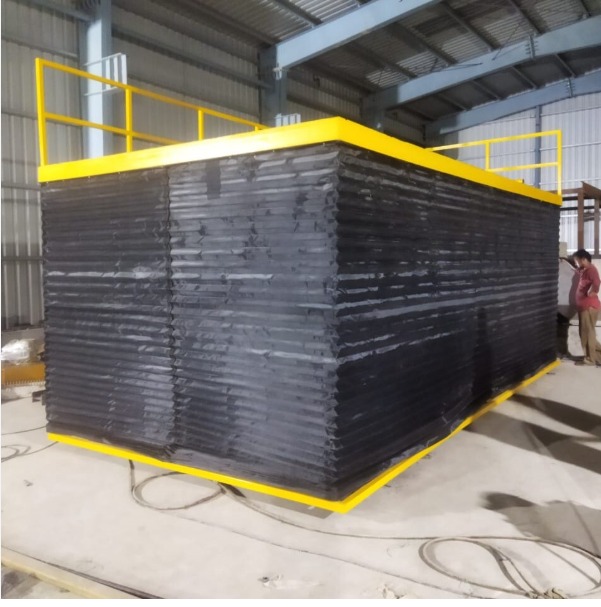 | SCISSOR LIFT BELLOWS Scissor Lift Bellows are one of the broadly demanded stabilizer for which we are considered an acclaimed designed in the market. View product → |
 | Machine Covers Machine covers are specially designed shields used to protect industrial equipment and machinery from environmental elements. View product → |
Frequently asked questions
What protection boundary should you define for a scissor lift cover?
Define whether the cover protects a hydraulic cylinder, screw drive, guideway or lifting mechanism from contamination. A bellows is not a personnel guard, floor shield or operator-facing perimeter.
How do scissor lift bellows compare with aprons, roll-up covers and rigid shields?
Bellows suit enclosed moving mechanisms and repeated compression. Aprons cover broad openings, roll-up covers suit compact storage, and rigid shields resist direct impact when flexible covers would wear.
What should you specify for a machine cover for a scissor lift?
Provide the folded and extended lengths, stroke, envelope dimensions, mounting points, cycle rate, temperature, oil or coolant exposure, chip size, bend radius and access requirements.
What should a Bengaluru quotation request include?
Request a dimensioned drawing, material and fabric details, test or inspection criteria, installation scope, delivery terms, spares, expected service life and the cost of replacing worn sections.