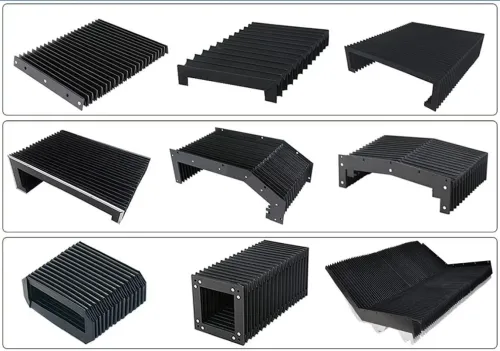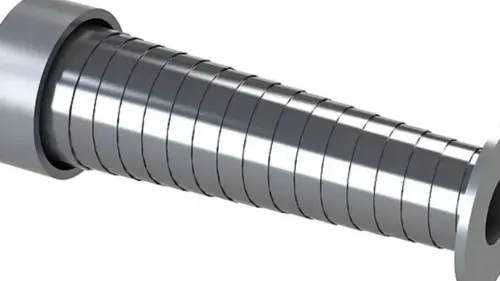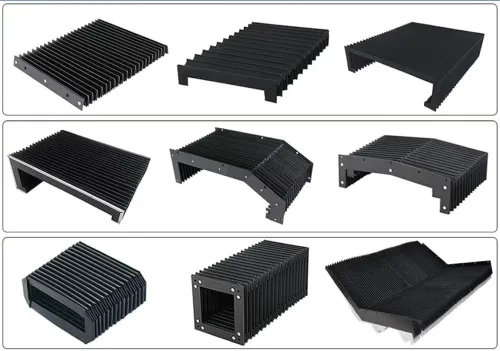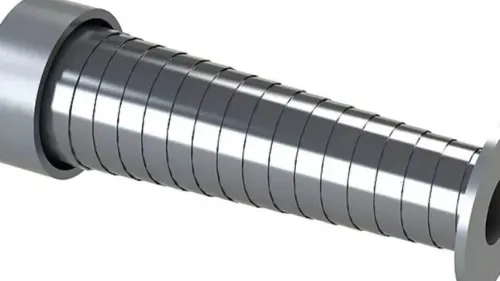
The right supplier must match the cover to the machine’s movement, contamination, available space and safety function—not simply quote a fabric width and rolled length. By the end, you will have a specification checklist, a way to compare cover types and drive systems, and a practical method for testing suppliers before installation.
Key takeaways
- Identify the contaminant, travel path, speed, and cover duty before requesting quotes.
- Choose roll-up construction when repeated guided access outweighs full enclosure protection.
- Send opening, stroke, clearance, mounting, and tracking dimensions to prevent fit failures.
- Demand material data, cycle testing, service access, and itemised replacement costs.
Start with the machine hazard, movement and cover’s actual job
Choose a roll up cover by identifying the contaminant and motion it must survive, not by starting with fabric or price. A roll up cover for machine tools suits guided travel where dry chips, dust, or moderate coolant must be cleared repeatedly.
Abrasive cast-iron dust, high-pressure coolant, oil mist, grinding slurry, welding spatter, and hot chips need different seams, wipers, coatings, and heat resistance; coolant can carry fine abrasive particles into bearings and the winding drum.
| Option | What it means | When it applies |
|---|---|---|
| Roll-up cover | Compact barrier that winds onto a drum | Linear travel with limited installation space and repeated opening |
| Apron cover | Overlapping slats or flexible strips extend and fold | Broad horizontal beds; a poor choice where debris can pack into folds |
| Bellows | Folded fabric or coated material expands and contracts | Protected axes needing enclosed movement; unsuitable for sharp chips without reinforcement |
| Telescopic steel cover | Rigid overlapping steel boxes shield the guideway | Heavy chips, hot material, and severe machining; requires more mass and clearance |
| Fixed guard | Stationary enclosure or barrier | Access prevention; use it instead of a cover when personnel can reach hazardous motion |
For a roll up cover for CNC machines, inspect edge geometry, overlaps, wipers, end seals, drain paths, and seam orientation. Ask for the supplier’s spray or leak-test method; an IP rating or fabric datasheet does not prove coolant sealing. Test a representative section at actual travel, reversals, chip form, pressure, temperature, and washdown conditions.
A motorized roll up machine cover also needs torque, duty, drum diameter, gearing, limit sensing, jam response, manual recovery, and controller interfaces. A roll up cover for machine protection is not automatically a personnel guard: address ISO 12100 risk assessment, ISO 14120 guarding, safety distances, interlocking, and ISO 13849-1 validation separately.
Compare roll-up construction with the alternatives before specifying it
Choose a roll-up cover only when compact storage, frequent movement and protection from chips or coolant outweigh the alternatives. A roll up cover for machines suits many CNC and machine-tool axes, but it is not automatically personnel guarding; apply ISO 12100, ISO 14120 and ISO 13857 when access to a hazard is possible.
| Option | Choose it when | Wrong choice when |
|---|---|---|
| Roll-up cover | Travel is frequent and the cover must retract into a small rolled envelope | The exposed hazard needs certified access prevention or the rolled package blocks tooling, doors or adjacent axes |
| Apron cover | A robust segmented barrier must span long travel and tolerate chips | You lack space for its folded stack or need a very small retracted envelope |
| Bellows | You need enclosed protection around slides, screws or complex three-dimensional movement | Hot chips, sharp swarf or abrasion will quickly damage fabric folds |
| Telescopic steel cover | Heavy cutting, impact and hot chips demand rigid protection | Low mass, high acceleration or restricted mounting space is critical |
| Fixed guarding | You need permanent separation from a hazardous zone | Operators must access the area frequently or the guard would obstruct the process |
Before requesting a quotation, give the roll up machine cover manufacturer the opening width and height, travel, speed, mounting orientation, attachment geometry, available installation space, rolled diameter allowance and permitted sag. Ask for drawings showing installed gaps, materials, operating limits, spare parts and maintenance intervals.
Compare replaceable wear strips, wipers, bearings, fasteners and fabric sections rather than purchase price alone. If cables approach the cover, retain their bend radius, separation, torsion and cycle limits; the cover is not a cable carrier.
Give the manufacturer dimensions that prevent fit and tracking failures
For custom roll up machine covers, provide more than usable travel. The manufacturer needs the opening and the complete space occupied by the cover at both ends of its movement. A correct drawing prevents a rolled package from blocking a door, chip conveyor, tool change area or adjacent axis.
- Opening width and height
- Required travel, travel direction and mounting orientation
- Fixed and moving attachment points, including hole patterns and edge offsets
- Clearance around guides, wipers, drum and end brackets
- Maximum permitted rolled diameter and the available drum envelope
- Distance between supports and the required flatness or allowable sag
- Nearby doors, tooling, axes, conveyors and service-access limits
State the operating limits that the design must survive, not just the machine’s normal settings. Excessive speed, unsupported span or repeated acceleration can cause tracking errors, edge wear and drum overload.
- Cover opening speed, acceleration, cycle frequency and daily cycles
- Maximum temperature, coolant, oil, chip load and cleaning chemicals
- Guide alignment tolerance, minimum bend radius and allowable lateral movement
- Cable clearance, if cables approach the cover; preserve the cable maker’s bend radius and unsupported-length limits
- Motor torque, duty rating, drum dimensions, limit sensing and jam-response requirements for a motorized cover
Request a controlled drawing showing the unrolled and rolled envelopes, attachment geometry and clearances. The quotation should identify material, coating, operating limits, spare wear parts and the revision number, so a replacement custom roll up machine cover matches the approved design.
Match materials, seals and drive systems to the exposure
Match the cover construction and motor to the exposure before comparing manufacturers. A roll up cover for CNC machines needs a barrier designed around the actual contaminant, movement and operating temperature, not a fabric chosen from a catalogue.
| Exposure | Construction response | Failure if mismatched |
|---|---|---|
| Dry chips | Flexible coated fabric, overlapping edges and replaceable wipers | Chips enter the drum and guides |
| Coolant or oil mist | Sealed edges, end seals, drain paths and seam orientation away from the spray | Liquid carries abrasive particles into bearings |
| Grinding slurry | Abrasion-resistant material, robust wipers and easy cleaning | Slurry hardens in joints and restricts travel |
| Hot chips or welding spatter | Heat-resistant, non-melting outer layer with protected seams | Punctures and fused material stop retraction |
| Chemicals | Verify compatibility with each coolant, cleaner and lubricant | Swelling, cracking or loss of flexibility |
For a roll up cover for machine tools, request the supplier’s defined spray or leak-test method. Nominal liquid resistance, an IP rating or a fabric datasheet does not prove complete coolant sealing.
A motorized roll up machine cover is a motion system. Require these details in the quotation:
- Motor torque, reduction gearing, duty cycle, travel speed and acceleration
- Drum diameter, winding direction and available rolled envelope
- Limit or position sensing, overload detection and jam response
- Manual recovery, cable routing and machine-controller interface
Treat the cover as a chip or coolant barrier, not automatically as personnel guarding. If it blocks access to moving parts, assess safety distances, interlocking and control performance under ISO 12100, ISO 14120 and ISO 13849-1. For lifecycle cost, compare replaceable wipers, wear strips, bearings and fabric sections rather than a complete-assembly replacement.
A roll up cover for machine protection is cheaper only when it remains serviceable.
Audit the supplier’s engineering evidence, serviceability and total quote
A capable industrial roll up cover manufacturer proves performance with controlled engineering documents, not a nominal width and height. Ask for a drawing with revision history, identified materials and coatings, maximum speed and temperature, minimum bend radius, mounting orientation, rolled-diameter allowance, spare-part codes, installation instructions, maintenance intervals and acceptance-test records.
Request a quotation that includes the complete installed assembly:
- Drum and guides
- Wipers, end seals and drain details
- Motor, controls and sensors
- Mounting brackets and cable routing
- Commissioning and testing
- Spare wear parts, including bearings, fasteners, fabric sections and replaceable edge strips
A cover fabric quote is not comparable with a motorised custom roll up machine cover. Confirm the opening width and height, travel direction, attachment geometry, clearances, required flatness or sag, and the rolled envelope; a correct travel length can still block a door, tool access, chip conveyor or adjacent axis.
For a roll up cover for CNC machines, ask the roll up machine cover supplier to define its leak or spray-test method. Fabric liquid resistance, an IP rating or a datasheet does not prove that seams, overlaps, wipers and end seals exclude coolant.
Test a representative section on the machine, or on a fixture reproducing reversal rate, chips, coolant pressure, temperature and washdown.
Ask SCUTES INDIA PRIVATE LIMITED for these records when comparing its proposal with competing custom roll up machine covers. Reject any design that requires replacing the complete assembly for one damaged wear component.
Related products
 | Roll Up Cover A roll-up cover is a highly durable and flexible protective solution designed to safeguard machinery, equipment, and valuable assets from dust,... View product → |
 | Machine Covers Machine covers are specially designed shields used to protect industrial equipment and machinery from environmental elements. View product → |
Frequently asked questions
When is a roll-up cover suitable for machine tools?
Use a roll-up cover for machine tools when guided movement requires repeated access and the cover must clear dry chips, dust, or moderate coolant. Choose another design when the hazard demands a sealed enclosure or heavy impact protection.
What dimensions should you give a roll-up machine cover manufacturer?
Provide the opening width and height, travel or stroke, mounting points, available roll diameter, clearance around moving parts, guide alignment, and the machine’s speed and acceleration.
How should you match a roll-up cover to the machine environment?
Specify the contaminant, coolant or oil exposure, temperature, chip size, abrasion risk, cleaning method, travel speed, and cycle frequency. Use these conditions to compare fabric, coating, seals, guides, and drive systems.
What evidence should you request from a roll-up machine cover supplier?
Request drawings, material specifications, load and temperature limits, cycle-test results, tracking details, maintenance instructions, spare-part availability, warranty terms, and an itemised quote covering installation and replacement parts.