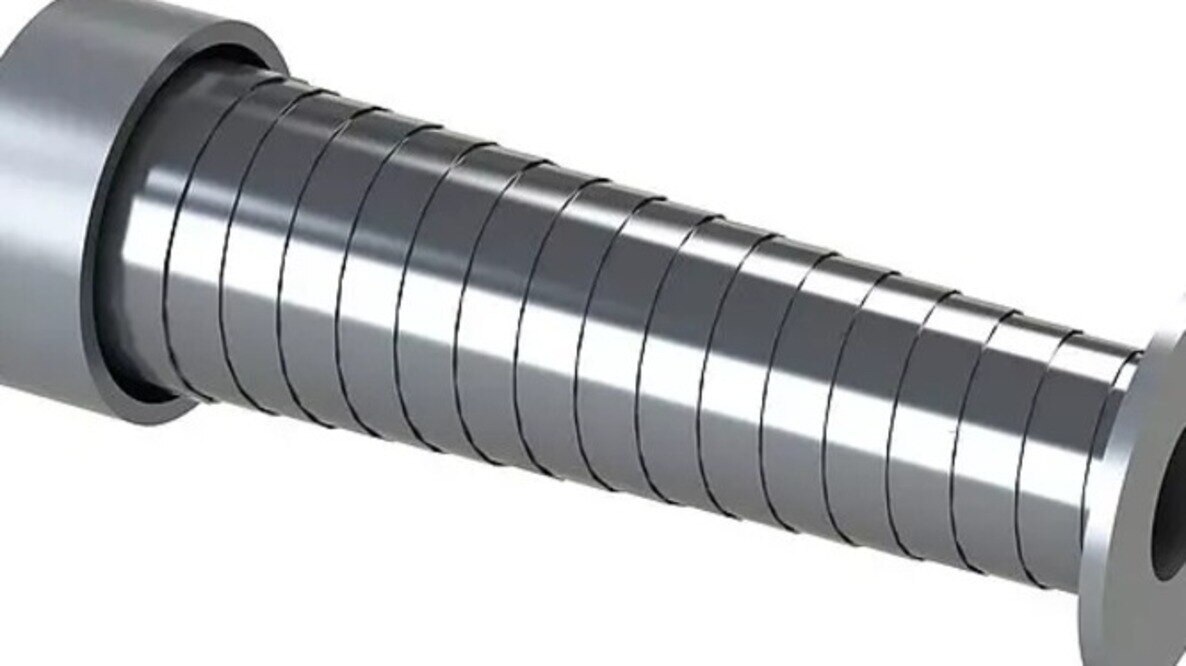
A distributor cannot source these components reliably from a machine name or an outside measurement alone. By the end, you will know which drawings, dimensions, environmental details, supplier checks and acceptance tests belong in a Bengaluru RFQ and purchase order.
Key takeaways
- Build the RFQ around machine interfaces, dimensions, loads, and operating conditions.
- Measure guideway clearances and account for cover movement before finalising dimensions.
- Specify spiral springs by force, travel, mounting, and working envelope.
- Check supplier drawings, inspection records, testing, and delivery capability before ordering.
Build an RFQ around the machine interface, not a catalogue photo
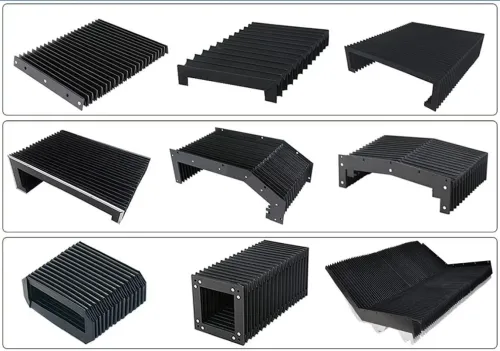
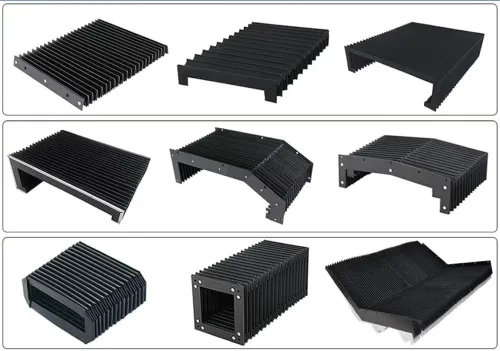
Collect machine-interface and operating data before requesting a price; a catalogue photograph cannot prove fit. Knowing how distributors source telescopic covers and spiral springs in Bengaluru starts with defining the machine rather than selecting a visually similar product.
1. Record the machine model, axis travel, stroke, closed and extended cover lengths, width, height, section count, fixed and moving ends, mounting faces, guideway geometry, maximum speed, acceleration, duty cycle and available clearance.
2. Attach a 2D or 3D interface drawing. Mark the guideway width, required collapsed-length limit, spindle or tool-changer clearance, mounting-hole pattern, maximum cover height and nearby coolant plumbing. State the chip load, coolant or oil exposure and expected operating hours.
3. Ask each manufacturer to return a marked-up drawing, section-by-section stack-up, provisional lead time, installation assumptions and replacement-part list. For spring-related assemblies, include attachment geometry, required force, available coil diameter, operating speed and cycle count.
This telescopic cover sourcing workflow exposes clearance, overlap and moving-mass problems before purchase. Treat any quote that omits these details as budgetary, not final; otherwise a low price may describe a cover that cannot travel, mount or survive the machine environment.
Measure the guideway without creating a new interference problem
Measure the available envelope at both ends of the stroke, then record the closed length, fully extended length, section count, mounting orientation, guideway width and maximum cover height. Lock out the machine before measuring; never measure across moving axes while the machine is running.
Move the axis through its full safe travel and inspect every position for contact with:
- Wipers and lubrication lines
- Coolant pipes and chip conveyors
- Access doors and limit switches
- Tool changers and cable carriers
A replacement buyer should photograph the nameplate, end frames and mounting holes, then provide the machine model. Outside length alone cannot establish section overlap, wiper geometry or correct mounting orientation.
| Design | Check against the envelope | Reject when |
|---|---|---|
| Standard or telescopic spring cover | Closed height, section stack-up and moving mass | The collapsed height blocks nearby equipment |
| Custom steel cover | Acceleration, hot swarf and rigid guideway mounting | Its bending path or mass exceeds machine limits |
| Apron or roll-up cover | Available width, storage space and travel direction | The roll or slats obstruct access |
| Bellows cover | Flexible routing and low-load movement | Chips, heat or sharp edges will damage fabric |
Compare each option as a machine protection component, not by appearance. Give the telescopic cover distributor in Bengaluru the envelope drawing and photographs; select only a cover that clears every component through the complete stroke.
Match construction and inspection requirements to the cutting environment
A polished sample is unsuitable if its construction cannot survive your chip, coolant and acceleration profile. During telescopic cover sourcing, ask for the steel grade, sheet thickness, formed geometry, section clearances, guide system, rollers, scrapers, wipers, damping, lubrication points, fasteners, surface treatment and corrosion-resistance method.
- Require the supplier to relate each detail to the hazard, not merely show photographs.
| Hazard | Construction choice | Failure to avoid |
|---|---|---|
| Abrasive cast-iron chips | Robust scrapers, generous chip-shedding geometry and protected guide surfaces | Chips grinding into joints and blocking section movement |
| High-pressure coolant | Sealed overlaps, positive drainage openings and coolant-resistant wipers | Fluid entering the guideway or pooling inside sections |
| Grinding dust | Tight clearances, continuous wiper contact and protected guidance | Fine dust bypassing gaps and abrading bearings |
| Hot swarf or welding spatter | Heat-tolerant steel, formed geometry and suitable surface treatment | Warping, burned wipers or coating failure |
| Oil and outdoor moisture | Compatible seals, fasteners and a specified corrosion-resistance method | Swollen wipers, rusted hardware and seized sections |
More overlapping sections reduce collapsed length but add moving mass, friction points, wipers and chip traps. Compare the complete stack-up with the axis acceleration limit; a compact cover can overload the drive.
On delivery, check closed and extended lengths, section squareness, mounting-hole locations, manual travel, wiper contact, drainage openings and full-stroke clearance. Record any interference before installation. If the cover must prevent operator access, require a separate guard assessment against ISO 14120: guideway protection alone does not establish a safety guard.
Specify the spiral spring by force, travel and working envelope
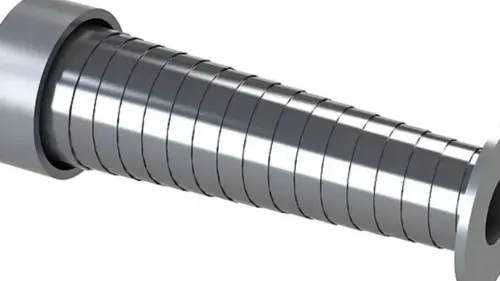
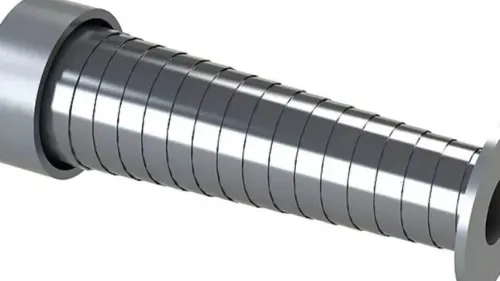
A nominal force is not a complete spiral-spring quotation. First identify the product: a constant-force spring uses a pre-stressed strip for near-constant retraction, while a spiral torsion or power spring supplies changing torque through angular deflection.
1. Define the output: required force at the attachment point or torque at the shaft, usable stroke or angular travel, operating speed, cycle count and environmental exposure. State whether the spring retracts a cover or drives a motion assembly.
2. Define the physical envelope: strip material, thickness, width, coil or drum diameter, minimum bend or drum diameter, mounting arrangement, pre-winds and recommended mounting orientation. Include the available clearance, maximum speed and whether a protective housing is required.
3. Define limits before requesting prices: allowable force or torque variation, acceptable permanent set, maximum coil damage, permitted loss of retraction and the point at which the spring must fail safely. Confirm that it will not become fully uncoiled, exceed its working envelope or carry a structural load that needs positive support.
4. Ask whether the spring is standard from a published force-travel table or custom to a drawing. A spiral spring distributor should state the cycle-life basis and provide installation details. Document how distributors source telescopic covers and spiral springs in Bengaluru so quotations remain comparable.
On receipt, verify force or torque at the specified position, free travel, coil condition, attachment geometry and pre-wind direction. Reject incorrect pre-winding; it commonly causes weak retraction or early failure.
Vet the Bengaluru supplier before approving the purchase order
A capable telescopic cover distributor in Bengaluru proves technical control before quoting a final price. Ask whether it can review machine-interface drawings, manufacture or coordinate the section-by-section stack-up, supply inspection records, specify replacement wipers and issue installation instructions.
| Check | Capable supplier | Warning sign |
|---|---|---|
| Interface review | Returns a marked-up drawing with clearances and mounting assumptions | Quotes from a photograph or outside length |
| Construction | Explains section count, materials, overlap, guides and wiper design | Cannot identify who controls fabrication |
| Service | Names local service coverage and accepts alignment and commissioning responsibility | Installation ends at delivery |
| Continuity | Stocks or identifies replacement springs and wipers | Offers no part specification or source |
| Accountability | States warranty, lead time and response process for leakage or travel interference | Uses “standard lead time” without conditions |
Put the final drawing into the purchase order. It must show fixed and moving ends, mounting-hole locations, collapsed and extended dimensions, section count, materials and every approved deviation. Include acceptance criteria for length, squareness, hole position, smooth travel, wiper contact, drainage openings and full-stroke clearance.
On receipt, inspect those points, then run the cover through its complete stroke at controlled speed before production use. Check a spiral spring distributor’s force or torque, free travel, coil condition, attachment geometry and pre-wind direction.
SCUTES INDIA PRIVATE LIMITED belongs in the comparison only when it demonstrates the same documents, installation support and replacement-part continuity. Choose total operating risk, not the lowest quotation.
Related products
 | TELESCOPIC SPRING COVER Telescopic Spring Covers provide protection under extreme conditions. View product → |
 | TELESCOPIC COVERS A telescopic cover protects guide-way surfaces and components of moving axis of machines. View product → |
Frequently asked questions
What information should distributors include in an RFQ for a telescopic cover?
Include the machine interface, guideway dimensions, available clearances, travel, speed, acceleration, coolant and chip conditions, material preferences, and inspection requirements instead of relying on a catalogue photograph.
How should you measure a guideway for a telescopic cover?
Record the guideway width, height, travel, mounting faces, maximum extended and compressed lengths, nearby obstructions, and clearance during movement so the cover does not create interference.
How do you choose construction requirements for a telescopic cover?
Match the cover material, sealing arrangement, scraping system, drainage, surface treatment, and inspection checks to the machine's chips, coolant, oil, heat, speed, and contamination levels.
What details define the correct spiral spring?
Specify the required force, stroke or travel, spring dimensions, mounting method, operating cycle, working envelope, end configuration, and the force available across the travel.
How can you vet a telescopic cover distributor in Bengaluru?
Review supplier drawings, dimensional inspection records, material and coating details, sample or reference work, testing methods, delivery commitments, and the supplier's ability to resolve fit issues before purchase-order approval.