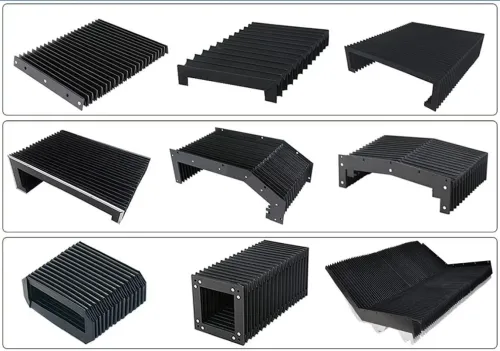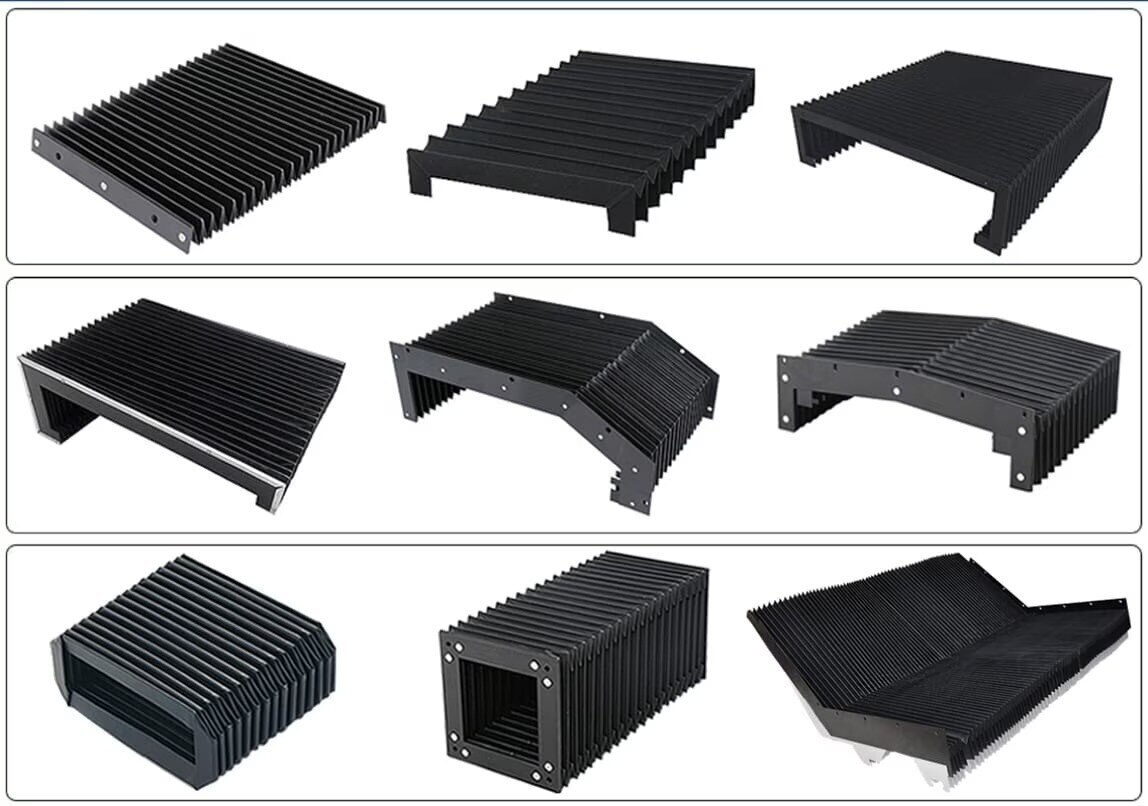
Laser cutting exposes guideways, ballscrews, cable carriers and nearby mechanisms to fine metallic dust, fumes, hot particles, condensation and abrasive debris. By the end, you will be able to compare fabric bellows with spiral spring, steel, roll-up and improvised guards, specify the right construction, and check whether the design fits your machine safely.
Key takeaways
- Protect guideways, ball screws and cable carriers from chips, dust and cutting residue.
- Choose fabric when you need flexible travel, low mass and straightforward access for service.
- Specify fabric layers, seams, heat resistance and attachments around the machine’s actual motion path.
- Check compression, extension, clearances and fasteners before commissioning the bellow.
What a fabric bellow protects during laser cutting
Guideways, ball screws, racks, linear motors, cable carriers and optics-adjacent motion mechanisms benefit from a fabric bellow for laser equipment. It keeps cutting residue away from sliding surfaces and drive elements while they travel, but it does not replace the laser beam enclosure, access-door interlocks, emergency stops or safety-related controls.
The cover must handle:
- Fine metallic dust and smoke residue from cutting
- Slag, abrasive particles and hot spatter
- Compressed-air blowback that drives debris into moving joints
- Coolant mist, oil, condensation and workshop moisture
- Repeated folding, acceleration and contact with nearby machine parts
A laser machine fabric bellow works only when its end plates, mounting faces and cable transitions close the contamination path. Gaps at guideway exits or moving plates let dust enter behind the cover; damaged coatings and open fold gaps can leak fumes and particles. Source-capture extraction and enclosure ventilation remain necessary.
| Component | Main hazard | Protection provided |
|---|---|---|
| Guideways and linear rails | Metallic dust, slag and abrasive debris | Shields bearing tracks and sliding surfaces during travel |
| Ball screws and racks | Fine particles, smoke residue and oil contamination | Reduces deposits that increase friction and wear |
| Linear motors and encoders | Dust, moisture and thermal contamination | Covers adjacent moving hardware without blocking required clearances |
| Cable carriers and hoses | Chips, spatter, bending and compressed-air blowback | Separates flexible services from cutting debris |
| Optics-adjacent stages | Fumes, hot particles and mechanical impact | Protects motion mechanisms; it is not an optical or beam shield |
Specify fabric against the actual laser wavelength, heat load, spatter temperature and exposure duration. No universal fabric suits every fiber, CO₂, diode or Nd:YAG machine.
Fabric bellow advantages versus other protection methods
Key fabric bellow advantages are low moving mass, compact folded height and easy adaptation to long or irregular travel. That reduces the load on high-acceleration axes when internal frames, end plates and mounting hardware do not add excessive drag.
| Option | Strength | Limitation and best use |
|---|---|---|
| Fabric bellow | Light, flexible and adaptable around guideways, ballscrews, racks, cables and linear motors | Fabric needs stand-off protection from direct spatter, radiant heat and sharp abrasive debris |
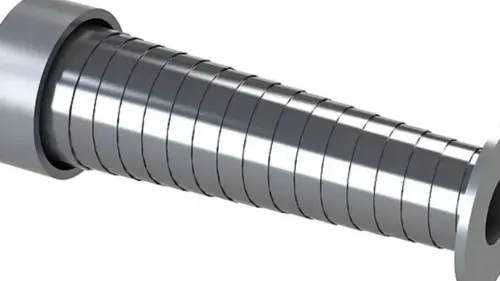
| Spiral spring cover | Compact rolled diameter; spring-steel strip resists chips and abrasion better than unsupported textile | Check minimum rolled diameter, axial travel, speed, acceleration, strip overlap, corrosion protection and cleaning access |
| Telescopic steel cover | Strong barrier against hot chips, impact and heavy contamination | Higher mass, greater folded height and rigid geometry make long, fast or irregular travel difficult |
| Roll-up cover | Uses little space in the retracted position and suits straight travel | The roll, tension system and edge sealing need room; winding can admit particles through gaps |
| Sheet-metal guard | Simple, rigid deflection barrier for a local hazard | An improvised guard rarely seals guideway exits, cable transitions or moving interfaces |
A spiral spring cover is not automatically better because it occupies less space. Its exposed edges, overlap and fatigue must suit the machine geometry; interference or openings can create contamination paths.
A fabric bellow also fails if its interfaces leak. Pair it with a sacrificial metal skirt, stand-off shield or replaceable front apron near the cutting zone. A sheet-metal guard protects against a local splash; it does not replace a sealed moving cover or a laser beam enclosure.
When to choose fabric instead of spiral spring protection in Bengaluru
Choose a fabric bellow when the protected part has a mainly straight stroke, limited lateral movement, and little contact with sharp swarf. Choose spiral spring protection when abrasive chips, exposed edges, or a compact rolling shield matter more than a fully enclosed accordion seal.
| Machine condition | Fabric bellow | Spiral spring cover |
|---|---|---|
| Travel geometry | Linear travel with controlled compression and a clear bend radius | Rolling or expanding travel where installation length is restricted |
| Contamination | Fine metallic dust, smoke residue, condensation, and small particles | Heavy chips and abrasion that could cut unsupported fabric |
| Motion | Moderate acceleration without twisting or unsupported spans | Fast motion where spring tension and strip overlap suit the machine |
| Heat and beam exposure | Select fabric and coating for the measured heat load, wavelength, spatter temperature, and exposure time | Select strip material and shielding for the same exposure; steel is not automatically laser-safe |
| Maintenance space | End plates and seams can be inspected and sealed around cable transitions | Minimum rolled diameter, overlap, exposed edges, and cleaning access need verification |
Do not select spiral spring laser protection in Bengaluru only because it occupies less space. Check its minimum rolled diameter, axial travel, allowable acceleration, corrosion protection, and contamination paths against the fabric design.
The fabric bellow benefits laser for equipment spiral spring in bengaluru only when interfaces close every gap around guideways, ballscrews, racks, cable carriers, and mounting plates. It is not a beam enclosure or personnel guard. SCUTES INDIA PRIVATE LIMITED can help document those interfaces before fabrication.
Related product
 | Laser Machine Bellows Laser Machine Bellows are specialized protective coverings designed to safeguard the vital internal components of laser machines. View product → |
How to specify fabric, seams, heat resistance and attachments
Specify the laser machine fabric bellow against the actual wavelength, beam-exposure scenario, heat load, spatter temperature and exposure duration. A flame-resistant or heat-resistant coating does not make it a laser-radiation barrier; request test evidence if direct or focused beam containment is part of the safety function.
1. State the fabric stack and operating environment: base cloth, coating, resistance to metallic dust, fumes, oil, coolant, cleaning chemicals, abrasion and compressed-air blowback. Select for the combined hazards, not a nominal temperature rating alone; fold fatigue, cracked coating and particle impact often end service first.
2. Specify seams that will not open during repeated folding. Ask for double-stitched or welded seams matched to the coated fabric, heat-resistant thread where stitching is used, sealed needle holes where contamination control matters, and reinforced corners. A fabric bellow for laser equipment can leak through seams even when its panels remain intact.
3. Define heat protection by location. Request a sacrificial outer layer, reflective or insulating panel, and clearance from the cutting zone where hot slag or spatter reaches the cover. Record the maximum particle temperature and dwell time instead of accepting “high-temperature fabric” as a specification.
4. Detail attachments: bolted clamping frames or replaceable flanges, flexible end plates, strain relief for cable passages, and guards over fasteners that could snag folds. Leave no sharp edge at the travel path.
5. Require inspection samples showing minimum bend radius, compressed length and fold-cycle performance. The bellow controls contamination; it does not replace fume extraction, filtration, ventilation or a certified laser enclosure.
Fit checks, installation limits and service inspection
Before ordering, measure the machine at full extension and compression, then record the available installation envelope. Include fold pitch, number of folds, internal-frame spacing, mounting orientation, unsupported span, minimum bend radius, and clearance from the laser head, nozzle, fixtures and hot-work zone.
1. Compare the bellow’s extended and compressed lengths with the measured travel. Check that folded fabric, frames and mounts do not enter the axis path, pinch cables, restrict acceleration, or contact a nearby guideway.
2. Confirm the mounting faces are parallel and rigid. Respect the supplier’s minimum bend radius and unsupported-span limit; exceeding either can cause sagging, frame distortion, seam fatigue or interference during rapid motion.
3. Define the thermal boundary from the actual laser wavelength, beam exposure scenario, heat load, spatter temperature and exposure duration. A flame-resistant or heat-resistant coating does not make the bellow a laser enclosure, and it cannot contain a direct or focused beam without tested certification.
4. Keep beam enclosures, access-door interlocks, viewing windows, emergency stops and safety-related control functions in the machine risk assessment. Treat the bellow as protection for moving parts, not personnel protection.
Record cleaning access, inspection frequency, replacement method and approved cleaning agents before installation. Inspect folds, seams, frames, fasteners and attachment points for cuts, scorching, hardened coating, trapped metallic dust and coolant residue; excessive drag or new noise signals a fit problem. These checks preserve the fabric bellow advantages without trading them for maintenance failures.
Frequently asked questions
What does a fabric bellow protect during laser cutting?
It shields guideways, ball screws, racks, linear motors, cable carriers and motion mechanisms near optics from dust, chips, coolant and cutting residue. It does not replace the beam enclosure, door interlocks, emergency stops or safety controls.
What are the advantages of a fabric bellow over other protection methods?
A fabric bellow provides flexible travel protection with low moving mass and service access. Compare its heat, abrasion and chemical resistance with the exposure at your laser machine before selecting it.
When should you choose fabric instead of spiral spring protection in Bengaluru?
Choose fabric when the travel path needs a flexible, lightweight cover and the exposure suits the selected fabric and seam construction. Choose spiral spring protection when compact rolled protection and the spring’s operating limits better match the machine.
How do you specify a fabric bellow for laser equipment?
Provide the retracted and extended lengths, folded height, width, travel direction, minimum bend or fold geometry, fabric layers, seam construction, heat exposure, attachment method and nearby obstructions.
What fit and service checks should you perform after installation?
Run the machine through its full travel at slow speed, then inspect compression, extension, rubbing, snagging, clearances, fasteners and attachment plates. Inspect the bellow for tears, open seams, embedded chips and heat damage during scheduled service.