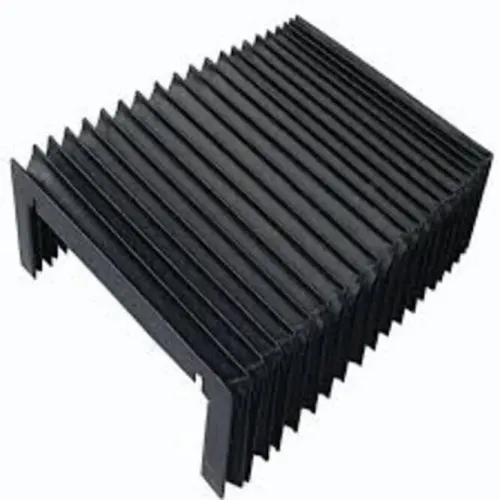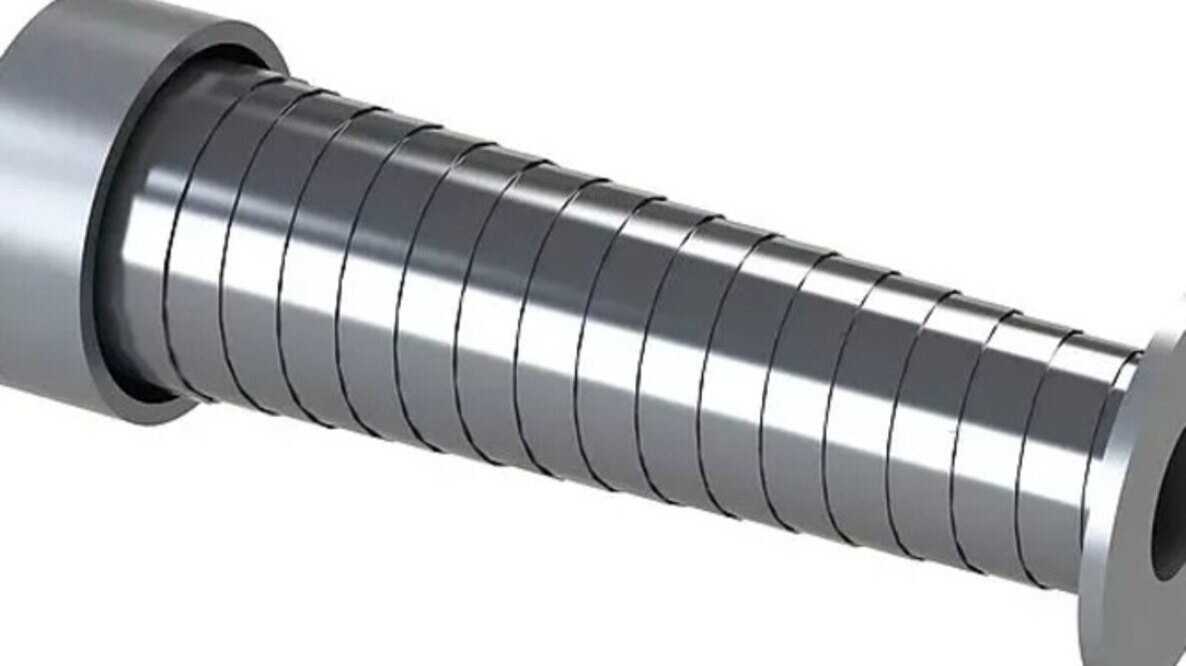
A single trapped chip can dent a telescopic box, shift a guide shoe and turn a minor obstruction into repeated scraping on every axis stroke. By the end, you will be able to identify chip and coolant damage, inspect the cover safely, separate cover faults from machine-setting problems, and decide when repair or replacement is justified in Vienna.
Key takeaways
- Check every box, guide shoe, wiper and drain path during a controlled full-stroke test.
- Remove chips with tools and low-pressure cleaning; do not force jammed cover sections.
- Replace the cover when box geometry, guides or seals cannot hold alignment.
- Record dimensions, stroke, mounting details and failure evidence before ordering replacement.
How chips and coolant turn a small defect into CNC cover failure
A CNC machine cover failure often begins with one impact, not uniform wear. A trapped chip between boxes can dent a box wall, deform a sliding surface, or push a guide shoe out of alignment; each later stroke raises friction and drive load, producing scraping, knocking, hesitation, or a seized section.
Sharp swarf cuts wipers, while abrasive fines score sliding surfaces and wash onto the protected guideway. Chips can block drain openings, holding contaminated fluid against folded or spot-welded seams. This is the failure pattern behind CNC telescopic cover chip damage: impact starts the fault, misalignment spreads it, and contamination reaches the guideway.
Telescopic cover coolant damage follows another route. Wiper material incompatible with the formulation can swell or harden; concentration, temperature, tramp oil and exposure time matter more than the label “water-soluble coolant.” Fluid can attack adhesive joints and fasteners, strip lubricant from rollers, and cause corrosion where it pools.
A high-pressure nozzle aimed at a joint can force fluid past an intact scraper.
Check for these visible warnings:
- Coolant inside the cover or leaking through open gaps
- Torn, swollen or hardened wipers
- Rust staining at seams, fasteners or drains
- Metallic dust, guideway scoring or contaminated way surfaces
- Uneven box movement, scraping, knocking, hesitation or seized sections
What to inspect during a controlled full-stroke check
Start with production stopped, isolate unexpected axis movement, and let hot chips and coolant drain before you touch the cover. Use this sequence when checking a CNC machine telescopic cover for damage from chips and coolant in Vienna.
- Remove loose chips with a brush or vacuum. Do not drag swarf across painted surfaces or force it through the wiper line.
- From a safe position, observe one slow extension and retraction. Record the exact stroke position of every noise, hesitation or impact.
- Inspect the underside and contact line of every box, including wipers, guide shoes, rollers, mounting brackets, fasteners, seams, drain openings and lubricant points.
- Check that the boxes stay parallel and that gaps do not widen or close during travel.
- Inspect the protected guideway for scoring, rust, coolant film, excess grease and embedded swarf.
Compare the pattern before blaming the cover:
| Source | Diagnostic clue |
|---|---|
| Cover damage | Noise or binding follows one box or one telescoping section. |
| Guideway misalignment | Resistance remains consistent along the axis. |
| Poor levelling | Geometry changes across the machine, not only at the cover. |
| Excess lubrication | Grease attracts abrasive chips and forms contaminated paste. |
| Damaged way wiper | Guideway contamination appears without cover distortion. |
| Incorrect installation | Persistent offset, binding or incorrect mounting clearance remains. |
Record the axis, stroke position, speed, coolant state, chip type, temperature, frequency and extension-versus-retraction behaviour. This separates impact damage from seizure, contamination and installation error.
Cleaning, pressure and the line between maintenance and repair
Remove chips before repeated cover retraction; trapped swarf becomes an abrasive wedge. Do not scrape chips across coated or stainless surfaces, clean while the cover moves, or aim compressed air or high-pressure coolant at joints. A pressure washer can drive abrasive debris behind a scraper.
Nozzle angle, pressure, stand-off distance and whether the cover extends or retracts all affect fluid ingress, a common route to telescopic cover coolant damage.
Base cleaning frequency on production exposure:
- Clear drains before coolant pools at seams.
- Wipe contaminated coolant away; do not redistribute it across the wiper line.
- Inspect wipers for continuity, flexibility and embedded chips.
- Confirm lubrication at the manufacturer’s specified points.
- Work under the machine’s risk assessment, isolating unexpected movement and controlling pinch points, hot chips and hot surfaces.
Routine cleaning is appropriate only when the boxes move smoothly, wipers remain continuous and flexible, drains are open, fasteners are secure and the guideway is clean.
| Condition | Decision | Why |
|---|---|---|
| Clean guideway, smooth travel, intact wipers | Maintain and monitor | No active damage is evident |
| Torn or hardened wiper, fresh scoring or coolant inside | Stop and arrange repair | Cleaning cannot restore sealing or remove contamination |
| Dented box, uneven movement or seized section | Stop and arrange repair | Geometry, guide shoes or rollers may be damaged |
| Perforated seam or blocked drain | Stop and arrange repair | Corrosion or retained coolant threatens the mechanism |
Replacing one wiper will not correct a bent box, distorted bracket, seized roller or blocked drain. Treat those findings as a developing cnc machine cover failure, not a cleaning task.
Repair or replacement: the evidence you need before deciding
Repair based on geometry, not appearance. A clean panel can still conceal distorted guides, shifted brackets or end-of-stroke collisions.
1. Choose local repair when the frame, guide surfaces, mounting structure and telescoping alignment remain within the manufacturer’s tolerances. The repair may involve wipers, fasteners, guide shoes, rollers, drains or a replaceable panel.
2. Specify replacement when repeated dents have distorted box geometry, corrosion has weakened seams, guide surfaces are scored, mounting brackets have moved, or boxes still collide after cleaning and adjustment. Replacing a panel or wiper without removing the impact source or correcting misalignment only preserves the failure.
3. For a technical quotation, provide the closed and extended lengths, width, height, number of boxes, travel direction, orientation, mounting-hole pattern, maximum speed and acceleration, unsupported length, cycle profile, chip material and shape, coolant formulation and concentration, temperature, washdown method and available removal space.
Nominal axis travel is insufficient: box mass, guide friction, acceleration and installation clearance determine synchronisation and end-of-stroke impact.
4. Request a site measurement for telescopic cover replacement in Vienna when drawings are missing or the machine has been modified. Record the mounting points, rear clearance, access for removing the old cover and the actual closed-length envelope; photographs rarely show all four.
Include the axis, stroke position, speed and whether collision occurs during extension or retraction.
Planning telescopic-cover replacement for a Vienna machine
Plan a telescopic-cover replacement in Vienna around measured geometry, not nominal axis travel. If the original drawing is missing or the machine has been modified, arrange a site survey: photographs often miss the closed-length envelope, rear clearance, drain route and access needed to remove the old cover.
Record these installation dimensions:
- Closed length, extended length, width, height, number of boxes, travel direction, orientation and rear clearance
- Drain arrangement, mounting-hole pattern, bracket geometry and the route for removing the existing cover
Record the cutting environment as well:
- Coolant chemistry, concentration, temperature, cleaning chemicals and tramp-oil contamination
- Chip material, size, shape and temperature
- Nozzle direction, pressure, stand-off distance, washdown method, axis speed, acceleration and cycle frequency
Ask the supplier to confirm wiper-material compatibility with the exact coolant and cleaning chemicals. “Coolant” is not a specification; nitrile, polyurethane and fluorocarbon wipers do not resist every formulation equally.
| Repair | Use when | Replacement trigger |
|---|---|---|
| Local repair | Alignment and frame geometry remain within tolerance | Bent boxes, scored guides or moved brackets |
| Replacement | Damage is confined to replaceable parts | Repeated collisions, weakened seams or persistent binding |
Check the CNC machine telescopic cover for damage chips coolant in Vienna against existing guarding and the machine risk assessment. ISO 12100 provides the general risk-assessment framework, not one universal cover design. SCUTES INDIA PRIVATE LIMITED can assess repair or configuration from measured conditions and failure evidence rather than axis travel alone.
Commission smooth full-stroke movement, even box spacing, clear drains, no coolant bypass, secure fasteners and a clean guideway. Keep the failure record for future maintenance.
Related product
 | TELESCOPIC COVERS A telescopic cover protects guide-way surfaces and components of moving axis of machines. View product → |
Frequently asked questions
How do chips and coolant cause CNC telescopic cover failure?
A trapped chip can dent a box, deform a sliding surface or misalign a guide shoe. Coolant then carries debris into gaps, increases friction and accelerates seal, coating and corrosion damage.
What should you inspect during a controlled full-stroke check?
Inspect each box for dents, scraping, gaps, lifted edges and distorted overlaps. Check wipers, guide shoes, fasteners, drains and mounting points while moving the cover slowly through its full travel.
Can cleaning fix a damaged CNC telescopic cover?
Cleaning can remove chips, sludge and blocked drains, but it cannot restore a bent box, worn guide shoe, damaged wiper or distorted mounting point. Stop and repair or replace those parts.
When should you repair or replace a telescopic cover?
Repair when damage is localised and the boxes, guides and mounting geometry remain true. Replace the cover when sections bind, overlap incorrectly, leak coolant or cannot maintain alignment after cleaning and adjustment.
What information is needed for telescopic-cover replacement in Vienna?
Prepare machine and axis details, cover dimensions, stroke length, closed and extended sizes, mounting-hole pattern, box count, material, wiper arrangement, photos and the failure history.