The correct protection depends first on what is moving: a stationary duct joint, a linear machine axis, a rotating shaft or a telescoping column. By comparing motion, contamination, dimensions, sealing, installation and maintenance requirements, you can reject unsuitable designs before requesting a quotation.
Key takeaways
- Identify whether the cover follows duct expansion or a machine-tool axis.
- Compare stroke, compressed length, envelope and mounting geometry before requesting prices.
- Specify chip size, coolant, temperature, speed and cleaning conditions.
- Request drawings, materials, limits and maintenance details for comparable quotations.
Identify the movement before choosing the cover
Start with the movement: duct equipment protection options are not interchangeable with covers for a machine-tool axis. A duct bellows absorbs thermal expansion, vibration and small misalignment between fixed duct sections while carrying air, dust or process gases. A CNC machine bellow protects an exposed linear guide, slide, screw or laser-machine axis as it travels.
| Option | Movement and surface covered | Choose it when |
|---|---|---|
| Duct bellows | Axial, lateral or angular movement between duct connections; the complete duct opening | Thermal growth, vibration or equipment movement affects ductwork, and pressure, airflow, temperature and chemical exposure must remain controlled |
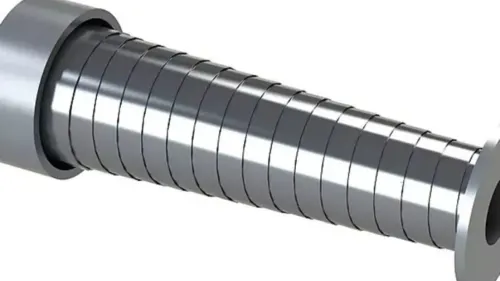
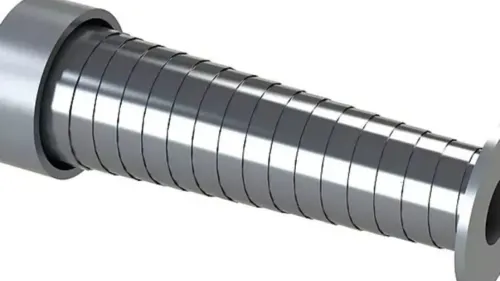
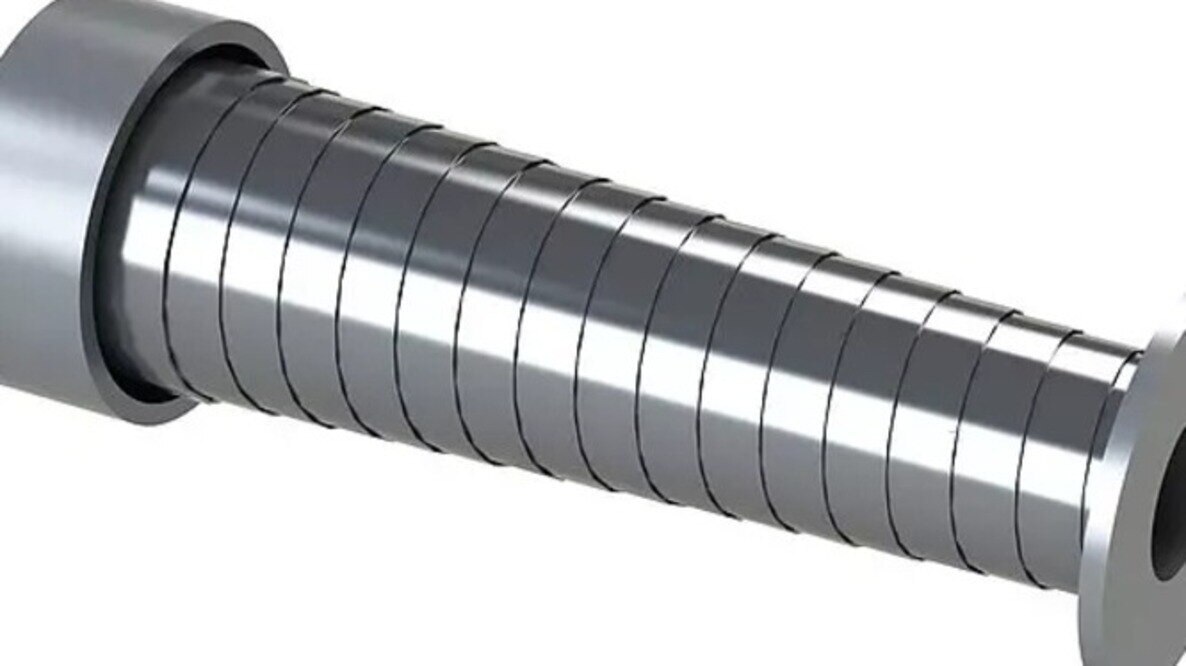
| Spiral spring cover | Linear reciprocation along a guide; coiled steel strip rolls over a running surface | Hot, sharp chips and splash threaten a way, with enough clearance for the spring’s coil and overlap |
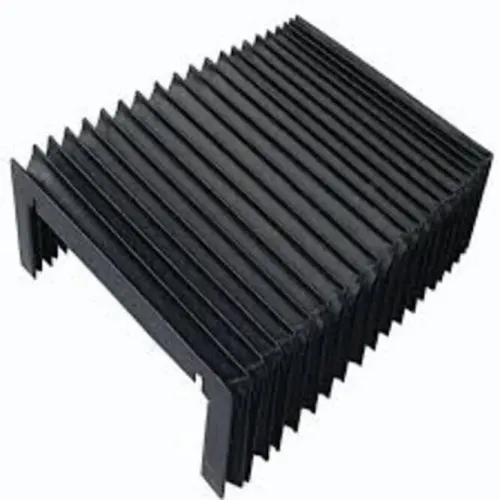
| CNC machine bellow | Linear axis travel; folded fabric spans a guide, slide, screw or opening | Low mass, compact folded length and protection from dust, coolant mist or less aggressive swarf matter |
A spiral spring or CNC machine bellow in Vienna therefore starts with the moving surface, not the supplier’s product label. Do not use either as a cable-routing device: a cable carrier supports hoses and cables, controls their bend radius and carries flexing loads.
Replacing it with a spring cover leaves cables unsupported; using a bellow for routing can produce bend-radius failure. Neither cover is automatically a fine-dust or liquid seal.
Compare stroke, envelope and mounting geometry
Measure the complete motion before comparing covers: actual stroke, compressed length, extended length, folded height, opening width and depth, and clearance at both ends. A travel figure alone can select a cover that bottoms out, stretches, or strikes the machine.
A useful CNC machine bellow comparison in Vienna also records the fixed point, moving point, guide arrangement, and mounting-face geometry. Measure the distance between mounting faces at minimum and maximum extension, then check the envelope around the slide, tooling, hose packs, screw, and adjacent guarding throughout the axis motion.
Spiral spring and CNC machine bellow designs suit different motion and exposure patterns:
| Option | Motion and coverage | Measurements and fit checks |
|---|---|---|
| Spiral spring | Telescoping axial travel over a guideway, screw, or shaft; compact when retracted | Stroke, barrel diameter, maximum outside diameter, end clearances, shaft alignment, and attachment details |
| CNC machine bellow | Folding axial travel over a linear guide, slide, screw, or laser axis; broad rectangular coverage | Extended and folded lengths, folded height, width, corner clearance, frame dimensions, and guide parallelism |
| Duct bellows | Thermal expansion, vibration, or offset movement between duct sections; not a machine-axis guard | Duct opening, flange pattern, face-to-face length, pressure or airflow, temperature, humidity, chemicals, and washdown exposure |
Record mounting-face flatness and parallelism. A twisted end frame or off-axis installation concentrates folds and causes early failure, even when the nominal stroke and overall length match. Include drainage or wiper orientation where liquid or chips can collect.
Match the construction to chips, coolant and heat
A hot, sharp chip load rules out treating every cover as equivalent. Choosing a spiral spring or CNC machine bellow in Vienna starts with what reaches the moving surface: dry dust, coolant mist, abrasive swarf, red-hot chips or washdown liquid.
| Option | Contamination and heat behaviour | Best fit |
|---|---|---|
| Fabric bellows | Light, compact and low-mass; protects against dust, mist and less aggressive swarf, but embedded chips can cut the coating and create pinholes. | Clean guideways, compact axes and moderate coolant exposure |
| Lamella bellows | Aluminium or stainless slats resist sharp and hot chips better than fabric, but add mass and drive force. | Milling and turning axes with abrasive chip loads |
| Spiral spring covers | Coiled steel strips handle hot chips and splash protection, but gaps and joints do not make a universal fine-dust or liquid seal. | Rotating or telescoping protection around exposed screws, shafts and guideways |
| Rigid shields and wipers | Deflect large chips and help scrape surfaces, but need clearance and do not cover complex multi-axis motion. | Heavy chip zones and accessible straight guideways |
For horizontal or inverted bellows, specify sloped folds, wipers, drain paths or a chip deflector. Otherwise trapped coolant and chips become an abrasive, moving load that can overload the axis.
Keep cable carriers separate from these duct equipment protection options. A carrier controls hose routing, bend radius and strain relief; a bellow or spring cover does none of those jobs.
For ductwork exposed to vibration or thermal movement, use a duct bellows designed for its pressure, airflow, temperature and chemical conditions rather than a machine-axis cover.
Check installation, drainage, maintenance and safety limits
An off-axis installation can tear a good bellow within weeks. Check that the mounting faces are flat and parallel, the end frames are not twisted, and the cover clears the slide, tooling, hose packs and adjacent guards across the full stroke.
Use this installation checklist before commissioning:
- Confirm the drawing shows travel, compressed length, extended length, folded height, end-frame dimensions and mounting-hole positions.
- Keep the bellow centred on the guideway; do not force it to correct misalignment or a bend radius below its specified limit.
- Set the wiper and drainage orientation so coolant and washdown water leave the cover instead of pooling in folds.
- Provide clearance for inspection, cleaning and replacement without removing unrelated machine components.
- Remove sharp chips before they become trapped in folds, and use the manufacturer’s cleaning method rather than compressed air that drives debris into seals.
- Record axis speed, acceleration, duty cycle, coolant type and cleaning frequency, then inspect stitching, lamellas, spring strip, mounting screws and folded height at the planned service interval.
A CNC machine bellow comparison in Vienna should assess these fit and maintenance conditions, not just quoted stroke. Duct equipment needs separate checks for thermal expansion, vibration, pressure or airflow, humidity and chemical exposure.
A flexible cover is not automatically a safety guard. ISO 14120 covers guard design and ISO 13857 covers safety distances; the completed machine’s risk assessment must prove protection against reach into the hazard zone. Do not rely on a bellow’s CE marking or declaration to certify the finished assembly.
Send a quotation request that produces comparable designs
Send a dimensioned sketch, operating conditions and acceptance criteria, not just an axis travel figure.
Whether you contact SCUTES INDIA PRIVATE LIMITED or another machine tool bellow supplier in Vienna, give every bidder the same information so a light fabric bellow, reinforced bellow, lamella design or telescopic spring cover is being priced against the same duty.
Include:
- Required stroke, compressed length, extended length and maximum folded-height envelope
- Opening dimensions, moving and fixed points, guide arrangement, slide clearance and adjacent tooling or guarding
- End-frame dimensions, mounting-hole pattern, attachment method, mounting-face flatness and parallelism
- Axis speed, acceleration, duty cycles, cycle frequency and target service interval
- Chip type and size, coolant or cutting fluid, dust, chemicals, humidity, temperature and washdown method
- Drainage direction, wiper orientation, pressure or airflow exposure, and any minimum bend radius
- A marked-up photograph or CAD drawing showing hose packs, cable carriers and interference points at both travel limits
Ask the supplier to return a drawing showing travel, folded height, clearances, materials, mass, mounting details and inspection tolerances. A bellow protects a guide or axis; it does not replace a cable carrier, which controls cable bend radius and strain relief.
For duct equipment protection options, state thermal movement, vibration, duct dimensions, airflow or pressure and attachment faces separately. Also request the proposed acceptance test: full-stroke clearance, off-axis tolerance, drainage and cleaning access. A flexible cover is not a safety guard; assess guarding against ISO 14120 and ISO 13857 independently.
Related products
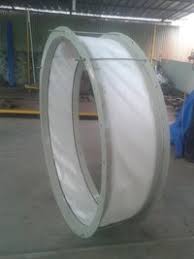 | Duct Bellows HVAC systems and industrial ducting rely on high-quality duct bellows for durability and performance. View product → |
 | TELESCOPIC SPRING COVER Telescopic Spring Covers provide protection under extreme conditions. View product → |
Frequently asked questions
How do you choose between a spiral spring and a CNC machine bellow?
Choose by movement first. Duct bellows accommodate thermal expansion, vibration and small misalignment between fixed duct sections; CNC machine bellows travel with exposed guides, slides, screws or machine axes.
What dimensions must you compare for a machine bellow?
Compare required stroke, extended and compressed lengths, folded height, width, clearance, mounting-hole position and the available envelope around the moving axis.
Which operating conditions affect the cover construction?
Specify chip size and shape, coolant or oil exposure, dust, moisture, temperature, travel speed, acceleration, vibration and cleaning method before selecting materials and construction.
What should a quotation request include?
Send movement details, drawings or photographs, dimensions, mounting geometry, operating conditions, expected service life, drainage needs and required safety limits so suppliers can quote comparable designs.
Related product
 | TELESCOPIC COVERS A telescopic cover protects guide-way surfaces and components of moving axis of machines. View product → |