The first decision is not the spring rating but the cover construction: a rigid telescoping way cover and a roll-up cover retracted by a spiral spring solve different motion problems. By the end, you will have a measurement checklist, a selection sequence, and an acceptance test that accounts for Vienna workshop conditions, installation orientation, contamination, service, and EU machinery responsibilities.
Key takeaways
- Measure retracted length, extended length, width, height, and service clearances.
- Match wipers and materials to Vienna’s coolant, chips, dust, moisture, and temperature.
- Specify spring force, travel speed, stroke, orientation, and cycle rate together.
- Put dimensions, testing, installation, and service requirements into the quotation.
Identify the cover construction and the machine motion
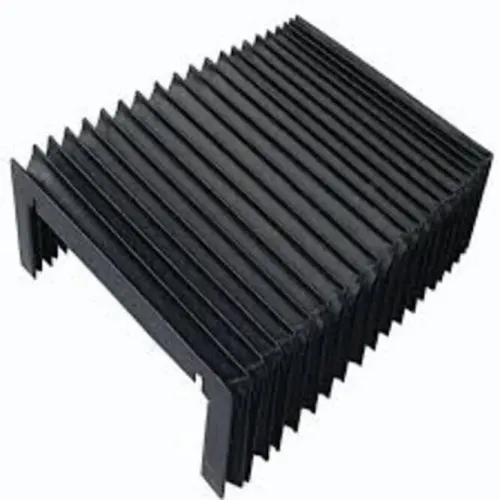
For choosing a telescopic cover with spiral spring for machines in Vienna, match the construction to a straight-line guideway and the space available at full retraction. A rigid multi-box steel way cover suits horizontal, vertical or inclined linear travel; nested sections slide under one another while the spring offsets their weight and friction.
It does not follow curved paths, sideways motion or a guideway whose cross-section changes.
| Construction | Motion and space match | Main limitation |
|---|---|---|
| Rigid telescopic way cover with spring assistance | Straight guideway travel where overlapping boxes can occupy the closed length | Needs room for nested sections and mounting hardware |
| Roll-up or coilable cover with spiral spring | Straight travel where a small retracted package or narrow housing matters | Protects differently and must not be specified as a telescopic box cover |
| Rigid cover with guide rollers or wear strips | Repeated high-speed travel with controlled guidance | Adds width, moving mass and service parts |
Check these inputs before choosing the spring arrangement:
- Travel direction: horizontal, vertical, inclined or inverted.
- Required stroke, maximum extended length and shortest closed length.
- Cross-section, mounting faces and the available height, width and end space.
- Speed, acceleration, chip load, coolant exposure and installation orientation.
Do not size the spring from cover mass alone. Wiper drag, guide friction, acceleration and chip accumulation determine whether the cover moves smoothly or strikes its end stops. State whether local installation and spring replacement support are required, then request the spring part number, preload procedure and safe replacement method.
Measure the complete installation envelope before requesting a quote
A cover that clears the machine at full extension can still strike a casting, chuck, cable carrier or enclosure halfway through the stroke. Measure the complete envelope, not only the two end positions.
1. Record the protected way length, usable stroke, and travel direction. Measure the cover’s required closed length and extended length, including end boxes, spring housing and any travel stops.
2. Measure the available cross-section at several points along the guideway. Record width, height, mounting-face dimensions, shaft or guideway diameter, and the fixing-hole pattern. Include uneven surfaces, steps and overhanging brackets.
3. Check the clearance envelope with the machine stopped at fully retracted, fully extended and every intermediate position. Plot the cover’s maximum height and width as sections nest and separate; leave room for deflection, vibration, chip build-up and installation tools.
4. Check access for fasteners, wiper removal and spiral-spring replacement. A box that fits mechanically can still be unserviceable if a side panel, guard or coolant line blocks the service path.
5. State whether the cover is horizontal, vertical or inclined, and identify gravity’s direction relative to extension and return. Ask for the permitted orientation, end-stop locations and spring-failure retention arrangement.
Send a dimensioned drawing or 3D model with these measurements when comparing telescopic cover options. Request the supplier’s maximum closed and extended dimensions, mounting tolerances, spring housing projection and required clearance, then verify those figures against the full machine travel rather than a single snapshot.
Match materials, wipers and box design to Vienna contamination
Material alone will not protect a machine from Vienna’s contamination; chip direction, coolant volume, washdown pressure and temperature determine the construction. Clarify whether you need a rigid, multi-box steel way cover with spring assistance or a roll-up cover retracted by a spiral constant-force spring. They are different designs.
| Construction option | What it withstands | Check before selecting |
|---|---|---|
| Stainless or coated steel boxes | Coolant, moisture and ordinary metal chips | Coating compatibility, box thickness and corrosion at folded edges |
| Hardened wear strips and scraper wipers | Hot chips, abrasive swarf and repeated sliding contact | Wiper temperature rating, replaceability and contact pressure |
| Angled tops, chip deflectors and drainage | Falling chips, pooled coolant and washdown | Chip discharge path, drain outlets and sealed mounting faces |
| Brush wipers or fine-gap seals | Dust and fine particles | Seal compatibility; abrasive dust can raise friction before jamming |
| Roll-up strip with spiral spring | Compact retraction where rigid boxes cannot fit | Confirm it is not being substituted for a telescopic way cover |
Specify overlap between sections, scraper geometry and whether chips can enter the telescoping gaps. Thin standard sheet-metal boxes are a poor choice for foundry debris, grinding dust or frequent high-pressure washing; better wipers alone will not fix blocked chip evacuation.
A request using “telescopic cover spiral spring in Vienna” should state the coolant type, abrasive material, washdown method, minimum and maximum temperatures, and required spring and wiper replacement access. Extra deflectors, rollers and seals increase mass, friction, closed length and service cost, so add each only for a named hazard.
Specify spring force, speed and orientation as one dynamic system
Do not size the spring from cover mass alone. Calculate the resisting load at both travel limits: friction in guides, wiper compression, seal drag, cable or hose interference, chip accumulation, and acceleration forces. For a vertical cover, include the gravity component; for horizontal or inverted mounting, account for the changed guide and contact loads.
Compare that load with spring assistance at the actual deflection, not with a catalogue peak. Spring torque changes as the spiral winds, and effective force also depends on the drum radius and linkage geometry.
Set the spring so the drive can open and close the cover without losing contact, while preventing snap-back, end-of-stroke impact, or excessive guide wear.
Confirm which construction you are specifying. A rigid, nested steel telescopic cover with spring assistance has different force and motion limits from a roll-up cover whose strip retracts into a coil. Treating both as interchangeable makes spiral spring machine cover selection unreliable.
Define the operating envelope in the quotation:
- Orientation: horizontal, vertical, inclined, or inverted
- Stroke, retracted length, extended length, speed, acceleration, and reversal frequency
- Spring preload, working deflection, continuous-load condition, and required cycle life
- Opening and closing force at both limits, measured at the worst coolant, chip, and temperature condition
- Maximum permitted speed and acceleration, including limits for flutter, resonance, spring surge, wiper lift, and box impact
Acceptance testing must use the machine’s real acceleration profile and repeated rapid reversals. Request the spring part number, replacement method, preload procedure, and expected service life; peak force without fatigue-life data is not a complete specification.
Turn the selection into a quotation, commissioning and service specification
A quotation must identify the construction: a rigid multi-box way cover with spring assistance, or a roll-up cover retracted by a spiral spring. These telescopic cover options are not interchangeable.
For choosing a telescopic cover with spiral spring for machines in Vienna, require drawings, material and wiper specifications, travel limits, orientation, speed, acceleration, spring torque or force curves, and the calculated opening and closing forces.
1. Require the supplier to state the permitted speed, acceleration, cycle frequency, temperature range and contamination limits. The calculation must include box weight, friction, wiper compression, guide friction, cable interference and chip accumulation, not mass alone.
2. Put local installation, commissioning and after-sales spring replacement in the quotation. Obtain spring and wiper part numbers, preload instructions, a guarded replacement method, cleaning guidance and lead times. SCUTES INDIA PRIVATE LIMITED should distinguish these service details from a generic cover price.
3. During commissioning, test the cover on the machine in its actual reference position. Run complete extension, retraction and repeated rapid reversals at the real acceleration profile, checking clearance, wiper contact, end-stop impact, spring noise, snap, flutter and coolant leakage.
4. Inspect after a contaminated trial, not only a dry cycle. Look for chip packing and slurry beneath the boxes, then confirm that cleaning points, drain paths and spring access remain usable.
Acceptance requires smooth travel without guide contact, lost wiper contact or abnormal impact, with every measured result recorded against the quotation.
Related products
 | TELESCOPIC SPRING COVER Telescopic Spring Covers provide protection under extreme conditions. View product → |
 | TELESCOPIC COVERS A telescopic cover protects guide-way surfaces and components of moving axis of machines. View product → |
Frequently asked questions
What machine motion suits a telescopic cover with a spiral spring?
Use a rigid multi-box cover for straight-line travel on horizontal, vertical, or inclined guideways. The spiral spring offsets section weight and friction as the boxes extend and retract.
What dimensions must you measure before requesting a quotation?
Measure the cover’s extended and retracted lengths, width, height, guideway position, mounting points, access zones, and clearances at every position.
How should you select materials and wipers for Vienna machines?
Match steel or other construction materials, wiper profiles, seals, and box design to the machine’s chips, coolant, dust, moisture, heat, and vibration.
Which dynamic details belong in a spiral spring machine cover specification?
State spring force, travel speed, stroke, orientation, cycle frequency, acceleration, operating temperature, and the required service life as one system.