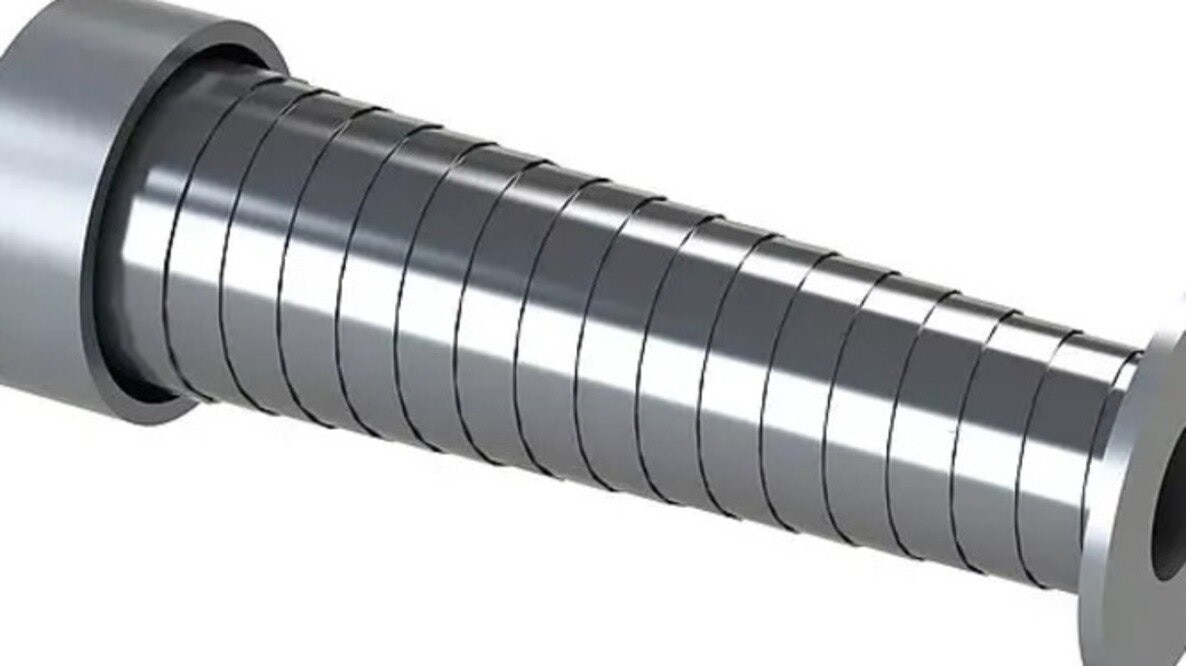
A telescopic steel cover and a spiral spring cover protect different machine zones, tolerate different contamination loads, and impose different demands on an axis. By comparing their construction, motion effects, failure modes, space requirements, and specification data, you can select the protection that fits your CNC machine rather than choosing by product name alone.
Key takeaways
- Choose telescopic steel covers for heavy chips, coolant, abrasion, and exposed linear guideways.
- Choose spiral spring covers for compact protection around shafts, rods, and rotating components.
- Compare folded length, moving mass, travel speed, and available installation space before ordering.
- Send axis travel, cover dimensions, mounting details, photos, and operating conditions to the supplier.
How telescopic steel covers differ from spiral spring covers
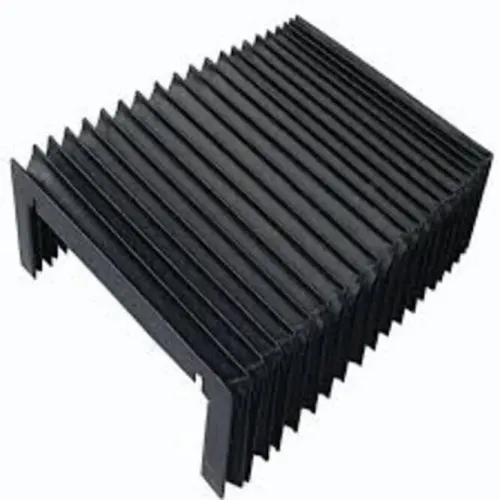
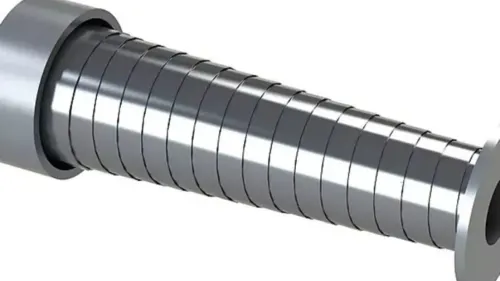
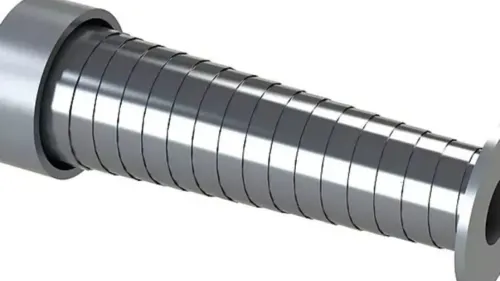
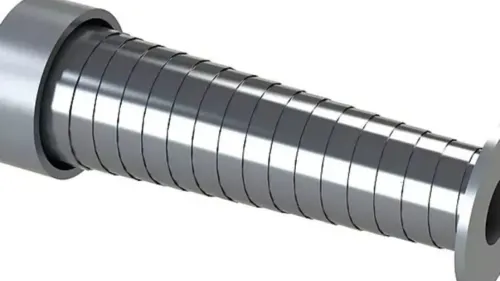
A telescopic steel cover uses nested steel boxes that extend and retract with a machine axis. It protects linear guideways, ways, columns, ballscrews, and other exposed axis surfaces. A spiral spring cover uses overlapping spring bands wound into a compact coil around a spindle, shaft, rod, or similar component.
| Feature | Telescopic steel cover | Spiral spring cover |
|---|---|---|
| Main strength | Resists large, hot, sharp, and abrasive chips through steel boxes, scrapers, overlap, and drainage | Keeps moving mass and retracted volume low |
| Best location | Linear guideways, columns, ways, and broad exposed machine surfaces | Spindles, rods, shafts, narrow axes, and restricted envelopes |
| Space and motion | Requires a calculated folded stack and adds axis mass and inertia | Retracts into a smaller roll with lower moving mass |
| Limitation | An oversized cover can reduce acceleration and increase friction | Coils can admit chips or suffer damage beneath heavy swarf, grinding dust, or hot chips |
For CNC machine protection options, choose steel where impact and chip volume dominate; use a deflector or secondary guard when the stream exceeds the cover’s design. Choose a spiral arrangement where compactness and low mass matter more than severe exposure.
Neither is automatically a personnel safety guard: hazardous access requires the machine’s fixed or movable guards, interlocks, and documented risk assessment. That is the practical CNC machine telescopic cover benefits versus spiral spring covers in Vienna comparison.
Which cover survives your chips, coolant, heat, and abrasion load
Choose a telescopic steel cover for a guideway beneath heavy, sharp, hot, or abrasive swarf. Its overlapping boxes, replaceable scrapers, seals, and rear drainage shed impact and coolant better than exposed spiral coils.
That is the central CNC machine telescopic cover benefits comparison; spiral spring covers in Vienna suit controlled contamination, compact spaces, and low moving mass.
| Option | Best contamination fit | Main failure risk |
|---|---|---|
| Telescopic steel cover | Large chips, high chip volume, hot swarf, tramp oil, and grinding debris | Packed chips, damaged wipers, blocked drainage, rubbing, or poor overlap |
| Spiral spring cover | Spindle, shaft, rod, or narrow axis with light chips and controlled coolant | Chips trapped between coils, abrasive wear, winding damage, loss of overlap, or jammed retraction |
| Secondary guard or deflector | Any cover beneath a direct chip stream or tool discharge | Without redirection, impact and hot swarf reach the primary cover |
- Choose steel boxes for a lathe, machining centre, grinder, or turning centre when chips are sharp, plentiful, hot, or abrasive. Use a chip deflector or different protection method if the stream strikes the cover directly.
- Specify coolant type, concentration, temperature, tramp oil, cleaning chemicals, and hot-swarf temperature. Confirm compatibility for wipers, spring bands, coatings, adhesives, seals, and fabric elements; “coolant-resistant” alone proves nothing.
- Check sealing, heat tolerance, impact resistance, rubbing, and abrasion in the actual duty cycle. These cnc machine protection options require material records and replacement parts, not just a product label.
How cover mass and folded space change CNC axis performance
A lighter spiral spring cover is not automatically better for a fast CNC axis. Lower moving mass can improve acceleration, noise, motor power demand, vibration, and cycle time, but cover inertia, centre of gravity, guide friction, ballscrew load, and machine-frame limits decide the result.
| Option | Performance effect | Check before selection |
|---|---|---|
| Spiral spring cover | Low mass and compact roll-up volume suit narrow axes, spindles, shafts, and ballscrews | Confirm controlled chips, spring force, winding clearance, and axis acceleration |
| Telescopic steel cover | Greater mass and folded stack, but stronger resistance for exposed guideways and columns | Compare cover mass and inertia with the ballscrew, linear motor, axis motor, and frame limits |
| Oversized steel cover | Extra thickness can add friction, vibration, motor demand, and reduced achievable cycle time | Reject it if protection exceeds the contamination load or axis capacity |
The folded length of a telescopic cover cannot be calculated from stroke alone. Number and geometry of boxes, minimum overlap, scraper arrangement, box height and width, mounting face, travel direction, and clearances set the compressed envelope. These are important CNC machine telescopic cover benefits only when the stack fits.
- Check interference at both travel endpoints, including tooling, fixtures, columns, guards, and service access.
- For a linear guideway or column, prioritise box overlap, drainage, and chip clearance; for a spindle or ballscrew, prioritise compact diameter, winding space, and low moving mass.
- Include centre-of-gravity shift, guide friction, permissible acceleration, and motor power in the axis calculation.
A telescopic cover for CNC equipment can protect a larger exposed surface, while cnc machine protection options remain constrained by available envelope and safeguarding requirements. Neither cover replaces fixed or movable guards, interlocks, or a machine risk assessment.
What fails, and how to inspect each cover before downtime
Treat a cover that retracts asymmetrically, changes roll diameter, rubs, or jams as a functional warning. It signals rising friction, lost overlap, misalignment, or failing protection—not a cosmetic defect.
1. Inspect a telescopic cover with the machine stopped and clean. Remove packed chips between boxes, then check hardened or torn wipers, blocked drainage, insufficient box overlap, and damage at corners. Confirm mounting faces are flat, guide surfaces parallel, axis pitch and yaw within the cover design, and clearances adequate through full travel.
Binding after machine levelling or mounting work points to guideway deflection or disturbed alignment.
2. Inspect spiral spring covers in Vienna for uneven winding, damaged or permanently deformed coils, coil fatigue, reduced spring force, torn edge elements, internal contamination, and rubbing. Measure whether the roll diameter changes during travel and check overlap at both endpoints.
Interference at full travel means the cover is unsuitable or misaligned, even if the spring still retracts.
- Use this service checklist before downtime:
- Clean box channels or the spring interior.
- Replace damaged or hardened scrapers.
- Clear and test drainage paths.
- Check spring force, coils, edge elements, and rubbing marks.
- Confirm access panels permit cleaning and replacement without dismantling the axis.
For CNC machine protection options in Vienna, verify how the cover integrates into the complete machine’s conformity assessment under the transition between the Machinery Directive and EU Machinery Regulation 2023/1230. Retain drawings and replacement-part records.
What to send a Vienna supplier before ordering a replacement or new cover
Send a supplier a complete measurement pack, not a photograph and axis stroke alone. Include protected component dimensions, stroke, maximum speed, acceleration, installation orientation, coolant type and concentration, tramp oil, cleaning chemicals, temperature, chip size, mounting points, available folded space, extended and retracted envelopes, and clearance at both travel endpoints.
Include a dimensioned drawing or 3D model showing:
- A clear interface datum scheme, mounting-face flatness, travel direction, mounting holes, and tooling or fixture interference zones.
- Axis-load data, cover mass limits, service access, and the machine’s local replacement lead time.
Ask the quotation to identify these comparison points:
| Option | Confirm before ordering | Main risk if omitted |
|---|---|---|
| Steel telescopic cover for CNC equipment | Box count, minimum overlap, folded length, scrapers, panels, seals, drainage, drawings, material records, and spare-part availability | A strong cover binds, exceeds the envelope, or creates long downtime |
| Spiral spring cover | Spring-band material, roll diameter, winding travel, seals, replacement spring lead time, and contamination limits | Compact protection loses overlap or spring force under uncontrolled chips and fluids |
Specify compatibility for wipers, spring bands, coatings, adhesives, seals, and fabric elements; “coolant-resistant” means little without the named fluid and temperature. SCUTES INDIA PRIVATE LIMITED should receive the same documented fitment, material, service, and parts data.
That evidence resolves the CNC machine telescopic cover benefits versus spiral spring covers in Vienna decision: choose steel for exposed heavy swarf and impact; choose a spiral spring when compactness and low moving mass dominate under controlled contamination.
Related products
 | TELESCOPIC SPRING COVER Telescopic Spring Covers provide protection under extreme conditions. View product → |
 | TELESCOPIC COVERS A telescopic cover protects guide-way surfaces and components of moving axis of machines. View product → |
Frequently asked questions
How do telescopic steel covers differ from spiral spring covers?
Telescopic steel covers use nested boxes to shield linear guideways, ways, columns, and ballscrews. Spiral spring covers use overlapping spring bands wound into a compact coil around shafts, rods, or similar components.
Which cover handles chips, coolant, heat, and abrasion better?
Telescopic steel covers suit heavy chips, coolant flooding, hot debris, and sliding abrasion on exposed machine ways. Spiral spring covers suit lighter, compact shielding around cylindrical components; check the band material and temperature limits for the application.
How do cover mass and folded space affect CNC axis performance?
A heavier telescopic cover increases moving inertia and demands more from the axis drive, while its folded length takes installation space. A spiral spring cover occupies less space but may not provide the rigid, broad protection required over a machine way.
What should you inspect before a cover causes downtime?
Check telescopic covers for dented boxes, seized slides, damaged wipers, loose fasteners, and chip-packed gaps. Check spiral spring covers for cracked or permanently deformed bands, uneven winding, broken mounts, and exposed shaft areas.
What information should you send a Vienna supplier for a replacement cover?
Send machine and axis details, travel length, closed and extended dimensions, mounting-hole positions, guideway width, cover height, photos, material requirements, chip and coolant conditions, operating temperature, and failure symptoms.