
Pune monsoon exposure combines wind-driven rain, high humidity, condensation, washed-in dust and abrasive sludge, so a cover must do more than block falling water. By the end, you will know how to select the right cover geometry, specify materials and drainage, protect the machine’s safety systems, and run a practical inspection and cleaning routine.
Key takeaways
- Map spray, condensation and washed-in dust before selecting protection.
- Measure the full travel envelope, including compressed and extended cover positions.
- Specify corrosion-resistant materials, wipers and drainage paths for repeated wetting.
- Inspect covers, wipers, guideways and drains after heavy rain and overnight condensation.
Define the monsoon risk before choosing a cover
Pune’s monsoon exposes a laser machine to repeated wetting, high humidity, wind-driven spray, washed-in dust and overnight condensation—not rain alone. A telescopic cover for laser machines in Pune monsoon must protect guideways, ball screws, linear scales, connectors and unsealed electrical cabinets from contamination and corrosion. This is monsoon machine protection, not simply a rain shield.
| Risk | What reaches the machine | Protection requirement |
|---|---|---|
| Rain and spray | Water enters from above, sides or windward gaps | Direct runoff away from the guideway and machine bed |
| Trapped water | Pockets form against seals, wipers or the lowest cover section | Provide a deliberate drainage direction and no standing-water pocket |
| Washed-in dust and chips | Abrasive sludge reaches sliding interfaces | Seal gaps without blocking cover movement; remove deposits before they harden |
| Condensation | Moisture forms after overnight cooling or shutdown | Dry exposed surfaces and control humidity around sensitive components |
Specify the water-resistance target using IEC 60529. IP54 protects against harmful dust deposits and splashing water from any direction; it does not prove resistance to hose jets, immersion or floodwater, and a cover has no higher rating unless the complete installed assembly is tested.
Keep the cover separate from cable protection: cable carriers, laser-head hoses, fibre cables and drain lines need their own bend-radius, support and ingress provisions. Preserve emergency stops, guard interlocks, beam enclosures, fume extraction, service access and alarm visibility. A weather cover is not a laser-safety enclosure.
Choose the cover type for the laser machine’s exposed geometry
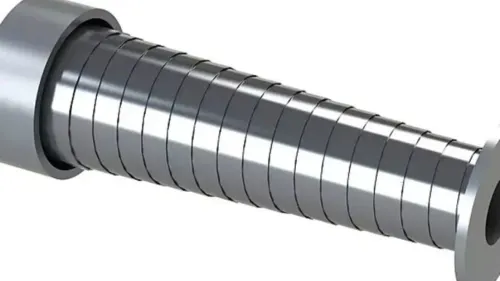
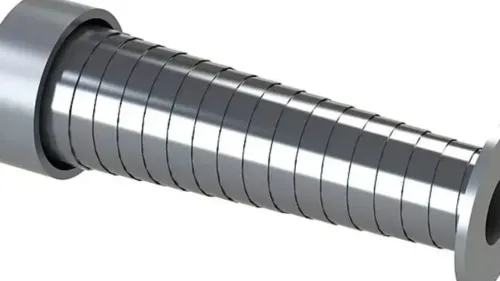
A telescopic steel cover suits a moving axis with a straight, rigid guideway and repeated exposure to chips, hot metal particles, coolant or cutting oil. Its overlapping boxes and replaceable wipers protect the slide while travelling with the machine, but they do not form a sealed room.
| Option | Best fit | Main limitation |
|---|---|---|
| Telescopic steel cover | Long straight X, Y or Z guideways exposed to hot debris and frequent impact | Needs clearances, drainage and compatible wipers; sliding gaps do not stop humidity or condensation |
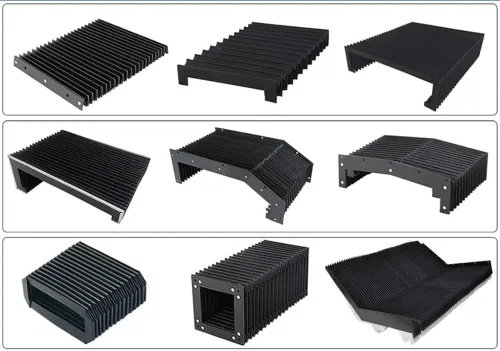
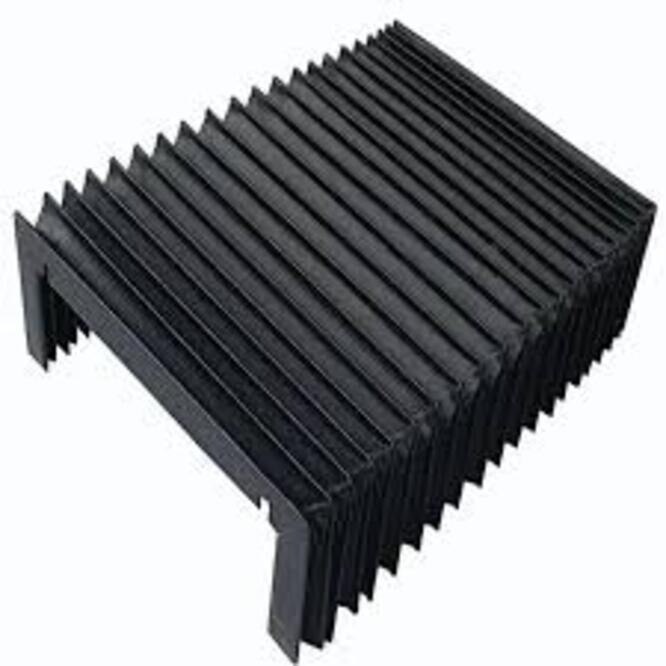
| Bellows | Shorter travel, irregular profiles, narrow spaces or areas needing flexible continuous coverage | Fabric or elastomer can burn, swell, harden or shed particles beside hot laser-cutting spatter |
| Roll-up cover | Large openings, overhead protection or occasional coverage where compact storage matters | Less suitable against sharp chips, hot particles and abrasive sliding debris |
| Separate enclosure or guarded hood | Idle-machine rain protection, cabinet protection or controlled fume and heat management | Must preserve extraction, cooling, visibility, service access and interlocks |
Choose bellows when the axis has obstructions or changing cross-sections that steel boxes cannot follow. Choose a roll-up cover for a parked machine, not as the primary defence around an operating cutting head with hot contamination.
A laser machine cover in Pune must never block emergency stops, door or guard interlocks, beam enclosures, fume extraction or alarm visibility. A telescopic cover in Pune is not automatically a laser-radiation enclosure; credit it as one only after a safety assessment against applicable laser and machinery standards.
Pair rain protection with cabinet sealing, anti-condensation control and humidity monitoring.
Measure the travel envelope and test motion compatibility
A nominal axis stroke is not enough: provide the cover supplier with the complete travel envelope, including every end position and interference point. A cover sized only for the programmed stroke can bottom out, telescope unevenly or pull on its mounting.
Provide these measurements and operating details:
- Axis travel length, including overtravel, end stops and the cover’s closed and fully extended lengths.
- Guideway width, cover height, mounting-point locations and the clearance above, below and beside the moving axis.
- Maximum speed, acceleration, deceleration and cycle frequency during rapid traverse and cutting.
- Tool-head or cutting-head movement, hose flexing, cable-carrier travel and any rotating or swivelling joints.
- Maintenance positions, access-panel openings and the machine state after loss of power.
- Cable, fibre, signal, assist-gas and drain-line bend radii, support points and separate travel paths.
- Clearance needed for chips, dust and water-sludge accumulation, plus the intended drainage direction.
Check each operating state rather than measuring only the parked machine.
| State | What to test | Specification consequence |
|---|---|---|
| Rapid traverse | Full speed and acceleration at both ends | Confirms section overlap, guides and mounting loads |
| Cutting | Head movement with hot particles, fumes and hoses active | Prevents contact, snagging and heat damage |
| Monsoon operation | Wet cover, grit and sludge in joints | Requires cleaning access, drainage and controlled wiper pressure |
| Maintenance access | Open doors, raised covers and service tooling | Prevents blocked access or collision |
| Power loss | Axis stopped at its worst position | Confirms the cover will not collapse, jam or trap cables |
Treat cable management separately; routing a cable through a telescopic-cover gap creates a water path and repeated flexing damage.
Specify materials, wipers and drainage for repeated wetting
Treat telescopic cover weather protection as a drainage-and-contamination specification, not a promise that the cover seals the machine. Choose stainless steel or sealed coated steel for boxes facing hot spatter; match the grade or coating to coolant, oil, cleaning chemicals and wet Pune air. A general-purpose fabric can burn, harden or shed particles.
Specify replaceable wipers made from a compound tested against the actual contaminants and temperature. Check compression across every overlap: a loose wiper admits chips and spray, while excessive compression increases drive load and accelerates wear. Require the wiper profile, compound, temperature limit and replacement availability in writing.
Put these details on the purchase specification:
- Material and finish: state the steel grade or coating system, edge sealing, corrosion resistance and maximum hot-particle temperature.
- Wipers: state the compound, compression, temperature range, resistance to coolant, oil, cleaning chemicals and assist-gas condensate.
- Drainage: slope each box so water runs away from the guideway and machine bed; provide accessible outlets and no pocket against a seal or wiper.
- Exposure and service: state rainfall, wind-driven spray, washdown method, travel speed, acceleration, stroke and hot-particle exposure.
Keep drain outlets clear after installation. Use roof drainage, rated electrical enclosures, cable-entry glands and drip loops separately; a telescopic cover cannot stop condensation or flooding. Give SCUTES INDIA PRIVATE LIMITED the contamination list and drainage direction before fabrication, so the design is checked against the actual laser process rather than a generic cover.
Related products
 | TELESCOPIC COVERS A telescopic cover protects guide-way surfaces and components of moving axis of machines. View product → |
 | Laser Machine Bellows Laser Machine Bellows are specialized protective coverings designed to safeguard the vital internal components of laser machines. View product → |
Use a monsoon inspection and cleaning routine
Before the first heavy rain, photograph the telescopic cover in its fully closed and extended positions. Record the date, machine hours, cover condition and any existing rust, dents, leaks or abnormal movement so a new monsoon defect is not mistaken for old damage.
- Remove chips, dust, dried coolant and abrasive sludge from the cover, overlaps, wipers, guideways and surrounding machine bed. Check that drains carry water away from the guideway instead of forming a pocket against seals.
- Inspect for torn or flattened wipers, standing water, loose fasteners, corrosion at overlaps, rubbing marks and uneven extension. Move the cover through its complete travel at the normal machine speed and stop if it binds or scrapes.
- Clean with a suitable cloth or low-pressure rinse; do not force high-pressure water past wipers, into linear scales, connectors or cable glands. Dry exposed steel, guideways and machine-bed surfaces before shutdown ends.
- Check roof drainage, nearby floor drains, cable-entry glands, drip loops and electrical-cabinet seals. Confirm that the cover does not block emergency stops, guard interlocks, beam enclosures, extraction airflow or service access.
During the monsoon, repeat the inspection after wind-driven rain, heavy cutting or any coolant spill. For monsoon machine protection, document photographs, findings, cleaning, repairs and the person responsible; a laser machine cover in Pune protects moving parts, not fume extraction or laser safety functions.
Frequently asked questions
What monsoon risks should you assess before choosing a laser machine cover?
Assess wind-driven spray, high humidity, overnight condensation, washed-in dust and water paths toward guideways, ball screws, linear scales, connectors and electrical cabinets.
How do you choose a telescopic cover for a laser machine?
Match the cover design to the machine’s exposed geometry, required travel, available mounting space and the direction of chips, coolant, dust and water ingress.
What measurements confirm that a telescopic cover will not obstruct machine motion?
Record the guideway length, cover’s compressed and extended lengths, height, width, mounting clearances and the complete travel envelope, then test movement at full speed.
Which cover features help with repeated Pune monsoon wetting?
Specify corrosion-resistant materials, suitable seals and wipers, sloped surfaces, clear drainage paths and construction that prevents trapped water.
How should you inspect and clean a laser machine cover during monsoon?
Remove accumulated dust and chips, inspect wipers and joints, clear drains, check for corrosion or trapped water, and verify smooth motion after heavy rain.
Related product
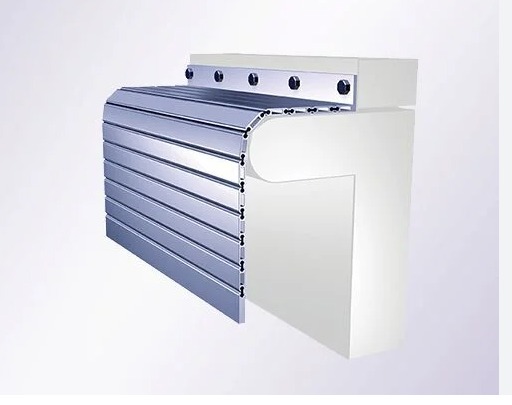 | APRON COVER Effectively engaged in offering a vast collection of outstanding quality products which include Apron Covers. View product → |