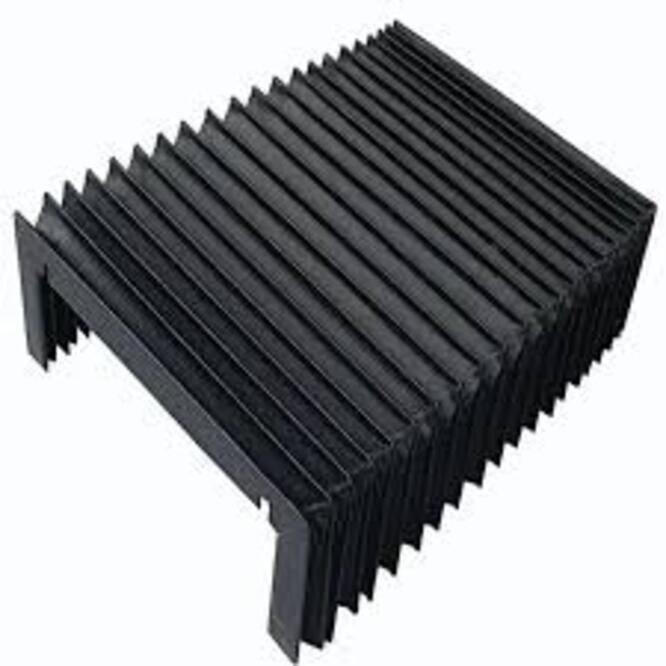
Replace the cover when damage allows chips, abrasive fines or coolant to reach a guideway, ballscrew or linear scale, even if the assembly still moves. By the end, you will be able to separate a cleaning or adjustment issue from a repairable defect, define a condition-based replacement trigger and specify a replacement that fits the machine’s actual travel and operating conditions.
Key takeaways
- Replace covers with holes, torn bellows or exposed moving components.
- Use leakage, friction, distortion and contamination as inspection warning signs.
- Set replacement intervals from wear records, not an arbitrary calendar date.
- Match travel, folded length, mounting points, materials and clearances before ordering.
Which cover defects require replacement rather than repair?
Replace a machine tool cover when structural damage lets chips, abrasive fines or coolant reach the guideway, ballscrew, linear scale or another protected mechanism. Clean, realign or make a limited repair only when the protective function and geometry remain intact.
| Condition | Action | Replacement or repair decision |
|---|---|---|
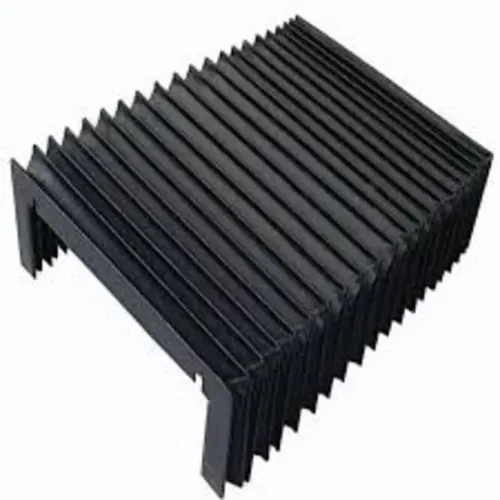
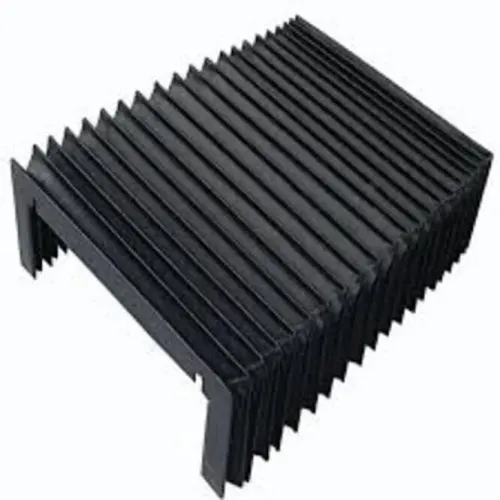
| Bellows: torn fabric, punctured panel, split seam, open fold or failed joint | Replace | Any opening that exposes the mechanism requires machine tool cover replacement. |
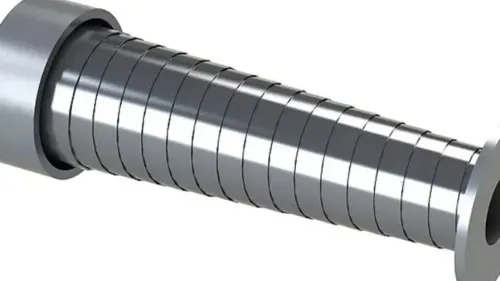
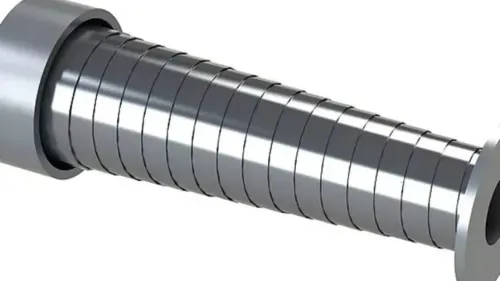
| Telescopic cover: missing slat, bent box, distorted overlap, excessive gap, damaged roller or mounting point | Replace | Replace when the defect admits coolant or chips, shifts alignment or increases drive load. |
| Wiper or seal: hardened, cracked or flattened edge, visible gap, coolant streaks or chips passing underneath | Replace the wiper or seal | Replace the complete cover only when its body, frames and alignment are also damaged. |
| Binding caused by debris, with no structural damage | Clean and realign | Lubricate only where the cover design permits it. |
| Limited fabric or coating damage | Repair only to the manufacturer’s stated limits | Obtain approved patch or adhesive instructions first; an unsuitable repair can stiffen a fold, catch chips or separate in coolant. |
After a crash or collision, inspect the hidden guide frames, rollers, springs, slats and brackets even when the exterior looks intact. Run the cover through full travel after isolation and adjustment; scraping, popping, uneven folding or failure to reach either end indicates damage beyond simple dirt.
What inspection signs show that a cover has lost its function?
Inspection signs that a cover has lost its function include abnormal movement, physical damage and contamination beyond the cover. This inspection determines whether machine tool cover replacement is needed, not merely cleaning or adjustment.
- Isolate electrical, hydraulic, pneumatic, gravity, stored-spring and other hazardous energy under the machine’s lockout/tagout procedure. Open or remove nothing until unexpected movement is impossible.
- Move the cover through its full permitted travel only after isolation. Check every bellows fold, telescopic section, slat, fastener, seal, roller, guide frame, mounting bracket and drainage path.
- Look for rubbing marks, uneven folding, seized rollers, scraping or popping noises, hesitation, and failure to reach the fully collapsed or extended position.
- Check mating surfaces for gaps, then inspect for torn material, open seams, missing slats, cracked seals, coolant streaks and chips passing beneath wipers.
- Examine the guideway, ballscrew and linear scale for scoring, chips, coolant, rising friction, abnormal axis noise or lost positioning accuracy. Repeated wiper failure or contamination beneath the cover proves protection has already failed.
- After reassembly, verify alignment, wiper contact, coolant leakage and full-stroke movement. Test at operating speed; a cover that passes a slow hand check can still bind under acceleration.
A replacement cover does not restore accuracy after contamination or a crash has damaged the guideway, bearing, scale or mounting surface. Check axis behavior separately.
How do you set a replacement interval without guessing a calendar date?
Set a replacement interval from operating conditions and condition records, not a calendar date: there is no reliable universal rule such as replacing a machine tool cover every three or five years. Machine tool cover replacement becomes due when protection, movement or material integrity falls outside the manufacturer’s limits.
Record these variables for each machine and axis:
- Travel cycles and strokes per shift
- Axis speed and acceleration
- Chip load, chip size and chip sharpness
- Coolant type and cutting-oil chemistry
- Cleaning agents and washdown pressure
- Operating temperature and abrasive-dust exposure
Increase inspection frequency when the machine runs multiple shifts, uses high-pressure coolant or air blast, produces hot or abrasive chips, or is cleaned with alkaline or solvent fluid. These conditions can shorten service life without producing an obvious calendar pattern.
For bellows, check the fabric and coatings for embrittlement, swelling, delamination and loss of flexibility. For steel covers, check wear at overlaps, rollers and seals. Keep dated condition records and photographs so you can see a worsening trend rather than waiting for a leak, rising resistance or contamination.
Use the manufacturer’s limits for the final decision. A cover is a replacement candidate when it no longer protects the guideway, travels correctly or retains material integrity—not when an arbitrary date arrives.
What measurements and specifications must match the replacement cover?
Buy a machine tool cover replacement against the machine’s movement and mounting interface, not its model number or outside width alone. Record the following before requesting a quotation:
| Record | Match against | Why it matters |
|---|---|---|
| Machine make, model, axis and cover type | Installation drawing and existing assembly | Identifies the correct axis and solution: bellows, telescopic cover, apron curtain or wiper set |
| Travel direction, closed length and extended length | Full axis stroke | Prevents over-compression or over-extension |
| Width, height, section pitch or fold height and cover weight | Available envelope and supporting brackets | Wrong fold height can cause rubbing, fold interference or excessive load |
| Mounting-hole pattern, brackets, drainage and guideway orientation | Machine mounting surfaces | A visually similar cover can fail if holes, supports or drainage do not align |
| Maximum speed, acceleration, side clearance and top clearance | Axis specifications | The cover must move without buckling or contacting nearby parts |
| Clearance at every point in the stroke | A full-travel measurement | A single end measurement can miss an obstruction |
Measure the existing cover at both ends and compare it with the machine’s mounting surfaces. Do not copy a stretched, collapsed or distorted cover; confirm hole spacing, brackets and drainage from an installation drawing or sample unit.
Specify the actual operating conditions:
- Coolant and cutting-oil names
- Cleaning chemicals and washdown pressure
- Temperature range
- Chip shape, size and abrasiveness
- High-pressure coolant, air blast and hot-chip exposure
Include photographs and note any crash history. SCUTES INDIA PRIVATE LIMITED can use these records to determine whether you need a replacement component or a redesigned assembly.
Related products
 | Machine Covers Machine covers are specially designed shields used to protect industrial equipment and machinery from environmental elements. View product → |
 | TELESCOPIC COVERS A telescopic cover protects guide-way surfaces and components of moving axis of machines. View product → |
What must you verify after installing the replacement?
After machine tool cover replacement, accept the installation only when the cover protects the mechanism without creating a new fault. This final check prevents a new cover from hiding an alignment, drive or guideway problem.
- Confirm every fastener is tight, the cover is aligned, each seal contacts its mating surface, and every drainage path remains open.
- Check that no fold, slat or roller touches a fixed machine part anywhere in the stroke.
- Run the cover through its full stroke at low speed, then at operating speed and acceleration. Stop for rubbing, hesitation, scraping, popping, uneven collapse or excess drive load.
- Apply the normal coolant and chip conditions, then inspect beneath the cover for leakage or chip ingress.
- Check continuous wiper contact and repeat the axis test for noise, friction and positioning behavior.
If accuracy remains poor, inspect the guideway, bearing, linear scale, ballscrew and mounting surface. Replacement does not repair damage caused by contamination or a collision.
Finally, confirm that the new design preserves the machine’s risk-assessed guarding arrangement. A cover is not automatically a substitute for point-of-operation guarding or hazardous-energy controls; in the United States, review OSHA 29 CFR 1910.212 and 1910.147 where they apply.
Frequently asked questions
Which machine tool cover defects require replacement rather than repair?
Replace the cover when holes, torn folds, detached layers, distorted frames or failed seals expose the guideway, ballscrew, linear scale or another protected mechanism. Clean or repair it only when its protective function and geometry remain intact.
What inspection signs show that a cover has lost its function?
Look for chips or coolant behind the cover, oil trails, abrasive dust, cracked fabric, pinholes, rubbing marks, uneven movement, stuck folds and gaps at mounting edges. Any sign of contamination reaching the protected mechanism indicates loss of function.
How do you set a machine tool cover replacement interval?
Record inspection findings, operating hours, cycles, coolant exposure, chip load and repair frequency. Replace the cover when damage reaches a defined limit or repeated repairs no longer restore reliable protection, rather than choosing a fixed date without evidence.
What must you verify after installing a replacement cover?
Check full travel, folded and extended dimensions, mounting alignment, clearance from moving parts, smooth motion, seal contact and access for maintenance. Run the machine through its complete stroke, then inspect for rubbing, buckling, leakage and new contamination paths.