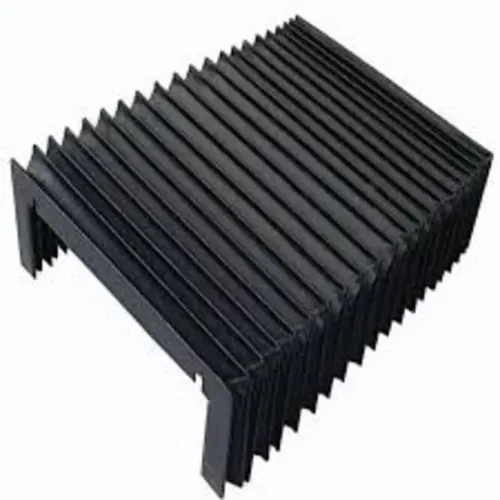
A bellow can keep chips, coolant, oil, dust, and welding debris away from an industrial lift’s guides and actuators, but only when its geometry and material match the lift’s complete movement. By the end, you will know where to install one, how to specify its dimensions and service limits, when a spiral spring cover is the better choice, and what evidence to request from a supplier.
Key takeaways
- Cover the complete scissor mechanism opening through collapse and extension.
- Measure the full motion envelope, including folds, bends and retraction clearance.
- Match bellows fabric and coating to chips, coolant, heat and cleaning chemicals.
- Choose spiral spring covers when compact cylindrical protection suits the moving part.
Where a CNC machine bellow belongs on an industrial lift
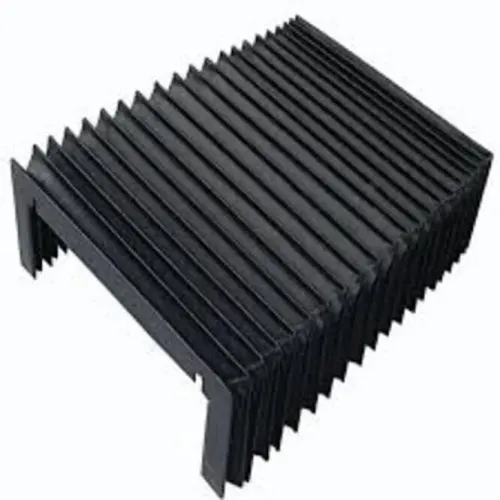
Install the bellow across the changing side openings of the scissor mechanism, not merely around one visible component. It must close the opening when the lift is collapsed and extended while accommodating arm articulation, platform movement, and full retraction.
| Installation zone | What the bellow protects |
|---|---|
| Guideways and sliding interfaces | Guides, linear bearings, and rollers from chips and abrasive dust |
| Hydraulic cylinders and screw mechanisms | Rods, seals, threads, and bearings from coolant, oil, and dirt |
| Sensors and actuator routes | Detection hardware and cables from spray, debris, and impact |
| Scissor sides and pinch points | Moving mechanisms, while preserving required clearances |
A general CNC machine bellow usually follows a straight guideway or axis. A scissor-lift bellow needs a flexible, articulated envelope around changing geometry; folds that enter between scissor arms, rollers, the platform, or the floor can be crushed.
Chips and dust score guides, coolant and hydraulic oil attack fabrics or reach bearings, and trapped debris accelerates seal wear.
These CNC machine bellows benefits industrial lift manufacturers in Kolhapur by controlling contamination, not by increasing lifting capacity or structural stiffness. That is the practical basis of industrial lift protection in Kolhapur.
A bellow is not safety-rated guarding. Keep fixed guards, interlocks, safe distances, emergency stops, and a documented crushing and entrapment risk assessment.
Which scissor lift bellow benefits justify the added component
A bellow earns its place when contamination, pinch exposure, or debris-driven downtime costs more than the added moving load.
These scissor lift bellow benefits are operational: cleaner guideways and cylinders reduce contamination-driven maintenance; enclosed mechanisms reduce exposure to sharp moving parts; controlled folds limit debris accumulation; and a supported cover helps preserve sensor and actuator reliability.
| Design choice | Operational gain | Trade-off |
|---|---|---|
| Heavier coated fabric | Resists chips and splashes | Adds folded height, moving mass, and actuation force |
| Tighter folds | Improves sealing and debris control | Reduces flexibility and increases friction |
| Internal support | Prevents flapping and crease fatigue at speed | Adds cost, space, and attachment points |
| Flexible construction | Accommodates articulation and misalignment | Offers less resistance to sharp chips and pressure |
Sealing must not defeat movement. An over-stiff bellow can pull mounting frames out of alignment, while an unsupported one can flap, crease, and fatigue. Keep every fold out of the gap between scissor arms, rollers, the platform, and the floor at full retraction; entrapment there can tear the cover or obstruct the lift.
Provide low-point drainage and inspection access. Use replaceable sections and accessible fasteners so a damaged panel does not require full replacement. During maintenance, inspect fold creases, seams, coating cracks, mounting points, trapped coolant, and loss of guided return.
How to size a bellow from the lift’s complete motion envelope
Measure the complete motion envelope, not just the lift’s nominal stroke. For a CNC machine bellow in Kolhapur, give the supplier the protected envelope width and height, minimum and maximum extension, usable stroke, collapsed or folded height, end-frame thickness, lateral offset, angular misalignment, mounting-hole pattern, attachment orientation, and clearance at full retraction.
1. Record the operating conditions: maximum speed, acceleration, cycle frequency, minimum bend radius, and the routes of cables and hoses. Mark the locations of scissor arms, rollers, guides, and floor obstructions at both travel limits.
2. Do not order a bellow with exactly the nominal lift stroke. The folded pack, end-frame thickness, and required safety clearance consume space and can reduce available travel. Specify the compressed length and fully extended length on the quotation drawing.
3. Require the drawing to show fold direction and every internal support frame, sliding plate, or lamella. These details prevent an unsupported span from flapping or a constrained fold from buckling into the mechanism.
Check that no fold enters the gap between scissor arms, rollers, the platform, or the floor at full retraction. Before production approval, perform a full-stroke dry run with cables and hoses installed; inspect for rubbing, snagging, buckling, and interference. A static fit check will not expose failures that occur during repeated motion.
How material and cleaning conditions change the protection choice
A lift exposed to hydraulic oil needs a different bellow construction from one facing welding sparks or grinding heat. For industrial lift protection in Kolhapur, select by exposure, not by the fabric name alone.
| Construction | Best fit | Limitation to verify |
|---|---|---|
| Coated fabric | General chips, dust, and light coolant | Coating can crack at folds or mounting points |
| Neoprene | Oil, weather, and moderate abrasion | Confirm compatibility with the specific hydraulic oil |
| Silicone | Heat, sparks, and intermittent hot particles | Verify temperature, tear, and chemical limits |
| Polyurethane | Abrasion, fine dust, and repeated flexing | Confirm resistance to coolant and wash chemicals |
| PVC | Coolant, dust, and economical general service | Ordinary PVC can fail under heat, sparks, sharp edges, or incompatible oils |
| Aramid | Hot chips, sparks, and cut resistance | May need a protective coating and sealed seams |
| Fiberglass | High radiant heat and welding exposure | Brittle damage and chemical resistance require testing |
| Multi-layer heat-resistant | Combined heat, abrasion, and splash | Added thickness, folded height, and cost require space checks |
Ask whether the lift encounters hydraulic oil, water-based coolant, abrasive dust, sharp chips, welding spatter, grinding heat, outdoor moisture, or frequent washdown. Have the supplier test the selected material against the actual coolant, oil, and cleaning chemical; silicone or heat-resistant layers still have defined limits.
Design low points to drain instead of pooling. Provide cleaning and inspection access because closed folds retain water, coolant, and abrasive fines. Put these conditions in the specification:
- Operating temperature and chip size
- Washdown method and chemical
- Mounting orientation, speed, and cycle frequency
When to choose a spiral spring cover and how to compare suppliers
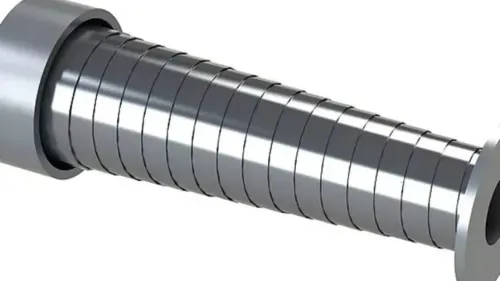
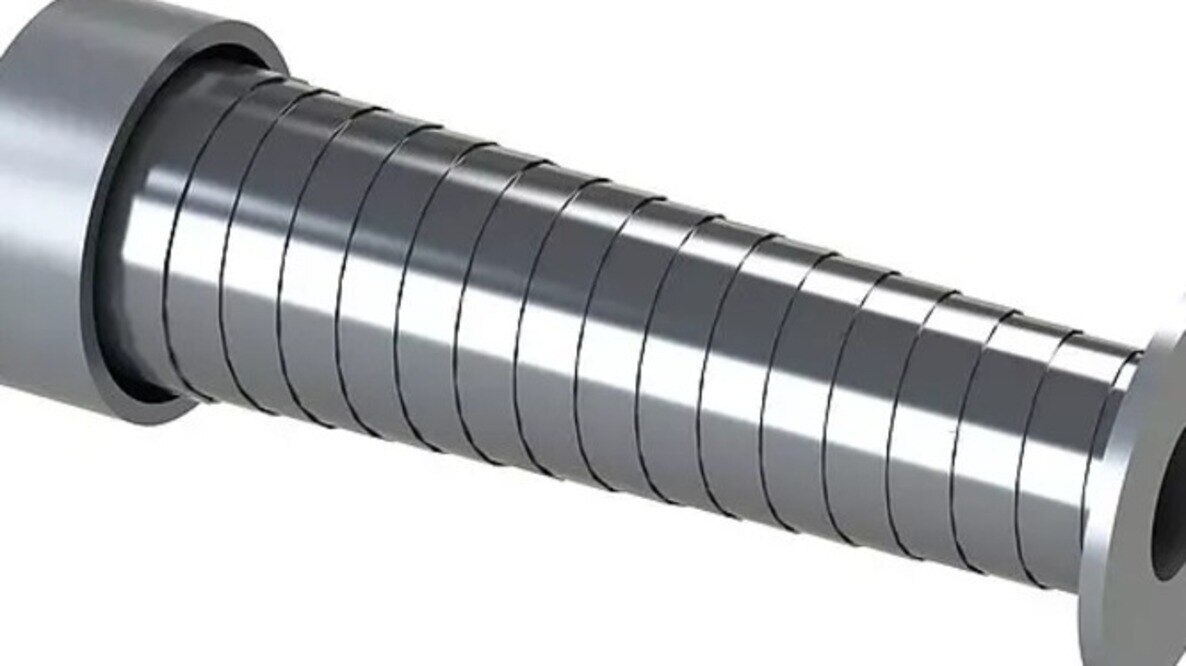
Choose a flexible bellow for a large, irregular, folding envelope; choose a spiral spring cover for a defined rod or shaft whose spring strip remains clear of the moving member.
Spiral spring cover industrial lifts applications suit cylindrical shafts, suitable orientation, controlled compression, edge clearance, speed, and chip size—not rectangular scissor openings requiring continuous splash, fine-dust, or pinch-point enclosure.
| Option | Strength | Limitation |
|---|---|---|
| Flexible bellow | Covers changing, irregular openings | Can snag or fatigue if unsupported |
| Spiral spring cover | Compact protection against metal chips | Does not seal broad openings against splash and fine dust |
Ask every supplier for one comparable engineering quotation, not only width and length:
- Usable stroke; compressed and extended dimensions; material and coating.
- Temperature and chemical limits for the actual coolant, oil, and cleaner.
- Mounting method, supported or unsupported construction, orientation, speed, and cycle conditions.
- Inspection procedure, including fold, attachment, clearance, and fluid-compatibility checks.
A supplier such as SCUTES INDIA PRIVATE LIMITED can be evaluated by whether it supplies these details on a drawing. For a cnc machine bellow in kolhapur, acceptance must include a full-stroke dry run, repeated cycles, actual-fluid exposure, and inspection of folds, seams, and mounting points. Reject rubbing, snagging, buckling, or cracked coating.
Keep a spare-bellow identification drawing with the accepted dimensions, material, mounting-hole pattern, fold direction, and part number. That prevents a future replacement from matching length while failing the lift’s motion envelope.
Related product
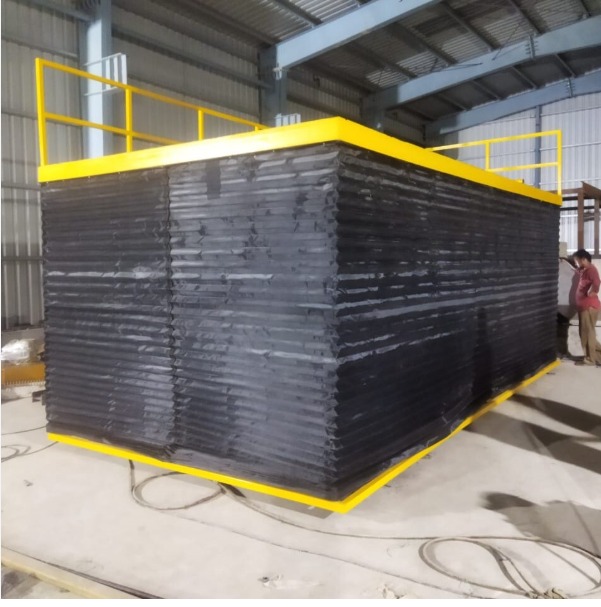 | SCISSOR LIFT BELLOWS Scissor Lift Bellows are one of the broadly demanded stabilizer for which we are considered an acclaimed designed in the market. View product → |
Frequently asked questions
Where does a CNC machine bellow belong on an industrial lift?
Install it across the changing side openings of the scissor mechanism, covering the opening through collapse, extension, arm articulation, platform movement and full retraction.
What benefits justify adding a bellow to a scissor lift?
A correctly sized bellow helps block chips, dust, coolant, moisture and mechanical contact from the moving mechanism while preserving the lift’s motion.
How do you size a bellow for an industrial lift?
Measure the complete motion envelope: collapsed and extended lengths, maximum width and height, fold depth, bend radius, mounting points, travel speed and retraction clearance.
When should you choose a spiral spring cover instead?
Choose a spiral spring cover when the exposed component needs compact cylindrical protection and the cover can follow its axial movement without obstructing nearby lift parts.