A damaged cover can hide a bent spring band, failed attachment or alignment problem even when it still blocks chips. You will be able to isolate the machine, inspect the cover without releasing stored energy, decide whether a minor repair is safe, and verify full-stroke movement before returning to production.
Key takeaways
- Lock out movement and release stored spring energy before inspection.
- Clean chips and coolant before checking spring strips, guides, and attachments.
- Test smooth travel at low speed before returning the machine to service.
- Replace covers with cracked strips, distorted guides, or unsafe travel.
How do you make a damaged cover safe to inspect?
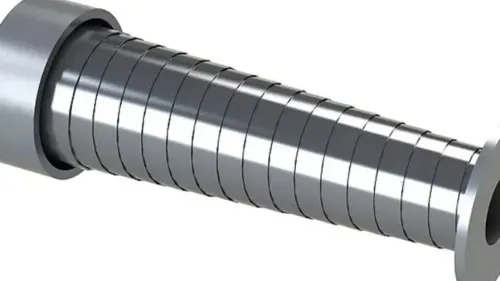
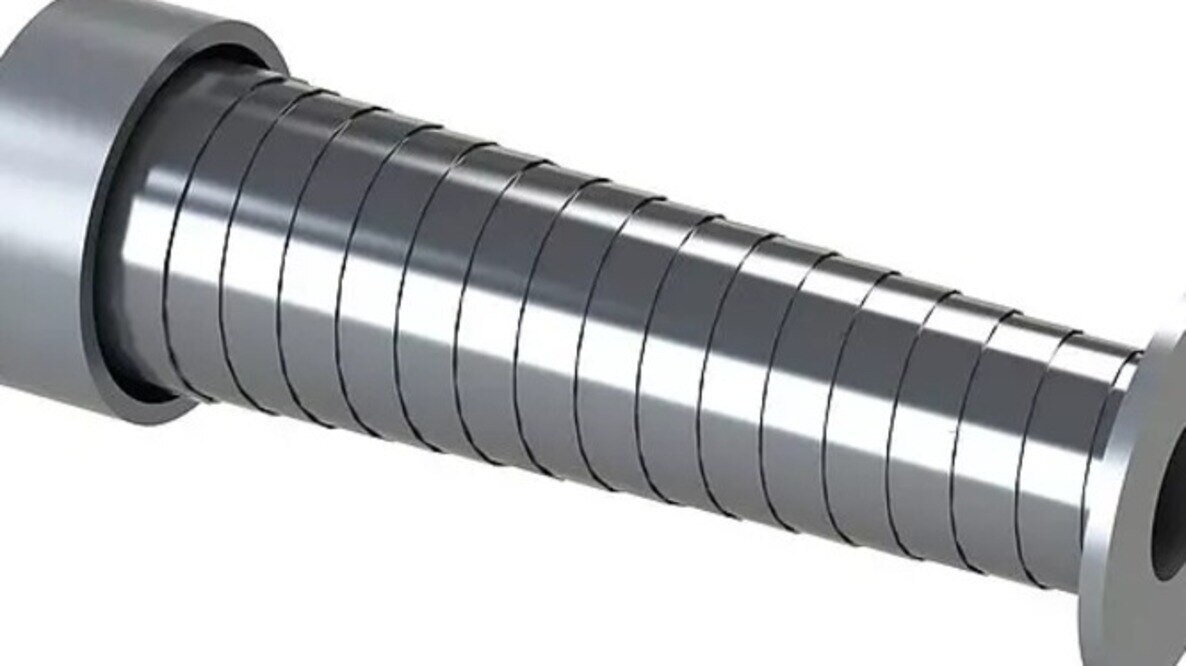
After spring cover damage, treat a telescopic spiral spring cover as a stored-energy hazard, not a stationary sheet-metal part. Switching off the control panel alone does not prevent axis movement or release from the preloaded spring strip.
- Stop the machine and apply the site’s lockout/tagout procedure. Isolate electrical, hydraulic and pneumatic supplies, then verify that the controls cannot start the machine.
- Block or mechanically support every raised axis. Wait for rotating spindles to stop and for hydraulic, pneumatic and other stored pressure to dissipate.
- Keep hands and tools out of the coil path. Do not manually unwind, pull, flatten or force the spring strip.
- Photograph the cover before moving it. Record machine position and travel direction, then mark each damaged convolution.
- If the manufacturer permits opening or extending the cover, follow its handling instructions and use suitable supports. Extend it without placing your hands between turns, near an end ring or beneath an unsupported section.
- Record whether the spring band has a crack, permanent kink, sharp edge, separated seam or broken attachment. Note collapsed sections, loose fasteners and contact with adjacent machine parts.
Stop the on-machine inspection if the spring strip is loose, an edge is exposed, an end ring is unstable or the cover begins to unwind. Evidence collection is not repair: do not change the damage merely to make it appear smaller. Photograph and isolate the assembly for controlled assessment instead.
How should you clean and inspect the spring, guides and attachments?
Clean the cover before judging whether repair is possible; chips and packed sludge can hide cracks, pits, rubbing and distorted turns. Lift debris away from the coils with a soft brush, vacuum, plastic scraper or lint-free cloth.
Do not use uncontrolled compressed air: it can drive abrasive particles into bearings and blow them toward an operator’s eyes.
Inspect the cleaned assembly in this order:
1. Examine the spring band for uneven gaps between turns, rubbing marks, burrs, chipped plating or paint, corrosion pits, separated seams, and a band that no longer winds concentrically.
2. Check the end rings, mounting flange, guide elements, wipers, fasteners and stops for distortion, loose screws, missing parts or contact marks.
3. Inspect the adjacent spindle, guideway, bracket and cable or hose path for chips, collision marks, obstruction and shifted alignment. A bent bracket or blocked path can impose side load on the spring.
4. Distinguish corrosion staining from corrosion pitting. Staining changes the surface colour; a pit in a highly stressed spring strip creates a structural concern and possible fatigue-initiation site.
5. Look for coolant residue and excess grease. Heavy grease can hold fine swarf against the spring and form an abrasive paste, so record the lubricant type and quantity specified for that cover instead of assuming more protection comes from more grease.
This spiral spring cover maintenance record should include photographs, defect locations and any one-edge wear pattern. Keep the cover out of service if cleaning reveals a crack, sharp edge, collapsed section, unstable attachment or obstruction that restricts travel.
How can you tell whether the cover still travels correctly?
A cover that appears intact passes only after a controlled full-stroke test. Restore guards as required, place the machine in its approved maintenance mode, and move the telescopic spiral spring cover for maintenance at low speed or by the manufacturer’s approved manual method. Do not force a tight spot.
Check each travel cycle for:
- Smooth extension and retraction
- Even spacing between convolutions
- Full reach of both end positions
- Stable mounting without bracket movement
- No binding, scraping, hesitation, pulsing force, sudden collapse, turn collision, incomplete retraction or new rubbing noise
| Observation | What it indicates | Action |
|---|---|---|
| Cover moves smoothly and remains concentric | Normal tracking | Continue clearance and end-position checks |
| Cover moves but the spring has lost curvature, overlaps irregularly or retracts off-centre | Hidden spring or alignment damage | Treat as a failure; stop and inspect |
| One edge shows concentrated rubbing | Misalignment, side loading, an obstructing hose, incorrect stop or insufficient clearance | Record the location and investigate the cause |
Watch clearance throughout travel, not only when parked. Check the cover against the spindle, guideway, guard, cable carrier and hoses; contact at any point can damage a replacement.
After a collision, inspect stop positions, end attachments, mounting alignment and bracket deflection. A shifted mount can impose side load on a new spring. Record where rubbing occurs, which edge is affected and the machine position, then compare those marks with the travel path before returning to normal speed.
When is telescopic spiral spring repair appropriate, and when must you replace it?
Repair only a controlled, non-spring defect; replace the spring element or complete cover when the band itself has lost its shape or integrity.
| Condition | Decision | Reason |
|---|---|---|
| Correct-specification fastener, loose mounting point, small burr outside the spring band, or damaged wiper | On-machine repair | These defects do not change spring force or tracking when the approved part and method are used. |
| Cracked, fractured, sharply kinked, or permanently set spring band | Replace spring element or complete cover | A patch cannot restore controlled retraction, balance, or fatigue strength. |
| Binding dent, collapsed section, separated seam, sharp edge, or repeated rubbing | Stop service and investigate replacement | Continued travel can spread damage or create contact with the machine and operator. |
| Cover that blocks some chips but fails to retract or seal its intended area | Do not keep it in service | Partial protection does not make a failed assembly safe. |
Do not hammer, cold-form, weld, braze, drill, grind, or reshape a loaded or damaged strip. Heat changes spring properties; drilled or ground areas become stress concentrations, and straightening leaves residual deformation that can cause rapid failure. These changes also alter preload, winding balance, clearance, and protection later in the stroke.
A replacement must match preload, winding direction, strip thickness and material, end-hook or attachment geometry, stroke, allowable travel speed, and installation orientation—not only width. SCUTES INDIA PRIVATE LIMITED can help compare the damaged assembly with the machine’s actual mounting and motion requirements.
After any telescopic spiral spring repair or replacement, run the cover through its full stroke at low speed and confirm both end positions without binding, spring surge, turn collision, bracket movement, or adjacent-part contact. A cover is not a chip conveyor, pressure-rated coolant seal, or structural guard.
Related products
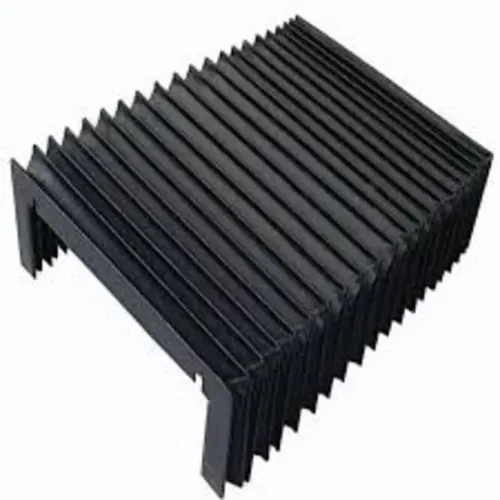
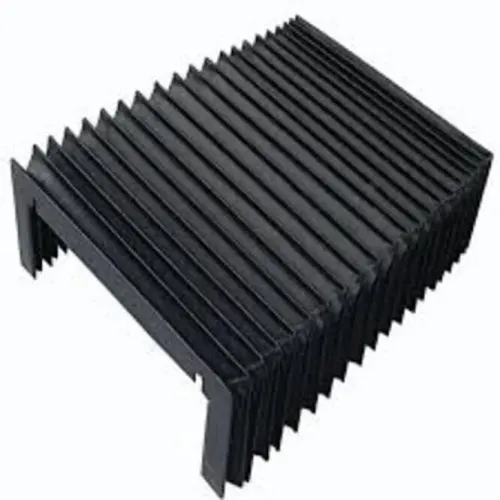
 | TELESCOPIC SPRING COVER Telescopic Spring Covers provide protection under extreme conditions. View product → |
 | TELESCOPIC COVERS A telescopic cover protects guide-way surfaces and components of moving axis of machines. View product → |
How do you return the machine to service and prevent repeat damage?
Return the machine to service only after every fastener, flange, wiper, guide, stop and mounting bracket is secure. Run the telescopic spring cover through its full stroke at low speed, checking both end positions, spring tracking, noise, clearance and bracket movement.
Restore normal speed only after repeated controlled cycles show no binding, scraping, spring surge, turn collision or incomplete retraction.
Record the condition check with:
- Date, machine axis and stroke position
- Damage location and photographs
- Suspected cause and travel direction
- Parts changed and lubricant used
- Low-speed test result and approval for normal speed
For recurring damage, compare the wear marks with the machine’s travel path before installing another cover.
| Wear pattern | Likely cause | Correct before refitting |
|---|---|---|
| One-edge rubbing or thinning | Misalignment, side loading, obstructing cable or hose | Realign the mount and clear the travel path |
| Repeated end collision | Incorrect stop or shifted bracket | Reset the stop and inspect bracket deflection |
| Marks across adjacent turns | Inadequate clearance or turn collision | Restore clearance and confirm spring tracking |
| Uneven corrosion pits | Moisture exposure or trapped abrasive debris | Replace structurally damaged parts and remove the source |
This spiral spring cover maintenance record must trigger another inspection after a collision, abnormal noise, visible corrosion pits, changed retraction force or contact with an adjacent machine part. Inspect the mounting brackets, end attachments, guide surfaces and machine-side alignment; replacing the cover without correcting a bent mount or obstructing path repeats the failure.
Frequently asked questions
How do you make a damaged telescopic spiral spring cover safe to inspect?
Isolate electrical, hydraulic, pneumatic, and stored mechanical energy, then secure the axis against movement before opening or touching the cover.
How should you clean and inspect the spring, guides and attachments?
Remove chips and coolant with a suitable cleaning method, then check spring strips for cracks, deformation, corrosion, and sharp edges. Inspect guides, fasteners, stops, and mounting points for wear or looseness.
How can you tell whether the cover still travels correctly?
Move the axis slowly through its usable range and watch for binding, scraping, uneven extension, sudden release, gaps, or contact with nearby machine parts.
When is telescopic spiral spring repair appropriate, and when must you replace it?
Repair is appropriate for minor contamination, loose fasteners, or replaceable attachments. Replace the cover when spring strips, guides, stops, or structural mounts are cracked, permanently distorted, or unsafe.
How do you return the machine to service and prevent repeat damage?
Reassemble and secure every attachment, verify clearance and smooth travel, run the machine at low speed, and correct chip, coolant, alignment, or collision causes before normal operation.