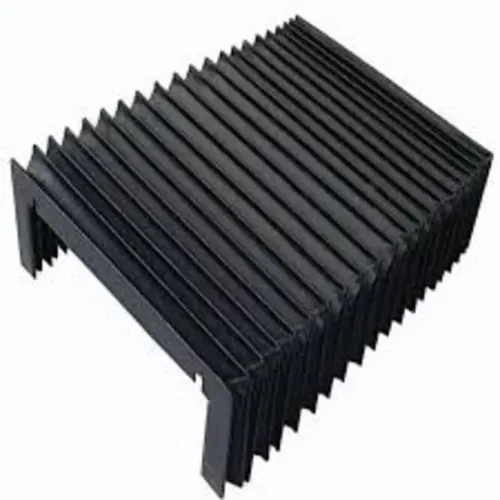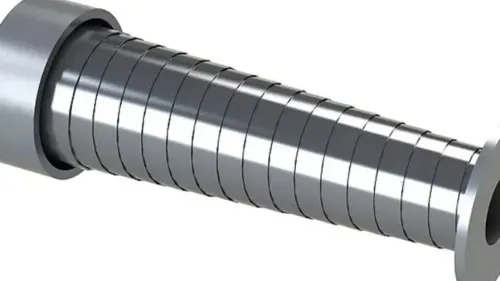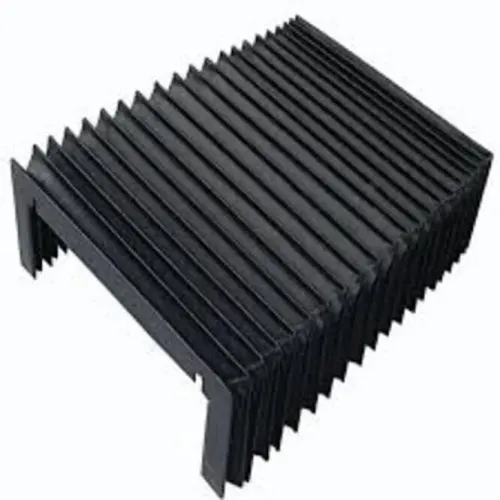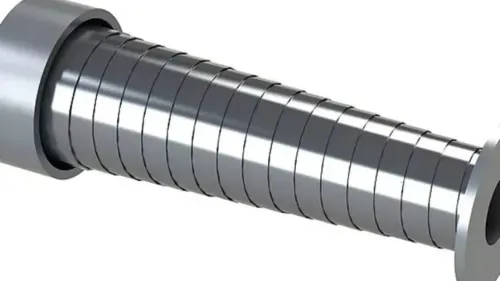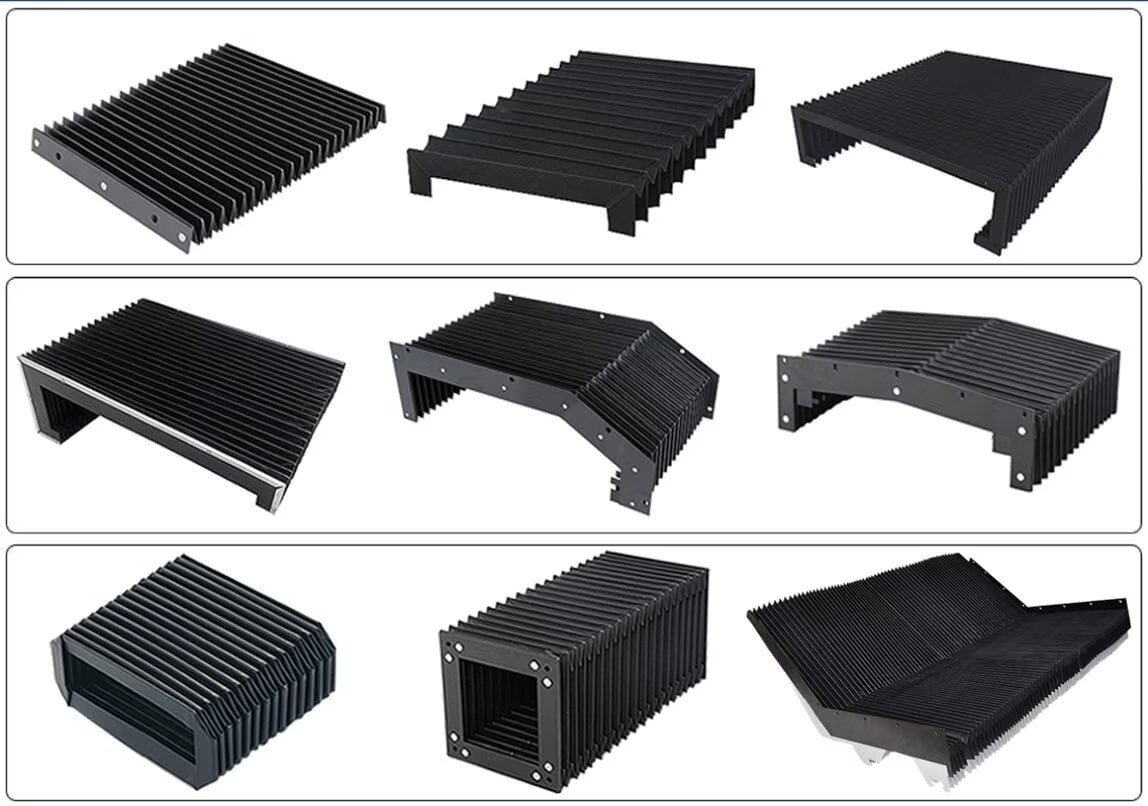
A bellows cover earns its place when contamination can damage the lift faster than the cover adds weight, drag, maintenance, or access difficulty. By checking the hazards, moving geometry, material limits, and safety clearances, you can decide whether protection is justified and specify a cover that will survive the full lift cycle.
Key takeaways
- Add protection when contamination could damage joints, pivots, seals, or drive components.
- Choose material and construction for the actual dust, coolant, oil, heat, and chip exposure.
- Check compression, extension, folds, and clearances across the full lift stroke.
- Specify dimensions, mounting, inspection access, and replacement requirements before requesting quotes.
Start with the contamination and failure risk
A bellows cover is justified when contamination can reach the scissor mechanism and the resulting failure would cost more than the cover’s added mass, drag, and maintenance.
The decision question is when to use a bellows cover on a scissor lift: protect exposed moving joints or the actuator when site debris can impair movement, wear surfaces, or damage seals.
Look for these exposure conditions:
- Grinding dust or abrasive powder entering pivot areas
- Metal chips, product debris, or welding spatter striking links and folds
- Coolant, cutting oil, or washdown residue reaching the actuator
- Moisture that can corrode pins, guides, or electrical components
Outdoor installation alone does not justify a cover. Rain, monsoon wetting, or airborne dust matters only when the lift’s exposed parts cannot be kept clean and inspected; a badly drained cover can trap water, slurry, or chips and accelerate wear.
Check the risk at full collapse as well as full elevation. The folded pack, retaining frame, or mounting hardware must not contact a link, roller, cylinder, hose, or floor at either extreme, including uneven loading.
Added mass matters most near collapse, where actuator force is highest, so include the cover in the lift’s moving-mass and startup-force calculation. A cover also reduces dust entry without making the lift waterproof or dust-tight; seams and clearances remain leakage paths.
Match the cover to the actual exposure
Scissor lift dust protection targets dry particles that foul pivot pins, link joints, sensors, and actuator rods. It does not automatically stop coolant, oil, washdown water, hot chips, or rain. Select the bellows fabric, seams, clearances, and drainage for the hazard that reaches the mechanism.
| Exposure | What the cover must resist | Design implication |
|---|---|---|
| Fine mineral or machining dust | Abrasion and particle entry | Use a wear-resistant coated fabric; protect folds and close gaps without trapping abrasive grit. |
| Coolant, hydraulic oil, or alkaline washdown | Swelling, softening, chemical attack, and liquid entry | Confirm coating and thread compatibility, then provide sloped surfaces, drainage, and cleanable seams. |
| Metal chips and weld spatter | Puncture, cutting, and local heat | Use reinforced or heat-resistant material and prevent chips from lodging between folds; hot spatter may require a separate shield. |
| Rain, ultraviolet light, and outdoor weather | Wetting, UV degradation, and corrosion | Specify UV-stable fabric, water-shedding construction, corrosion-resistant hardware, and drainage. |
A general-purpose PVC-coated fabric is not a universal answer. Solvents, continuous heat, welding sparks, and hot chips can destroy it even when it handles dry dust well.
Treat the cover as contamination reduction, not a dust-tight or waterproof enclosure. Seams, end frames, access openings, and movement clearances remain leakage paths; specify a tested enclosure rating separately if the lift requires one.
Check the bellows through the entire stroke
Confirm fit by checking the bellows at full collapse, full elevation, and every position between them. A scissor mechanism changes geometry throughout its stroke, so a cover that looks correct when raised can overstretch, fold into a link, or trap itself when lowered.
- Record the lift’s minimum and maximum dimensions, then measure the available clearance around links, pivot pins, rollers, hydraulic cylinders, hoses, sensors, cable runs, and the floor.
- Cycle the lift slowly with the cover temporarily positioned in place; inspect the folded pack, retaining frames, fasteners, and seams at both extremes.
- Repeat the check with the platform skewed or unevenly loaded, because side movement can close clearances that appear adequate under a centred load.
- Confirm that no part of the cover rubs, snags, pinches, or blocks access to lubrication points and inspection areas.
- Check the cover’s collapsed height and folded volume against the lift base, then verify that it does not contact the floor before the mechanism reaches full collapse.
Choose guided bellows, segmented side guards, telescoping frames, or separately supported curtains when a simple sheet fixed between two points cannot follow the changing geometry. Do not treat the cover as weightless: include its mass and starting drag in the lift’s moving-mass and actuator-force calculation, especially near collapse.
A trapped chip, wet fold, or misaligned frame can create bellows cover scissor lift problems even when the fabric itself remains intact.
Keep the cover from becoming a machine hazard
A bellows is not a guard, an enclosure, or an energy-isolation device. Before anyone reaches beneath or inside it, apply lockout/tagout and release or secure stored energy under a documented procedure; OSHA 29 CFR 1910.147 requires this for servicing. The cover can hide a pinch point and cannot prevent unexpected movement.
Route cables independently of the bellows folds:
- Give every cable its specified minimum bend radius and a separate strain-relief point.
- Use an energy chain, guided loop, or protected cable carrier when the scissor geometry changes the cable path.
- Check cable length, bend direction, and clearance at every lift position.
- Keep cables away from links, pivots, cylinders, retaining frames, and the floor.
Run the lift slowly through full collapse and full elevation, then repeat the check with the platform unevenly loaded if that condition is possible. Stop if the folded pack, frame, or fasteners touch the mechanism, or if the cover pulls tight before the stroke ends.
Include the added cover mass in the lift’s moving-mass and startup-force calculation.
Set an inspection interval based on contamination and cycle rate. Look for torn fabric, abrasive wear, trapped chips, loose fasteners, and blocked drainage; repair the cause, not only the visible tear. Clean the cover without forcing debris into folds, and keep access points available for inspecting protected components.
Turn the decision into a purchase specification
Ask for a drawing-backed specification, not a generic “dustproof” description. The supplier must show how the bellows affects lift capacity, movement, cleaning, and maintenance.
1. Provide the collapsed and elevated dimensions, usable stroke, folded-pack thickness, mounting points, minimum bend radius, and clearance from links, rollers, cylinders, hoses, pins, sensors, and the floor. Request checks at full collapse, full elevation, and skewed or unevenly loaded positions.
2. State the contamination precisely: machining dust, foundry grit, chips, coolant, oil, welding spatter, washdown water, food residue, or monsoon exposure. Request the fabric, coating, thread, fastener, and frame materials, plus temperature and chemical-compatibility limits.
3. Include the bellows mass and its position in the lift’s rated moving mass and startup-force calculation. Extra weight near the collapsed position can increase actuator force when the mechanism has its poorest leverage.
4. Request drainage details, access panels, cleaning instructions, inspection intervals, replacement method, and a clear cable-routing plan. Power, control, and sensor cables need separate bend-radius, strain-relief, abrasion, and loop provisions; do not route them through uncontrolled folds.
5. Specify whether you need contamination reduction or a tested enclosure rating. A bellows is not automatically dust-tight or waterproof because seams, frames, access openings, drainage gaps, and movement clearances remain leakage paths.
For scissor lift bellows in kolhapur, SCUTES INDIA PRIVATE LIMITED can be included in your comparison when it supplies the drawings and exposure-specific details above rather than only a catalogue name.
Related product
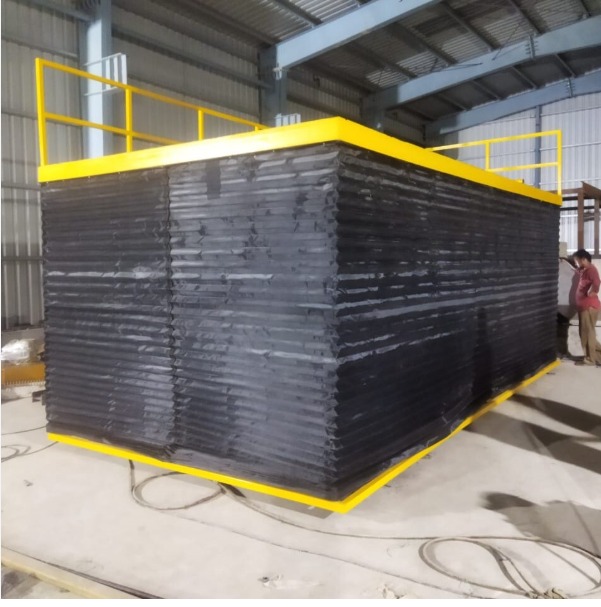 | SCISSOR LIFT BELLOWS Scissor Lift Bellows are one of the broadly demanded stabilizer for which we are considered an acclaimed designed in the market. View product → |
Frequently asked questions
When should you use a bellows cover on a scissor lift?
Use one when dust, chips, coolant, oil, heat, or mechanical debris can reach the scissor mechanism and a failure would cost more than the cover’s added mass, drag, and maintenance.
How do you match a bellows cover to scissor lift exposure?
Identify the contaminants, temperature, contact risks, cleaning method, and required flexibility, then select the bellows material, seams, reinforcements, and mounting method for those conditions.
What should you check across the full scissor lift stroke?
Inspect the bellows at full compression, full extension, and intermediate positions for folding, stretching, rubbing, trapping, sagging, and interference with links, pivots, sensors, and adjacent equipment.
How can a scissor lift bellows cover become a hazard?
Prevent loose folds, exposed fasteners, pinch points, snagging loops, blocked inspection access, and contact with hot or moving parts by checking clearances and securing the cover at every position.