A vague request such as “quote a bellows cover” leaves too many design and cost decisions unresolved. By supplying defined machine dimensions, motion data, contamination conditions, construction requirements and commercial assumptions, you can obtain quotations that are comparable and usable for design approval.
Key takeaways
- Send machine model, axis, location, drawing revision and quantity first.
- State travel, speed, acceleration, cycle rate and exposure to contaminants.
- Specify cover construction, compressed dimensions and cable-clearance requirements.
- Compare quotes for drawings, exclusions, testing, warranty and delivery commitments.
Which machine data and dimensions must you send first?
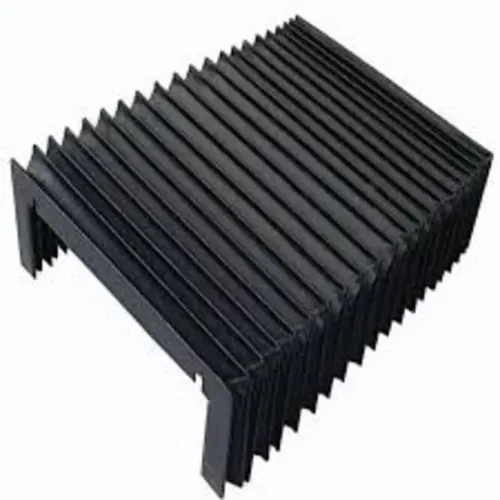
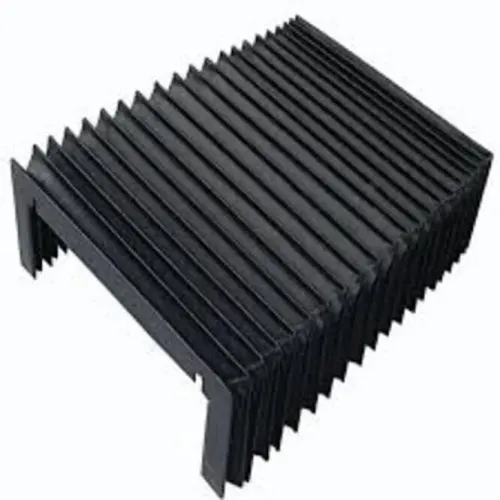
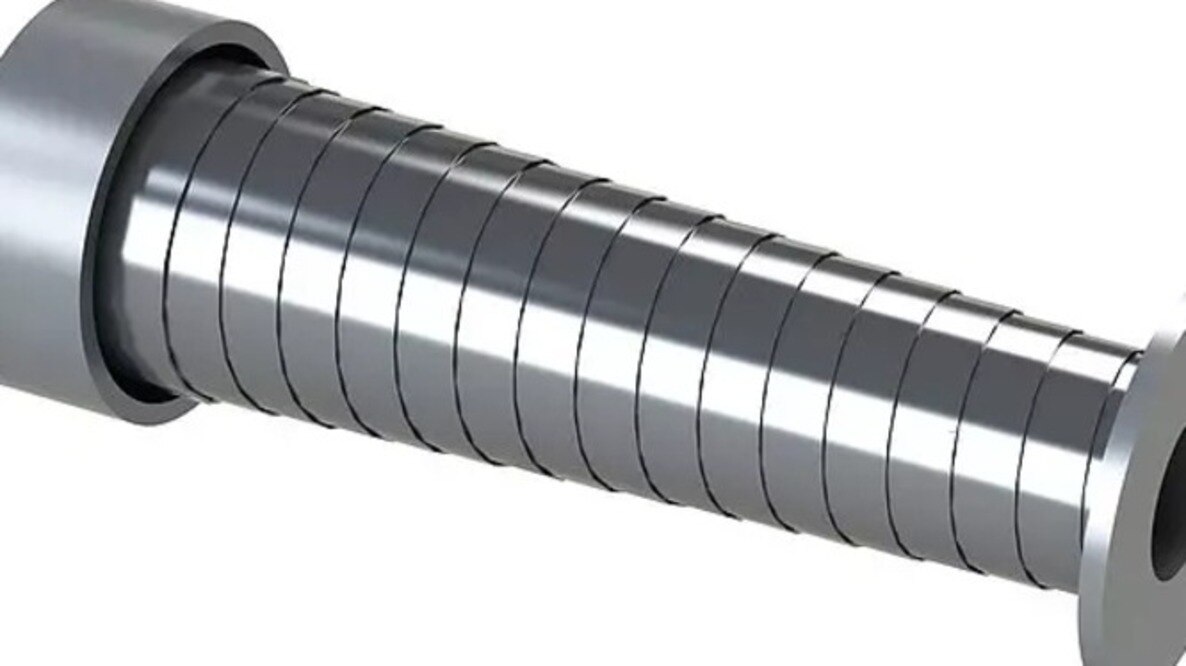
Send the supplier the machine cover quotation requirements before discussing price: machine make and model, axis name, installation location, drawing reference and revision, and required quantity. Identify the cover type and construction, such as sewn or vulcanized bellows, telescopic steel cover, roller blind, apron cover or way cover.
- Protected envelope, travel in each axis, stroke, travel direction, speed, acceleration, cycle frequency, movement profile, and whether motion is horizontal, vertical or inclined.
- Closed length, extended length, cover width, cover height, folded height and allowable overlap.
- Guideway or mounting face dimensions, fixed and moving attachment points, flange or frame size, hole pattern, mounting orientation and support-rail requirements.
- Minimum clearance to tooling, fasteners, moving members and obstruction zones. State any permitted attachment loads and whether brackets, guides, wipers, scrapers and hardware are included.
- For bellows, give the minimum permitted fold or bend radius. For energy chains, give internal height and width, bend radius, unsupported length, moving mass and required cable separation or strain relief.
Measure from the machine’s fixed datum and record the cover’s actual mounting faces, not nominal axis travel. Exclude moving parts, fasteners and obstruction zones that the cover must not contact. Mark every dimension directly on a layout or clear photograph, and name the drawing revision.
| Measurement | Record | Do not include |
|---|---|---|
| Protected envelope | Full space the cover must shield | Moving hardware outside that space |
| Mounting faces | Fixed and moving interface faces | Assumed bracket thickness |
| Clearance | Smallest gap to adjacent parts | Areas the cover cannot enter |
What motion and operating conditions should the quotation describe?
A useful machine cover quotation requirements list must describe the complete motion duty, not maximum speed alone. Acceleration, repeated short strokes and frequent cycling can control fatigue, heat generation and folded-pack behaviour even when peak speed is modest.
1. State the travel direction, stroke, maximum speed, acceleration, deceleration and cycle frequency. Describe the movement profile, including pauses, rapid reversals and intermittent or continuous operation.
2. Identify the orientation: horizontal, vertical, inclined axis or multiple axes. Note whether the cover faces side loading, twisting or unsupported sag.
3. For a flexible cover, specify the minimum permitted fold or bend radius and the resulting folded-pack length at the quoted stroke. A cover can meet the travel distance yet fail when installation forces a tighter bend.
4. List the actual exposure: coolant type and concentration, cutting oil, hydraulic oil, lubricant, hot chips, swarf, grinding particles, abrasive dust, welding sparks or spatter, laser heat, humidity, ambient temperature range, washdown pressure and chemicals, and ultraviolet exposure.
5. Define the intended protection separately: coarse chips, fine dust, liquid splash, direct spray or immersion. State whether seams, wipers, brushes, overlaps or drainage paths must control ingress.
A material name alone proves neither chemical compatibility nor hot-chip resistance. Tie each requirement to the quoted speed, motion profile, temperature and contamination so the supplier can select and verify the cover rather than label it merely “suitable.”
Which cover construction and cable-clearance details affect price?
A meaningful machine cover quotation must name the construction, not merely say “bellows.” State the fabric or polymer grade, coating or laminate, metal grade and thickness, baffle or slat design, scraper or wiper arrangement, reinforcement, seam method, fastener material and corrosion protection.
These machine cover quotation requirements affect rigidity, folded length, repairability, contamination resistance and service life.
| Construction | Price and performance effect | Specify |
|---|---|---|
| Sewn or vulcanized bellows | Flexible and repairable versus sealed, uniform construction | Seam method, fold radius, reinforcement, folded length |
| Coated-fabric, rubber or polyurethane cover | Grade and laminate control heat, oil, abrasion and flexibility | Polymer or fabric grade, coating, temperature and chemical limits |
| Roller blind or aluminium-strip apron | Compact storage versus slat overlap, rigidity and gap protection | Slat material, thickness, baffle design, wipers and fasteners |
| Spring-steel cover | High resilience with limited shape options | Steel grade, thickness, coating and edge protection |
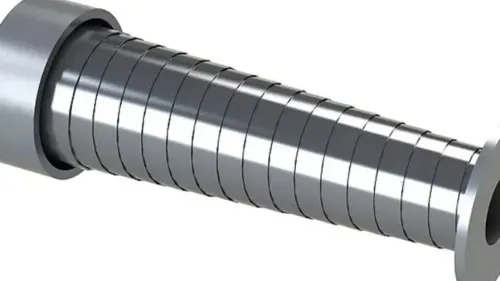
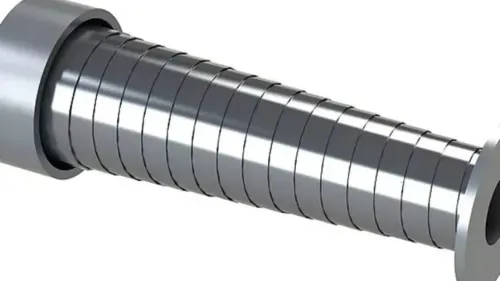
| Telescopic steel cover | High rigidity and chip protection, with heavier sections | Steel grade, thickness, scraper design and guide arrangement |
| Custom slideway enclosure | Fits unusual geometry but requires more design work | Mounting faces, reinforcement and overlap |
SCUTES INDIA PRIVATE LIMITED can compare these constructions accurately when you provide every service sharing an energy chain or carrier:
- List each power, control, encoder, data, fibre-optic, pneumatic, hydraulic and coolant line with outside diameter, dynamic bend radius, mass, connector dimensions, approximate length and separation needs.
- State carrier internal height and width, bend radius, unsupported length, moving mass, divider shelves, clamps and strain relief. Provide connector-support details so cables lie freely instead of being forced against one another.
Related products
 | Machine Covers Machine covers are specially designed shields used to protect industrial equipment and machinery from environmental elements. View product → |
 | Roll Up Cover A roll-up cover is a highly durable and flexible protective solution designed to safeguard machinery, equipment, and valuable assets from dust,... View product → |
What mounting, scope and commercial terms should appear in the quote?
Machine cover quotation requirements include a complete interface definition, a stated design basis and commercial terms that leave no “by others” items unresolved.
1. Specify fixed and moving attachment points, flange or frame dimensions, hole pattern, mounting orientation, support rails, allowable attachment loads, and the dimensions of every bracket or guide. State whether wipers, scrapers, rails, brackets, guides, fasteners, cable-carrier hardware and installation aids are included or excluded.
2. Record the machine drawing revision and dimensional datum used for the quote. List missing information, assumed duty cycle, environmental assumptions and customer-supplied interfaces. Include inspection interval, cleaning method, replacement parts, lubrication requirements and any wear limit used for a service-life estimate.
3. Separate one-time engineering or tooling charges from the repeat-unit price. Show quantity, currency, quotation validity, taxes, freight, packaging, delivery point and lead time; define whether lead time begins at order, drawing approval or receipt of complete customer data, and state the customer-response time allowed for approval.
List exclusions explicitly: installation, commissioning, cable termination, guarding changes, floor or foundation work and validation testing. These machine cover quotation requirements prevent a low initial price from becoming a disputed change order.
How should you verify the quoted design and compare supplier promises?
Verify the quoted design through acceptance evidence, not the word “suitable.” Machine cover quotation requirements should link every claim to the quoted duty, environment and inspection record.
| Condition | Evidence to request | Weak promise to reject |
|---|---|---|
| Dimensions | Inspection report against drawing revision, datum and agreed tolerances | “Fits the machine” |
| Motion and life | Movement or cycle test at quoted speed, acceleration, travel, temperature, contamination and cycle count | Cycle-life figure with no test basis |
| Spray, leakage and noise | Spray or leak results where relevant, plus noise measurement against a stated limit | “Sealed” or “quiet” without records |
| Protection | Defined exclusion of chips, dust, splash, direct spray or immersion; identify seams, drains, wipers and overlaps | An IP rating without testing the complete assembly |
| Safeguarding | Stated protective function and machine interfaces | Claim that the cover alone makes the machine compliant |
The quotation should also identify the evidence and service assumptions that govern acceptance:
- Mark inspection points, cleaning method, replacement parts, lubrication requirements and allowable wiper or brush wear.
- State the inspection interval and explain any cycle-life estimate as conditional on the quoted motion and environment.
- Record missing information, customer-supplied interfaces and exclusions such as installation, commissioning, cable termination and validation testing.
If the cover contributes to safeguarding, the integrator remains responsible for the ISO 12100 risk assessment, guarding, access prevention, stopping performance and control-system requirements. Compare quotations line by line against these conditions, not by unit price or product label.
Frequently asked questions
Which machine data and dimensions must you send first?
Provide the machine make and model, axis name, installation location, drawing reference and revision, required quantity, cover type, overall dimensions, travel, mounting points and available installation space.
What motion and operating conditions should the quotation describe?
State the axis travel, direction, speed, acceleration, cycle rate, operating temperature, coolant or oil exposure, chip load, cleaning method and any heat or abrasion hazards.
Which cover construction and cable-clearance details affect price?
Identify the construction, such as sewn or vulcanized bellows, telescopic steel cover, roller blind, apron cover or way cover. Include compressed and extended lengths, section sizes, material, guide requirements, cable-chain clearance and access constraints.
What mounting, scope and commercial terms should appear in the quote?
Request mounting hardware details, installation responsibility, included drawings, inspection or testing, packaging, delivery schedule, warranty, payment terms, taxes, freight and every exclusion.
How should you verify the quoted design and compare supplier promises?
Check the quotation against your drawing revision and operating data, then request a dimensioned approval drawing. Compare materials, travel capacity, clearances, mounting method, scope, lead time, warranty and exclusions rather than price alone.
Related products
 | TELESCOPIC COVERS A telescopic cover protects guide-way surfaces and components of moving axis of machines. View product → |
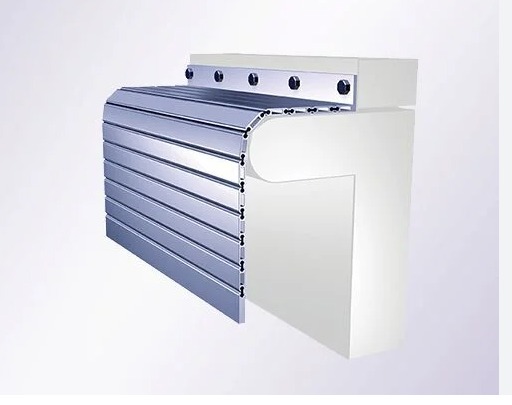 | APRON COVER Effectively engaged in offering a vast collection of outstanding quality products which include Apron Covers. View product → |
 | TELESCOPIC SPRING COVER Telescopic Spring Covers provide protection under extreme conditions. View product → |
 | Laser Machine Bellows Laser Machine Bellows are specialized protective coverings designed to safeguard the vital internal components of laser machines. View product → |