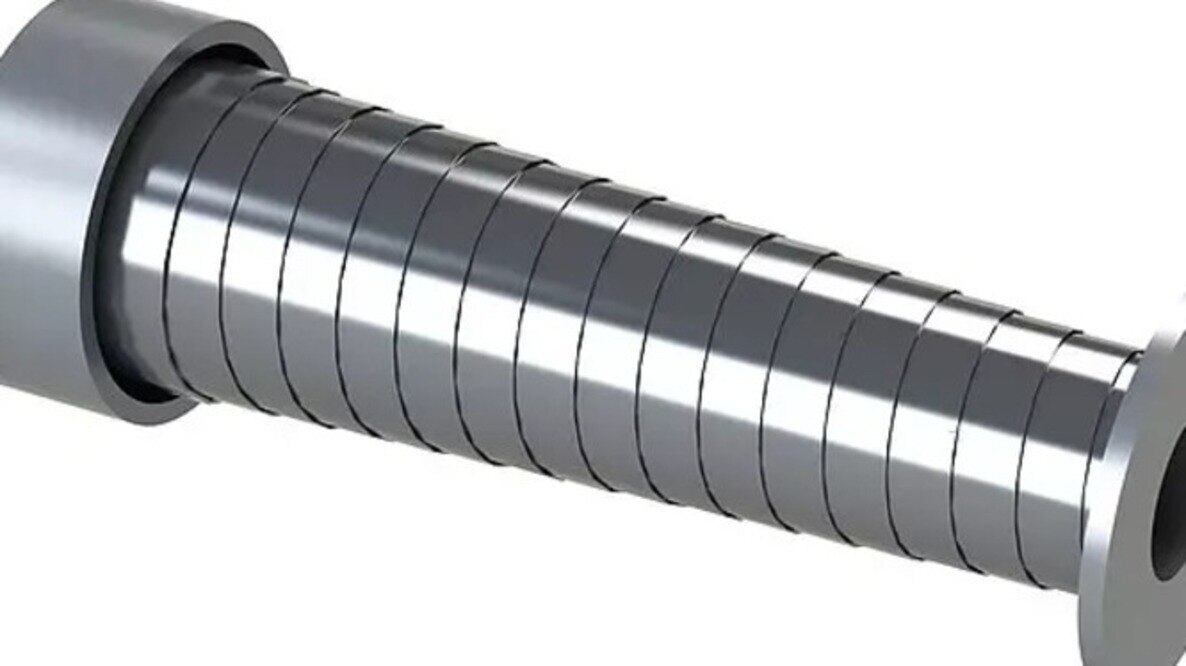
Kolhapur’s monsoon exposes machine protection to rain, splash, wet chips, condensation and repeated wet–dry cycling rather than humidity alone. By the end, you will know how moisture enters a telescopic spiral spring, how to specify materials and drainage, how to measure fit, and how to inspect and maintain it through the wet season.
Key takeaways
- Treat the cover as rain-shedding, not hermetically sealed.
- Specify corrosion-resistant strip material, finish and a clear drainage path.
- Measure mounting faces, travel, diameter and clearance before approving the cover.
- Inspect after heavy rain and remove trapped water, chips and corrosion residue.
How Kolhapur Monsoon Water Reaches a Telescopic Spiral Spring
Rainwater can enter a telescopic spiral spring through the open outer end, clearances at the machine-side mounting, and the narrow gaps between overlapping turns. The spring sheds direct rain while moving, but it is not a hermetically sealed enclosure; water can travel along the strip and reach the shaft or mounting face.
Retention becomes more likely under these Kolhapur monsoon conditions:
- A horizontal or recessed spring cover allows water to pool instead of running away.
- Wet chips, mud, or oily sludge lodge between turns and block drain paths.
- Repeated wet–dry cycling leaves deposits that hold moisture against strip edges, end rings, and fasteners.
- Coolant spray mixes with rainwater and creates a residue that drains slowly.
- High humidity follows machine shutdown, and a warm shaft or cooling cover creates internal condensation even without current rainfall.
The machine-side interface needs separate attention because water entering at the mounting plate can bypass the spring’s overlapping protection. Check the cover’s orientation, low points, drainage holes, and access for cleaning; a blocked drain turns splash protection into a water trap.
IEC 60529 IP ratings do not automatically certify moving overlaps, shaft clearances, or internal drainage.
A specification for telescopic spiral spring protection for monsoon conditions in Kolhapur must therefore describe more than rain exposure. For telescopic spiral spring monsoon in Kolhapur service, state the orientation, splash direction, coolant exposure, cleaning chemicals, drainage arrangement, and inspection access.
Rain Shedding Is Not the Same as Sealed Water Protection
A telescopic spiral spring provides splash and contamination shielding, not a watertight seal. Its overlapping metal turns shed direct rain, chips and coarse debris, but water can pass through turn clearances, end gaps and mounting interfaces. That is the practical limit of spiral spring moisture protection.
Kolhapur’s monsoon adds prolonged humidity and repeated wet–dry cycling. A spring that looks dry after rain can still hold water beneath wet chips or sludge. Condensation creates a separate failure: after shutdown, a warm shaft inside a cooled, wet cover can condense moisture on the spring and shaft even without fresh rainfall.
Use additional controls when exposure includes more than incidental splash:
- For condensation, provide drainage, ventilation and a shutdown drying routine; do not treat the spring as a sealed enclosure.
- For coolant mixed with rainwater, use deflectors and a machine-side guard or seal, then confirm that the overlap sheds liquid outward.
- For washdown, keep the spray away from end clearances, arrange the opening direction to prevent scooping, and run a physical water-spray trial through the full stroke.
- For water collecting on horizontal or recessed surfaces, add a drain path so liquid cannot remain against the spring.
If coolant or washdown reaches the spring directly, specify corrosion control and cleaning procedures alongside the cover. A rain-shedding spring is not a substitute for sealed protection around the machine interface.
Specify Materials, Finishes and Drainage for Wet Service
Specify the exposure, not just “monsoon duty.” For a telescopic spring cover in Kolhapur, put shaft diameter, stroke, speed, acceleration, orientation, splash direction, coolant type, cleaning chemicals, desired service life and acceptable corrosion appearance on the purchase drawing.
Include wet chips, mud, condensation after shutdown and water mixed with coolant; these create a harsher cycle than rain alone.
| Choice | Compare | When it applies |
|---|---|---|
| Spring strip | 304 or 316 stainless steel versus coated carbon steel; request the actual grade and corrosion-test basis | Choose against chloride-bearing water, coolant residue and cleaning chemicals, not the word “stainless” alone |
| Finish | Flexible coating adhesion, edge coverage and abrasion resistance; ask whether the finish survives repeated coiling | Use coated steel only with evidence that movement will not crack or shed the coating |
| Fasteners and rings | A4 stainless or compatible protected hardware, galvanic compatibility and crevice exposure | Specify matching materials where wet dissimilar-metal joints could stain or corrode |
| Mounting | Sloped interfaces, protected end clearances and a separate machine-side seal or shield | Use where horizontal surfaces collect rain, coolant or wash water |
| Drainage | Low-point drain holes or slots, chip guards and cleaning access; confirm hole size and location on the drawing | Provide a free path for water and sludge without directing discharge onto the machine |
A drain that opens into a recessed flange is not drainage; it is a mud trap. Keep outlets clear of the moving strip, prevent chips from bridging the opening, and test free retraction after wet debris is removed.
Ask SCUTES INDIA PRIVATE LIMITED to state the mounting orientation, drainage arrangement and application-specific service limits rather than offering a generic salt-spray figure.
Related products
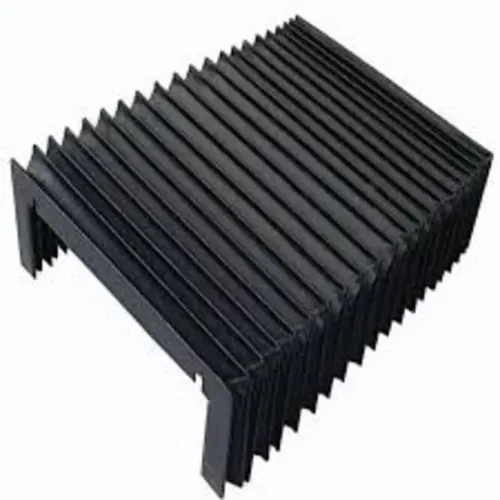
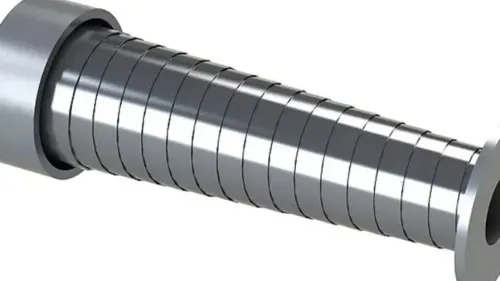
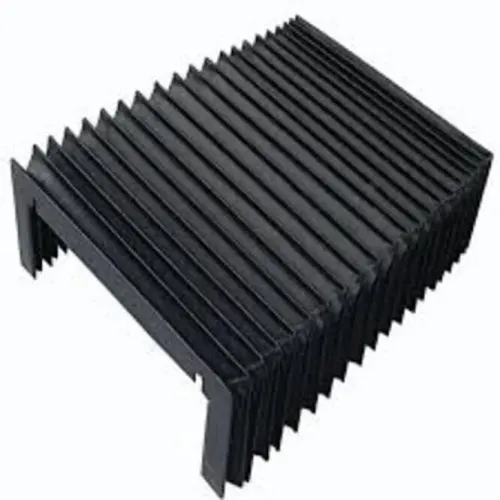
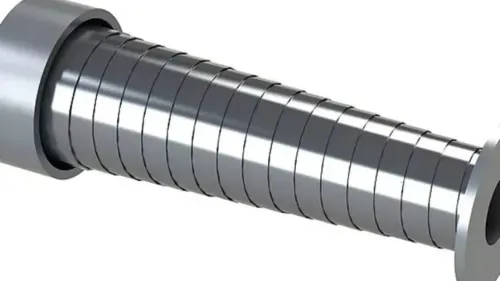
 | TELESCOPIC SPRING COVER Telescopic Spring Covers provide protection under extreme conditions. View product → |
 | TELESCOPIC COVERS A telescopic cover protects guide-way surfaces and components of moving axis of machines. View product → |
Measure the Spring Cover Before You Approve the Design
Approve the cover only after you record the machine’s full stroke, available mounting space and motion profile. A spring that fits at full extension can still buckle at retraction, scrape the guideway or crush its overlaps when the compressed length is too short.
Measure these values at the machine, not from a general arrangement drawing:
- Shaft or guideway diameter, fixed-end and moving-end locations, mounting-face width, and the minimum radial and axial clearances.
- Complete stroke, required extended length, available compressed length, overlap length, and the cover’s opening direction.
- Travel speed, acceleration, cycle frequency, orientation, and the allowable spring force and acceleration stated by the manufacturer.
- Parallelism and angular alignment between mounting points; record any lateral offset or runout across the stroke.
- Splash direction, coolant path, horizontal recesses and drain-hole locations, then confirm that chips or oily sludge cannot block drainage.
| Dimension | Check | Failure if wrong |
|---|---|---|
| Extended length | Covers the entire stroke with overlap retained | Exposed guideway or pulled-apart turns |
| Compressed length | Fits without end-stop contact or overlap stacking | Over-compression, scraping or seizure |
| Clearance | Radial and axial space through the complete travel | Rubbing, buckling or trapped debris |
| Motion data | Speed, acceleration and cycle rate match the design envelope | Spring-force overload or failed retraction |
If your search began with machine protection monsoon in kolhapur, include wet–dry cycling, mud deposits and spray orientation in the approval trial. Move the cover repeatedly through its full stroke, then inspect edges, overlaps and drainage before accepting the design.
Monsoon Inspection and Maintenance That Prevents Seizure
A seized spring usually starts with wet chips or oily sludge trapped between overlapping turns. Inspect the cover after heavy rain, coolant washdown and repeated wet–dry cycles, not only when movement becomes noisy or stiff.
1. Stop and isolate the machine. Remove mud, chips and dried deposits with a soft brush and lint-free cloth. Use a mild, compatible cleaner; keep high-pressure water away from the open end and mounting interface.
2. Dry every accessible turn, edge and recess before retracting the spring. Direct clean, low-pressure air outward, or wipe manually, so water is not driven deeper into the overlaps.
3. Inspect the strip edges, overlaps, end rings and fasteners for red rust, pitting, lifted coating, dents and fresh rubbing marks. A scratch at the edge can spread corrosion beneath the finish.
4. Clear drainage holes and paths of chips or oily sludge. Blocked drains leave water against the spring after the outside surface appears dry.
5. Move the cover slowly through its complete stroke by approved machine movement. Stop if it scrapes, buckles, hesitates or fails to retract fully.
6. Apply a thin, compatible rust-preventive lubricant to clean, dry contact surfaces. Do not flood the overlaps; excess lubricant holds abrasive dust and wet chips.
Before an extended shutdown, clean, dry and lubricate the spring, then leave drainage paths open. Afterward, inspect for standing water and corrosion before powering the machine, and verify free movement at low speed.
Frequently asked questions
How does monsoon water reach a telescopic spiral spring?
Water enters through the open outer end, machine-side mounting clearances and gaps between overlapping turns. It can then travel along the strip to the shaft or mounting face.
Is rain shedding the same as sealed water protection?
No. A moving telescopic spiral spring sheds direct rain but is not a hermetically sealed enclosure. Design drainage and protect the mounting interface instead of assuming complete waterproofing.
What should you specify for wet Kolhapur service?
Specify a corrosion-resistant strip material, suitable surface finish, protected mounting hardware and a drainage route that prevents water from pooling near the spring or shaft.
What measurements are needed before approving a telescopic spring cover?
Record the mounting-face dimensions, spring outside and inside diameters, axial travel, operating clearance, shaft dimensions and the cover’s position at full extension and compression.
How do you maintain a telescopic spiral spring during the monsoon?
Inspect after heavy rain for trapped water, chips, rust, distorted turns and mounting looseness. Clean deposits, restore drainage and investigate rubbing or stiff movement before seizure develops.