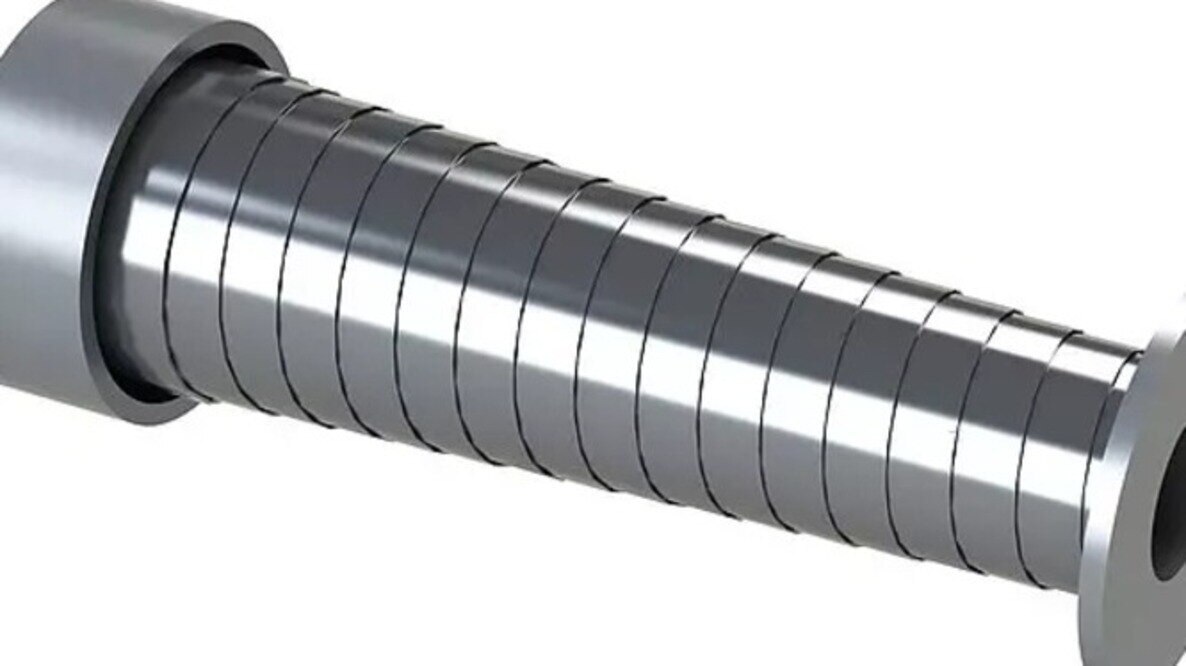
A quotation for a spiral spring machine cover is incomplete if it lists only the travel length and price. Before approval, you need a defined cover construction, measured installation envelope, motion and contamination data, documented inclusions and exclusions, and acceptance checks that prove the part fits and moves safely on the machine.
Key takeaways
- State that the cover uses wound spring-steel strip.
- Send compressed, extended and mounting dimensions before fabrication.
- Describe travel, speed, contamination, temperature and clearance limits.
- Record quotation inclusions and acceptance checks for replacement orders.
What a Spiral Spring Cover Includes—and Where It Is the Wrong Choice
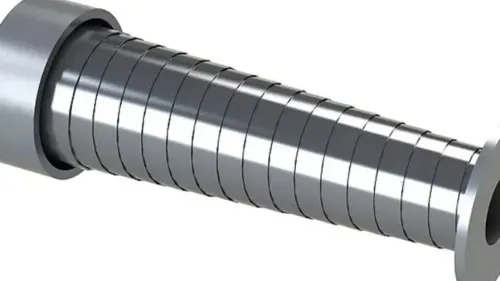
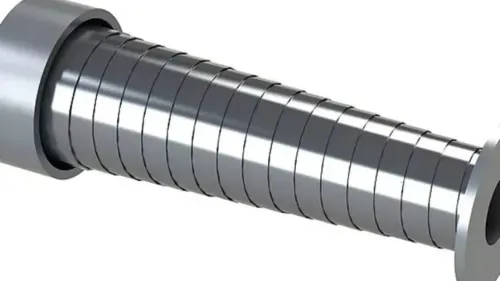
A spiral spring machine cover is a wound spring-steel strip that expands and contracts over a guideway, shaft, screw, or other moving element. State this construction explicitly in the industrial machine cover specifications; do not describe it only as “machine protection,” because that invites a bellows or telescopic-cover quotation.
| Type | Construction | Best fit |
|---|---|---|
| Spiral spring | Wound strip forming a moving coil | Compact protection for shafts, screws, and guideways |
| Telescopic steel | Sliding rigid boxes | Higher impact resistance and broad way coverage |
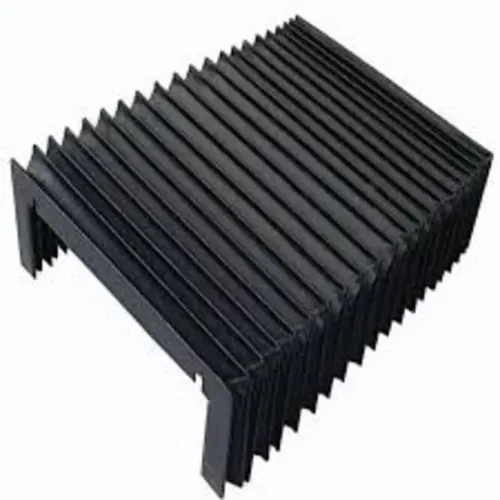
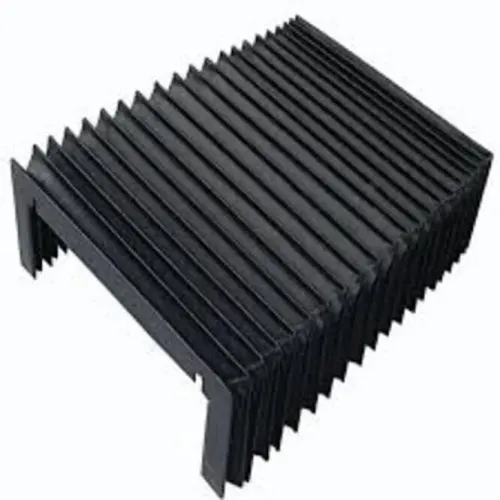
| Bellows | Flexible fabric or coated folds | Sealing against coolant, dust, and chips |
| Roll-up or apron | Flexible or linked curtain | Long exposed runs and simpler shielding |
Before requesting a quotation, treat spiral spring machine protection as a protective device, not a structural slide or load-bearing platform. Keep tools, fixtures, workpieces, and operators from pressing on or striking it unless a supported surface has been engineered.
- Name the machine and axis, protected component, installation position, quantity, travel direction, and environment.
- Ask whether scrapers, wipers, brushes, drainage, deflectors, or a separate way cover are needed. A spiral spring alone is the wrong choice where liquid ingress demands a sealed enclosure.
- Require a complete-stroke test on the machine or representative fixture. Acceptance means no rubbing, binding, coil collision, uncontrolled snap-back, or attachment loss; visual inspection alone proves little.
The Measurement Package to Send Before Fabrication
A nominal travel figure cannot define a cover. Put the machine name, axis or slide designation, protected component, quantity, installation position and movement direction in the machine cover order details.
Send this measurement package:
- Protected shaft, guideway or component diameter; give width where the part is rectangular.
- Required cover length at full extension, retracted or closed length, and usable travel.
- Cover outside diameter, available radial clearance, and nearby obstruction dimensions.
- Fixed and moving attachment locations, cover orientation, mounting-face dimensions, hole pattern, hole diameter, clamp details and allowable angular misalignment.
- Lubrication points, sensors, clamps, tooling and adjacent moving parts that the envelope must clear.
- State whether the supplier or customer provides brackets, guides, scrapers and fasteners.
Measure from the actual mounting faces, not from a convenient edge on the machine. Mark which location stays fixed and which travels; reversing them can place the spring force and opening in the wrong direction.
| Record | Why it matters | What to show |
|---|---|---|
| Machine and component | Identifies the installation | Machine model, axis, part name and diameter or width |
| Travel and envelope | Prevents binding or excess package size | Extended length, closed length, travel, outside diameter and radial clearance |
| Mounting | Prevents hole-pattern nonconformity | Face dimensions, fixed/moving points, orientation, holes and clamps |
| Approval drawing | Controls design changes | Mounting coordinates, full-stroke clearances, strip and coil dimensions, revision number |
Require a dimensioned approval drawing before production. Ask the drawing to show the spring strip width and thickness, active turns, coil geometry and end attachment; changing these can alter the outside diameter and operating force.
Specify Motion, Contamination, Material and Construction
A proposed cover must match the machine’s duty, not merely its diameter. Identify the construction explicitly as a wound spring-steel strip that expands and contracts over the guideway, shaft or screw; do not quote it as a bellows, telescopic steel cover or sealed enclosure.
Record these inputs in the industrial machine cover specifications:
- Motion: stroke, cycles per minute, maximum and average speed, acceleration, deceleration, dwell periods, and whether mounting is horizontal, vertical, inverted or around a rotating part.
- Environment: chip size, abrasive dust, coolant volume, heat, moisture, cleaning chemicals and the direction of contamination.
- Material and finish: spring steel for general machine-tool service or stainless spring material for greater corrosion exposure, plus the required surface treatment and edge treatment.
- Construction: attachment method, supported or unsupported installation, and any scraper, wiper, brush, deflector or drainage arrangement needed for the application.
Coolant-heavy or abrasive service needs more than the spring strip alone. Ask whether the design protects the coils from packed chips and directs liquid away; spiral spring machine protection is not a substitute for a sealed bellows or fully enclosed telescopic cover when liquid ingress is critical.
Treat the cover as a protective device, not a slide or load-bearing platform. Prevent operators, tools, fixtures and workpieces from pressing on or striking it unless the supplier has engineered a supported surface. Test the installed cover through a complete stroke: reject rubbing, binding, coil collision, uncontrolled snap-back or lost attachment.
A static inspection proves none of these.
Define Fit, Clearance, Quotation Inclusions and Acceptance
Do not approve a drawing from envelope dimensions alone. Confirm the fixed and moving attachment points, cover orientation, mounting holes or clamps, allowable angular misalignment, and every nearby obstruction.
Check the full expanded and compressed envelope against lubrication points, sensors, tooling and adjacent moving parts; insufficient clearance causes rubbing, while excessive compression causes coil collision and early spring failure.
Use the machine cover order details to request these quotation lines separately:
- Cover price, construction type, material, finish and quantity
- Tooling, brackets, guides, scrapers and fasteners, stating who supplies each item
- Trial fitting, installation and commissioning
- Freight, taxes and delivery location
- Replacement pricing for spring strips, wipers or scrapers
- Packaging for the cover in its extended or coiled condition
- Inspection interval, cleaning method, approved lubricant or solvent, and the replacement condition for worn parts, packed abrasive debris, corrosion, permanent distortion or sharp edges
Acceptance must include a complete-stroke test on the actual guideway or a representative fixture. Reject the cover if it rubs, binds, loses attachment, snaps back without control, collides internally or leaves a hazardous sharp edge; static inspection cannot reveal these failures. Record the tested stroke, clearance, attachment condition and any adjustment.
Ask SCUTES INDIA PRIVATE LIMITED to state these limits on the quotation rather than leaving fit, delivery and maintenance assumptions in email correspondence. Keep the approved drawing and test record with the machine for replacement ordering.
Choose the Supplier and Preserve the Specification for Replacement
A low quotation is not comparable until the supplier separates cover price from tooling, brackets, trial fitting, installation, freight, taxes, and replacement-part prices. Give the machine cover supplier in kolhapur the delivery location separately, and request packaging that protects the cover in its extended and coiled condition.
Ask these questions before approving the order:
- Is the construction a wound spring-steel strip, rather than a bellows, telescopic cover, roll-up cover, or sealed enclosure?
- Will the proposed design include scrapers, wipers, brushes, drainage, or deflectors for the stated chips, coolant, and cleaning chemicals?
- What spring material, surface treatment, edge treatment, and coolant compatibility are specified?
- What inspection interval, cleaning method, lubricant or solvent, and worn-wiper replacement procedure will you receive?
- What complete-stroke test will you witness on the machine or a representative fixture?
For a search such as “spiral spring machine cover for inclusions in kolhapur,” preserve the answer in the purchase file, not in email alone.
| Record | Acceptable evidence | Unacceptable evidence |
|---|---|---|
| Construction | Named spiral spring cover with material and finish | “Steel cover” |
| Acceptance | Complete-stroke test with no rubbing, binding, coil collision, snap-back, or detachment | Static visual inspection |
| Replacement | Drawing, revision, photos, test record, and part prices | Supplier name without dimensions or revision |
Set replacement triggers in advance: long stringy chips, packed abrasive debris, corrosion, permanent distortion, or sharp edges. Reorder from the retained drawing and test record, then update the revision after every approved change.
Frequently asked questions
What does a spiral spring machine cover include?
It includes a wound spring-steel strip arranged to expand and contract over a guideway, shaft, screw or other moving element. State this construction explicitly so the supplier does not quote a bellows or telescopic cover.
What measurement package should you send before fabrication?
Send the protected component dimensions, mounting points, available diameter and length, compressed and extended positions, travel, clearance, and interface details such as holes, flanges or clamps.
What operating information belongs in the machine cover order details?
Specify motion direction, travel length, speed, acceleration, cycle frequency, chips, coolant, dust, heat, moisture, abrasion, material preference and construction requirements.
When is a spiral spring cover the wrong choice?
Choose another design when the application needs a sealed enclosure, unusual travel geometry, large unsupported spans, extreme heat, or protection that a wound spring-steel strip cannot provide.